

Top Emerging Careers Every MBA Student Should Know
Admission & Info Tools
Need Expert Assistance?
Our counselors can help you with fee structures, eligibility guidelines, and upcoming admission cutoffs instantly.
Direct Application Tools
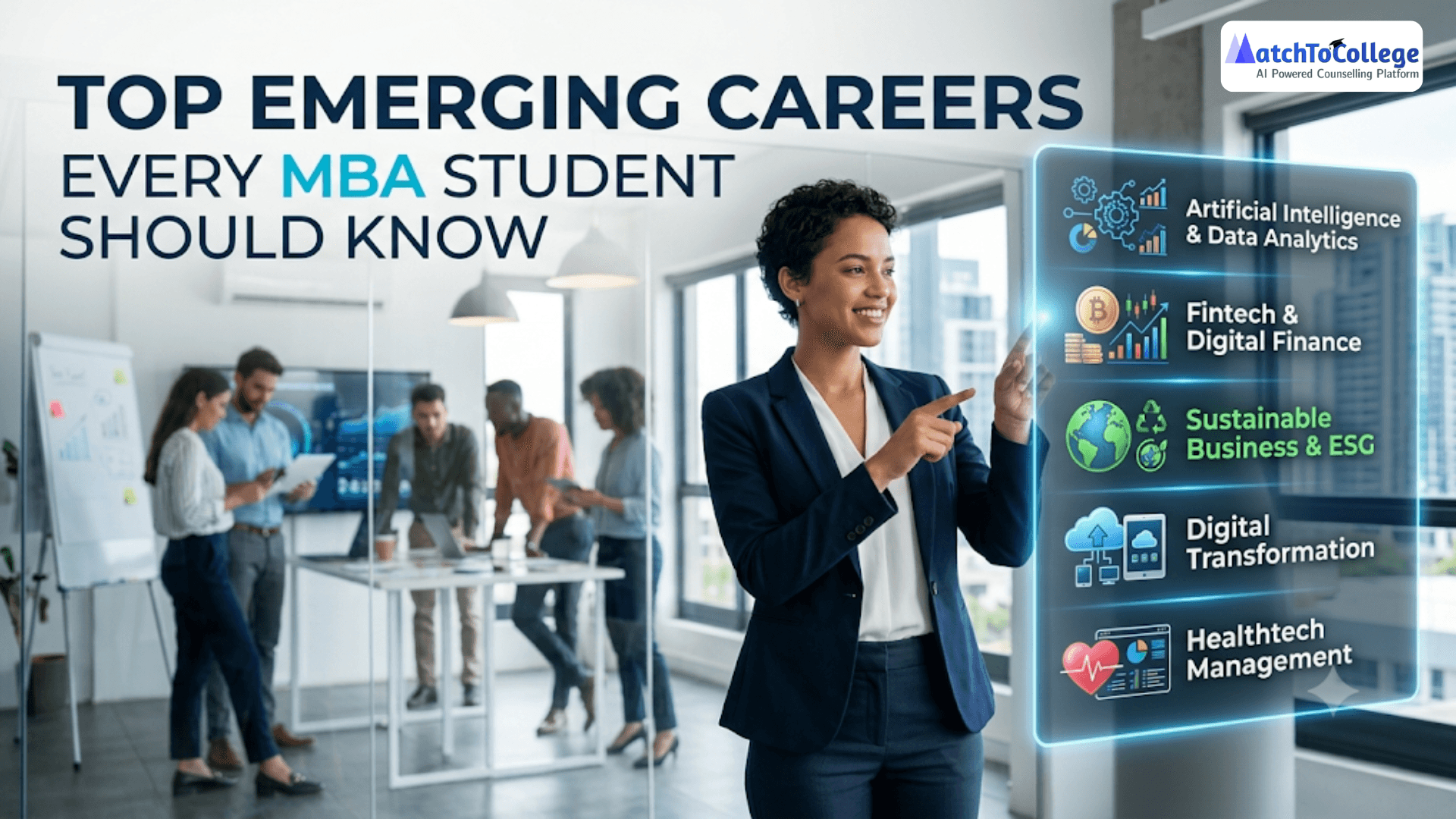
Top Emerging Careers Every MBA Student
The landscape of global business is undergoing a seismic shift. Traditional industries are being disrupted, new technologies are emerging at an unprecedented pace, and the demand for socially conscious, data-driven leadership has never been higher. For ambitious MBA students and prospective candidates, this isn't just a challenge; it's an unparalleled opportunity to forge career paths that are not only financially rewarding but also deeply impactful and future-proof. Gone are the days when an MBA primarily led to a handful of well-trodden roles in consulting, investment banking, or brand management. While these sectors remain robust, the true innovation and growth lie in new, evolving domains that demand a fresh perspective and a unique blend of business acumen, technological literacy, and ethical leadership.
At MatchToCollege, our mission is to empower students and parents with the insights needed to navigate the complex world of higher education and career planning. With our AI-powered platform, we analyze evolving market trends, skill demands, and emerging career opportunities to help you identify the best fit for your aspirations. This blog post delves into the high-growth sectors and specific roles that are shaping the future of work for MBA graduates. We'll explore how an MBA degree, combined with strategic upskilling and a forward-thinking mindset, can position you at the forefront of these exciting new frontiers. Whether you're specializing in finance, marketing, operations, or general management, understanding these emerging careers is crucial for charting a successful and fulfilling professional trajectory.
The value of an MBA increasingly comes from its ability to equip leaders with the adaptability to thrive amidst ambiguity and change. It's about developing a strategic mindset that can identify opportunities in disruption, leverage data for informed decision-making, and lead diverse teams through complex challenges. As you consider your post-MBA options, it's essential to look beyond the immediate and anticipate where the economy is headed. This means understanding the convergence of technology, sustainability, and societal needs, and identifying roles that sit at these exciting intersections. From harnessing the power of artificial intelligence in product development to championing environmental, social, and governance (ESG) initiatives, the possibilities are vast and varied. Let's explore the top emerging MBA career paths that are poised for significant growth and impact in the coming decade, ensuring you're not just ready for the future, but actively shaping it.
The Rise of Data Science & AI Leadership
As global awareness of climate change and social inequality intensifies, businesses are increasingly expected to operate ethically and sustainably. This shift has given rise to a critical demand for MBA graduates who can integrate environmental, social, and governance (ESG) principles into core business strategy. Roles in sustainable finance, impact investing, corporate social responsibility (CSR), and ESG consulting are no longer niche; they are becoming central to corporate strategy across all industries. An MBA provides the perfect foundation, combining strategic thinking, financial modeling, and operational expertise to lead initiatives that deliver both profit and purpose.
| Aspect | Details |
| Key Roles | ESG Strategist, Sustainable Finance Analyst, Impact Investment Manager, Chief Sustainability Officer (CSO), CSR Manager |
| Why It's Emerging | Rising regulatory requirements, investor expectations, consumer demand, and corporate focus on sustainability are driving growth. |
| MBA Advantage | MBA graduates develop skills in strategy, stakeholder management, business analytics, and sustainable business practices. |
| Skills Required | Strategic planning, data analytics, stakeholder engagement, risk management, ethical leadership, and ESG regulatory knowledge. |
The ability to quantify the financial benefits of sustainable practices and communicate them effectively is a highly sought-after skill. MBA graduates in this space will be at the forefront of transforming industries, driving innovation in clean technologies, and shaping responsible supply chains. This field demands leaders who can translate abstract concepts of sustainability into tangible business value, making it a powerful and impactful career choice for the next generation of business leaders.
Driving Impact: Sustainable Business & ESG Strategy
Artificial Intelligence (AI) and Machine Learning (ML) are no longer just buzzwords; they are foundational technologies transforming every sector from healthcare to retail. While technical roles in AI development are critical, there's a burgeoning need for MBA graduates to bridge the gap between complex algorithms and market demands. This is where AI/ML Product Management and AI Strategy roles come into play. These professionals define product roadmaps, manage cross-functional teams (including data scientists and engineers), and ensure AI solutions solve real-world business problems. An MBA equips individuals with the strategic vision, market analysis skills, and leadership capabilities essential for successful AI product development and deployment.
| Aspect | Details |
| Key Roles | AI Product Manager, AI Strategy Consultant, Head of AI Innovation, Machine Learning Business Analyst |
| Why It's Emerging | Rapid AI adoption across industries is creating demand for leaders who can drive AI-powered business growth. |
| MBA Advantage | MBA graduates combine business strategy, analytics, and project management to bridge the gap between technology and business. |
| Skills Required | Product management, data literacy, strategic thinking, cross-functional leadership, UX understanding, and agile methodologies. |
These roles require a unique blend of technical understanding (without necessarily being a coder) and robust business acumen. MBA graduates will be responsible for identifying AI opportunities, assessing feasibility, managing ethical considerations, and ensuring that AI products deliver tangible value to customers and stakeholders. The future of business is inextricably linked with AI, making these roles incredibly high-impact and central to innovation.
Spearheading Innovation: Digital Transformation & Product Management
The financial services industry is in the midst of a radical transformation, driven by technology and changing consumer expectations. FinTech (Financial Technology) has disrupted traditional banking, payments, lending, and investment sectors, creating a wealth of opportunities for MBA graduates. Beyond FinTech startups, established financial institutions are heavily investing in digital transformation, requiring leaders who can navigate complex technological changes, regulatory environments, and customer experience enhancements. Roles in digital banking, blockchain strategy, payment innovation, and regulatory technology (RegTech) are experiencing explosive growth.
| Aspect | Details |
| Key Roles | FinTech Product Manager, Digital Transformation Lead, Blockchain Strategist, Payments Innovation Specialist, RegTech Analyst |
| Why It's Emerging | Growing demand for digital financial services, regulatory modernization, and innovations in AI and blockchain are transforming the financial sector. |
| MBA Advantage | MBA graduates leverage expertise in finance, strategy, and technology to drive digital innovation and business transformation. |
| Skills Required | Financial acumen, technology knowledge, risk management, regulatory compliance, innovation management, and customer journey mapping. |
MBA graduates in this domain will be instrumental in shaping the future of money and financial services. They will lead initiatives to create seamless digital experiences, develop secure and efficient payment systems, and leverage data to personalize financial products. The ability to innovate within a highly regulated industry while maintaining trust and security is a hallmark of successful leaders in FinTech and digital finance.
Revolutionizing Wellness: Healthcare Innovation & Management
The healthcare and biotechnology sectors are undergoing rapid evolution, fueled by scientific breakthroughs, technological advancements, and increasing demands for accessible, personalized care. For MBA graduates, this translates into diverse opportunities beyond traditional hospital administration. Roles in biotech strategy, health tech product management, pharmaceutical market access, digital health solutions, and healthcare consulting are high-growth areas. The intersection of business strategy, scientific discovery, and patient care requires leaders who can navigate complex ethical, regulatory, and financial landscapes.
| Aspect | Details |
| Key Roles | Health Tech Product Manager, Biotech Business Development, Healthcare Strategy Consultant, Digital Health Director, Pharmaceutical Marketing & Market Access |
| Why It's Emerging | Growth in telemedicine, precision medicine, digital health, biotech innovation, and aging populations is driving demand. |
| MBA Advantage | MBA graduates apply expertise in strategy, operations, finance, and supply chain management to improve healthcare delivery and commercialize innovations. |
| Skills Required | Strategic planning, market analysis, regulatory knowledge, project management, stakeholder collaboration, and communication skills. |
These roles require not only business acumen but also an appreciation for the scientific process and the unique challenges of the healthcare ecosystem. MBA graduates will lead initiatives that bring life-changing innovations to market, improve patient outcomes, and enhance the efficiency of healthcare systems globally. It’s a sector that promises immense impact and intellectual stimulation.
Pioneering the Future of Finance: FinTech & Blockchain Leadership
In an age where data is often called the new oil, the ability to extract meaningful insights and drive strategic decisions from vast datasets is paramount. MBA graduates who specialize in Business Intelligence (BI) and Data Analytics Leadership are in high demand across virtually every industry. These roles go beyond mere data collection; they involve designing data strategies, leading analytics teams, implementing BI tools, and translating complex data findings into actionable business recommendations for executive leadership. An MBA provides the critical context and strategic framework to apply data insights effectively.
| Aspect | Details |
| Key Roles | Head of Business Intelligence, Director of Data Strategy, Analytics Consultant, Data Product Manager, Chief Data Officer (CDO) |
| Why It's Emerging | Rapid growth of business data and the need for data-driven decision-making are increasing demand for analytics leaders. |
| MBA Advantage | MBA graduates combine analytical, strategic, and communication skills to transform data into business insights and competitive advantage. |
| Skills Required | Data visualization, statistical analysis, strategic thinking, project management, leadership, and communication. |
These leaders are critical for fostering a data-driven culture within organizations. They ensure that investments in data infrastructure yield tangible returns by directly informing product development, marketing campaigns, operational efficiencies, and overall corporate strategy. For MBAs passionate about leveraging insights to drive growth, this career path offers immense potential and influence.
Your AI Advantage: Personalized Career Navigation with MatchToCollege
The explosion of e-commerce and digital channels has fundamentally reshaped how businesses interact with customers. For MBA graduates, this translates into exciting opportunities in digital marketing strategy, e-commerce leadership, customer experience (CX) management, and omnichannel retail. These roles demand a deep understanding of consumer behavior, digital platforms, analytics, and agile marketing methodologies. An MBA provides the strategic oversight to manage complex digital ecosystems and drive growth in competitive online environments.
| Aspect | Details |
| Key Roles | Head of E-commerce, Digital Marketing Director, Customer Experience Strategist, Growth Marketing Manager, Omnichannel Retail Lead |
| Why It's Emerging | Growth in online shopping, personalized marketing, and omnichannel customer experiences is driving demand. |
| MBA Advantage | MBA graduates gain expertise in marketing strategy, consumer behavior, analytics, and operations to optimize digital growth. |
| Skills Required | Digital advertising, SEO/SEM, content strategy, marketing analytics, UX/UI principles, agile marketing, and CRM. |
MBA leaders in this space are responsible for crafting compelling digital narratives, optimizing conversion rates, and building lasting customer relationships through innovative digital strategies. They are at the forefront of understanding and leveraging the latest trends in social media, mobile commerce, and personalization to drive significant business outcomes.
Beyond the MBA: Future-Proofing Your Career in a Dynamic World
While identifying specific emerging careers is crucial, the overarching theme for success in the modern business world is adaptability and a commitment to lifelong learning. The careers highlighted above are dynamic, constantly evolving with technological advancements and societal shifts. An MBA provides a powerful framework for critical thinking and problem-solving, but sustained success requires continuous upskilling, networking, and an open mind to new challenges.
MatchToCollege understands these dynamics. Our AI-powered platform not only helps you identify the perfect MBA program but also provides insights into how different specializations align with these emerging career paths. We offer personalized guidance to help you craft an application that highlights your potential for impact in these high-growth areas, and connects you with resources to develop the skills needed for future success.
Ultimately, the most successful MBA graduates will be those who can combine their foundational business knowledge with a forward-looking perspective, embracing change and proactively seeking opportunities in uncharted territories. By focusing on areas like sustainable business, AI product management, FinTech, healthcare innovation, data analytics, and digital commerce, you can position yourself for a career that is not only robust but also contributes meaningfully to the global economy. Your MBA is just the beginning of a journey into an exciting and ever-changing professional landscape. Equip yourself with the knowledge, skills, and strategic partnerships to thrive.
The Rise of Data Science & AI Leadership
As global awareness of climate change and social inequality intensifies, businesses are increasingly expected to operate ethically and sustainably. This shift has given rise to a critical demand for MBA graduates who can integrate environmental, social, and governance (ESG) principles into core business strategy. Roles in sustainable finance, impact investing, corporate social responsibility (CSR), and ESG consulting are no longer niche; they are becoming central to corporate strategy across all industries. An MBA provides the perfect foundation, combining strategic thinking, financial modeling, and operational expertise to lead initiatives that deliver both profit and purpose.
| Aspect | Details |
| Key Roles | ESG Strategist, Sustainable Finance Analyst, Impact Investment Manager, Chief Sustainability Officer (CSO), CSR Manager |
| Why It's Emerging | Rising regulatory requirements, investor expectations, consumer demand, and corporate focus on sustainability are driving growth. |
| MBA Advantage | MBA graduates develop skills in strategy, stakeholder management, business analytics, and sustainable business practices. |
| Skills Required | Strategic planning, data analytics, stakeholder engagement, risk management, ethical leadership, and ESG regulatory knowledge. |
The ability to quantify the financial benefits of sustainable practices and communicate them effectively is a highly sought-after skill. MBA graduates in this space will be at the forefront of transforming industries, driving innovation in clean technologies, and shaping responsible supply chains. This field demands leaders who can translate abstract concepts of sustainability into tangible business value, making it a powerful and impactful career choice for the next generation of business leaders.
Driving Impact: Sustainable Business & ESG Strategy
Artificial Intelligence (AI) and Machine Learning (ML) are no longer just buzzwords; they are foundational technologies transforming every sector from healthcare to retail. While technical roles in AI development are critical, there's a burgeoning need for MBA graduates to bridge the gap between complex algorithms and market demands. This is where AI/ML Product Management and AI Strategy roles come into play. These professionals define product roadmaps, manage cross-functional teams (including data scientists and engineers), and ensure AI solutions solve real-world business problems. An MBA equips individuals with the strategic vision, market analysis skills, and leadership capabilities essential for successful AI product development and deployment.
| Aspect | Details |
| Key Roles | AI Product Manager, AI Strategy Consultant, Head of AI Innovation, Machine Learning Business Analyst |
| Why It's Emerging | Rapid AI adoption across industries is creating demand for leaders who can drive AI-powered business growth. |
| MBA Advantage | MBA graduates combine business strategy, analytics, and project management to bridge the gap between technology and business. |
| Skills Required | Product management, data literacy, strategic thinking, cross-functional leadership, UX understanding, and agile methodologies. |
These roles require a unique blend of technical understanding (without necessarily being a coder) and robust business acumen. MBA graduates will be responsible for identifying AI opportunities, assessing feasibility, managing ethical considerations, and ensuring that AI products deliver tangible value to customers and stakeholders. The future of business is inextricably linked with AI, making these roles incredibly high-impact and central to innovation.
Spearheading Innovation: Digital Transformation & Product Management
The financial services industry is in the midst of a radical transformation, driven by technology and changing consumer expectations. FinTech (Financial Technology) has disrupted traditional banking, payments, lending, and investment sectors, creating a wealth of opportunities for MBA graduates. Beyond FinTech startups, established financial institutions are heavily investing in digital transformation, requiring leaders who can navigate complex technological changes, regulatory environments, and customer experience enhancements. Roles in digital banking, blockchain strategy, payment innovation, and regulatory technology (RegTech) are experiencing explosive growth.
| Aspect | Details |
| Key Roles | FinTech Product Manager, Digital Transformation Lead, Blockchain Strategist, Payments Innovation Specialist, RegTech Analyst |
| Why It's Emerging | Growing demand for digital financial services, regulatory modernization, and innovations in AI and blockchain are transforming the financial sector. |
| MBA Advantage | MBA graduates leverage expertise in finance, strategy, and technology to drive digital innovation and business transformation. |
| Skills Required | Financial acumen, technology knowledge, risk management, regulatory compliance, innovation management, and customer journey mapping. |
MBA graduates in this domain will be instrumental in shaping the future of money and financial services. They will lead initiatives to create seamless digital experiences, develop secure and efficient payment systems, and leverage data to personalize financial products. The ability to innovate within a highly regulated industry while maintaining trust and security is a hallmark of successful leaders in FinTech and digital finance.
Revolutionizing Wellness: Healthcare Innovation & Management
The healthcare and biotechnology sectors are undergoing rapid evolution, fueled by scientific breakthroughs, technological advancements, and increasing demands for accessible, personalized care. For MBA graduates, this translates into diverse opportunities beyond traditional hospital administration. Roles in biotech strategy, health tech product management, pharmaceutical market access, digital health solutions, and healthcare consulting are high-growth areas. The intersection of business strategy, scientific discovery, and patient care requires leaders who can navigate complex ethical, regulatory, and financial landscapes.
| Aspect | Details |
| Key Roles | Health Tech Product Manager, Biotech Business Development, Healthcare Strategy Consultant, Digital Health Director, Pharmaceutical Marketing & Market Access |
| Why It's Emerging | Growth in telemedicine, precision medicine, digital health, biotech innovation, and aging populations is driving demand. |
| MBA Advantage | MBA graduates apply expertise in strategy, operations, finance, and supply chain management to improve healthcare delivery and commercialize innovations. |
| Skills Required | Strategic planning, market analysis, regulatory knowledge, project management, stakeholder collaboration, and communication skills. |
These roles require not only business acumen but also an appreciation for the scientific process and the unique challenges of the healthcare ecosystem. MBA graduates will lead initiatives that bring life-changing innovations to market, improve patient outcomes, and enhance the efficiency of healthcare systems globally. It’s a sector that promises immense impact and intellectual stimulation.
Pioneering the Future of Finance: FinTech & Blockchain Leadership
In an age where data is often called the new oil, the ability to extract meaningful insights and drive strategic decisions from vast datasets is paramount. MBA graduates who specialize in Business Intelligence (BI) and Data Analytics Leadership are in high demand across virtually every industry. These roles go beyond mere data collection; they involve designing data strategies, leading analytics teams, implementing BI tools, and translating complex data findings into actionable business recommendations for executive leadership. An MBA provides the critical context and strategic framework to apply data insights effectively.
| Aspect | Details |
| Key Roles | Head of Business Intelligence, Director of Data Strategy, Analytics Consultant, Data Product Manager, Chief Data Officer (CDO) |
| Why It's Emerging | Rapid growth of business data and the need for data-driven decision-making are increasing demand for analytics leaders. |
| MBA Advantage | MBA graduates combine analytical, strategic, and communication skills to transform data into business insights and competitive advantage. |
| Skills Required | Data visualization, statistical analysis, strategic thinking, project management, leadership, and communication. |
These leaders are critical for fostering a data-driven culture within organizations. They ensure that investments in data infrastructure yield tangible returns by directly informing product development, marketing campaigns, operational efficiencies, and overall corporate strategy. For MBAs passionate about leveraging insights to drive growth, this career path offers immense potential and influence.
Your AI Advantage: Personalized Career Navigation with MatchToCollege
The explosion of e-commerce and digital channels has fundamentally reshaped how businesses interact with customers. For MBA graduates, this translates into exciting opportunities in digital marketing strategy, e-commerce leadership, customer experience (CX) management, and omnichannel retail. These roles demand a deep understanding of consumer behavior, digital platforms, analytics, and agile marketing methodologies. An MBA provides the strategic oversight to manage complex digital ecosystems and drive growth in competitive online environments.
| Aspect | Details |
| Key Roles | Head of E-commerce, Digital Marketing Director, Customer Experience Strategist, Growth Marketing Manager, Omnichannel Retail Lead |
| Why It's Emerging | Growth in online shopping, personalized marketing, and omnichannel customer experiences is driving demand. |
| MBA Advantage | MBA graduates gain expertise in marketing strategy, consumer behavior, analytics, and operations to optimize digital growth. |
| Skills Required | Digital advertising, SEO/SEM, content strategy, marketing analytics, UX/UI principles, agile marketing, and CRM. |
MBA leaders in this space are responsible for crafting compelling digital narratives, optimizing conversion rates, and building lasting customer relationships through innovative digital strategies. They are at the forefront of understanding and leveraging the latest trends in social media, mobile commerce, and personalization to drive significant business outcomes.
Beyond the MBA: Future-Proofing Your Career in a Dynamic World
While identifying specific emerging careers is crucial, the overarching theme for success in the modern business world is adaptability and a commitment to lifelong learning. The careers highlighted above are dynamic, constantly evolving with technological advancements and societal shifts. An MBA provides a powerful framework for critical thinking and problem-solving, but sustained success requires continuous upskilling, networking, and an open mind to new challenges.
MatchToCollege understands these dynamics. Our AI-powered platform not only helps you identify the perfect MBA program but also provides insights into how different specializations align with these emerging career paths. We offer personalized guidance to help you craft an application that highlights your potential for impact in these high-growth areas, and connects you with resources to develop the skills needed for future success.
Ultimately, the most successful MBA graduates will be those who can combine their foundational business knowledge with a forward-looking perspective, embracing change and proactively seeking opportunities in uncharted territories. By focusing on areas like sustainable business, AI product management, FinTech, healthcare innovation, data analytics, and digital commerce, you can position yourself for a career that is not only robust but also contributes meaningfully to the global economy. Your MBA is just the beginning of a journey into an exciting and ever-changing professional landscape. Equip yourself with the knowledge, skills, and strategic partnerships to thrive.
Share this Article
FAQFrequently Asked Questions
Q: What are the most in-demand skills for MBA graduates in emerging careers?
Beyond core business acumen, highly sought-after skills include data analytics, artificial intelligence literacy, strategic thinking, sustainability knowledge (ESG), digital transformation expertise, change management, ethical leadership, and cross-functional team collaboration. Adaptability and a commitment to lifelong learning are also paramount.
Q: How can an MBA help me transition into these new career fields?
An MBA provides a robust foundation in strategic management, finance, marketing, and operations. Many top MBA programs offer specialized tracks (e.g., FinTech, Sustainable Business, Healthcare Management, Business Analytics) and experiential learning opportunities (internships, projects) that directly prepare students for emerging roles. The strong alumni network and career services at business schools are also invaluable for making career transitions.
Q: Should I choose a specific MBA specialization for emerging careers?
While a general MBA can provide a broad skill set, specializing can be highly beneficial for emerging careers. Specializations in areas like Business Analytics, Technology Management, Sustainable Business, FinTech, or Digital Marketing can provide deeper knowledge and signal specific expertise to employers in these high-growth sectors. However, ensure your specialization aligns with your genuine interests and long-term career goals.
Get More Info About Top Emerging Careers Every MBA Student Should Know
Recommended Reading
GATE Previous Year Question Papers with Official Answer Keys (2007–2026) – Download PDF by Branch
Download official GATE previous year question papers with answer keys PDF from 2007 to 2026. Access branch-wise question papers for Computer Science (CS), Data Science (DA), Mechanical (ME), Electronics (EC), Electrical (EE), and Civil (CE) by IIT Madras.

Top Mistakes Students Make in CUET Exam (And How to Avoid Them)
Many students lose marks in the CUET exam due to common mistakes like poor time management, ignoring the syllabus, and guessing answers blindly. This guide explains the top mistakes CUET aspirants make and practical strategies to avoid them to improve their exam performance.

How to Achieve AIR Under 500 in JEE Advanced: Proven Strategy Guide
Learn how to crack JEE Advanced with an AIR under 500 using proven strategies, smart study plans, mock test analysis, and subject-wise preparation tips followed by top rankers.