

Skills Over Diplomas: Why Tech Companies Love GitHub More
Admission & Info Tools
Need Expert Assistance?
Our counselors can help you with fee structures, eligibility guidelines, and upcoming admission cutoffs instantly.
Direct Application Tools

Portfolio vs degree: tech career essentials
In the rapidly evolving world of technology, the traditional path to a successful career often involved securing a prestigious degree. While higher education still holds significant value, a paradigm shift is underway, especially within the tech industry. Today, an increasing number of innovative companies are looking beyond academic transcripts, placing a premium on what candidates can actually do rather than just what they’ve studied.
This often means that a robust GitHub portfolio, showcasing real-world projects and problem-solving abilities, can be far more impactful than a mere diploma.
For students and parents navigating the complex landscape of higher education and career planning, understanding this shift is crucial. Is a university degree still the ultimate golden ticket, or is it merely one piece of a larger, more dynamic puzzle?
This blog post will delve into why tech giants and startups alike are increasingly valuing practical skills demonstrated through platforms like GitHub, and how you can strategically position yourself for success.
At MatchToCollege, we believe in empowering you with insights into these changing industry demands, helping you build a higher education and career strategy that truly resonates with future opportunities.
We'll explore the evolving recruitment trends, the power of a strong portfolio, and how to effectively balance your academic pursuits with practical skill development to become an irresistible candidate in the tech world. Get ready to rethink the 'degree vs. portfolio' debate and understand why your code might speak louder than your GPA.
The Shifting Landscape of Tech Recruitment
For decades, a university degree was the non-negotiable entry ticket into most professional fields, including technology. Institutions like MIT, Stanford, and Carnegie Mellon were (and still are) revered for producing top-tier talent. However, the breakneck pace of technological advancement, coupled with the rise of open-source projects and online learning platforms, has democratized skill acquisition. Tech companies, particularly those at the forefront of innovation, now grapple with a fundamental challenge: does a four-year degree truly equip graduates with the specific, cutting-edge skills needed for immediate contribution?
Many employers have found that while degrees provide foundational knowledge and critical thinking, they don't always guarantee hands-on proficiency in the latest programming languages, frameworks, or development methodologies. This realization has sparked a significant shift. Recruiters are now actively seeking candidates who can demonstrate their abilities through tangible work, moving towards a skill-based hiring model. They want to see proof of concept, not just academic credentials. This pivot is not about devaluing education, but rather about refining the assessment of a candidate's readiness for real-world development challenges.
Portfolio Power: Why Your GitHub Profile Matters Most
In this new hiring paradigm, a well-curated GitHub profile or a comprehensive digital portfolio acts as a live resume, a dynamic showcase of your capabilities, creativity, and commitment. Unlike a static transcript, a GitHub repository offers potential employers direct insight into your coding style, problem-solving approach, collaboration skills (through pull requests and issues), and even your continuous learning journey. It provides a transparent, verifiable record of your practical experience and technical proficiency.
Imagine a hiring manager sifting through hundreds of applications. A candidate with a relevant degree is one thing, but a candidate with a degree and a GitHub link featuring completed projects, contributions to open-source software, and well-documented code stands out immensely. It communicates initiative, passion, and a genuine aptitude for development.
Here's a quick comparison:
| Feature | Traditional Degree | Digital Portfolio / GitHub Repo |
| Demonstrates | Foundational knowledge, academic achievement, theoretical understanding, perseverance. | Practical skills, coding ability, problem-solving, project management, collaboration, initiative, continuous learning. |
| Evidence Type | Transcripts, GPA, course descriptions, essays, theoretical exams. | Live code, deployed applications, project documentation, commit history, peer reviews, contributions to real-world problems. |
| Industry Relevance | Broad foundational knowledge, may not reflect latest tech trends directly. | Directly showcases proficiency in current technologies, frameworks, and tools. |
| Personalization | Standardized curriculum, less room for individual project showcase. | Highly personalized, reflects unique interests, creativity, and specific skill sets. |
| Verifiability | Institution-verified grades and completion. | Openly accessible code, deployable projects, community engagement, peer feedback. |
| Value to Tech Recruiter | Indicates learning capacity and baseline knowledge. | Proves immediate capability, cultural fit (via collaboration), and readiness for practical tasks. |
A strong portfolio allows you to tell a story through your work, showcasing not just the final product, but the entire development process.
The Role of a Degree in a Portfolio-Driven World
While the spotlight is increasingly on practical portfolios, it's crucial to understand that a university degree is far from obsolete. For many roles, especially those requiring deep theoretical understanding, research capabilities, or leadership, a degree provides an invaluable foundation. It teaches critical thinking, structured problem-solving, complex algorithms, data structures, and the underlying principles of computer science – knowledge that often underpins innovative solutions.
Furthermore, higher education offers unparalleled networking opportunities, access to experienced faculty, and a structured learning environment that can be difficult to replicate independently. For specialized fields like AI research, cybersecurity architecture, or advanced data science, a master's or Ph.D. can be essential. The ideal approach for aspiring tech professionals is not to choose one over the other, but to strategically integrate both.
Use your academic journey to build a robust theoretical framework, while simultaneously developing and showcasing your practical skills through personal projects, hackathons, open-source contributions, and internships. This dual approach creates a highly compelling profile that combines intellectual rigor with demonstrable real-world capability.
Building Your Irresistible Tech Portfolio
So, how do you build a portfolio that truly stands out? It's about quality, relevance, and presentation. Here are key strategies:
- Start Early & Consistently: Begin working on personal projects, even small ones, during your academic years. Treat GitHub as your professional journal.
- Showcase Diverse Skills: Include projects that demonstrate different programming languages, frameworks, databases, and problem-solving skills. Don't just stick to one type of project.
- Quality Over Quantity: A few well-documented, functional, and impressive projects are better than many unfinished or poorly presented ones.
- Contribute to Open Source: Getting involved in open-source projects shows collaboration skills, code review experience, and a willingness to learn from and contribute to the community.
- Clear Documentation: Every project should have a detailed README file explaining its purpose, technologies used, how to run it, and any challenges faced.
- Deploy Your Work: If possible, deploy your projects so recruiters can interact with them directly. This adds a powerful dimension to your portfolio.
- Get Feedback: Share your portfolio with mentors, peers, or career advisors for constructive criticism.
Leveraging platforms like MatchToCollege can further enhance your career planning by connecting you with mentors and resources tailored to your tech ambitions, helping you identify colleges or programs that encourage practical skill development alongside academic excellence. We guide you not just to the right degree, but to a holistic strategy that includes building a portfolio that will open doors in the tech industry.
Share this Article
FAQFrequently Asked Questions
Q: Do I still need a degree to work in tech, given the importance of portfolios?
While a strong portfolio is increasingly vital, a degree still offers foundational knowledge, critical thinking skills, networking opportunities, and structured learning. Many top tech companies value both. The ideal approach is often a combination: use your degree to build a solid theoretical base and concurrently develop a robust portfolio to demonstrate practical skills.
Q: What kind of projects should I include in my GitHub portfolio?
Aim for a diverse range of projects that showcase different skills and technologies. Include personal projects (web apps, mobile apps, data science projects), contributions to open-source software, hackathon projects, and relevant coursework projects. Ensure they are well-documented, functional, and demonstrate your problem-solving abilities and coding style. Quality and relevance are more important than sheer quantity.
Get More Info About Skills Over Diplomas
Recommended Reading
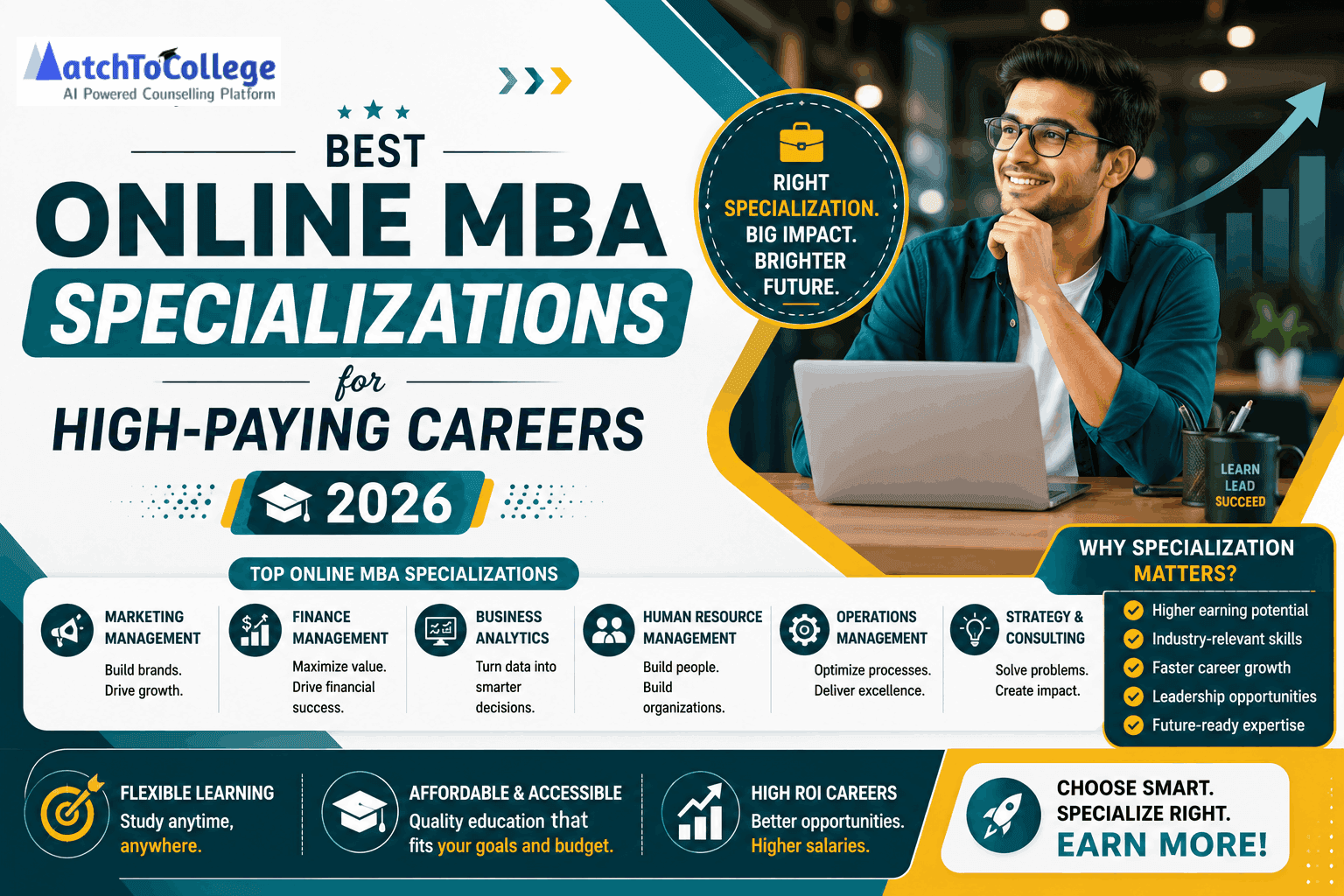
Best Online MBA Specializations for High-Paying Careers 2026
Discover the most lucrative online MBA specializations for 2026-27. Compare ROI, career growth, and use our AI tools to find your perfect management path.
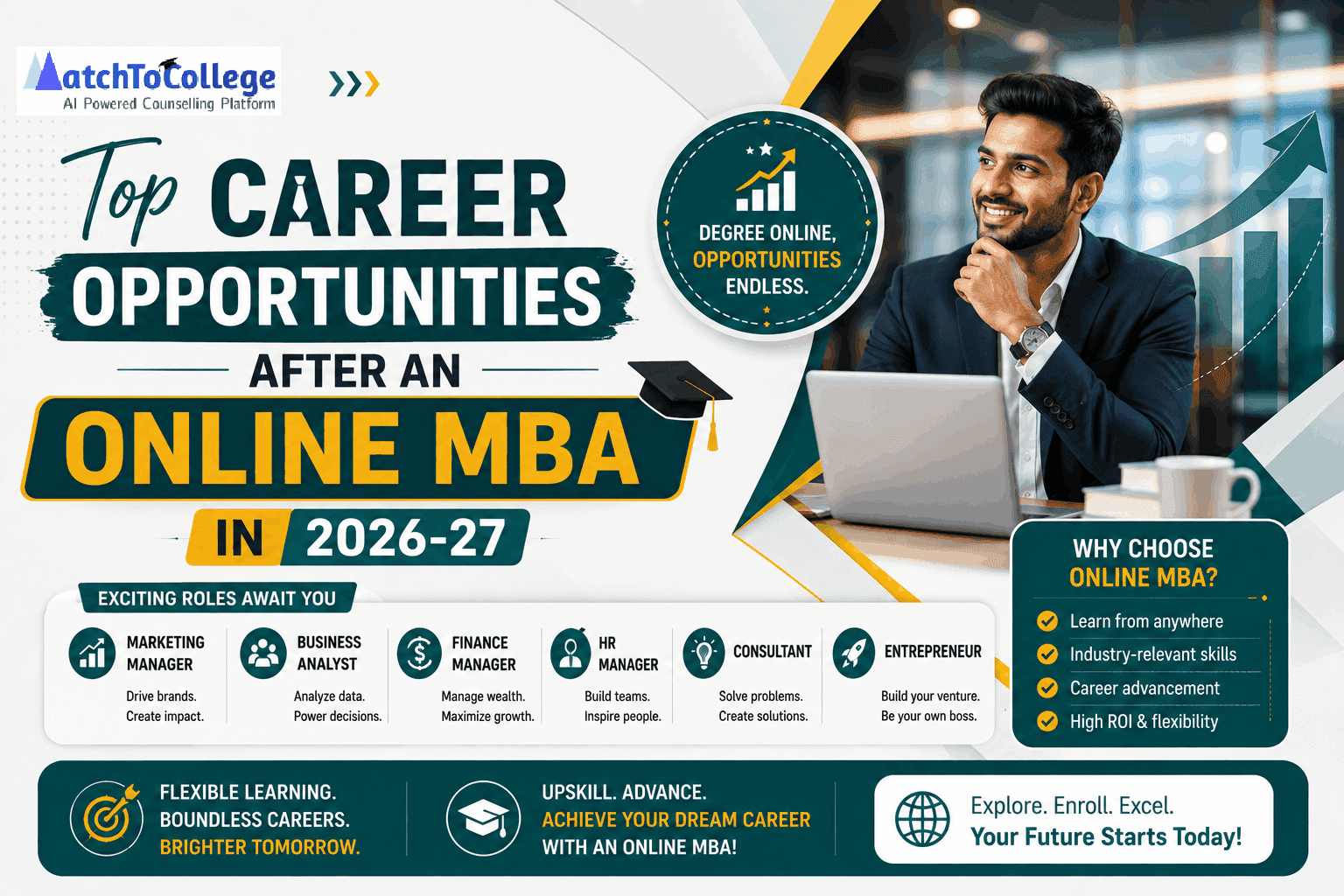
Top Career Opportunities After an Online MBA in 2026-27
Discover high-paying career paths and roles after an online MBA in 2026-27. Explore salary trends, ROI, and tools to navigate your future professional success.

Tax Deductions on Higher Education: 2026-27 India Guide
Maximize your savings with our guide on tax deductions for higher education fees in India for FY 2026-27. Learn about Section 80C, 80E, and upskilling benefits.