

Product Management After MBA: Skills & Portfolio Guide
Admission & Info Tools
Need Expert Assistance?
Our counselors can help you with fee structures, eligibility guidelines, and upcoming admission cutoffs instantly.
Direct Application Tools
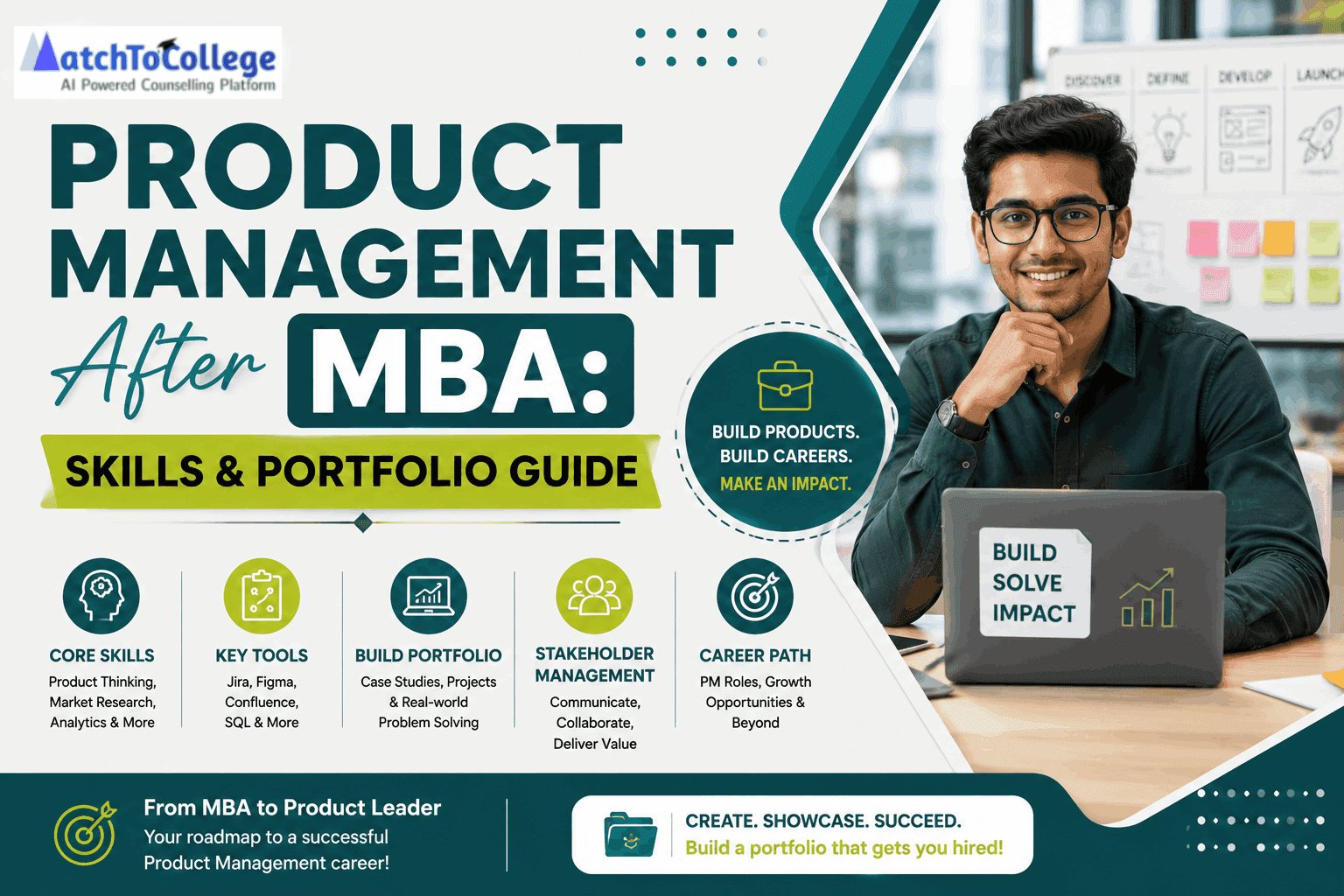
According to the Graduate Management Admission Council (GMAC), technology remains one of the top three industries for MBA graduates, with Product Management (PM) appearing as the primary destination for over 30% of those entering the tech sector. Unlike traditional consulting or finance tracks, the post-MBA PM path requires a unique hybrid of business intuition, technical empathy, and design thinking.
At MatchToCollege, we monitor the recruitment cycles of Big Tech firms like Google, Amazon, and Meta, where the 'Product Manager' title often carries a salary premium of up to 40% compared to general management roles. Transitioning into this field isn't just about having the degree; it is about proving you can manage the lifecycle of a digital product from ideation to sunset.
For students currently in the middle of their management studies, calculating academic progress is a prerequisite for high-stakes recruitment. You can use our CGPA to Percentage Calculator to ensure your academic records align with the technical requirements of global hiring platforms.
Success in this field is less about your ability to memorize frameworks and more about your capacity to synthesize data into actionable product roadmaps. This guide breaks down the precise skill sets and portfolio items that differentiate a successful MBA candidate from the rest of the applicant pool.
The Core Skill Stack: Beyond the MBA Classroom
While an MBA provides a solid foundation in strategy and finance, Product Management requires a specialized 'Hard Skill' stack that many general management programs overlook. First and foremost is Data Analytics and SQL.
PMs are expected to query their own data rather than waiting for a data scientist. You must be comfortable with A/B testing methodologies and tools like Mixpanel, Amplitude, or Google Analytics to track user behavior. If you are coming from a non-technical background, bridging this gap is non-negotiable.
Secondly, Technical Empathy is vital. You do not need to write production-level code, but you must understand system architecture, APIs, and the constraints of the tech stack your engineers are using. This allows you to negotiate feasibility versus desirability during sprint planning. To see if your current academic trajectory aligns with these technical demands, check out the Are You on the Right Path to Your Dream Career? tool, which maps your existing skills against industry expectations.
Lastly, Agile and Scrum Methodologies form the operational backbone of modern PM roles. Understanding the nuances of backlogs, epics, user stories, and velocity is essential. Many MBA graduates struggle here because they are trained for long-term strategic cycles, whereas PMs operate in two-week iterative loops. Mastering the art of 'Product Discovery'—the process of validating an idea before building it—is what separates a great PM from a mediocre one.
Share this Article
FAQFrequently Asked Questions
Q: Do I need a Computer Science degree for PM roles after an MBA?
No, a CS degree is not mandatory, but 'Technical Empathy' is. You must understand how software is built and be able to communicate effectively with engineers. Many successful PMs have backgrounds in humanities or finance but bridged the gap through technical bootcamps or self-learning.
Q: What is the difference between a Product Manager and a Program Manager?
A Product Manager focuses on 'What' and 'Why'—identifying user problems and defining the product vision. A Program Manager focuses on 'How' and 'When'—managing schedules, resources, and cross-functional execution to ensure the project is delivered on time.
Q: Is an internship essential for landing a full-time PM role post-MBA?
Yes, for career switchers, a summer internship in a product role is the single most important factor. It provides the 'real-world' case study you need for your portfolio and often leads to a pre-placement offer (PPO).
Top Colleges Covered in this Blog

The All India Institutes of Medical Sciences (AIIMS) is a group of autonomous government public medical universities of higher education under the jurisdiction of Ministry of Health and Family Welfare, Government of India. These institutes have been declared by an Act of Parliament as Institutes of National Importance. AIIMS New Delhi, the forerunner institute, was established in 1956. Since then, 24 more institutes were announced. As of January 2023, twenty institutes are operating and four more are expected to become operational until 2025. Proposals were made for six more AIIMS under the leadership of Narendra Modi. It is considered as pioneer health institution of Asia.
Total Fees
₹1K - ₹8K
Total Courses
17
Get More Info About Product Management After MBA
Recommended Reading
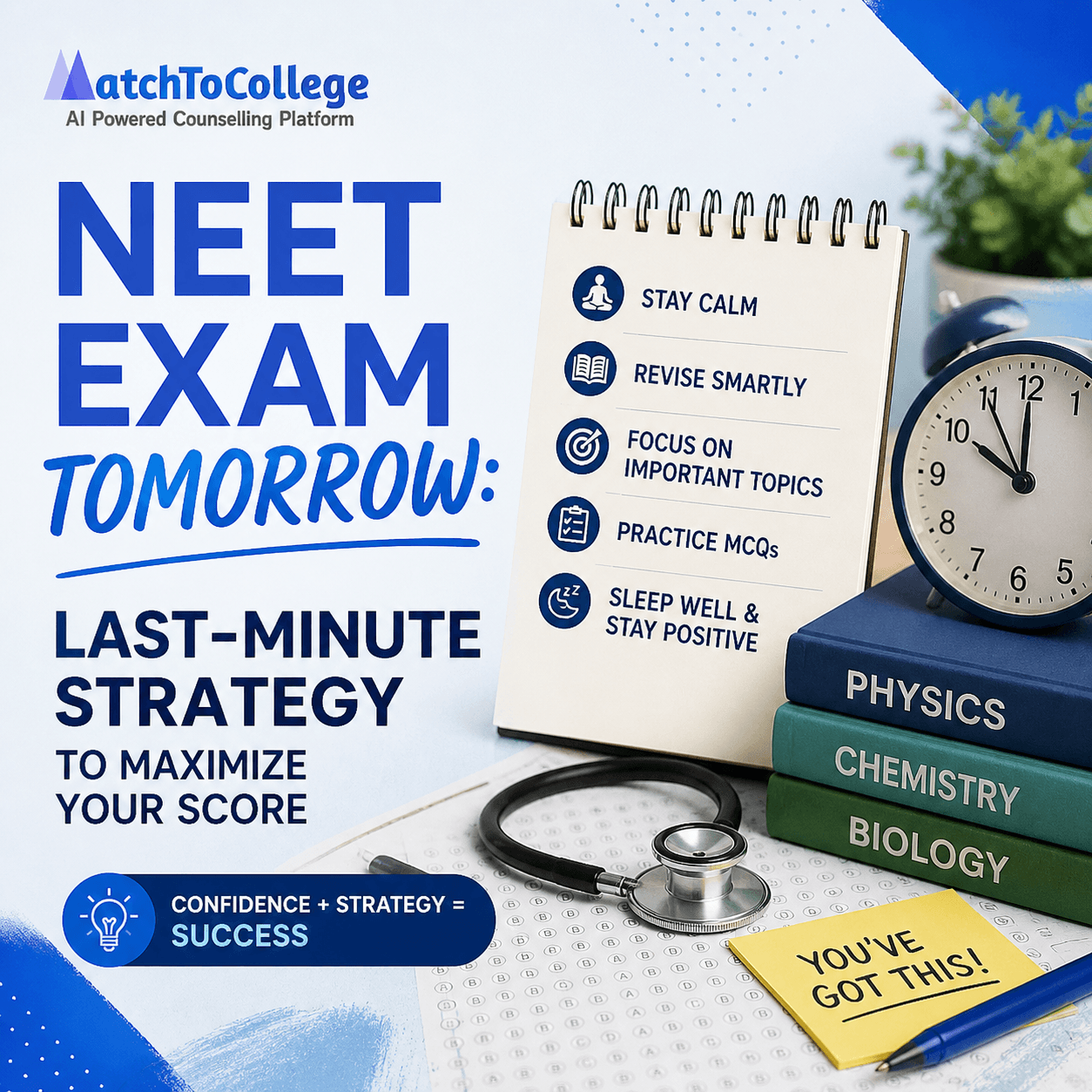
NEET Exam Tomorrow: Last-Minute Strategy to Maximize Your Score
NEET is tomorrow—here’s your complete last-day strategy covering revision, exam hall tips, and mistakes to avoid for maximum accuracy and performance.
GATE Previous Year Question Papers with Official Answer Keys (2007–2026) – Download PDF by Branch
Download official GATE previous year question papers with answer keys PDF from 2007 to 2026. Access branch-wise question papers for Computer Science (CS), Data Science (DA), Mechanical (ME), Electronics (EC), Electrical (EE), and Civil (CE) by IIT Madras.

NEET Exam Day Do’s and Don’ts (Must Read Before Leaving Home)
Students appearing for the National Eligibility cum Entrance Test (NEET) must follow strict exam day guidelines set by the National Testing Agency. From required documents and dress code to prohibited items, this guide covers the most important NEET exam day do’s and don’ts to help candidates avoid last-minute problems at the exam center.