

NExT Exam 2026-27: Replacing NEET-PG and FMGE Explained
Admission & Info Tools
Need Expert Assistance?
Our counselors can help you with fee structures, eligibility guidelines, and upcoming admission cutoffs instantly.
Direct Application Tools
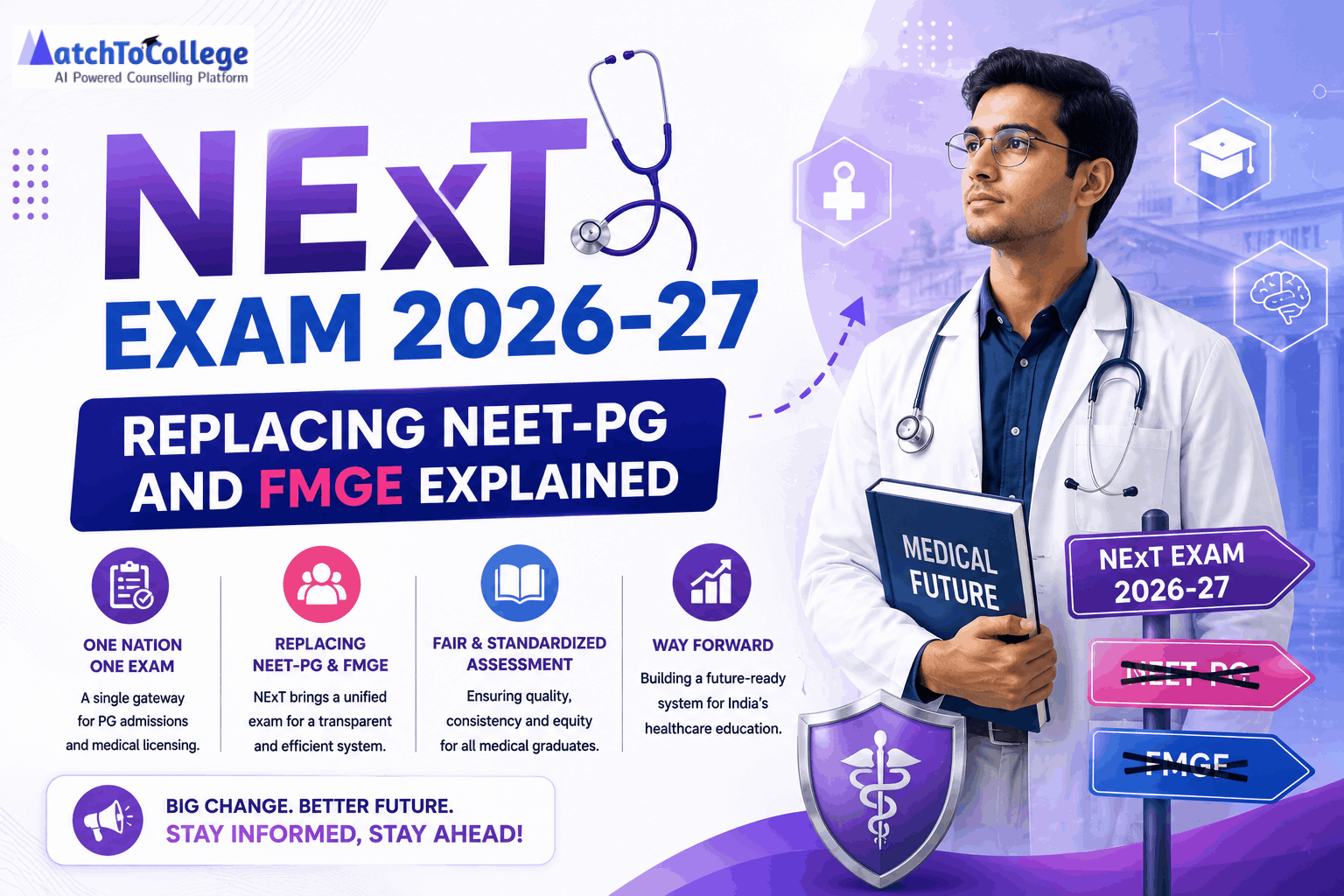
The Future of Medical Licensing: Understanding the NExT Shift
The landscape of Indian medical education is undergoing its most significant transformation in decades. For years, the National Eligibility cum Entrance Test for Postgraduates (NEET-PG) and the Foreign Medical Graduate Examination (FMGE) have been the primary hurdles for medical students aiming to practice or specialize in India. However, with the implementation of the National Medical Commission (NMC) Act, the National Exit Test (NExT) is set to become the single window for licensing and postgraduate entrance. Specifically for the 2026-27 batches, this shift isn't just a change in name; it's a fundamental overhaul of how medical competency is measured in the country.
As an AI-powered counseling platform, MatchToCollege recognizes that this transition creates a mix of anxiety and curiosity among medical aspirants. The NExT exam aims to standardize medical education across India, ensuring that whether a student graduates from a premier AIIMS institute, a state government college, or a foreign medical university, they meet a unified benchmark of clinical excellence.
This blog provides an in-depth analysis of how NExT will replace existing exams, the two-step structure of the test, and what the 2026-27 medical cohort needs to do to stay ahead of the curve.
By integrating clinical reasoning with theoretical knowledge, NExT moves away from rote memorization toward a practical, patient-centric approach. For students currently in their second or third year of MBBS, understanding the nuances of NExT Step 1 and Step 2 is no longer optional—it is the foundation of their future career. In the following sections, we will break down the timelines, the syllabus shift, and the strategic preparation required to master this new system.
The Evolution: Why NExT is Replacing NEET-PG and FMGE
For decades, the Indian medical system operated on a fragmented examination model. Indian graduates focused on university exams followed by NEET-PG for specialization, while those who studied abroad had to clear the FMGE to earn the right to practice in their home country. This dual system often led to discrepancies in the quality of doctors and created a 'brain drain' or 'status gap' between domestic and foreign graduates. The introduction of NExT serves as a 'great equalizer.' By 2026-27, the National Medical Commission (NMC) intends to phase out both NEET-PG and FMGE, replacing them with a singular, comprehensive assessment that every MBBS graduate must clear to obtain a permanent registration number.
The primary driver behind this change is the need for a 'minimum standard' of healthcare delivery. Under the old system, NEET-PG was largely a selection tool for limited postgraduate seats, often rewarding those who could memorize the most facts. NExT, however, is designed as a qualifying-cum-competitive exam. It ensures that any doctor treating an Indian citizen has demonstrated a specific level of clinical proficiency. For the 2026-27 batch, this means their final year university exams will effectively be replaced by NExT Step 1, making the stakes higher than ever. It also streamlines the process for Foreign Medical Graduates (FMGs), who will no longer be seen as a separate category but will take the same exit test as their Indian counterparts, fostering a more inclusive medical community.
Furthermore, this transition addresses the issue of varying standards across different medical colleges. Some colleges have rigorous internal assessments, while others might be more lenient. NExT ensures that the 'MBBS' tag carries the same weight and clinical value regardless of the institution's location or prestige. For students, this means that preparation must begin much earlier, focusing on integrated clinical modules rather than isolated subjects. The 2026-27 timeline is strategic, allowing enough lead time for the infrastructure to be digitized and for the syllabus to be finalized by the NMC, ensuring a smoother transition for the first full-scale implementation of the test.
Decoding the Structure: NExT Step 1 and NExT Step 2
The NExT exam is divided into two distinct phases, each serving a unique purpose in a doctor's journey. NExT Step 1 is a theoretical, computer-based examination consisting of multiple-choice questions (MCQs). It is designed to be taken after the completion of the final year of the MBBS program but before the start of the mandatory internship. The scores from Step 1 are critical because they serve two purposes: they act as the qualifying criteria to enter the internship phase and they provide the rank used for PG seat allocation in various clinical specialties. The subjects covered include Medicine and allied subjects, Surgery and allied subjects, Obstetrics and Gynecology, Pediatrics, Otorhinolaryngology, and Ophthalmology.
The complexity of Step 1 lies in its question format. Unlike traditional exams that might ask for a direct definition, NExT Step 1 focuses on clinical vignettes. A student might be given a patient history, lab results, and imaging, and then asked to determine the next best step in management. This requires a deep, horizontal and vertical integration of pre-clinical, para-clinical, and clinical subjects. For the 2026-27 aspirants, this means they cannot afford to ignore subjects like Anatomy or Pharmacology, as they form the 'why' behind the clinical 'what' tested in Step 1. The focus is 10% on basic sciences, 10% on preventive and social medicine, and 80% on clinical applications.
NExT Step 2, on the other hand, is a practical/clinical examination that takes place after the completion of the one-year internship. This is a pass/fail exam and does not contribute to the PG ranking, but it is mandatory for obtaining a permanent license to practice. It involves OSCE (Objective Structured Clinical Examination) and traditional practical cases. The exam tests the candidate’s communication skills, clinical examination techniques, and bedside manners. By splitting the assessment into theory (Step 1) and practice (Step 2), the NMC ensures that doctors are not just 'book smart' but are also capable of handling real-world patient interactions and procedures with precision and empathy.
Share this Article
FAQFrequently Asked Questions
Q: Will NEET-PG be completely abolished for the 2026-27 batch?
Yes, as per the National Medical Commission's roadmap, NExT will replace NEET-PG as the primary entrance exam for postgraduate medical courses in India for the 2026-27 cycle.
Q: Does NExT apply to students studying MBBS abroad?
Absolutely. NExT replaces the FMGE. Foreign Medical Graduates must clear NExT Step 1 and Step 2 to obtain their license to practice in India and to apply for PG seats.
Q: What happens if I fail NExT Step 2 but pass Step 1?
If you fail NExT Step 2, you cannot obtain a permanent registration/license or your degree. You must retake and pass Step 2, though your Step 1 score for PG ranking will remain valid for a specified period.
Q: Is the syllabus for NExT different from NEET-PG?
While the core subjects remain the same, the focus of NExT is significantly more clinical. It emphasizes clinical problem-solving and integrated system-based knowledge rather than isolated theoretical facts.
Q: How many times can I attempt the NExT exam?
There is currently no limit on the number of attempts for NExT Step 1, provided you complete the entire process within the timeframe stipulated by the NMC. However, students will likely aim to minimize attempts to secure PG seats early.
Top Colleges Covered in this Blog

The All India Institutes of Medical Sciences (AIIMS) is a group of autonomous government public medical universities of higher education under the jurisdiction of Ministry of Health and Family Welfare, Government of India. These institutes have been declared by an Act of Parliament as Institutes of National Importance. AIIMS New Delhi, the forerunner institute, was established in 1956. Since then, 24 more institutes were announced. As of January 2023, twenty institutes are operating and four more are expected to become operational until 2025. Proposals were made for six more AIIMS under the leadership of Narendra Modi. It is considered as pioneer health institution of Asia.
Total Fees
₹1K - ₹8K
Total Courses
17
Get More Info About NExT Exam 2026-27
Recommended Reading
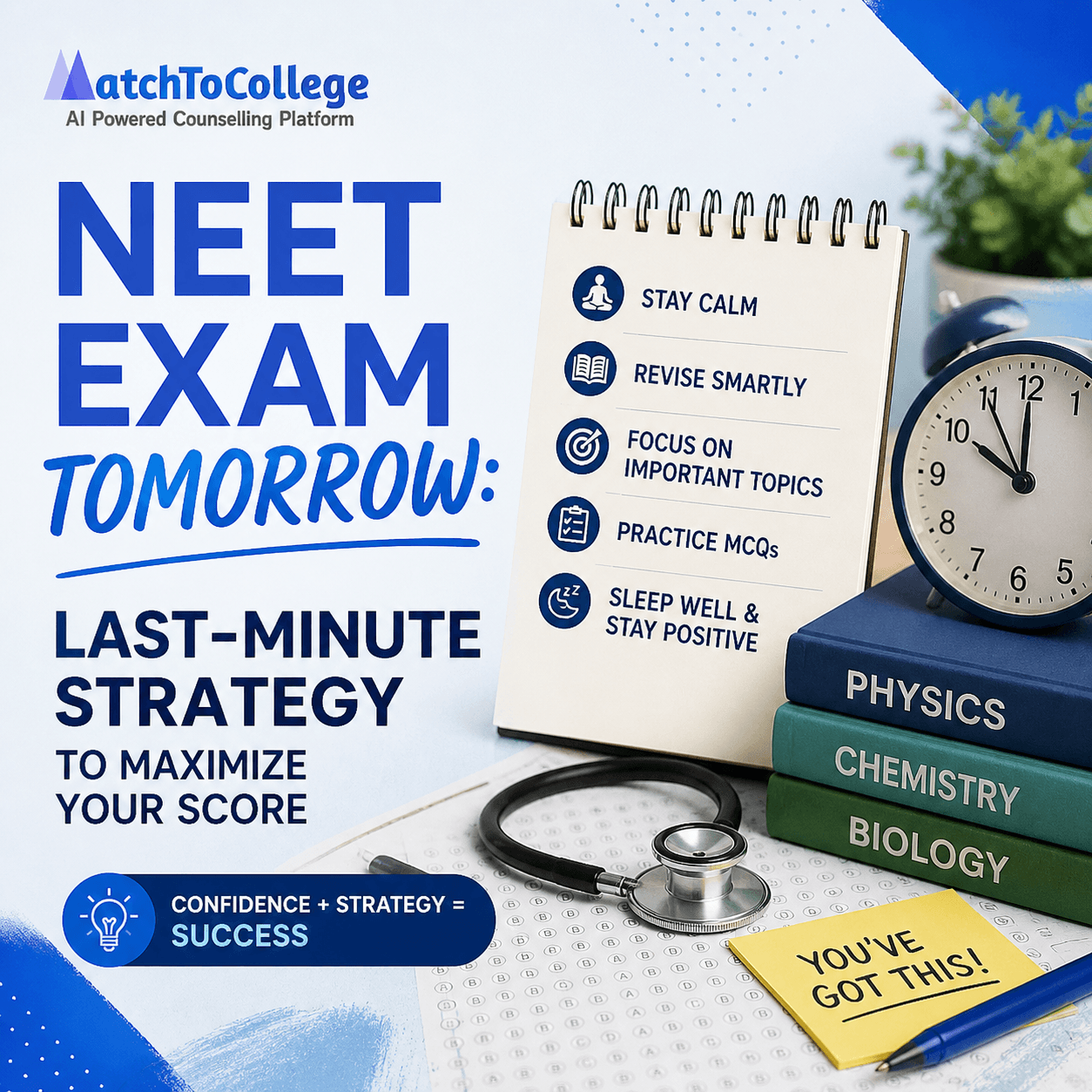
NEET Exam Tomorrow: Last-Minute Strategy to Maximize Your Score
NEET is tomorrow—here’s your complete last-day strategy covering revision, exam hall tips, and mistakes to avoid for maximum accuracy and performance.
GATE Previous Year Question Papers with Official Answer Keys (2007–2026) – Download PDF by Branch
Download official GATE previous year question papers with answer keys PDF from 2007 to 2026. Access branch-wise question papers for Computer Science (CS), Data Science (DA), Mechanical (ME), Electronics (EC), Electrical (EE), and Civil (CE) by IIT Madras.
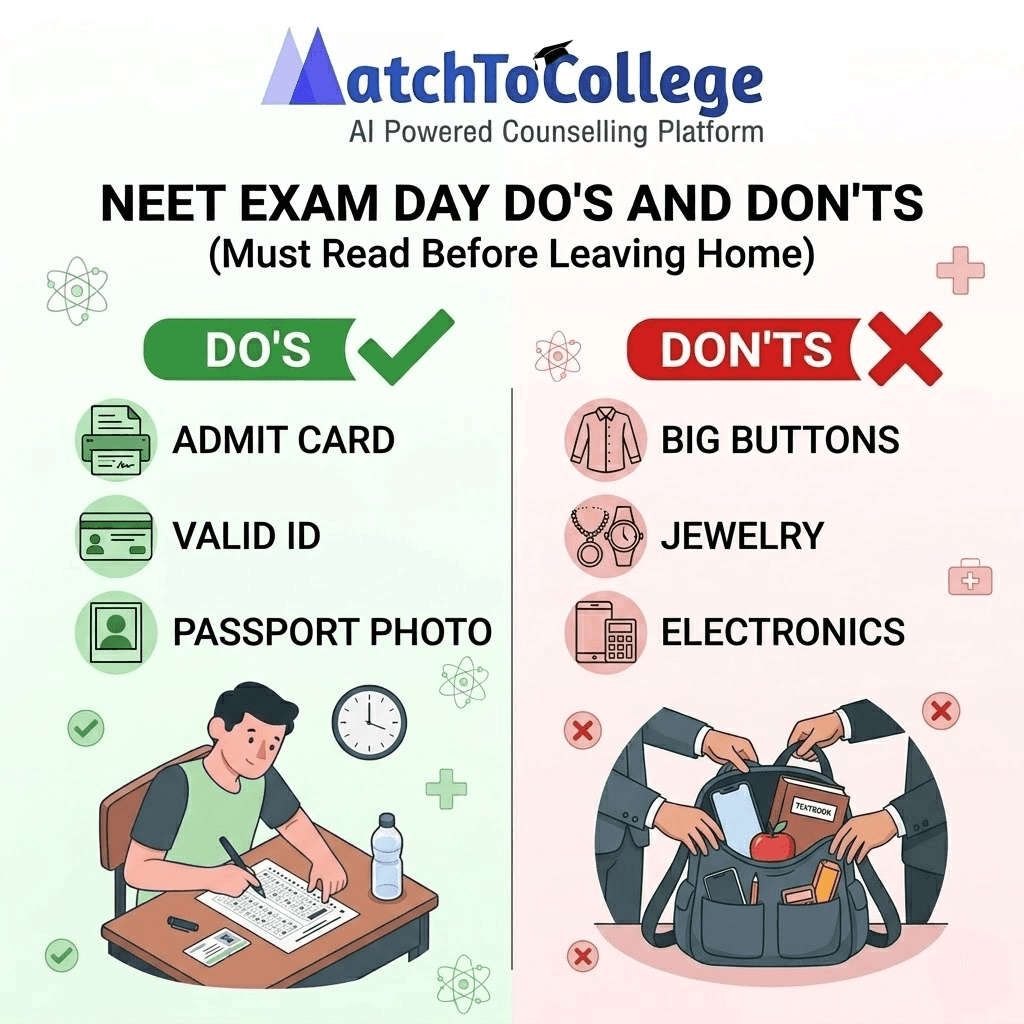
NEET Exam Day Do’s and Don’ts (Must Read Before Leaving Home)
Students appearing for the National Eligibility cum Entrance Test (NEET) must follow strict exam day guidelines set by the National Testing Agency. From required documents and dress code to prohibited items, this guide covers the most important NEET exam day do’s and don’ts to help candidates avoid last-minute problems at the exam center.