

Medical PG After MBBS Abroad: USMLE, UKMLA & AMC Guide 2026
Admission & Info Tools
Need Expert Assistance?
Our counselors can help you with fee structures, eligibility guidelines, and upcoming admission cutoffs instantly.
Direct Application Tools
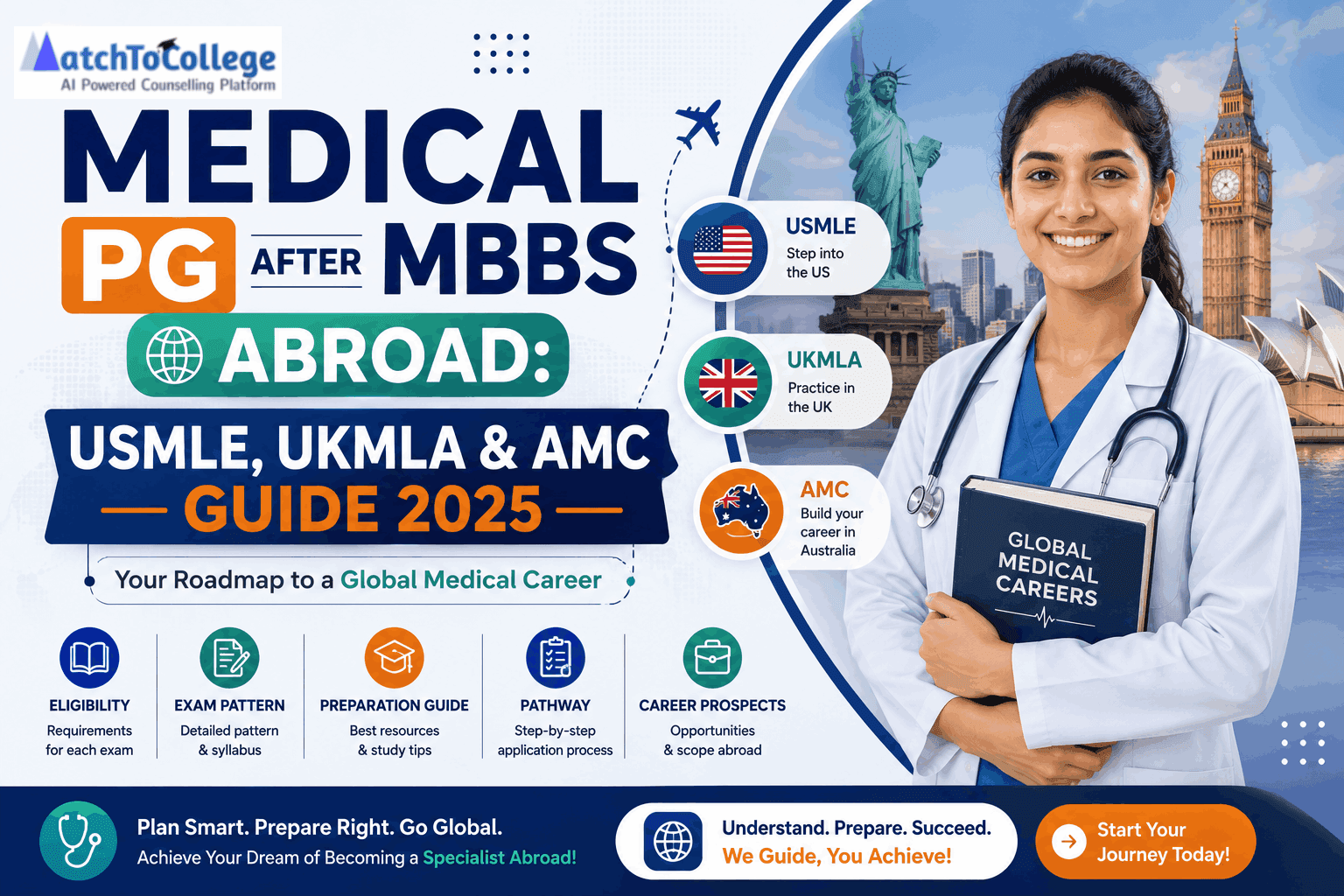
As of 2024, the Educational Commission for Foreign Medical Graduates (ECFMG) has officially implemented its new Medical School Accreditation Policy, which mandates that medical schools must be accredited by an agency recognized by the World Federation for Medical Education (WFME) for their graduates to be eligible for ECFMG certification.
This change specifically impacts thousands of students currently enrolled in MBBS abroad programs who intend to pursue residency in the United States. Simultaneously, the United Kingdom is transitioning from the Professional and Linguistic Assessments Board (PLAB) test to the UK Medical Licensing Assessment (UKMLA), creating a shifting landscape for International Medical Graduates (IMGs).
These regulatory shifts mean that the choice of an undergraduate medical university is no longer just about the quality of the immediate curriculum, but about the long-term eligibility for postgraduate (PG) specialization. MatchToCollege monitors these accreditation status changes in real-time, ensuring that the universities listed on our platform maintain the necessary WFME or ECFMG-recognized status required for these specific pathways.
The pursuit of a Medical PG in the USA, UK, or Australia requires a calculated approach to licensing exams, clinical rotations, and credential verification. For instance, the USMLE Step 1 has transitioned to a Pass/Fail system, placing significantly more weight on the USMLE Step 2 Clinical Knowledge (CK) score for residency matching through the National Resident Matching Program (NRMP). In the UK, the NHS is increasingly looking for IMGs to fill vacant training posts, but the competition for 'Foundation Year 2' standalone posts remains high. Meanwhile, Australia’s AMC pathway remains a rigorous route, requiring EPIC (Electronic Portfolio of International Credentials) verification before an applicant can even sit for the AMC Part 1 MCQ exam.
Understanding these nuances is critical because the financial investment is substantial; a typical USMLE journey, including exam fees, resources, and clinical electives, can cost upwards of $15,000 to $20,000 USD before a single residency paycheck is earned.
Furthermore, the temporal aspect of these pathways cannot be ignored. A student graduating from an MBBS program in Georgia or Kazakhstan might face a 12 to 18-month gap while preparing for Step 2 CK or waiting for a PLAB 2 seat, which are currently in high demand and often fully booked months in advance.
Our data at MatchToCollege shows that students who begin their USMLE Step 1 preparation in their third year of MBBS have a 40% higher probability of matching into their preferred specialty on the first attempt compared to those who start after graduation. This blog provides a forensic breakdown of the requirements, costs, and strategic timelines for the three most prominent medical PG destinations globally, allowing you to map your trajectory from an international medical student to a licensed specialist.
The USMLE Pathway: Navigating ECFMG's 2024 Accreditation Standards
The United States Medical Licensing Examination (USMLE) remains the most competitive and rewarding pathway for IMGs. However, the 2024 ECFMG accreditation rule is the most significant hurdle in recent history. If your medical school is not accredited by a WFME-recognized agency, you cannot apply for the USMLE.
At MatchToCollege, we verify the accreditation status of international medical universities against the World Directory of Medical Schools (WDOMS) and WFME lists to ensure our students aren't blocked from the US residency match. Beyond accreditation, the shift of USMLE Step 1 to Pass/Fail has fundamentally changed how residency directors evaluate candidates. Your Step 2 CK score is now the primary metric for academic filters, with scores above 250 being the benchmark for competitive specialties like Internal Medicine or Pediatrics, while surgical branches often require 260+.
The USMLE process is divided into three main steps, but for IMGs, the 'Match' is the ultimate goal. To be ECFMG certified, you must pass Step 1, Step 2 CK, and meet specific clinical skills requirements, often through OET (Occupational English Test) and the ECFMG Pathways. After certification, you enter the NRMP Match in September. A critical component that many students overlook is US Clinical Experience (USCE).
Most programs require at least 3 months of hands-on electives in US hospitals to provide Letters of Recommendation (LoRs) from US-based physicians. This is a high-cost endeavor, often requiring $2,000 to $5,000 per month in tuition and living expenses. To understand the financial commitment versus the high salaries of US residents (typically starting at $65,000 - $70,000), you should use our Calculate Your University ROI Compare tool to model your long-term earnings against these upfront costs.
Timing is everything in the USMLE cycle. If you miss the September application deadline for ERAS (Electronic Residency Application Service), you lose an entire year. Therefore, IMGs are advised to complete Step 1 by the end of their 4th year of MBBS and Step 2 CK by the time they graduate. This allows for a 'straight-through' transition into the US residency system without a gap year. MatchToCollege tracks these specific application windows to ensure students are synchronized with the NRMP schedule. We also provide insights into which US states are 'IMG-friendly,' such as New York, New Jersey, and Florida, which historically take a higher percentage of international graduates into their teaching hospitals.
Share this Article
FAQFrequently Asked Questions
Q: Does USMLE Step 1 being Pass/Fail make it easier for IMGs?
While it reduces the pressure of achieving a high numeric score, it actually makes the pathway more challenging for IMGs. Previously, a high Step 1 score was a key way to stand out. Now, you must excel in Step 2 CK and secure high-quality US Clinical Experience (USCE) to prove your clinical competence to residency directors.
Q: Can I switch from the PLAB pathway to the USMLE pathway later?
Yes, but it is expensive and time-consuming. The clinical knowledge overlaps, but the exam formats and residency application cycles are entirely different. It is generally advised to pick one primary goal by your 4th year of MBBS to maximize your resources and preparation time.
Q: Is the AMC Part 2 Clinical Exam mandatory to work in Australia?
Not strictly mandatory for initial employment. You can often find jobs as a 'Service Registrar' or 'Resident' with just AMC Part 1 and English proficiency, working under 'Limited Registration.' However, to gain General Registration and enter a formal Specialist Training program, you will eventually need to pass AMC Part 2 or complete Workplace Based Assessment (WBA).
Q: How do I know if my university is WFME accredited for 2026 USMLE eligibility?
You must check the World Directory of Medical Schools (WDOMS). Look for the 'Sponsor Notes' tab for your specific school; it must state that the school is currently accredited by an agency recognized by WFME. MatchToCollege performs these checks for all colleges listed on our platform.
Get More Info About Medical PG After MBBS Abroad
Recommended Reading
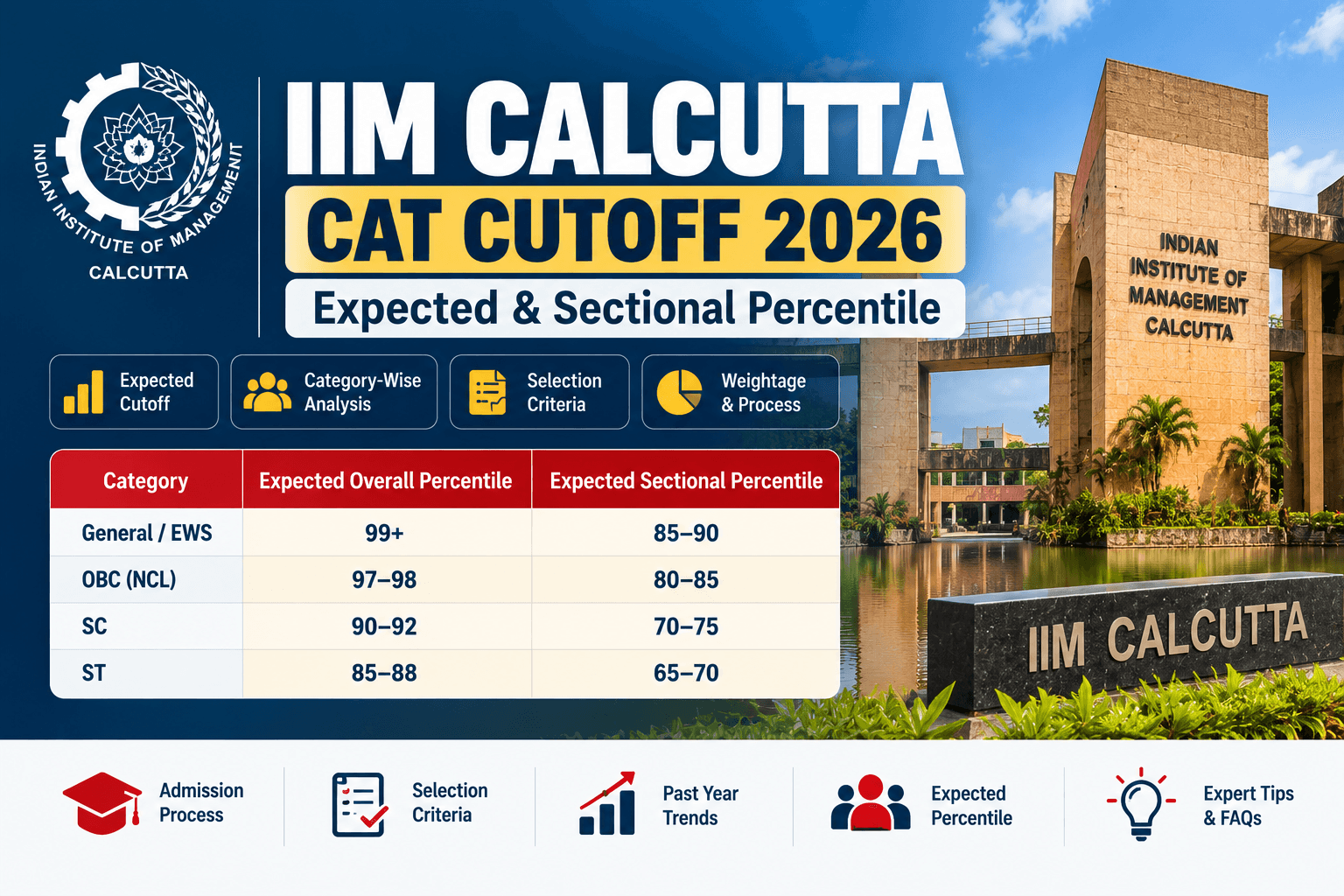
IIM Calcutta CAT Cutoff 2026: Expected & Sectional Percentile
IIM Calcutta CAT Cutoff 2026: Check the expected overall and sectional percentile, category-wise qualifying cutoff, selection criteria, CAT weightage and admission process for the 2027–29 MBA batch.
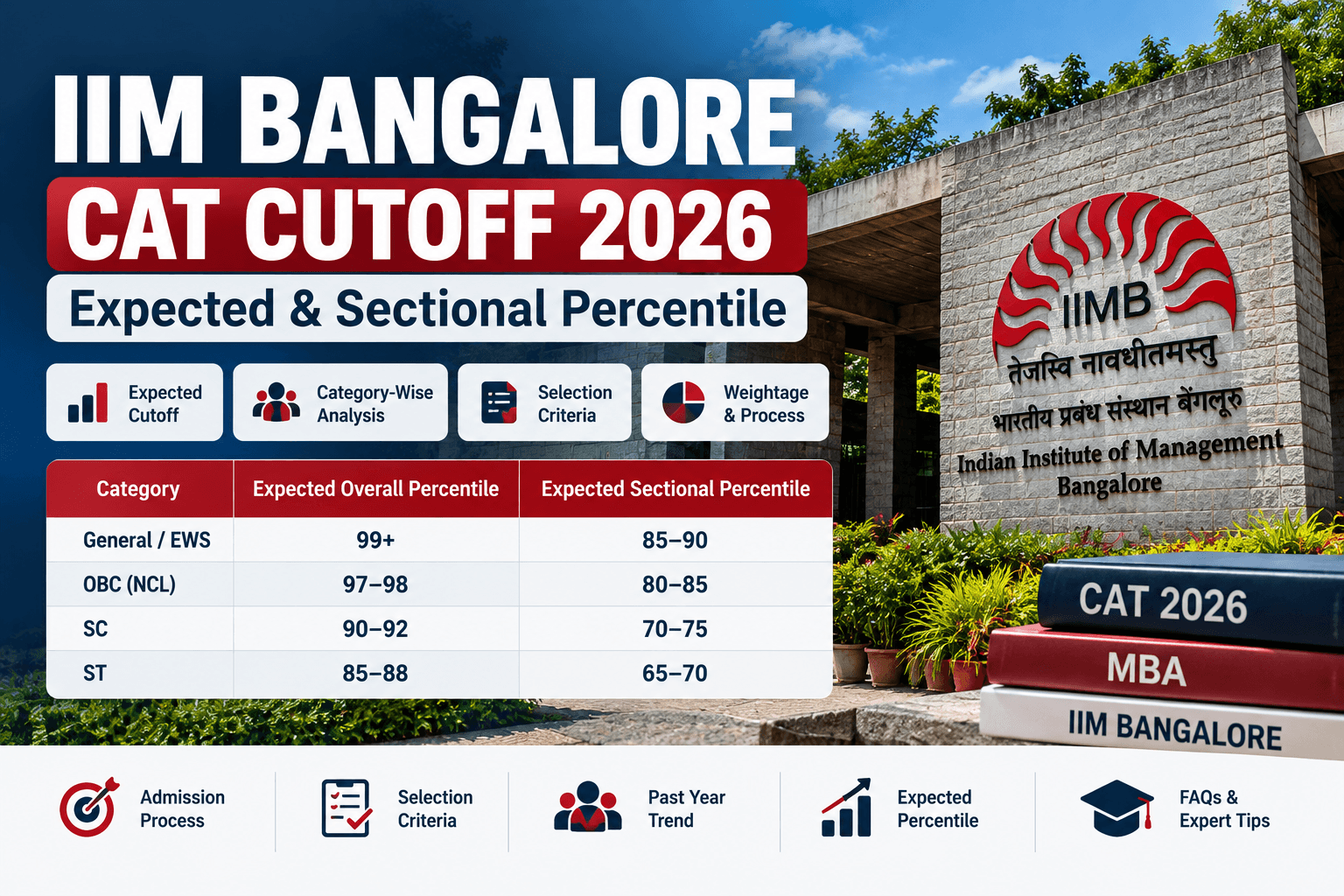
IIM Bangalore CAT Cutoff 2026: Expected & Sectional Percentile
IIM Bangalore CAT Cutoff 2026: Check the expected overall and sectional percentile, category-wise qualifying cutoff, selection criteria, CAT weightage and admission process for the 2027–29 MBA batch.
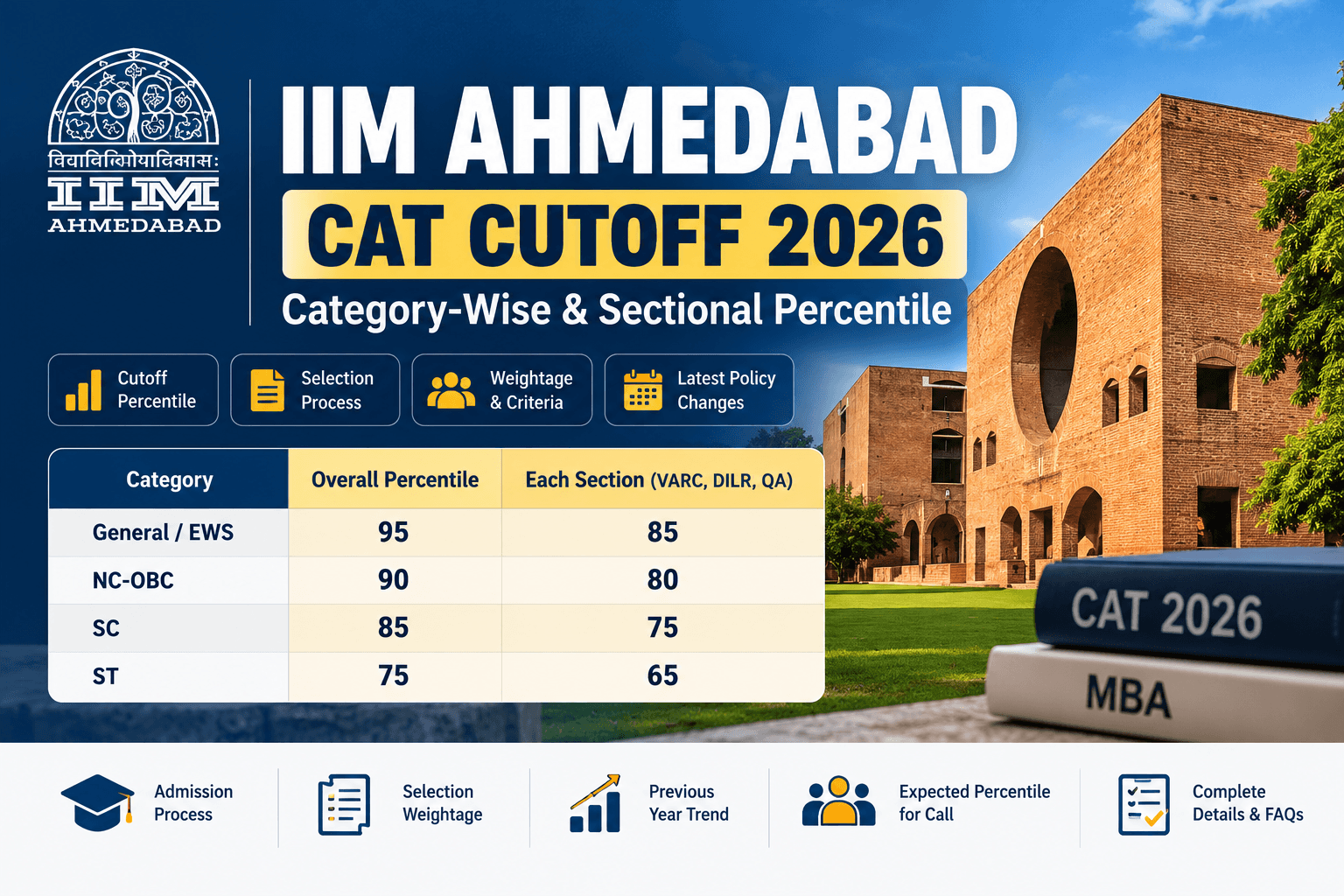
IIM Ahmedabad CAT Cutoff 2026: Expected & Sectional Percentile
Quick answer: For the PGP 2027–29 batch (CAT 2026), IIM Ahmedabad's minimum cutoff is 95 percentile overall and 85 in each section for General/EWS candidates. Reports of the revised policy say the cutoffs are unchanged from the previous cycle, which had already jumped from 80/70 the year before. Clearing the minimum only makes you eligible; it does not guarantee an interview call.