

MBBS in Georgia 2026: Total Cost & Fee Structure Breakdown
Admission & Info Tools
Need Expert Assistance?
Our counselors can help you with fee structures, eligibility guidelines, and upcoming admission cutoffs instantly.
Direct Application Tools
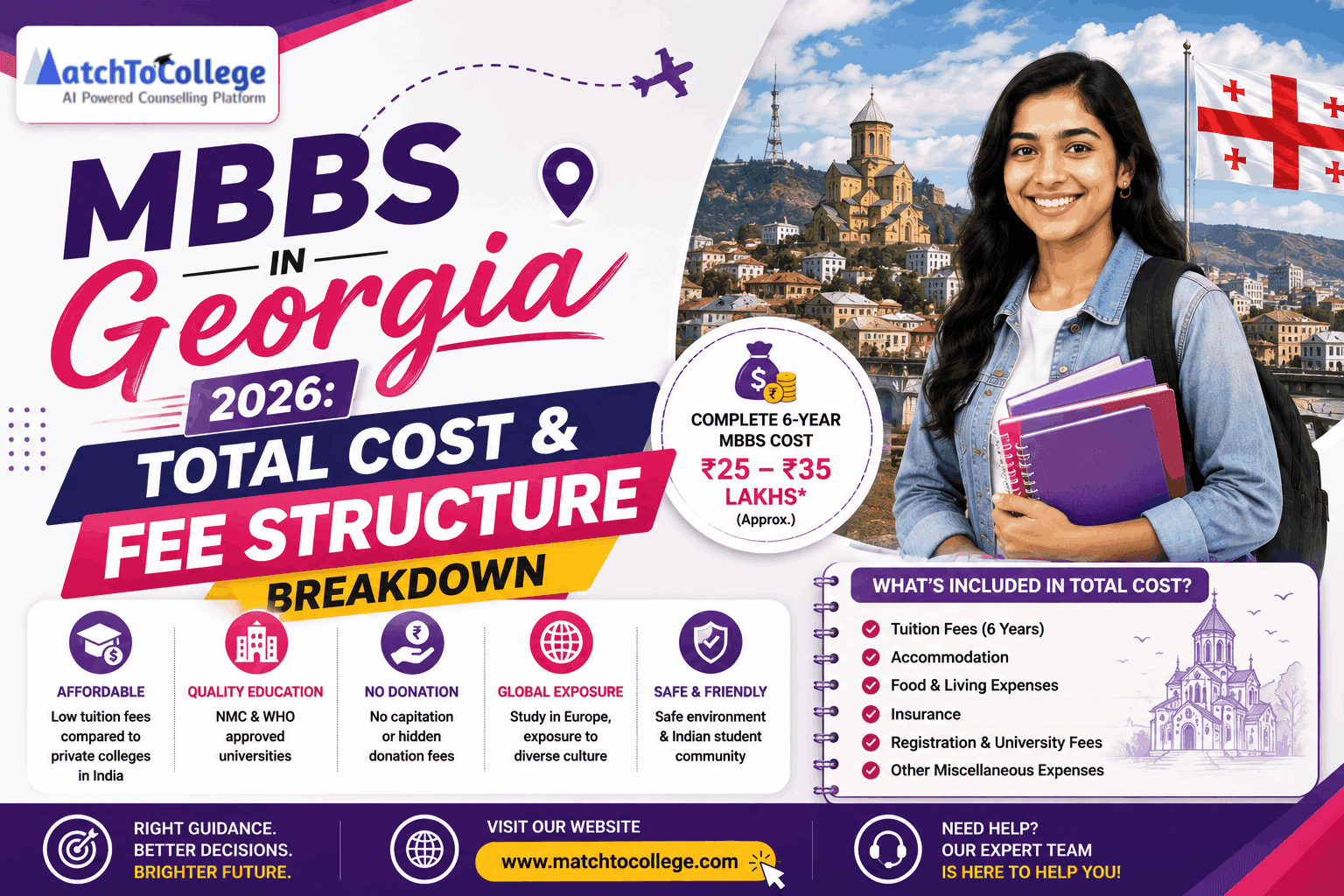
As of the 2026 academic cycle, the total expenditure for an MBBS degree in Georgia ranges from 28,00,000 INR to 45,00,000 INR for the entire six-year duration. Unlike many other European destinations, Georgia does not require a donation or capitation fee, making it a primary choice for students who qualify for NEET but cannot secure a seat in Indian government colleges.
At MatchToCollege, we track the specific tuition hikes across top-tier institutions like Tbilisi State Medical University and Batumi Shota Rustaveli State University to provide students with a realistic 2026 financial roadmap. Understanding the difference between state-funded and private medical universities in Georgia is critical, as tuition can vary by as much as $3,000 USD per annum. Before committing to a foreign currency expense, many students use our NEET 2026 Rank Predictor to gauge their chances of staying in India versus the financial commitment required for a Georgian medical license.
Georgia's medical education complies strictly with the National Medical Commission (NMC) Foreign Medical Graduate Licentiate (FMGL) Regulations 2021, which mandate a 54-month course followed by a 12-month clinical internship within the same institution. This six-year commitment means that your budget must account for 72 months of living expenses, insurance, and visa renewals.
Furthermore, while the medium of instruction is English, the administrative costs of learning the Georgian language (Kartuli) for clinical rotations are often overlooked in initial estimates. This breakdown provides a granular view of every dollar and lari you will spend from the day you land in Tbilisi or Batumi until you receive your degree in 2032.
Tier-Wise Tuition Fees for the 2026 Academic Intake
Tuition fees in Georgia are generally pegged to the US Dollar (USD), which means Indian students must account for currency fluctuations over a six-year period. For the 2026 intake, top-ranked government universities like Tbilisi State Medical University (TSMU) are expected to maintain a fee structure around $8,000 USD per year. In contrast, private universities such as New Vision University or European University offer competitive rates ranging from $5,000 to $7,000 USD.
It is vital to note that some universities offer a fixed fee structure for all six years, while others may implement a 5-10% annual increase. Our team at MatchToCollege monitors these specific contractual clauses in university admission letters to ensure students are not surprised by mid-course hikes.
When comparing these costs, students should utilize the University ROI Calculator to see how the investment in a Georgian degree compares to private Indian medical colleges, where the total cost can often exceed 80,00,000 INR.
In Georgia, the lower tuition fee does not equate to lower quality; rather, it reflects the state's subsidy of education and the lower cost of local operations. However, students must ensure the university they choose is recognized by the World Directory of Medical Schools (WDOMS) and the ECFMG to ensure they can sit for the USMLE or PLAB exams later. The 2026 fee structure usually includes laboratory fees and library access, but often excludes textbooks and examination retake fees, which can cost between $50 and $100 per instance.
Monthly Living Expenses: Tbilisi vs. Batumi vs. Kutaisi
The cost of living in Georgia is heavily dependent on the city of residence. Tbilisi, being the capital and the largest hub for medical students, is the most expensive. A student living in the Saburtalo district (near many medical faculties) can expect to pay between $300 and $500 USD per month for a shared apartment, utilities, and groceries.
In contrast, cities like Batumi or Kutaisi offer a slightly lower cost of living, with monthly expenses averaging $250 to $400 USD. Utility bills, including electricity, water, and the essential winter heating (gas), typically range from $40 to $70 USD depending on the season. It is a common mistake for students to overlook the heating costs during the harsh Georgian winters from December to February.
Food and transportation are relatively affordable.
A monthly 'Metromoney' card for the Tbilisi Metro and buses costs only a few dollars, providing unlimited travel. For groceries, shopping at local chains like Carrefour or Ori Nabidji can keep food costs around $150 USD monthly. For students who prefer university hostels, the cost is significantly lower, usually between $2,000 and $3,000 USD per year, though availability for the 2026 session is expected to be tight due to the rising number of international applicants.
To manage these recurring costs, we recommend using the Education Loan EMI Calculator to factor in a buffer for monthly maintenance alongside your tuition loan. This ensures that your loan amount covers not just the university payments but also your survival expenses in a foreign country.
Share this Article
FAQFrequently Asked Questions
Q: Can I pay the Georgia MBBS fees in installments for the 2026 session?
Yes, most Georgian universities, including East European University and Caucasus International University, allow students to pay tuition fees in two installments per academic year (per semester). However, the first year's fee is often required in full to secure the visa invitation letter.
Q: Is the cost of the 1-year internship included in the 6-year fee structure?
In most Georgian medical universities, the 6th year is considered the internship year, and the tuition fee for this year is usually the same as the previous years. Under NMC 2021 rules, you must complete this in Georgia to be eligible for registration in India.
Q: What is the average cost of a student hostel in Tbilisi in 2026?
A standard university hostel or private student dormitory in Tbilisi costs between $200 and $300 USD per month. This usually includes basic utilities and Wi-Fi, but excludes food.
Get More Info About MBBS in Georgia 2026
Recommended Reading

NEET Exam Tomorrow: Last-Minute Strategy to Maximize Your Score
NEET is tomorrow—here’s your complete last-day strategy covering revision, exam hall tips, and mistakes to avoid for maximum accuracy and performance.
GATE Previous Year Question Papers with Official Answer Keys (2007–2026) – Download PDF by Branch
Download official GATE previous year question papers with answer keys PDF from 2007 to 2026. Access branch-wise question papers for Computer Science (CS), Data Science (DA), Mechanical (ME), Electronics (EC), Electrical (EE), and Civil (CE) by IIT Madras.
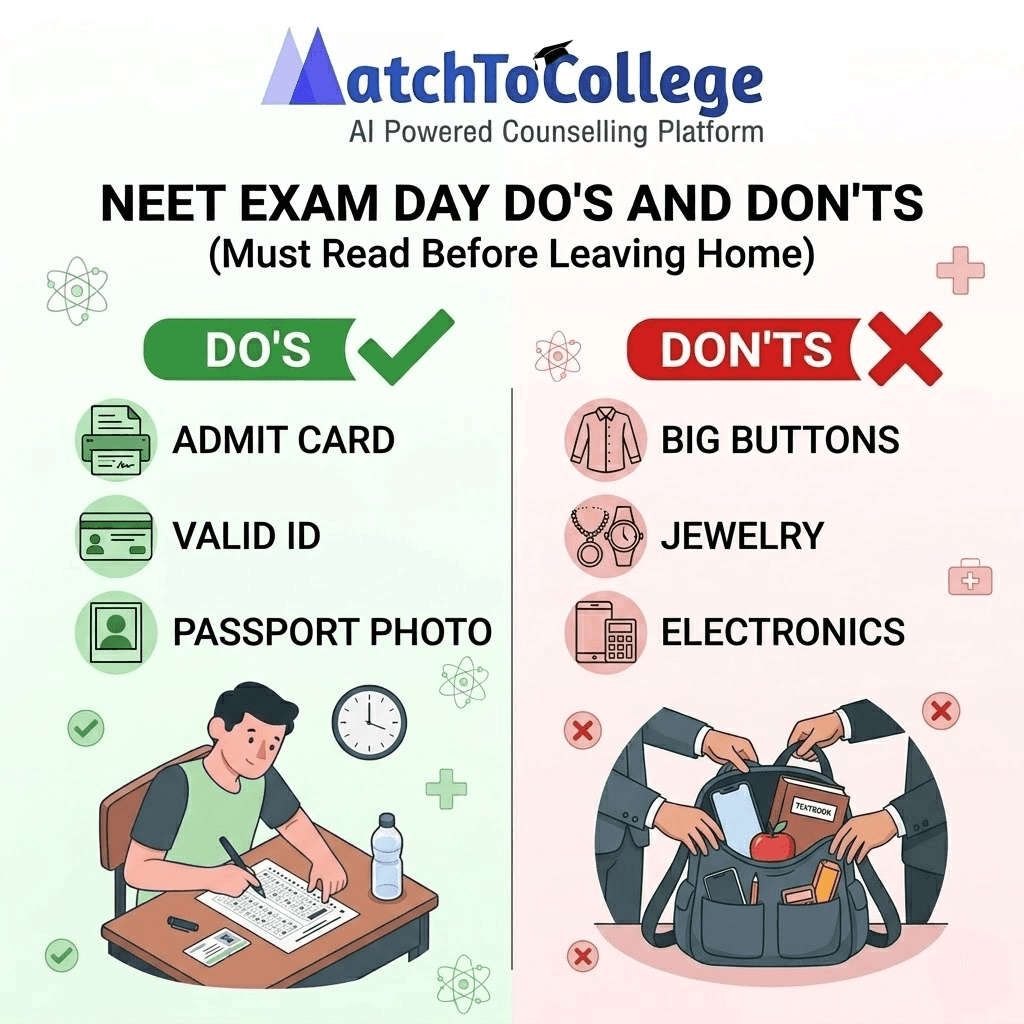
NEET Exam Day Do’s and Don’ts (Must Read Before Leaving Home)
Students appearing for the National Eligibility cum Entrance Test (NEET) must follow strict exam day guidelines set by the National Testing Agency. From required documents and dress code to prohibited items, this guide covers the most important NEET exam day do’s and don’ts to help candidates avoid last-minute problems at the exam center.