

MBBS Cost Calculator: Total Fees, Hostel & Hidden Costs
Admission & Info Tools
Need Expert Assistance?
Our counselors can help you with fee structures, eligibility guidelines, and upcoming admission cutoffs instantly.
Direct Application Tools
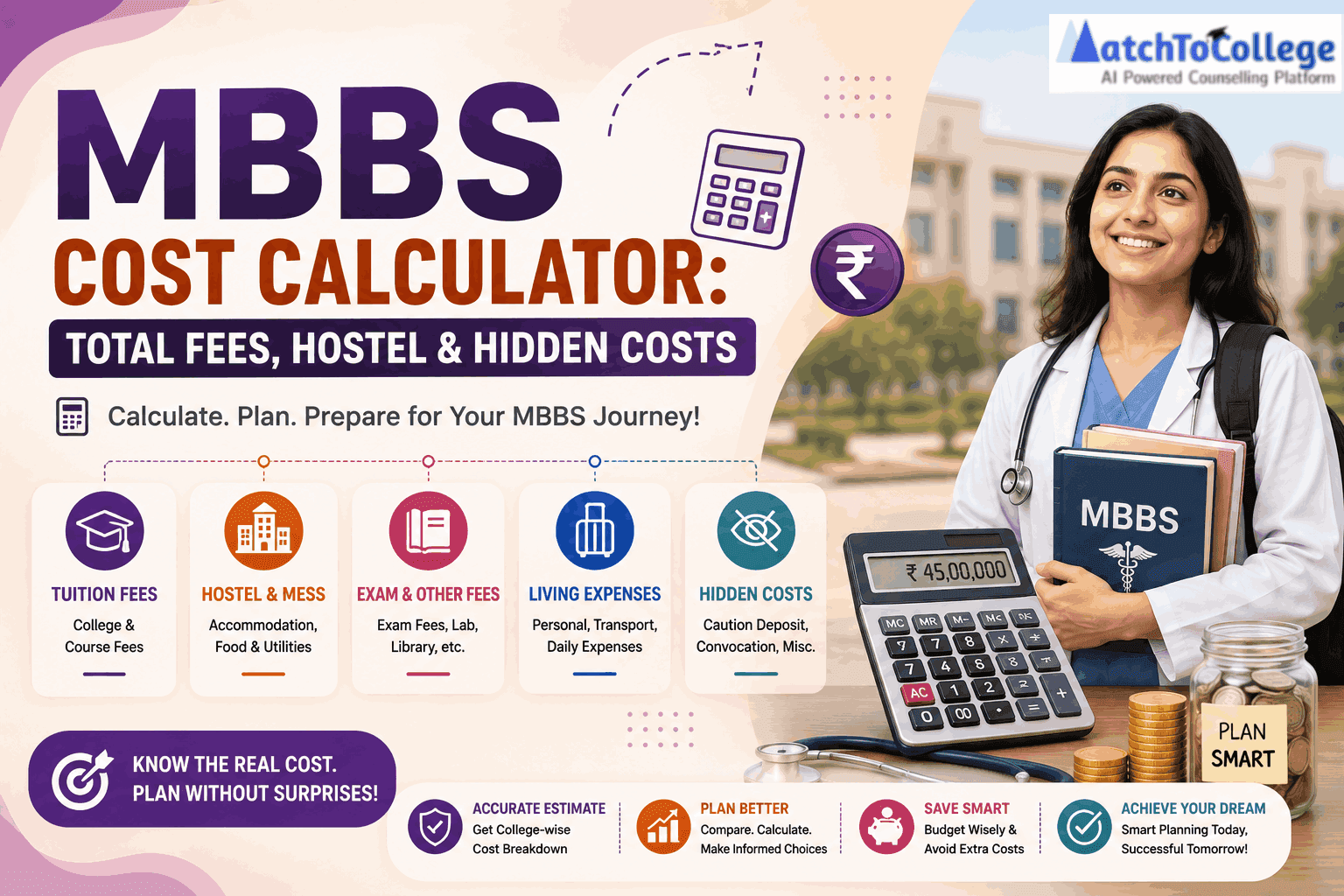
Embarking on a journey to become a doctor is one of the most noble and ambitious career paths a student can choose. However, the path to earning an MBBS degree is often paved with significant financial considerations that extend far beyond simple tuition fees. For many Indian families, understanding the Total MBBS Cost Calculator is the first step toward making a dream a reality. Whether you are aiming for a seat in a prestigious government medical college or considering private institutions, the financial landscape can be complex and intimidating.
This is where strategic planning and the right tools come into play. At MatchToCollege, we aim to simplify this process by breaking down every rupee you will spend over the 5.5 years of your medical education. Before you dive into the numbers, it is essential to have a clear idea of where you stand academically. We recommend using our NEET College Predictor to identify which institutions are within your reach based on your performance. Knowing your target college allows for a much more accurate financial forecast.
The cost of an MBBS degree in India varies dramatically. Government medical colleges offer highly subsidized education, often costing less than 1 lakh per year. Conversely, private medical colleges and deemed universities can range from 10 lakhs to over 25 lakhs annually. This massive disparity makes it crucial to use a systematic MBBS cost calculator approach that factors in tuition, hostel fees, security deposits, and miscellaneous expenses like books, instruments, and clinical attire.
To get an early estimate of your standing and potential college category, you can Predict Your NEET 2026 Rank Instantly using our advanced AI algorithm. This rank is the ultimate currency in the medical admission market and dictates whether you will be paying a few thousands or several millions for your degree.
Furthermore, calculating the cost isn't just about the first year; it is about the entire duration of the course, including the internship period. Many students overlook the inflationary aspects of mess charges and annual fee hikes in private institutions. By utilizing resources like the NEET OMR Score Calculator, you can verify your raw scores immediately after the exam, giving you a head start in financial planning.
Planning your finances early ensures that you don't face a liquidity crisis mid-course. In the following sections, we will dissect the three pillars of MBBS expenditure: Tuition, Accommodation, and the often-ignored Miscellaneous costs, providing you with a comprehensive roadmap for your medical education budget.
Decoding the Tuition Fee Structure: Government vs. Private
Tuition fees form the largest chunk of the total MBBS cost. In India, medical colleges are broadly categorized into Government, Private, and Deemed Universities. Government medical colleges (GMCs) are the most sought-after due to their high patient inflow and extremely low tuition fees.
Under the All India Quota (AIQ) and State Quota, the annual tuition in a GMC can be as low as ₹10,000 to ₹1,00,000. For students who secure these seats, the financial burden is minimal, allowing them to focus entirely on their studies. If you are aiming for these seats, checking your eligibility via the NEET Result Checker is vital to stay updated on the latest cut-offs and trends.
On the other end of the spectrum, private medical colleges and deemed universities operate on a self-financed model. The tuition fees here are significantly higher, often ranging from ₹12 lakhs to ₹25 lakhs per annum. Some management quota or NRI quota seats can even exceed these figures. When calculating these costs, students often find themselves dealing with large numbers. To make these figures more relatable, you can use our million to lakhs calculator or the million to crore calculator to understand the total investment required over five years. It is not uncommon for a private MBBS degree to cost upwards of ₹1 crore when all factors are considered. This is why having a precise rank estimate is so critical; a difference of a few marks can mean a difference of lakhs in fees. Use the NEET Rank Predictor to see if you can bridge the gap between a private and a semi-government seat.
Additionally, some states have 'semi-government' seats or 'government seats in private colleges' where the fees are subsidized by the state government. These seats are a middle ground for middle-class families. However, competition for these is just as fierce. Understanding the fee regulatory committee (FRC) guidelines in your specific state is essential, as they set the ceiling for private college fees. Always check if the college has a 'bank guarantee' requirement, which is a common practice in many private institutions where you must prove your ability to pay the fees for the entire duration of the course upfront.
Hostel and Mess Charges: The Hidden Recurring Costs
While tuition is the primary expense, hostel and mess charges are recurring costs that can significantly inflate the total MBBS cost. In government colleges, hostel fees are usually nominal, often ranging from ₹5,000 to ₹20,000 per year. However, the quality of infrastructure varies. In contrast, private and deemed universities offer premium hostel facilities—sometimes with AC rooms, attached bathrooms, and high-speed internet—which can cost anywhere from ₹1 lakh to ₹4 lakhs per year. When you multiply this by 5.5 years, the amount becomes substantial.
Mess charges are usually separate from the hostel rent. On average, a healthy diet in a medical college mess costs between ₹3,000 and ₹6,000 per month. This adds another ₹36,000 to ₹72,000 annually to your budget. Many students also opt for external laundry services, gym memberships, or private tiffin services, which further increase the monthly burn rate. If you are planning to fund this through a loan, it is imperative to calculate the interest impact. Our Education Loan EMI Calculator can help you understand what your monthly repayments will look like after you complete your degree and the moratorium period ends.
Moreover, location plays a massive role in these costs. Studying in a metropolitan city like Mumbai, Delhi, or Bangalore will naturally lead to higher living expenses compared to colleges in smaller towns. For those considering colleges in specific regions, using a tool like the IP University College Predictor or the JAC Delhi College Predictor can give you an idea of the colleges available in high-cost-of-living areas. Always remember to factor in an annual increase of 5-10% in mess and hostel charges due to inflation when using your MBBS cost calculator.
Miscellaneous Expenses: Books, Equipment, and Exams
The "Miscellaneous" category in an MBBS budget is often the most underestimated. Medical books are notoriously expensive; a single standard textbook for Anatomy or Harrison’s Internal Medicine can cost several thousand rupees. Over the course of 4.5 years of academics, a student may spend between ₹50,000 and ₹1,00,000 just on books and digital learning subscriptions. Additionally, medical students need specific equipment early on, such as a high-quality stethoscope (e.g., Littmann), a sphygmomanometer, a bone set, and clinical uniforms (aprons and scrubs). These initial setup costs can easily touch ₹20,000 to ₹30,000.
Examination fees are another recurring expense. Every semester or year, universities charge for conducting professional exams, which can range from ₹2,000 to ₹10,000 depending on the university's status. There are also laboratory fees, library fees, and 'amenity' fees that many private colleges add to the annual bill. If you are a student transitioning from a different grading system, perhaps from an international board, you might find our cgpa to percentage calculator or gpa to percentage calculator useful for ensuring your previous academic records meet the eligibility criteria for scholarships that can offset these miscellaneous costs.
Finally, consider the cost of professional development. Most modern medical students use tablets for note-taking and access to online platforms like Marrow or Prepladder for NEET PG preparation from their second or third year. These subscriptions and gadgets are essential in the current competitive landscape but add a significant layer to the total MBBS cost. If you are trying to convert these costs into your local currency or understand the scale, our million to rupees calculator provides a quick conversion for high-value budgeting. Don't forget to include travel costs for going home during vacations, which can be significant if you are studying in a different state.
MBBS Abroad: A Cost-Effective Alternative?
Given the high cost of private medical education in India and the extreme competition for government seats, many students look toward MBBS Abroad as a viable alternative. Countries like Russia, Uzbekistan, Georgia, and Kazakhstan offer MBBS programs where the total cost—including tuition, hostel, and food—is often lower than the tuition fee alone in an Indian private college. A complete 6-year MBBS program in these countries can range from ₹25 lakhs to ₹40 lakhs total.
This makes it an attractive option for students who scored moderately on their NEET exam but still want to pursue their dream.
However, calculating the cost of MBBS abroad requires a different set of tools. You must account for currency fluctuations, visa renewal fees, and annual airfare. While the Education Loan EMI Calculator is still applicable, you should also consider the ROI. After returning, you must clear the FMGE (Foreign Medical Graduates Examination) or the upcoming NExT exam to practice in India. MatchToCollege provides extensive listings of Study Abroad options to help you compare these international costs against domestic ones.
When planning for abroad, the initial registration and consultancy fees should also be included in your total MBBS cost calculator. While the "sticker price" of tuition abroad looks low, ensure you are checking the hidden costs of health insurance and local registration. For students who may be slightly older when starting their journey due to drop years, our Age Calculator can help in checking eligibility for certain foreign universities that have age caps. Always compare the total 6-year outflow of an international degree against the 5.5-year outflow of a domestic one to get a true picture of the financial commitment.
Strategic Financial Planning: Loans, Scholarships, and Tools
Once you have a rough estimate from your MBBS cost calculator, the next step is funding. Most students rely on a combination of family savings and education loans. Education loans for MBBS are widely available, but they require careful scrutiny. Interest rates can vary between 8% and 12%, and since the loan amount is high, the interest accrued during the 5.5-year study period (the moratorium) can be massive. Using an Education Loan EMI Calculator is non-negotiable here. It helps you visualize your financial life post-graduation. Will you be able to afford a PG specialization if you have a massive UG loan? These are the questions MatchToCollege helps you answer.
Scholarships are another vital resource. Many state governments and private foundations offer merit-cum-means scholarships for medical students. If you have a high rank, as predicted by our NEET Rank Predictor, you may be eligible for significant fee waivers. Furthermore, for those who are still undecided if medicine is the right financial and career path, our Career Pathway Matcher can help verify if your strengths align with the demands of a medical career, or if perhaps an Online Course in healthcare management or data science might offer a better University ROI.
To stay organized, keep a spreadsheet of every college you are applying to. Include columns for tuition, hostel, security deposit (refundable), and expected miscellaneous spend. Use our tools like the NEET College Predictor for Maharashtra (or any other state) to narrow down your choices based on your budget and rank. By being proactive and using data-driven tools, you can ensure that your focus remains on your white coat ceremony, rather than on financial stress. Remember, a medical degree is an investment in your future, and like any investment, it requires a calculated approach.
Share this Article
FAQFrequently Asked Questions
Q: What is the average cost of MBBS in a government college in India?
The average tuition fee for MBBS in a government medical college ranges from ₹10,000 to ₹1,00,000 per year. When including hostel and mess, the total annual cost is usually under ₹1.5 to ₹2 lakhs.
Q: Are there any hidden costs in private medical colleges?
Yes, hidden costs can include laboratory fees, library deposits, development fees, examination fees, and mandatory purchase of specific books or equipment. Some colleges also require a bank guarantee for the remaining years' fees.
Q: How can I calculate my education loan EMI for MBBS?
You can use the MatchToCollege Education Loan EMI Calculator. Input your total loan amount, the interest rate, and the tenure (usually 10-15 years) to see your monthly repayment after the course ends.
Q: Is MBBS abroad cheaper than private MBBS in India?
Generally, yes. MBBS in countries like Russia or Kazakhstan can cost between ₹25-40 lakhs total, which is often less than half the cost of a private medical seat in India.
Q: Does the total cost include the internship year?
During the one-year mandatory internship, students usually do not pay tuition fees and instead receive a stipend. However, hostel and mess charges typically still apply.
Top Colleges Covered in this Blog
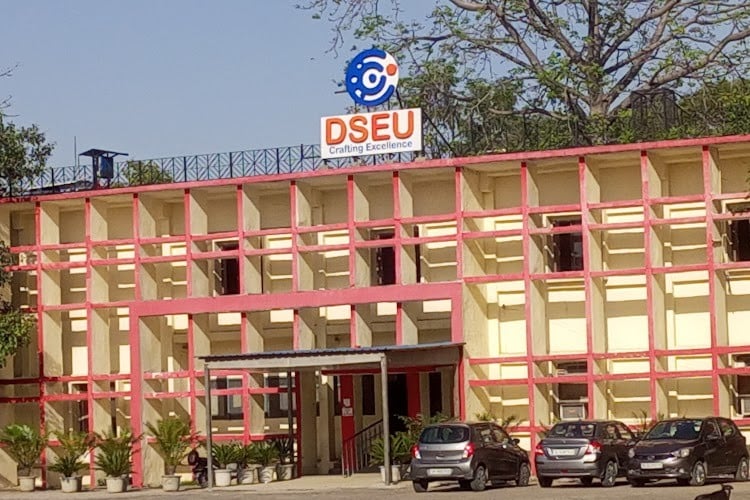

Delhi Skill and Entrepreneurship University
Delhi Skill and Entrepreneurship University
The Delhi Skill and Entrepreneurship University (DSEU) was established in August 2020 by the Government of NCT of Delhi to provide students with world-class skill education, enabling access to aspirational careers, fostering an entrepreneurial mindset, and promoting entrepreneurship. DSEU strives to create a win-win situation for both the youth and industry by addressing existing gaps in skill training. Drawing inspiration from the educational philosophies of thinkers like Mahatma Gandhi and Vinoba Bhave, DSEU seeks to integrate the hand, head, and heart for a balanced life and lifelong learning. The university emphasizes teaching both self-reliance for lifelong independence and the wisdom to nurture and value interdependence.
Total Fees
₹30K - ₹10.1L
Total Courses
15
Get More Info About MBBS Cost Calculator
Recommended Reading

LBSIM Delhi & GIBS 2027 Admissions Open: Apply Online Now
LBSIM Delhi and GIBS Bangalore open 2027 admissions. Explore PGDM, MBA, and BBA application details, early bird offers, and WBJEE/TNEA 2026 counseling updates.

Best Online MBA Specializations for High-Paying Careers 2026
Discover the most lucrative online MBA specializations for 2026-27. Compare ROI, career growth, and use our AI tools to find your perfect management path.

Top Career Opportunities After an Online MBA in 2026-27
Discover high-paying career paths and roles after an online MBA in 2026-27. Explore salary trends, ROI, and tools to navigate your future professional success.