

MBBS Abroad 2025-26: Avoid These 7 Crucial Mistakes!
Admission & Info Tools
Need Expert Assistance?
Our counselors can help you with fee structures, eligibility guidelines, and upcoming admission cutoffs instantly.
Direct Application Tools
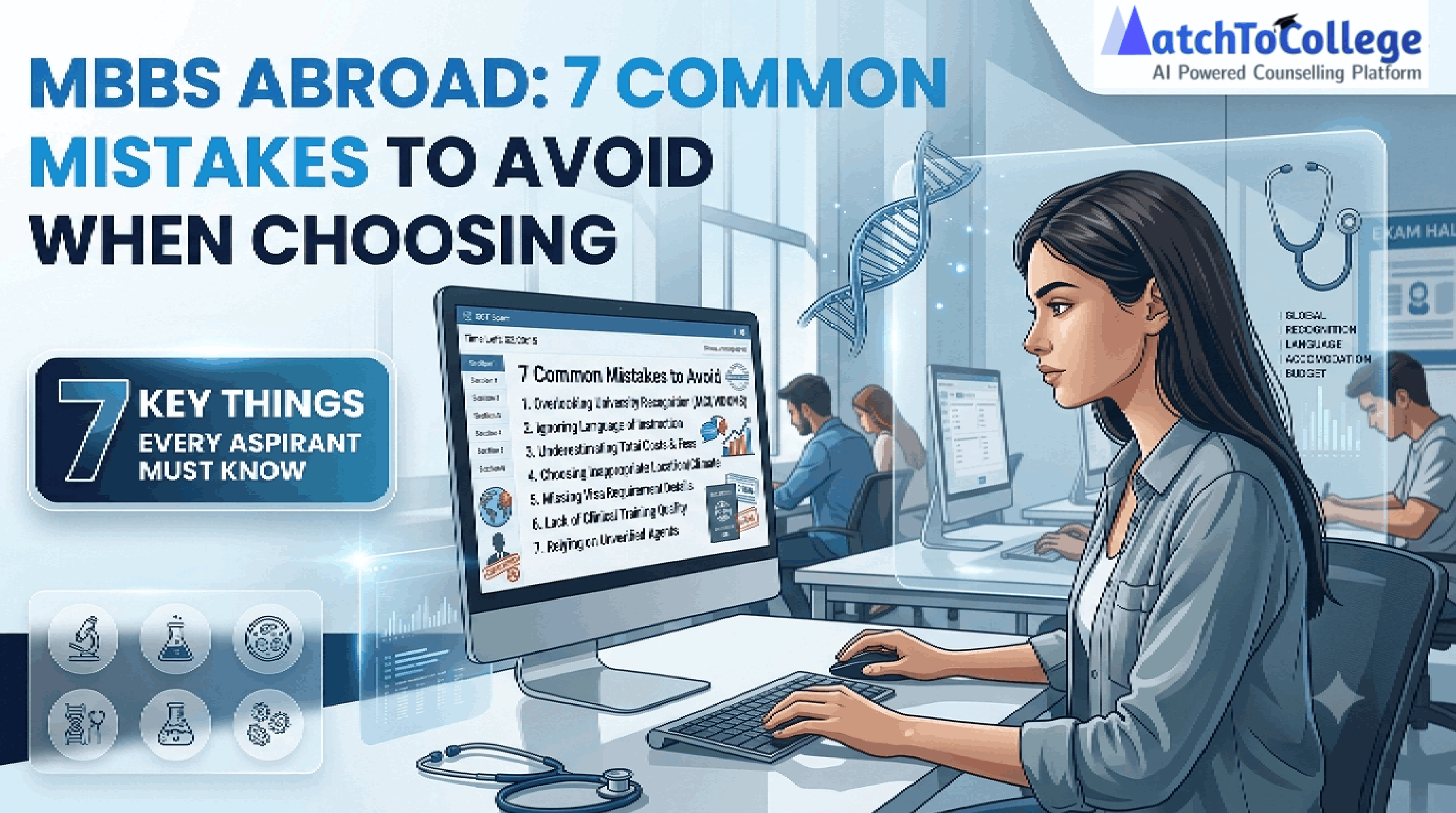
Breaking News for Aspiring Doctors!
The dream of pursuing an MBBS degree abroad continues to soar, especially with intensifying competition for NEET seats in India. As we fast approach the 2025-2026 academic year, the landscape of international medical education is more dynamic than ever. Recent policy changes, evolving visa regulations, and the stringent National Medical Commission (NMC) guidelines for Foreign Medical Graduates (FMGs) mean that what worked last year might not hold true for your admission.
Ignoring these critical updates can derail your aspirations, leading to wasted time, money, and emotional stress. The stakes are higher, and a strategic, well-informed approach is paramount. This isn't just about finding a college; it's about securing a recognized degree and a viable medical career path in a rapidly changing global environment.
At MatchToCollege, your AI-powered higher education counselling platform, we're on the frontline, monitoring every shift and update. Our mission is to equip you with the accurate, timely information you need to make the best decisions. With the 2025-26 admissions cycle looming, understanding and actively avoiding common pitfalls is non-negotiable.
Don't let your dream of becoming a doctor turn into a nightmare of regulatory hurdles or unaccredited degrees. Here are 7 crucial mistakes to avoid when choosing your MBBS abroad destination this year:
Mistake 1: Ignoring Latest NMC Recognition & Eligibility (2025-26 Guidelines)
This is, without a doubt, the most critical mistake. Many students overlook the updated National Medical Commission (NMC) guidelines for Foreign Medical Graduates, which are crucial for practicing medicine in India after studying abroad. For the 2025-26 intake, ensure your chosen university and country are explicitly recognized and meet all the latest eligibility criteria, including the duration of the course, internship requirements, and medium of instruction.
NMC Mandatory Requirements for MBBS Abroad (2025-26):
| Requirement | Details for 2025-26 |
| Course Duration | Minimum 4.5 years of medical training + 1 year compulsory internship. |
| Medium of Instruction | Must be entirely English. |
| Internship | Mandatory 12-month internship in the same foreign institution + 12-month supervised internship in India. |
| Licensing Exam | Qualify for NEET-UG before applying abroad, and later the NExT (National Exit Test) for licensure in India. |
| Recognition | University must be listed in the World Directory of Medical Schools (WDMS) and recognized by the respective country's medical council. |
Action: Always cross-verify the university's status on the official NMC website and WDMS. Explore recognized options at MatchToCollege's MBBS Abroad listings.
Mistake 2: Overlooking University Ranking & Accreditation (Beyond the Brochure)
Many students get swayed by glossy brochures or agents' claims without delving into the actual academic standing of the institution. For 2025-26, it's more vital than ever to look beyond superficial appeal. A university's global ranking, specific medical faculty accreditation, and patient exposure matter significantly for your future career.
Key Accreditation Factors to Vet:
| Factor | Why it Matters for 2025-26 |
| World Rankings | Check QS World University Rankings, THE Rankings, ARWU for Medical Science. A good ranking indicates academic rigor. |
| Local Accreditation | Ensure the medical program is accredited by the local medical council of that country. |
| Infrastructure & Faculty | Modern labs, cadaver dissection facilities, experienced faculty, and strong affiliated hospitals are non-negotiable. |
| Clinical Exposure | Adequate patient flow in attached hospitals is critical for practical learning and meeting NMC internship requirements. |
Action: Use multiple reliable sources, university official websites, and independent review platforms. Don't solely rely on information from third-party agents. For a comprehensive comparison, consider how these stack up against top domestic colleges.
Mistake 3: Neglecting Visa & Documentation Updates (Timely Compliance is Key)
Visa policies are dynamic, and for the 2025-26 intake, several countries are implementing stricter student visa regulations and application processes. Missing a single document or failing to meet new financial proof requirements can lead to visa rejection, jeopardizing your entire admission. This is particularly crucial as processing times can extend.
Essential Visa & Documentation Checklist (2025-26):
| Document/Requirement | Specifics for MBBS Abroad 2025-26 |
| Passport Validity | Must be valid for at least 6 months beyond your intended stay. |
| Letter of Acceptance | Official admission letter from the recognized university. |
| Financial Proof | Updated bank statements, scholarship letters, or education loan sanction letters covering tuition and living expenses for at least the first year. |
| Academic Transcripts | Originals and attested copies of 10th, 12th mark sheets, NEET-UG score card. |
| Health Check-up | Specific medical examinations required by the destination country's embassy. |
| Police Clearance | Recent Police Clearance Certificate (PCC). |
Action: Begin your visa application process early, ideally 4-6 months before your program starts. Regularly check the official embassy websites for the most current requirements and application forms. MatchToCollege's resources on Study Abroad can provide general guidance.
Mistake 4: Financial Misplanning & Underestimating Hidden Costs
Many families focus solely on tuition fees, neglecting the broader financial picture. For 2025-26, inflation and currency fluctuations can significantly impact your budget. Underestimating living costs, insurance, travel, and unexpected expenses can lead to financial strain and even abandonment of your studies.
Common Hidden Costs & Budget Considerations:
| Expense Category | What to Consider (2025-26) |
| Application Fees | University application, visa application, document notarization. |
| Travel & Relocation | Airfare, initial accommodation, local transport, baggage. |
| Living Expenses | Accommodation (rent, utilities), food, personal care, local travel, entertainment. These can vary significantly by city. |
| Health Insurance | Mandatory for most countries; research coverage and costs thoroughly. |
| Study Materials | Textbooks, lab coats, medical instruments, software subscriptions. |
| Emergency Fund | Always keep a buffer for unforeseen medical emergencies, travel changes, etc. |
Action: Create a detailed budget. Use MatchToCollege's Education Loan EMI Calculator to understand loan repayments, and consider the ROI of your education. Research average living costs for your chosen city meticulously.
Mistake 5: Neglecting Language Proficiency & Cultural Integration
While many MBBS programs abroad are taught in English, students often underestimate the importance of local language proficiency and cultural adaptation. Effective communication with patients (during clinical rotations), local staff, and daily life requires at least basic knowledge of the local language. Cultural shock can also severely impact academic performance and well-being.
Language & Cultural Preparedness:
| Aspect | Consideration for MBBS Students |
| English Proficiency | IELTS/TOEFL scores are often required. Ensure you meet the university's minimum. |
| Local Language | Even if teaching is in English, basic proficiency in the local language is crucial for daily life and clinical interactions. Universities might offer introductory courses. |
| Cultural Norms | Research local customs, etiquette, and social norms to avoid misunderstandings and facilitate integration. |
| Support Systems | Look for universities with strong international student support services, including language support and cultural orientation programs. |
Action: Start learning basic phrases of the local language well in advance. Engage with alumni or current students from your target university to understand the cultural environment. Consider if online courses could help with language basics.
Mistake 6: Not Understanding Post-Graduation & Licensure Pathways
A common oversight is focusing only on getting the MBBS degree without a clear plan for what comes next. For 2025-26 graduates, the journey to becoming a practicing doctor in India (or elsewhere) involves navigating specific licensure exams and residency applications. Not understanding these pathways can lead to delays or even render your foreign degree less useful.
Post-MBBS Abroad Pathways:
| Pathway | Key Requirements / Considerations |
| Practicing in India | Mandatory: Clear the NEXT (National Exit Test) exam. Fulfill NMC's internship requirements (1 year abroad + 1 year in India). Secure a residency. |
| Practicing in Host Country | Requires passing local licensing exams (e.g., USMLE for USA, PLAB for UK, local residency entrance exams). Often involves additional language proficiency. |
| Practicing in Other Countries | Each country has its own medical council and licensing requirements (e.g., AMC for Australia, MCCEE/MCCQE for Canada). |
Action: Research the licensure requirements for your desired practice location concurrently with choosing your university. Understand the NExT syllabus and preparation strategies. Consider using the Career Pathway Matcher to align your MBBS abroad with your long-term goals.
Mistake 7: Relying on Unverified Agents or Outdated Information
In the competitive world of MBBS abroad, unfortunately, many unverified agents provide misleading or outdated information. For the 2025-26 cycle, with frequent policy changes, relying on such sources is a grave mistake. These agents often push specific universities for higher commissions, regardless of the student's best interest or the university's accreditation status.
Why Trust Matters More Than Ever:
| Risk | How to Mitigate for 2025-26 |
| Misleading Information | Always cross-reference information with official university websites, embassy sites, and regulatory bodies (NMC). |
| Hidden Costs | Demand a transparent breakdown of all fees. Be wary of agents demanding large upfront payments not directly to the university. |
| Unrecognized Colleges | Verify college recognition with NMC and WDMS before committing. |
| Lack of Support | Choose platforms that offer continuous support, from application to post-arrival. |
Action: Choose reliable, AI-powered platforms like MatchToCollege for unbiased, real-time guidance. Our tools like the NEET College Predictor, NEET Rank Predictor, and NEET OMR Score Calculator help you assess your baseline before even considering abroad options. For detailed, verified information, visit our dedicated section on MBBS Abroad.
Final Thoughts: Your Future, Your Responsibility!
The journey to becoming a doctor through international education is rewarding but complex. For the 2025-26 academic year, staying updated, meticulous research, and proactive planning are your greatest allies. Don't leave your medical career to chance or outdated advice. Leverage the power of AI-driven guidance from MatchToCollege to make informed decisions and confidently embark on your MBBS abroad adventure.
Share this Article
FAQFrequently Asked Questions
Q: What are the latest NMC guidelines for MBBS abroad for 2025-26 admissions?
For 2025-26, the NMC mandates a minimum 4.5 years of medical course plus 1 year compulsory internship in the same foreign institution, English as the sole medium of instruction, and qualification in NEET-UG before applying. Additionally, a 12-month supervised internship in India is required after returning, and students must clear the NExT exam for licensure.
Q: How important is university accreditation when choosing an MBBS abroad program?
University accreditation is paramount. Ensure the medical school is listed in the World Directory of Medical Schools (WDMS) and recognized by the respective country's medical council. For those planning to practice in India, NMC recognition of the degree is non-negotiable. Always check recent rankings and infrastructure.
Q: What common financial mistakes should I avoid for MBBS abroad?
Avoid underestimating total costs beyond tuition, including living expenses, health insurance, visa fees, travel, and an emergency fund. Currency fluctuations can impact your budget significantly. Use tools like MatchToCollege's <a href="https://matchtocollege.com/tools/education-loan-emi-calculator" target="_blank">Education Loan EMI Calculator</a> to plan realistically.
Q: Do I need to learn the local language if my MBBS program is in English?
Yes, even if your program is entirely in English, learning basic local language phrases is highly recommended. It significantly aids in daily life, cultural integration, and critically, during clinical rotations for effective patient communication. Some universities may even have it as a mandatory part of the curriculum.
Get More Info About MBBS Abroad 2025-26
Recommended Reading

TNEA 2026: Govt School Quota & Special Reservation Updates
Crucial updates for TNEA 2026 applicants! Understand the 7.5% Government School Quota and Special Reservations for engineering admissions in Tamil Nadu.
JAC Chandigarh 2026 Round 2 Choice Filling Last Date Nears!
Don't miss the JAC Chandigarh 2026 Round 2 choice filling deadline! Act fast to secure your engineering seat. Get expert tips and use MatchToCollege tools for optimal selection.
ACPC B.Tech Round 2 Allotment 2026 OUT! Confirm Your Seat Now
Urgent update for B.Tech aspirants! ACPC Round 2 Allotment 2026 results are live. Confirm your seat, pay fees, and explore next steps with MatchToCollege's expert tools.