

MBA Resume Guide: Stand Out to Top Corporate Recruiters
Admission & Info Tools
Need Expert Assistance?
Our counselors can help you with fee structures, eligibility guidelines, and upcoming admission cutoffs instantly.
Direct Application Tools
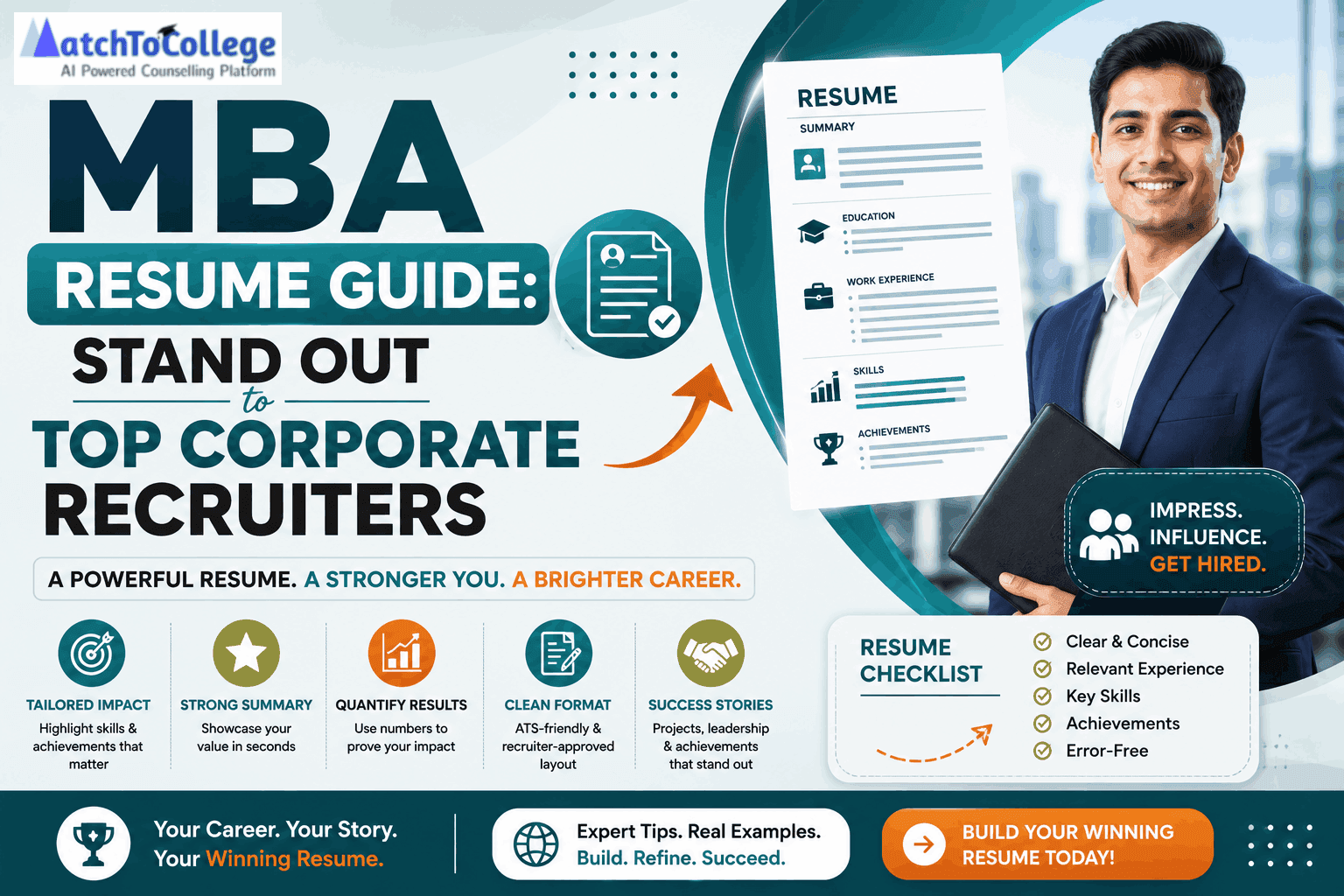
According to a study by The Ladders, recruiters spend an average of 7.4 seconds on an initial resume screen before deciding whether a candidate moves to the next pile. For MBA graduates targeting roles at McKinsey, Goldman Sachs, or Google, the competition is even tighter.
Your resume is no longer just a history of your employment; it is a high-stakes marketing document that must convey 'executive presence' and 'quantitative impact' in a single page. At MatchToCollege, we track the specific hiring criteria of top-tier firms to help candidates align their profiles with what recruiters actually value. If you are still in the early stages of your journey, using our CAT College Predictor can help you identify which B-schools will give you the strongest recruitment platform.
A standout MBA resume follows a strict hierarchy where every line must justify its existence through data. It requires a shift from 'responsibility-based' descriptions to 'result-oriented' narratives. Whether you are transitioning from engineering to consulting or finance to product management, the framework remains the same: show, don't tell. Recruiters look for evidence of leadership, analytical prowess, and the ability to navigate complex business environments.
To ensure your academic stats are presented in the format recruiters prefer, you can use our CGPA to Percentage Calculator to standardize your scores. This guide breaks down the structural and content-driven shifts necessary to move your resume from the 'maybe' pile to the 'must-interview' stack.
The One-Page Rule and Visual Hierarchy
In the world of elite corporate recruiting, the one-page resume is an absolute standard for anyone with less than 10 years of experience. A two-page resume often signals an inability to synthesize information—a critical skill for any MBA.
The visual hierarchy must guide the eye toward your most impressive achievements immediately. Start with a clean header containing your contact information and LinkedIn profile. Avoid using photographs, graphics, or complex multi-column layouts, as these often confuse Applicant Tracking Systems (ATS). Instead, use standard fonts like Calibri, Arial, or Georgia in 10-12 point size.
The structure should generally follow this order: Education, Professional Experience, Leadership & Extracurriculars, and Skills/Interests. Since you are in or recently graduated from an MBA program, your education section often moves to the top, highlighting your school’s brand. Use our Domestic Colleges listing to verify how your institution ranks in the eyes of top recruiters. Within each section, use reverse chronological order.
Consistency is key; if you bold a job title in one entry, every job title must be bolded. Recruiters look for 'white space'—a resume that is too dense is difficult to scan. Aim for 0.5 to 1.0-inch margins. If you are struggling to fit your experience, use our Inch to Centimeter Calculator to ensure your layout meets international printing standards if applying for global roles. Remember, the goal is not to list everything you have ever done, but to curate the experiences that prove you can do the job you are applying for now.
Share this Article
FAQFrequently Asked Questions
Q: Is a one-page resume mandatory for MBA recruiting?
Yes, for the vast majority of corporate roles, a one-page resume is the gold standard. It demonstrates your ability to prioritize information and communicate concisely.
Q: Should I include my GMAT or GRE scores on my resume?
Generally, yes, especially for consulting and investment banking roles. These firms often use test scores as an initial filter for analytical aptitude.
Q:
Get More Info About MBA Resume Guide
Recommended Reading
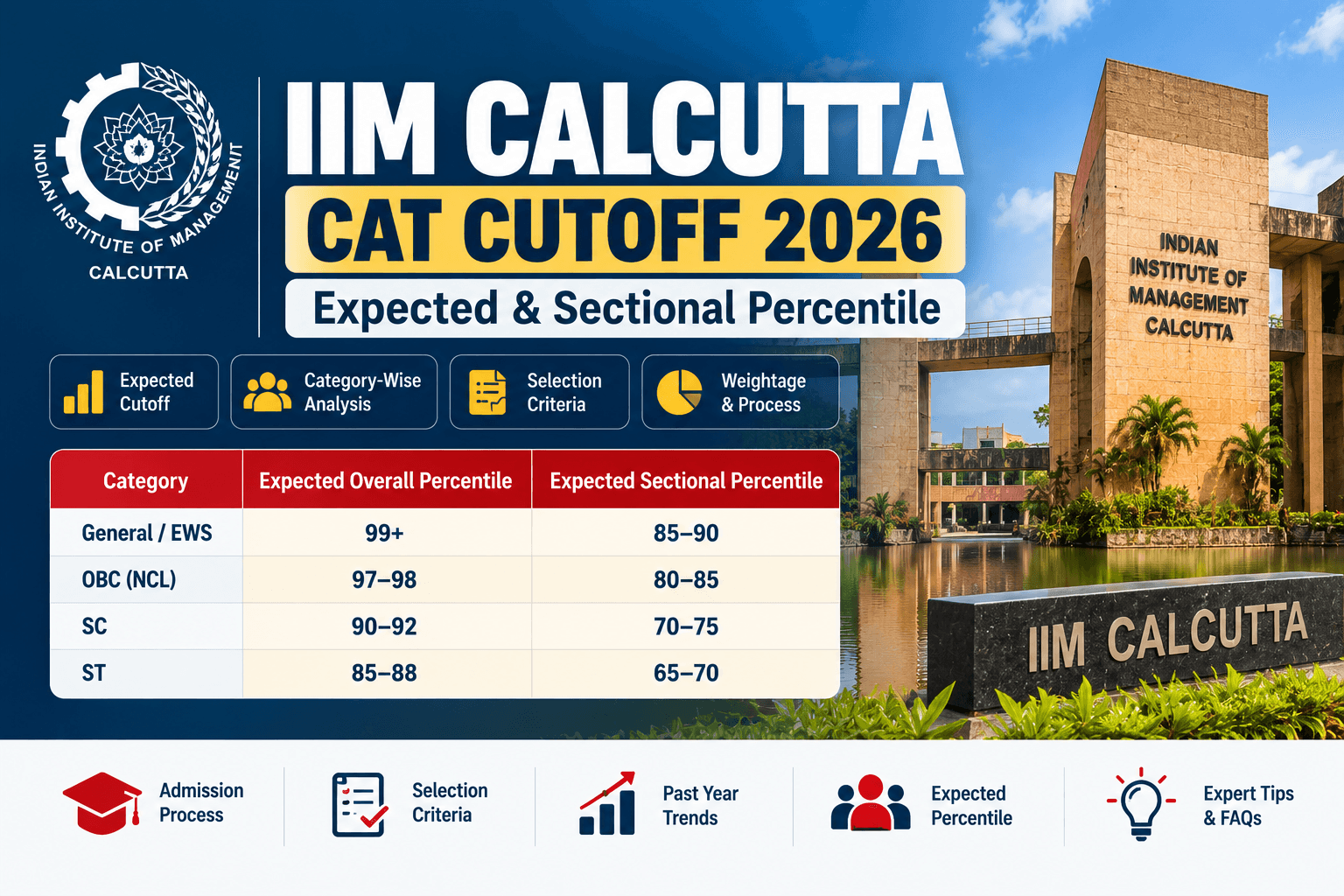
IIM Calcutta CAT Cutoff 2026: Expected & Sectional Percentile
IIM Calcutta CAT Cutoff 2026: Check the expected overall and sectional percentile, category-wise qualifying cutoff, selection criteria, CAT weightage and admission process for the 2027–29 MBA batch.
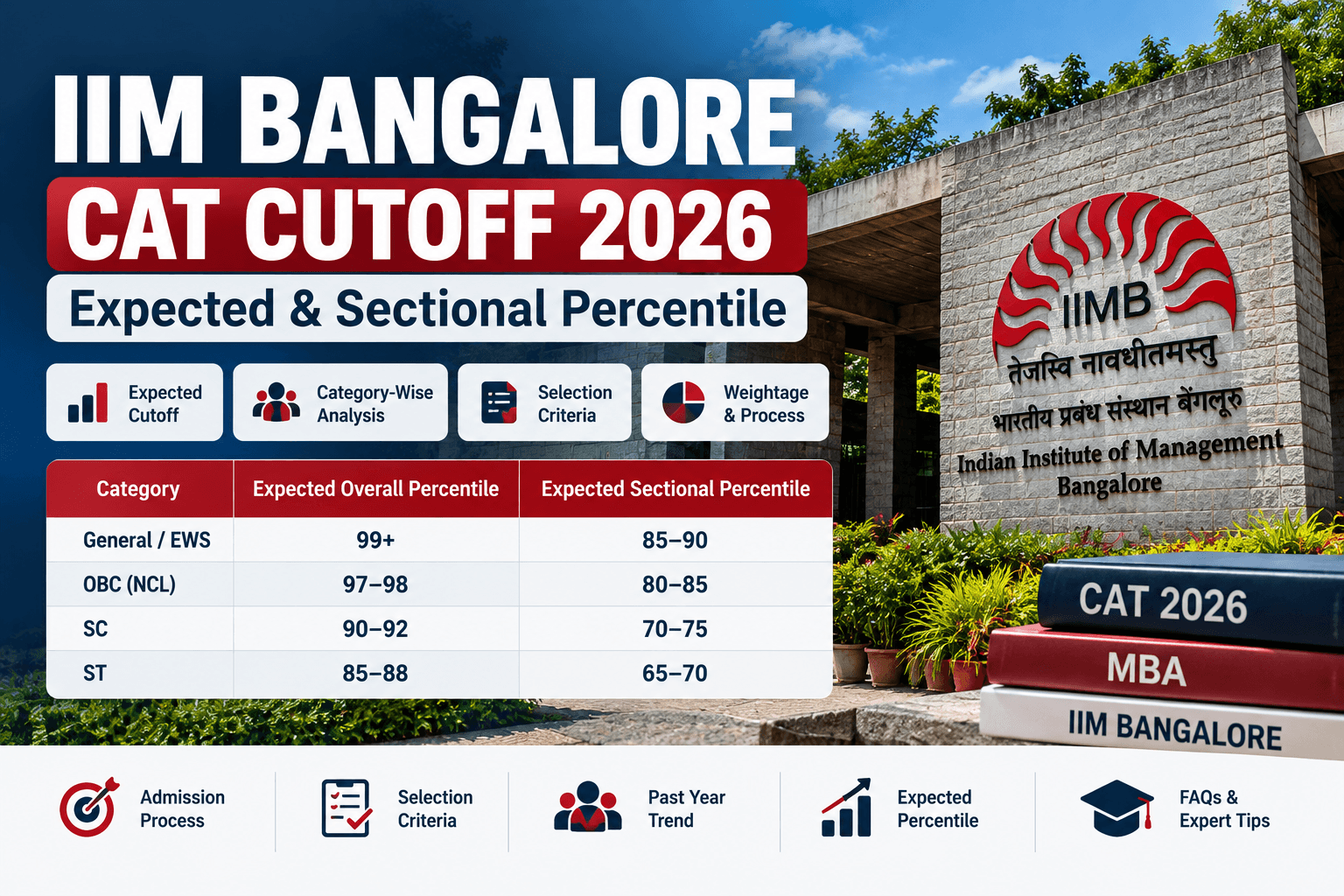
IIM Bangalore CAT Cutoff 2026: Expected & Sectional Percentile
IIM Bangalore CAT Cutoff 2026: Check the expected overall and sectional percentile, category-wise qualifying cutoff, selection criteria, CAT weightage and admission process for the 2027–29 MBA batch.
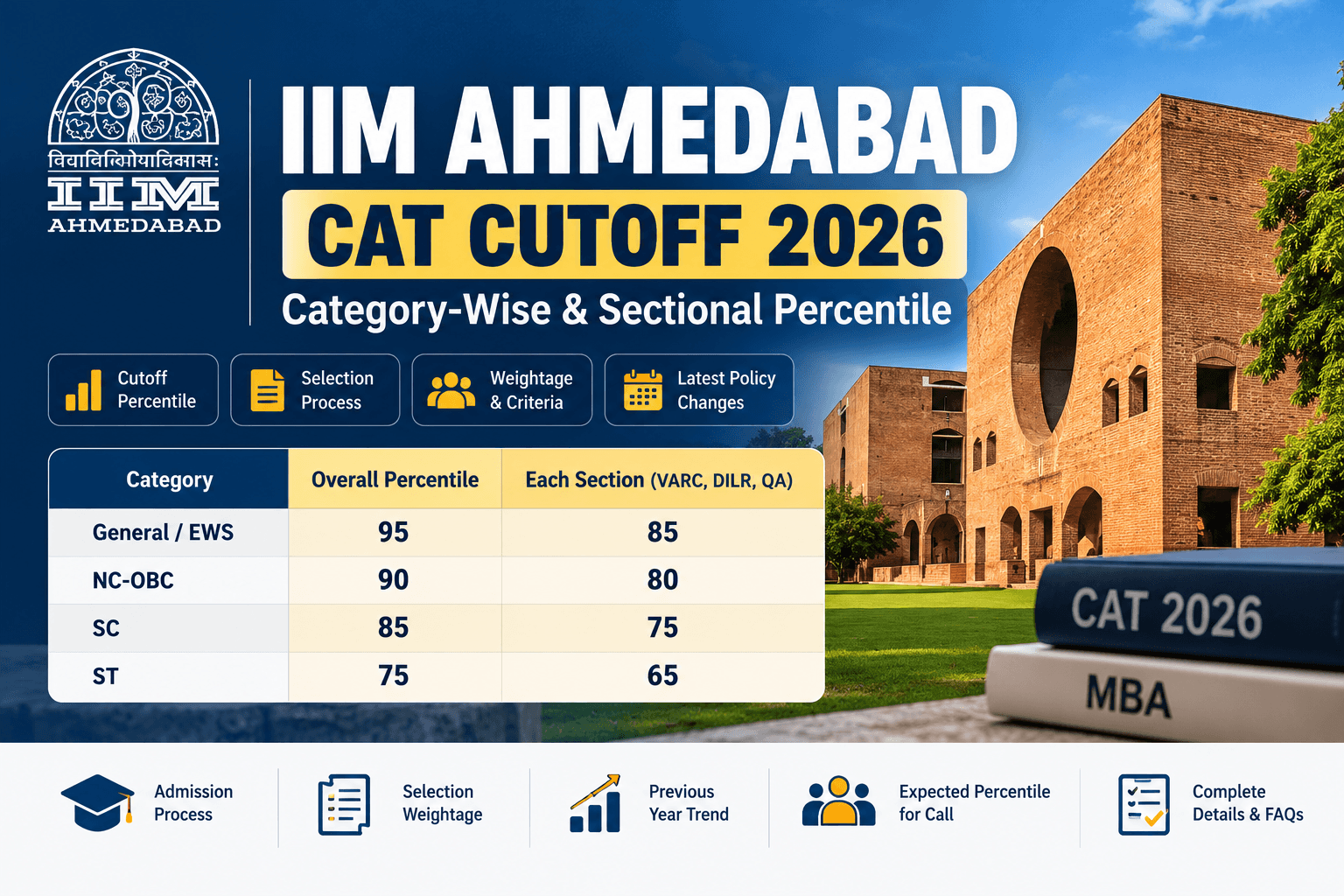
IIM Ahmedabad CAT Cutoff 2026: Expected & Sectional Percentile
Quick answer: For the PGP 2027–29 batch (CAT 2026), IIM Ahmedabad's minimum cutoff is 95 percentile overall and 85 in each section for General/EWS candidates. Reports of the revised policy say the cutoffs are unchanged from the previous cycle, which had already jumped from 80/70 the year before. Clearing the minimum only makes you eligible; it does not guarantee an interview call.