

MBA in Digital Marketing: Your Path to a High-Paying Career
Admission & Info Tools
Need Expert Assistance?
Our counselors can help you with fee structures, eligibility guidelines, and upcoming admission cutoffs instantly.
Direct Application Tools
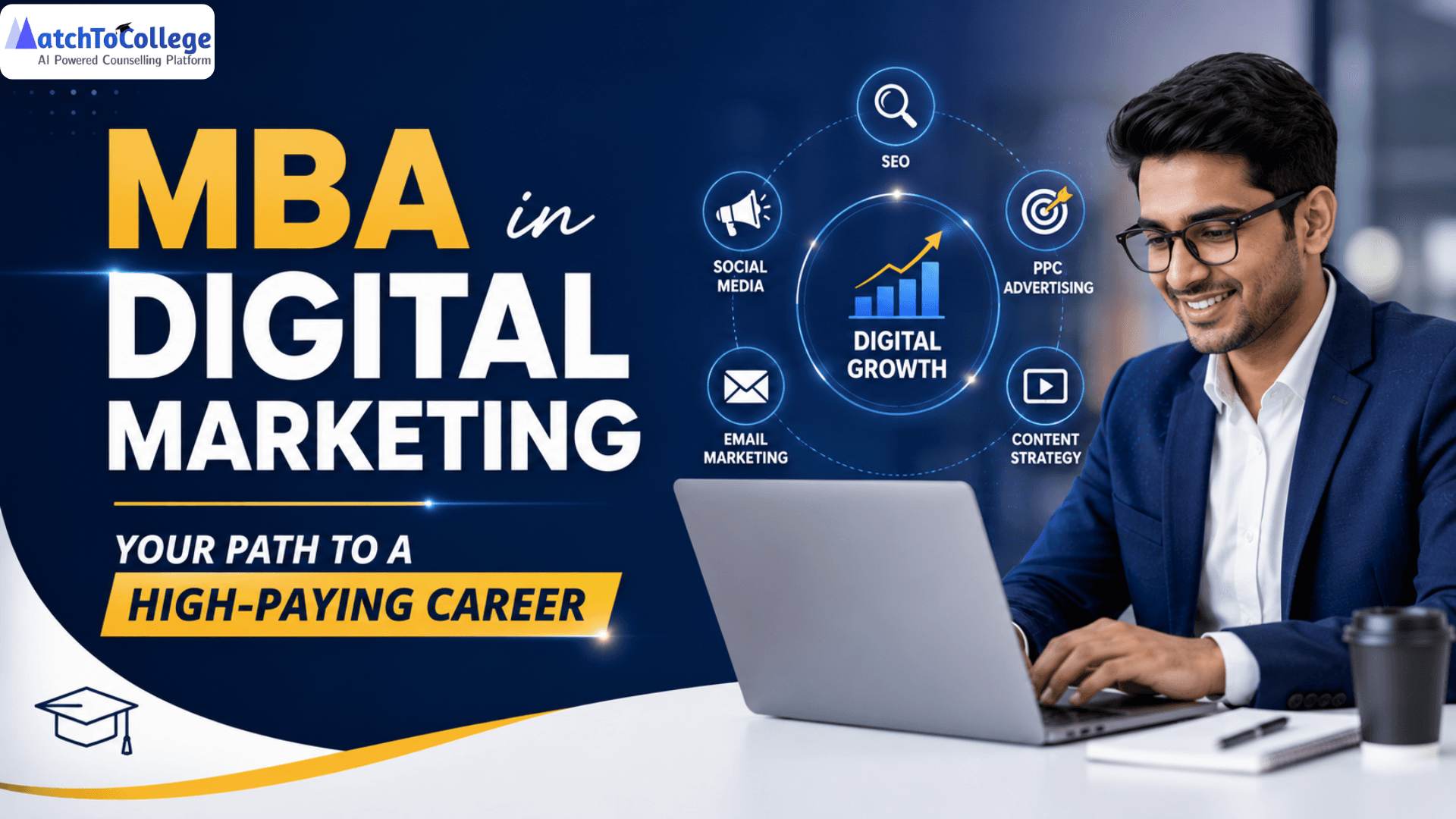
MBA in Digital Marketing
In today's hyper-connected world, businesses live and die by their digital presence. From search engine rankings to social media engagement, the digital landscape is where brands connect with customers, build loyalty, and drive sales. This seismic shift has created an unprecedented demand for strategic thinkers who understand the nuances of online marketing and possess the leadership skills to navigate complex business environments. This is precisely why an MBA in Digital Marketing has emerged as one of the most sought-after and high-impact postgraduate specializations.
Gone are the days when 'marketing' solely meant traditional advertising. The modern marketer is a data analyst, a content creator, an SEO specialist, a social media strategist, and a brand visionary, all rolled into one. They leverage analytics to understand consumer behavior, craft compelling narratives across diverse platforms, and implement campaigns that deliver measurable ROI. An MBA in Digital Marketing doesn't just teach you these tactics; it equips you with the strategic framework to lead teams, innovate marketing strategies, and drive significant business growth.
For aspiring professionals and mid-career executives looking to pivot or amplify their impact, an MBA focused on digital marketing offers a unique blend of core business acumen and specialized industry knowledge. You'll delve deep into topics ranging from advanced marketing analytics and e-commerce strategies to search engine optimization (SEO), social media marketing, content marketing, and customer relationship management (CRM). More importantly, you'll develop critical thinking, problem-solving, and leadership skills essential for climbing the corporate ladder.
Choosing to pursue an MBA in Digital Marketing is an investment in a future brimming with opportunities. It’s a commitment to mastering the tools and strategies that define success in the digital age. Whether you dream of leading a global brand's online presence, launching your own digital agency, or consulting for innovative tech startups, this specialization provides the robust foundation you need. At MatchToCollege, we understand the intricacies of navigating this academic and career path. Our AI-powered platform is designed to connect you with the top MBA programs tailored to your aspirations, ensuring you make an informed decision for a prosperous future in the dynamic field of digital marketing.
Why an MBA in Digital Marketing is Your Next Strategic Move
The digital economy is booming, and businesses are desperate for leaders who can bridge the gap between traditional business strategy and cutting-edge digital tactics. A specialized MBA in Digital Marketing provides this crucial bridge. It's no longer enough to just 'do' digital marketing; you need to understand the 'why' behind every campaign, the market forces at play, and how to integrate digital efforts into overarching business goals. This advanced degree goes beyond operational skills, focusing on strategic planning, data-driven decision-making, and marketing leadership.
Graduates emerge not just as skilled marketers but as business strategists capable of driving growth through innovative digital channels. You'll learn to craft comprehensive digital marketing strategies, manage large budgets, lead diverse teams, and analyze complex metrics to demonstrate tangible ROI. The curriculum often includes case studies, real-world projects, and industry interactions that equip you with practical experience alongside theoretical knowledge. This strategic perspective is what sets MBA graduates apart in a competitive job market, positioning them for roles with higher responsibilities and greater earning potential.
What You'll Learn: Core Curriculum & Key Skills
An MBA in Digital Marketing typically combines foundational business courses with specialized modules in digital marketing. Expect to delve into core subjects like corporate finance, organizational behavior, economics, and strategic management. Complementing these, the specialized curriculum offers deep dives into:
| Core Subject | What You'll Learn |
| Advanced Marketing Analytics | Learn to interpret marketing data, measure campaign performance, generate customer insights, and forecast market trends using analytical tools. |
| Search Engine Optimization (SEO) & Search Engine Marketing (SEM) | Understand keyword research, on-page and off-page SEO, paid search advertising (PPC), Google Ads, and strategies to improve online visibility. |
| Social Media Marketing & Strategy | Develop effective marketing campaigns and engagement strategies across platforms such as LinkedIn, Facebook, Instagram, X, YouTube, and TikTok. |
| Content Marketing | Create content strategies that attract, engage, nurture, and convert target audiences through blogs, videos, email campaigns, and other digital channels. |
| E-commerce & Digital Business Models | Explore online retail, e-commerce platforms, digital marketplaces, omnichannel strategies, and customer journey optimization. |
| Customer Relationship Management (CRM) | Learn to use CRM platforms for lead generation, customer acquisition, retention, segmentation, and personalized marketing. |
| Marketing Technology (MarTech) | Gain knowledge of modern marketing tools, automation platforms, AI-powered marketing solutions, and digital campaign management technologies. |
| Digital Branding & Reputation Management | Build, manage, and protect a brand's online reputation through effective branding, public relations, online reviews, and crisis management strategies. |
Beyond these technical skills, you'll hone critical soft skills such as leadership, problem-solving, negotiation, and cross-functional collaboration, essential for senior marketing roles.
Lucrative Career Paths After Your MBA in Digital Marketing
An MBA in Digital Marketing opens doors to a diverse array of high-demand and well-compensated roles across various industries. Graduates are sought after by marketing agencies, tech giants, multinational corporations, startups, and consulting firms. Some of the most common career paths include:
| Career Role | Key Responsibilities |
| Digital Marketing Manager / Director | Lead end-to-end digital marketing strategies, oversee campaigns, manage budgets, and drive customer acquisition and business growth. |
| SEO/SEM Specialist or Manager | Improve website visibility through Search Engine Optimization (SEO) and manage paid advertising campaigns using Search Engine Marketing (SEM) platforms like Google Ads. |
| Social Media Strategist / Manager | Plan, execute, and optimize social media campaigns while increasing brand engagement across platforms such as LinkedIn, Instagram, Facebook, and X. |
| Brand Manager (Digital Focus) | Build and strengthen the brand's online presence through integrated digital marketing, branding, and customer engagement strategies. |
| Marketing Analyst / Data Analyst | Analyze marketing data, customer behavior, and campaign performance to generate insights that support strategic business decisions. |
| E-commerce Manager | Manage online stores, optimize digital customer journeys, improve conversions, and oversee e-commerce operations and marketplace performance. |
| Content Marketing Manager | Develop and manage content strategies across blogs, websites, email campaigns, videos, and social media to attract and retain customers. |
| Marketing Consultant | Advise organizations on digital marketing strategies, campaign optimization, branding, and business growth initiatives. |
| Product Marketing Manager | Develop go-to-market strategies, product positioning, messaging, and digital promotion plans to maximize product success in the market. |
The strategic leadership and analytical skills gained make MBA graduates highly valuable in roles that require both vision and execution in the fast-evolving digital landscape.
Selecting the Best MBA in Digital Marketing Program
Choosing the right MBA program is a critical decision that will shape your future career trajectory. When evaluating programs, consider several key factors:
| Factor to Consider | Why It Matters |
| Curriculum Depth & Specialization | Choose a program with a comprehensive curriculum covering SEO, SEM, social media marketing, analytics, AI in marketing, marketing automation, programmatic advertising, content marketing, and emerging digital trends. |
| Faculty Expertise | Look for experienced faculty members with a strong background in digital marketing, industry consulting, research, and practical business applications. |
| Industry Connections & Internships | Prefer institutions that offer internships, live industry projects, guest lectures, corporate collaborations, and networking opportunities with leading marketing professionals and companies. |
| Alumni Network | A strong alumni network can provide mentorship, industry insights, referrals, networking opportunities, and career support after graduation. |
| Practical Learning Experience | Programs featuring live projects, case studies, simulations, capstone projects, certifications, and digital marketing labs help build real-world skills and improve employability. |
| Location & Rankings | Consider the institution's reputation, accreditation, rankings, placement record, and proximity to major business or technology hubs, which can enhance internship and job opportunities. |
Platforms like MatchToCollege can significantly simplify this process by matching your profile with programs that align with your career goals and academic background, helping you make an informed decision for your higher education journey.
Is an MBA in Digital Marketing Right for You?
An MBA in Digital Marketing is ideal for individuals who are passionate about the intersection of technology, business, and consumer behavior. If you possess strong analytical skills, a creative mindset, and a desire to lead in a dynamic field, this specialization could be your perfect fit. It's particularly beneficial for:
- Graduates with a background in marketing, communications, or business who wish to specialize and advance their careers.
- Professionals from other fields (e.g., IT, sales, traditional marketing) looking to pivot into a high-growth sector.
- Entrepreneurs aiming to build and scale their own digital businesses.
- Those seeking leadership roles in digital strategy and innovation.
Consider your long-term career aspirations. If leading strategic digital initiatives, leveraging data for impact, and staying at the forefront of marketing innovation excite you, then an MBA in Digital Marketing offers a robust pathway to achieve those goals. MatchToCollege is here to help you assess your fit and explore the best educational opportunities available.
Why an MBA in Digital Marketing is Your Next Strategic Move
The digital economy is booming, and businesses are desperate for leaders who can bridge the gap between traditional business strategy and cutting-edge digital tactics. A specialized MBA in Digital Marketing provides this crucial bridge. It's no longer enough to just 'do' digital marketing; you need to understand the 'why' behind every campaign, the market forces at play, and how to integrate digital efforts into overarching business goals. This advanced degree goes beyond operational skills, focusing on strategic planning, data-driven decision-making, and marketing leadership.
Graduates emerge not just as skilled marketers but as business strategists capable of driving growth through innovative digital channels. You'll learn to craft comprehensive digital marketing strategies, manage large budgets, lead diverse teams, and analyze complex metrics to demonstrate tangible ROI. The curriculum often includes case studies, real-world projects, and industry interactions that equip you with practical experience alongside theoretical knowledge. This strategic perspective is what sets MBA graduates apart in a competitive job market, positioning them for roles with higher responsibilities and greater earning potential.
What You'll Learn: Core Curriculum & Key Skills
An MBA in Digital Marketing typically combines foundational business courses with specialized modules in digital marketing. Expect to delve into core subjects like corporate finance, organizational behavior, economics, and strategic management. Complementing these, the specialized curriculum offers deep dives into:
| Core Subject | What You'll Learn |
| Advanced Marketing Analytics | Learn to interpret marketing data, measure campaign performance, generate customer insights, and forecast market trends using analytical tools. |
| Search Engine Optimization (SEO) & Search Engine Marketing (SEM) | Understand keyword research, on-page and off-page SEO, paid search advertising (PPC), Google Ads, and strategies to improve online visibility. |
| Social Media Marketing & Strategy | Develop effective marketing campaigns and engagement strategies across platforms such as LinkedIn, Facebook, Instagram, X, YouTube, and TikTok. |
| Content Marketing | Create content strategies that attract, engage, nurture, and convert target audiences through blogs, videos, email campaigns, and other digital channels. |
| E-commerce & Digital Business Models | Explore online retail, e-commerce platforms, digital marketplaces, omnichannel strategies, and customer journey optimization. |
| Customer Relationship Management (CRM) | Learn to use CRM platforms for lead generation, customer acquisition, retention, segmentation, and personalized marketing. |
| Marketing Technology (MarTech) | Gain knowledge of modern marketing tools, automation platforms, AI-powered marketing solutions, and digital campaign management technologies. |
| Digital Branding & Reputation Management | Build, manage, and protect a brand's online reputation through effective branding, public relations, online reviews, and crisis management strategies. |
Beyond these technical skills, you'll hone critical soft skills such as leadership, problem-solving, negotiation, and cross-functional collaboration, essential for senior marketing roles.
Lucrative Career Paths After Your MBA in Digital Marketing
An MBA in Digital Marketing opens doors to a diverse array of high-demand and well-compensated roles across various industries. Graduates are sought after by marketing agencies, tech giants, multinational corporations, startups, and consulting firms. Some of the most common career paths include:
| Career Role | Key Responsibilities |
| Digital Marketing Manager / Director | Lead end-to-end digital marketing strategies, oversee campaigns, manage budgets, and drive customer acquisition and business growth. |
| SEO/SEM Specialist or Manager | Improve website visibility through Search Engine Optimization (SEO) and manage paid advertising campaigns using Search Engine Marketing (SEM) platforms like Google Ads. |
| Social Media Strategist / Manager | Plan, execute, and optimize social media campaigns while increasing brand engagement across platforms such as LinkedIn, Instagram, Facebook, and X. |
| Brand Manager (Digital Focus) | Build and strengthen the brand's online presence through integrated digital marketing, branding, and customer engagement strategies. |
| Marketing Analyst / Data Analyst | Analyze marketing data, customer behavior, and campaign performance to generate insights that support strategic business decisions. |
| E-commerce Manager | Manage online stores, optimize digital customer journeys, improve conversions, and oversee e-commerce operations and marketplace performance. |
| Content Marketing Manager | Develop and manage content strategies across blogs, websites, email campaigns, videos, and social media to attract and retain customers. |
| Marketing Consultant | Advise organizations on digital marketing strategies, campaign optimization, branding, and business growth initiatives. |
| Product Marketing Manager | Develop go-to-market strategies, product positioning, messaging, and digital promotion plans to maximize product success in the market. |
The strategic leadership and analytical skills gained make MBA graduates highly valuable in roles that require both vision and execution in the fast-evolving digital landscape.
Selecting the Best MBA in Digital Marketing Program
Choosing the right MBA program is a critical decision that will shape your future career trajectory. When evaluating programs, consider several key factors:
| Factor to Consider | Why It Matters |
| Curriculum Depth & Specialization | Choose a program with a comprehensive curriculum covering SEO, SEM, social media marketing, analytics, AI in marketing, marketing automation, programmatic advertising, content marketing, and emerging digital trends. |
| Faculty Expertise | Look for experienced faculty members with a strong background in digital marketing, industry consulting, research, and practical business applications. |
| Industry Connections & Internships | Prefer institutions that offer internships, live industry projects, guest lectures, corporate collaborations, and networking opportunities with leading marketing professionals and companies. |
| Alumni Network | A strong alumni network can provide mentorship, industry insights, referrals, networking opportunities, and career support after graduation. |
| Practical Learning Experience | Programs featuring live projects, case studies, simulations, capstone projects, certifications, and digital marketing labs help build real-world skills and improve employability. |
| Location & Rankings | Consider the institution's reputation, accreditation, rankings, placement record, and proximity to major business or technology hubs, which can enhance internship and job opportunities. |
Platforms like MatchToCollege can significantly simplify this process by matching your profile with programs that align with your career goals and academic background, helping you make an informed decision for your higher education journey.
Is an MBA in Digital Marketing Right for You?
An MBA in Digital Marketing is ideal for individuals who are passionate about the intersection of technology, business, and consumer behavior. If you possess strong analytical skills, a creative mindset, and a desire to lead in a dynamic field, this specialization could be your perfect fit. It's particularly beneficial for:
- Graduates with a background in marketing, communications, or business who wish to specialize and advance their careers.
- Professionals from other fields (e.g., IT, sales, traditional marketing) looking to pivot into a high-growth sector.
- Entrepreneurs aiming to build and scale their own digital businesses.
- Those seeking leadership roles in digital strategy and innovation.
Consider your long-term career aspirations. If leading strategic digital initiatives, leveraging data for impact, and staying at the forefront of marketing innovation excite you, then an MBA in Digital Marketing offers a robust pathway to achieve those goals. MatchToCollege is here to help you assess your fit and explore the best educational opportunities available.
Share this Article
FAQFrequently Asked Questions
Q: What is the average salary after an MBA in Digital Marketing?
Salaries for MBA graduates in Digital Marketing vary based on experience, location, and industry, but they are generally high. Entry-level roles can start around $70,000 - $90,000 annually, while experienced professionals in management or director roles can earn upwards of $120,000 - $180,000+ per year, often with performance bonuses and benefits. An MBA significantly boosts earning potential compared to non-MBA roles in digital marketing.
Q: How long does an MBA in Digital Marketing typically take?
Most full-time MBA programs, including those with a Digital Marketing specialization, typically take two years to complete. However, there are also accelerated one-year programs, part-time options, and executive MBA programs designed for working professionals, which can vary in duration from 12 to 24 months depending on the program structure and credit load.
Q: Is work experience required for an MBA in Digital Marketing?
While not always strictly mandatory for all programs, most reputable MBA programs strongly prefer or require at least 2-5 years of professional work experience. This experience allows students to contribute more meaningfully to classroom discussions, understand complex business scenarios better, and leverage the MBA curriculum more effectively for career advancement. Some programs might accept exceptional candidates with less experience if they demonstrate strong leadership potential and academic achievements.
Get More Info About MBA in Digital Marketing
Recommended Reading
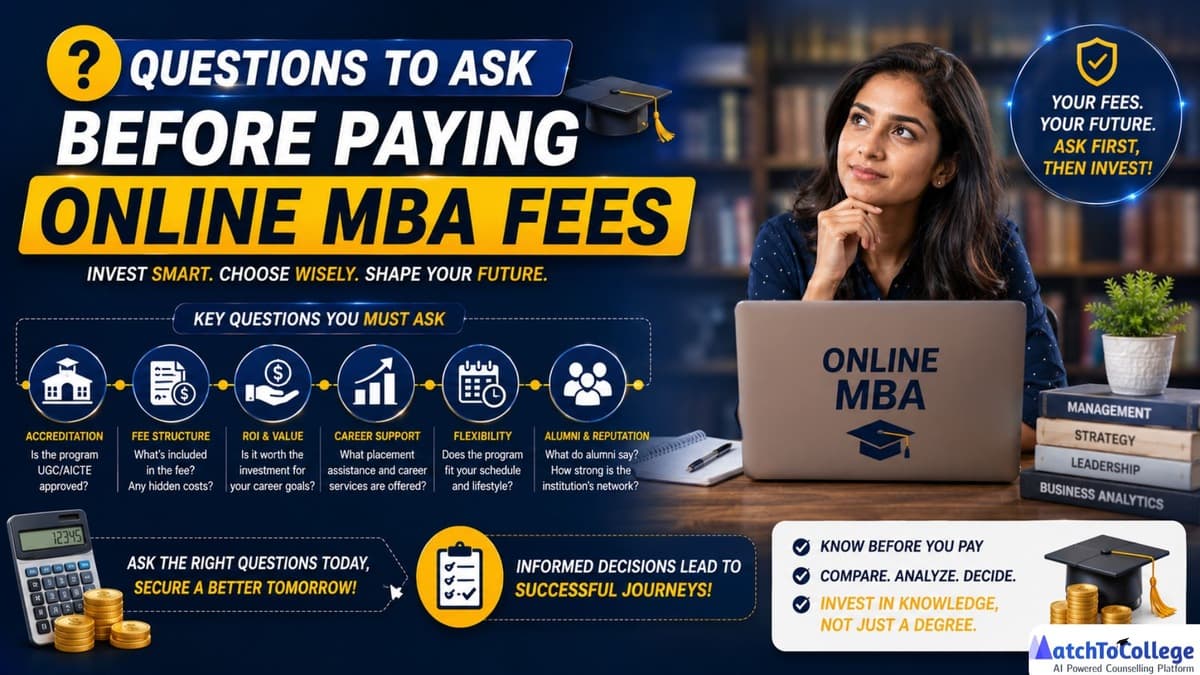
Online MBA Fees: 7 Vital Questions Before You Commit
Paying for an Online MBA? Don't rush! Discover 7 essential questions to ask about accreditation, costs, and career services before you pay your fees. Make a smart investment.

Top Careers After MBA in Marketing: Your Future Unlocked
Unlock your potential! Discover the most lucrative and impactful careers after an MBA in Marketing. From brand management to digital strategy, find your path.

Boost Your Career: The Power of an Online MBA
Unlock career growth with a flexible Online MBA. Discover top programs, navigate applications, and balance work-life. Your professional future starts here.