

Mastering CAT: Strategic Preparation with Past Papers for Top MBA Admissions
Admission & Info Tools
Need Expert Assistance?
Our counselors can help you with fee structures, eligibility guidelines, and upcoming admission cutoffs instantly.
Direct Application Tools

🎯 MatchToCollege AI Recommendation: Planning your counselling or choice filling? Check your seat allotment probability across premier colleges using the CAT College Predictor.
Key Highlights: Why CAT Past Papers are Indispensable
For any serious MBA aspirant, engaging with previous years' CAT question papers is not merely an option; it's a fundamental pillar of effective preparation. These papers serve as a diagnostic tool, a practice arena, and a confidence builder all rolled into one. Here’s why they are crucial:
- Understanding the Exam Landscape: Each CAT paper provides a snapshot of the exam's structure, question distribution, and difficulty level for that particular year.
- Identifying Strengths and Weaknesses: Consistent practice helps pinpoint areas where you excel and those that require more focused attention.
- Time Management Mastery: Simulating exam conditions with past papers is the best way to develop effective time allocation strategies for each section.
- Pattern Recognition: Over the years, certain question types and logical structures reappear. Familiarity with these can significantly boost your problem-solving speed.
- Building Stamina and Focus: The CAT is a lengthy examination. Practicing full-length past papers helps build the mental endurance needed to maintain concentration throughout the test.
Here’s a quick overview of the benefits:
| Parameter | Details |
| Exam Simulation | Replicates actual test conditions, including time limits and pressure. |
| Pattern Analysis | Helps identify recurring question types and topics. |
| Skill Enhancement | Sharpens problem-solving, critical thinking, and analytical abilities. |
| Time Management | Develops efficient strategies for allocating time across sections. |
| Confidence Boost | Familiarity with the exam format reduces anxiety and builds self-assurance. |
CAT Eligibility & The Selection Journey
The Common Admission Test (CAT) is the gateway to India's premier IIMs and numerous other top-tier B-schools. Understanding the eligibility criteria and the subsequent selection process is vital for every aspirant.
Eligibility Criteria for CAT:
- Educational Qualification: Candidates must hold a Bachelor's Degree with at least 50% marks or equivalent CGPA (45% for Scheduled Caste (SC), Scheduled Tribe (ST), and Persons with Disability (PwD) categories) from a university incorporated by an Act of the Central or State Legislature in India, or other educational institutions established by an Act of Parliament or declared to be deemed as a University under Section 3 of the UGC Act, 1956, or possess an equivalent qualification recognized by the Ministry of HRD, Government of India.
- Final Year Students: Candidates appearing for the final year of their Bachelor's degree/equivalent qualification examination and those who have completed degree requirements and are awaiting results are also eligible to apply. However, their admission will be provisional and subject to obtaining the required percentage of marks.
- Age Limit: There is no age limit for appearing in CAT.
The Selection Process for Top B-Schools:
Admission to IIMs and other leading B-schools typically involves multiple stages:
- CAT Examination: This is the primary hurdle. Your percentile score determines your eligibility for shortlisting by various institutions.
- Shortlisting for Interview Rounds: Based on CAT scores, academic profile (10th, 12th, Graduation marks), work experience, and diversity factors, candidates are shortlisted for the subsequent rounds.
- Written Ability Test (WAT): Many B-schools require candidates to write an essay on a given topic to assess their written communication skills.
- Group Discussion (GD): Candidates are often grouped to discuss a contemporary topic, evaluating their leadership, communication, and teamwork abilities.
- Personal Interview (PI): This is a crucial stage where candidates are assessed on their personality, motivation for an MBA, career goals, general awareness, and subject knowledge.
Your performance in the CAT, significantly enhanced by rigorous practice with past papers, directly impacts your chances of clearing the initial shortlisting stage and moving closer to your MBA dream.
Top MBA Colleges & Investment Insights
India boasts a vibrant landscape of world-class business schools, each offering unique strengths and career trajectories. The choice of institution is a significant decision, influencing not just your immediate education but your long-term career and financial growth. Here’s a glimpse at some of the top colleges accepting CAT scores, along with estimated fees and average placement figures to help you assess the Return on Investment (ROI).
| College Name | Estimated Fees (Lakhs INR) |
| IIM Ahmedabad | 23-25 |
| IIM Bangalore | 23-25 |
| IIM Calcutta | 23-25 |
| FMS Delhi | 2-4 |
| XLRI Jamshedpur (XAT) | 23-26 |
| SPJIMR Mumbai | 20-22 |
| IIM Lucknow | 19-21 |
| MDI Gurgaon | 21-23 |
| IIFT Delhi/Kolkata | 21-23 |
| IIM Kozhikode | 20-22 |
Note: Fees are approximate for the flagship PGP/MBA programs and subject to change. Average placement figures vary annually and are indicative. Always refer to the official college websites for the most current data.
When evaluating these institutions, consider not just the fees and placements, but also the faculty, curriculum, campus culture, and alumni network. A higher investment often correlates with stronger brand recognition and better career opportunities, leading to a robust ROI over time.
Strategic CAT Preparation: Leveraging Past Papers
Effective CAT preparation hinges on a well-structured strategy, and at its core lies the systematic use of past question papers. These papers are your most authentic practice material, offering insights that no mock test can fully replicate. Here’s how to integrate them into your study plan:
Understanding the CAT Exam Pattern (Example: CAT 2006 Structure):
While the CAT exam pattern has evolved over the years, the fundamental sections remain consistent. For instance, the CAT 2006 paper, like many others from that era, was structured to test candidates across three core areas:
| Section | Questions |
| Data Interpretation (DI) | 25 |
| Verbal Ability and Reading Comprehension (VARC) | 25 |
| Quantitative Ability (QA) | 25 |
| Total | 75 |
This structure, with equal weightage to each section, emphasizes the need for balanced preparation. Modern CAT exams might have different question counts or section timings, but the underlying skills tested are similar.
Step-by-Step Approach to Using Past Papers:
- Timed Practice: Treat each past paper as a real exam. Sit in a quiet environment, set a timer for the actual CAT duration (currently 2 hours), and attempt the entire paper without breaks. This builds stamina and helps you manage pressure.
- Thorough Analysis: Once you've completed a paper, the real work begins. Don't just check answers. Analyze every question:
- Correct Answers: Understand why your approach worked. Was it efficient?
- Incorrect Answers: Identify the root cause – conceptual gap, silly mistake, time pressure, or misinterpretation.
- Unattempted Questions: Evaluate if you could have solved them with more time or a different strategy.
- Categorize Mistakes: Maintain an error log. Group your mistakes by topic (e.g., Geometry, Critical Reasoning, Data Sufficiency) and type (e.g., calculation errors, conceptual errors, reading comprehension errors). This helps you identify weak areas for targeted revision.
- Revisit Concepts: Based on your analysis, go back to your study materials and strengthen the concepts where you faltered. Solve additional practice problems for those specific topics.
- Iterative Practice: Don't just solve one paper and move on. After addressing your weaknesses, attempt another past paper. Observe if your performance in previously weak areas has improved.
Remember, the goal isn't just to get the right answers, but to understand the logic, improve your speed, and develop a robust problem-solving methodology. As you refine your strategy, you'll naturally start to gauge your potential. To get a realistic estimate of your chances at top B-schools, we highly recommend using our CAT College Predictor. It's an invaluable tool to predict your MBA call chances into IIMs, FMS Delhi, SPJIMR & top B-schools based on your CAT percentile, helping you strategize your applications effectively.
MBA Career Trajectories & Placement Success
An MBA from a reputable Indian B-school is a transformative experience, opening doors to diverse and rewarding career trajectories. The rigorous curriculum, case-study methodology, and industry exposure prepare graduates for leadership roles across various sectors. Placement success is a key indicator of a B-school's standing and the value it adds to its students' careers.
Diverse Career Opportunities Post-MBA:
Graduates typically find opportunities in:
- Consulting: Management consulting firms recruit heavily, offering roles in strategy, operations, and technology consulting.
- Finance: Investment banking, private equity, corporate finance, wealth management, and fintech roles are popular choices.
- Marketing & Sales: Product management, brand management, market research, and sales leadership positions across FMCG, tech, and e-commerce sectors.
- Operations & Supply Chain: Roles in logistics, procurement, project management, and supply chain optimization.
- General Management: Leadership development programs and rotational roles designed to groom future leaders.
- Human Resources: HR consulting, talent management, organizational development.
- Entrepreneurship: Many MBA graduates leverage their skills and networks to launch their own ventures.
Average Placement Packages & ROI:
The average placement packages from top B-schools in India are highly competitive, often ranging from 20-35+ Lakhs INR per annum. While these figures are impressive, it's essential to consider the Return on Investment (ROI) in a broader sense. ROI isn't just about the first salary; it encompasses:
- Career Growth: The accelerated career progression and leadership opportunities that an MBA provides.
- Skill Development: The enhancement of critical thinking, problem-solving, and leadership skills.
- Networking: Access to a powerful alumni network and industry connections.
- Personal Transformation: The holistic development and confidence gained through the MBA journey.
While the initial investment in an MBA program is substantial, the long-term benefits in terms of career advancement, earning potential, and personal growth often far outweigh the costs, making it a truly valuable investment in your future.
🏛️ Looking for Admissions & College Cutoffs? Explore verified fee structures, seat matrices, and real student reviews across top institutions on the MatchToCollege Top Colleges & Universities in India Directory.
Frequently Asked Questions
Q: Why is practicing CAT past papers so important for MBA admissions?
Practicing CAT past papers is crucial because it familiarizes you with the exam pattern, question types, and difficulty levels. It helps you identify your strengths and weaknesses, improve time management, build stamina, and develop effective problem-solving strategies under timed conditions, all of which are essential for securing a high percentile and admission to top B-schools.
Q: How many past CAT papers should I solve during my preparation?
While there's no magic number, aiming to solve at least the last 5-7 years' official CAT papers is highly recommended. Beyond that, supplementing with older papers (like CAT 2006) and high-quality mock tests can further enhance your preparation. The key is not just solving them, but thoroughly analyzing each paper to learn from mistakes and refine your strategy.
Q: What's the best way to analyze my performance on a CAT past paper?
After attempting a past paper under timed conditions, conduct a detailed analysis. Review every question – correct, incorrect, and unattempted. For incorrect answers, understand the conceptual gap or error in approach. For correct ones, see if you could have solved them faster. Maintain an error log to track recurring mistakes and weak areas, then dedicate specific study time to address those topics.
Q: Can I still get into a good MBA program without a top CAT score?
While a high CAT score significantly boosts your chances, it's not the only factor. Many excellent B-schools consider a holistic profile, including your academic record (10th, 12th, graduation marks), work experience, extracurricular achievements, and performance in the Written Ability Test (WAT) and Personal Interview (PI) rounds. Some B-schools also accept other entrance exams like XAT, NMAT, or SNAP.
Q: What are the key sections in the CAT exam?
The CAT exam typically comprises three main sections: Verbal Ability and Reading Comprehension (VARC), Data Interpretation and Logical Reasoning (DILR), and Quantitative Ability (QA). Each section is timed separately, and candidates must attempt questions within the allotted time for that specific section.
Q: How can the MatchToCollege CAT College Predictor help my MBA application?
The MatchToCollege CAT College Predictor is a powerful tool that helps you estimate your admission chances into IIMs, FMS Delhi, SPJIMR, and other top B-schools based on your CAT percentile. By using this tool, you can get a realistic idea of which colleges you might receive calls from, allowing you to refine your application strategy and focus on institutions where you have a strong probability of admission.
Key Highlights: Why CAT Past Papers are Indispensable
For any serious MBA aspirant, engaging with previous years' CAT question papers is not merely an option; it's a fundamental pillar of effective preparation. These papers serve as a diagnostic tool, a practice arena, and a confidence builder all rolled into one. Here’s why they are crucial:
- Understanding the Exam Landscape: Each CAT paper provides a snapshot of the exam's structure, question distribution, and difficulty level for that particular year.
- Identifying Strengths and Weaknesses: Consistent practice helps pinpoint areas where you excel and those that require more focused attention.
- Time Management Mastery: Simulating exam conditions with past papers is the best way to develop effective time allocation strategies for each section.
- Pattern Recognition: Over the years, certain question types and logical structures reappear. Familiarity with these can significantly boost your problem-solving speed.
- Building Stamina and Focus: The CAT is a lengthy examination. Practicing full-length past papers helps build the mental endurance needed to maintain concentration throughout the test.
Here’s a quick overview of the benefits:
| Parameter | Details |
| Exam Simulation | Replicates actual test conditions, including time limits and pressure. |
| Pattern Analysis | Helps identify recurring question types and topics. |
| Skill Enhancement | Sharpens problem-solving, critical thinking, and analytical abilities. |
| Time Management | Develops efficient strategies for allocating time across sections. |
| Confidence Boost | Familiarity with the exam format reduces anxiety and builds self-assurance. |
CAT Eligibility & The Selection Journey
The Common Admission Test (CAT) is the gateway to India's premier IIMs and numerous other top-tier B-schools. Understanding the eligibility criteria and the subsequent selection process is vital for every aspirant.
Eligibility Criteria for CAT:
- Educational Qualification: Candidates must hold a Bachelor's Degree with at least 50% marks or equivalent CGPA (45% for Scheduled Caste (SC), Scheduled Tribe (ST), and Persons with Disability (PwD) categories) from a university incorporated by an Act of the Central or State Legislature in India, or other educational institutions established by an Act of Parliament or declared to be deemed as a University under Section 3 of the UGC Act, 1956, or possess an equivalent qualification recognized by the Ministry of HRD, Government of India.
- Final Year Students: Candidates appearing for the final year of their Bachelor's degree/equivalent qualification examination and those who have completed degree requirements and are awaiting results are also eligible to apply. However, their admission will be provisional and subject to obtaining the required percentage of marks.
- Age Limit: There is no age limit for appearing in CAT.
The Selection Process for Top B-Schools:
Admission to IIMs and other leading B-schools typically involves multiple stages:
- CAT Examination: This is the primary hurdle. Your percentile score determines your eligibility for shortlisting by various institutions.
- Shortlisting for Interview Rounds: Based on CAT scores, academic profile (10th, 12th, Graduation marks), work experience, and diversity factors, candidates are shortlisted for the subsequent rounds.
- Written Ability Test (WAT): Many B-schools require candidates to write an essay on a given topic to assess their written communication skills.
- Group Discussion (GD): Candidates are often grouped to discuss a contemporary topic, evaluating their leadership, communication, and teamwork abilities.
- Personal Interview (PI): This is a crucial stage where candidates are assessed on their personality, motivation for an MBA, career goals, general awareness, and subject knowledge.
Your performance in the CAT, significantly enhanced by rigorous practice with past papers, directly impacts your chances of clearing the initial shortlisting stage and moving closer to your MBA dream.
Top MBA Colleges & Investment Insights
India boasts a vibrant landscape of world-class business schools, each offering unique strengths and career trajectories. The choice of institution is a significant decision, influencing not just your immediate education but your long-term career and financial growth. Here’s a glimpse at some of the top colleges accepting CAT scores, along with estimated fees and average placement figures to help you assess the Return on Investment (ROI).
| College Name | Estimated Fees (Lakhs INR) |
| IIM Ahmedabad | 23-25 |
| IIM Bangalore | 23-25 |
| IIM Calcutta | 23-25 |
| FMS Delhi | 2-4 |
| XLRI Jamshedpur (XAT) | 23-26 |
| SPJIMR Mumbai | 20-22 |
| IIM Lucknow | 19-21 |
| MDI Gurgaon | 21-23 |
| IIFT Delhi/Kolkata | 21-23 |
| IIM Kozhikode | 20-22 |
Note: Fees are approximate for the flagship PGP/MBA programs and subject to change. Average placement figures vary annually and are indicative. Always refer to the official college websites for the most current data.
When evaluating these institutions, consider not just the fees and placements, but also the faculty, curriculum, campus culture, and alumni network. A higher investment often correlates with stronger brand recognition and better career opportunities, leading to a robust ROI over time.
Strategic CAT Preparation: Leveraging Past Papers
Effective CAT preparation hinges on a well-structured strategy, and at its core lies the systematic use of past question papers. These papers are your most authentic practice material, offering insights that no mock test can fully replicate. Here’s how to integrate them into your study plan:
Understanding the CAT Exam Pattern (Example: CAT 2006 Structure):
While the CAT exam pattern has evolved over the years, the fundamental sections remain consistent. For instance, the CAT 2006 paper, like many others from that era, was structured to test candidates across three core areas:
| Section | Questions |
| Data Interpretation (DI) | 25 |
| Verbal Ability and Reading Comprehension (VARC) | 25 |
| Quantitative Ability (QA) | 25 |
| Total | 75 |
This structure, with equal weightage to each section, emphasizes the need for balanced preparation. Modern CAT exams might have different question counts or section timings, but the underlying skills tested are similar.
Step-by-Step Approach to Using Past Papers:
- Timed Practice: Treat each past paper as a real exam. Sit in a quiet environment, set a timer for the actual CAT duration (currently 2 hours), and attempt the entire paper without breaks. This builds stamina and helps you manage pressure.
- Thorough Analysis: Once you've completed a paper, the real work begins. Don't just check answers. Analyze every question:
- Correct Answers: Understand why your approach worked. Was it efficient?
- Incorrect Answers: Identify the root cause – conceptual gap, silly mistake, time pressure, or misinterpretation.
- Unattempted Questions: Evaluate if you could have solved them with more time or a different strategy.
- Categorize Mistakes: Maintain an error log. Group your mistakes by topic (e.g., Geometry, Critical Reasoning, Data Sufficiency) and type (e.g., calculation errors, conceptual errors, reading comprehension errors). This helps you identify weak areas for targeted revision.
- Revisit Concepts: Based on your analysis, go back to your study materials and strengthen the concepts where you faltered. Solve additional practice problems for those specific topics.
- Iterative Practice: Don't just solve one paper and move on. After addressing your weaknesses, attempt another past paper. Observe if your performance in previously weak areas has improved.
Remember, the goal isn't just to get the right answers, but to understand the logic, improve your speed, and develop a robust problem-solving methodology. As you refine your strategy, you'll naturally start to gauge your potential. To get a realistic estimate of your chances at top B-schools, we highly recommend using our CAT College Predictor. It's an invaluable tool to predict your MBA call chances into IIMs, FMS Delhi, SPJIMR & top B-schools based on your CAT percentile, helping you strategize your applications effectively.
MBA Career Trajectories & Placement Success
An MBA from a reputable Indian B-school is a transformative experience, opening doors to diverse and rewarding career trajectories. The rigorous curriculum, case-study methodology, and industry exposure prepare graduates for leadership roles across various sectors. Placement success is a key indicator of a B-school's standing and the value it adds to its students' careers.
Diverse Career Opportunities Post-MBA:
Graduates typically find opportunities in:
- Consulting: Management consulting firms recruit heavily, offering roles in strategy, operations, and technology consulting.
- Finance: Investment banking, private equity, corporate finance, wealth management, and fintech roles are popular choices.
- Marketing & Sales: Product management, brand management, market research, and sales leadership positions across FMCG, tech, and e-commerce sectors.
- Operations & Supply Chain: Roles in logistics, procurement, project management, and supply chain optimization.
- General Management: Leadership development programs and rotational roles designed to groom future leaders.
- Human Resources: HR consulting, talent management, organizational development.
- Entrepreneurship: Many MBA graduates leverage their skills and networks to launch their own ventures.
Average Placement Packages & ROI:
The average placement packages from top B-schools in India are highly competitive, often ranging from 20-35+ Lakhs INR per annum. While these figures are impressive, it's essential to consider the Return on Investment (ROI) in a broader sense. ROI isn't just about the first salary; it encompasses:
- Career Growth: The accelerated career progression and leadership opportunities that an MBA provides.
- Skill Development: The enhancement of critical thinking, problem-solving, and leadership skills.
- Networking: Access to a powerful alumni network and industry connections.
- Personal Transformation: The holistic development and confidence gained through the MBA journey.
While the initial investment in an MBA program is substantial, the long-term benefits in terms of career advancement, earning potential, and personal growth often far outweigh the costs, making it a truly valuable investment in your future.
🏛️ Looking for Admissions & College Cutoffs? Explore verified fee structures, seat matrices, and real student reviews across top institutions on the MatchToCollege Top Colleges & Universities in India Directory.
Share this Article
FAQFrequently Asked Questions
Q: Why is practicing CAT past papers so important for MBA admissions?
Practicing CAT past papers is crucial because it familiarizes you with the exam pattern, question types, and difficulty levels. It helps you identify your strengths and weaknesses, improve time management, build stamina, and develop effective problem-solving strategies under timed conditions, all of which are essential for securing a high percentile and admission to top B-schools.
Q: How many past CAT papers should I solve during my preparation?
While there's no magic number, aiming to solve at least the last 5-7 years' official CAT papers is highly recommended. Beyond that, supplementing with older papers (like CAT 2006) and high-quality mock tests can further enhance your preparation. The key is not just solving them, but thoroughly analyzing each paper to learn from mistakes and refine your strategy.
Q: What's the best way to analyze my performance on a CAT past paper?
After attempting a past paper under timed conditions, conduct a detailed analysis. Review every question – correct, incorrect, and unattempted. For incorrect answers, understand the conceptual gap or error in approach. For correct ones, see if you could have solved them faster. Maintain an error log to track recurring mistakes and weak areas, then dedicate specific study time to address those topics.
Q: Can I still get into a good MBA program without a top CAT score?
While a high CAT score significantly boosts your chances, it's not the only factor. Many excellent B-schools consider a holistic profile, including your academic record (10th, 12th, graduation marks), work experience, extracurricular achievements, and performance in the Written Ability Test (WAT) and Personal Interview (PI) rounds. Some B-schools also accept other entrance exams like XAT, NMAT, or SNAP.
Q: What are the key sections in the CAT exam?
The CAT exam typically comprises three main sections: Verbal Ability and Reading Comprehension (VARC), Data Interpretation and Logical Reasoning (DILR), and Quantitative Ability (QA). Each section is timed separately, and candidates must attempt questions within the allotted time for that specific section.
Q: How can the MatchToCollege CAT College Predictor help my MBA application?
The MatchToCollege <a href="https://matchtocollege.com/tools/cat-college-predictor" target="_blank">CAT College Predictor</a> is a powerful tool that helps you estimate your admission chances into IIMs, FMS Delhi, SPJIMR, and other top B-schools based on your CAT percentile. By using this tool, you can get a realistic idea of which colleges you might receive calls from, allowing you to refine your application strategy and focus on institutions where you have a strong probability of admission.
Top Colleges Covered in this Blog
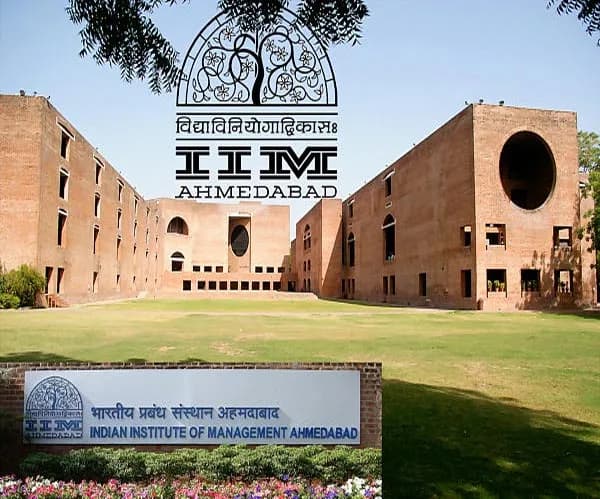

Located in the educational landscape of Ahmedabad, Gujarat, Indian Institute of Management Ahmedabad was established in 1961 to deliver transformative education. Conforming to regulatory norms of All India Council for Technical Education (AICTE) / UGC through its affiliation with Gujarat State University, the institution offers students an integrated foundation across business strategy, financial analytics, corporate governance, and entrepreneurial leadership. The campus is equipped with management simulation suites, modern boardroom presentation centers, and incubation hubs, creating an immersive environment for scholarly development and collaborative innovation. Dedicated to holistic student empowerment, the institution prepares ethical and career-ready professionals who contribute meaningfully to societal and industrial growth.
Total Fees
₹20L - ₹34.1L
Total Courses
6


Established in 1973, Indian Institute of Management Bangalore is a distinguished institution situated in Bengaluru Urban, Karnataka. Conforming to regulatory norms of All India Council for Technical Education (AICTE) / UGC through its affiliation with Karnataka State University, the institution offers students an integrated foundation across business strategy, financial analytics, corporate governance, and entrepreneurial leadership. The campus is equipped with management simulation suites, modern boardroom presentation centers, and incubation hubs, creating an immersive environment for scholarly development and collaborative innovation. By combining academic discipline with practical exposure, it equips emerging scholars to meet evolving demands in industry, academia, and public service.
Total Fees
₹4.5L - ₹34L
Total Courses
15


The Indian Institute of Management Calcutta (IIMC) was established as the first national institute for postgraduate studies and research in management by the Government of India in November 1961 in collaboration with the Alfred P. Sloan School of Management (MIT), the Government of West Bengal, the Ford Foundation, and Indian industry. During its initial years, several prominent faculty formed part of its nucleus, including Jagdish Sheth, J. K. Sengupta, and others. Over the years, IIMC has grown into a mature institution with a global reputation, imparting high-quality management education. It has been playing a pioneering role in professionalizing Indian management through its postgraduate and doctoral-level programs, executive training programs, and research and consulting activities. Today, the institute serves as an autonomous body, continually evolving to meet its goals in an ever-changing business environment.
Total Fees
₹40K - ₹33.5L
Total Courses
11


With an educational trajectory spanning 11 years since its inception in 2015, FACULTY OF MANAGEMENT STUDIES serves as a prominent seat of learning in Rajkot, Gujarat. Affiliated with Marwadi University and adhering to statutory benchmarks established by All India Council for Technical Education (AICTE) / UGC, the institution delivers specialized academic curricula centered on business strategy, financial analytics, corporate governance, and entrepreneurial leadership. Students benefit from contemporary infrastructure featuring management simulation suites, modern boardroom presentation centers, and incubation hubs, designed to support hands-on learning and comprehensive intellectual growth. By combining academic discipline with practical exposure, it equips emerging scholars to meet evolving demands in industry, academia, and public service.
Total Fees
₹75K - ₹2.3L
Total Courses
3


The IIM Lucknow Noida Campus is a state-of-the-art satellite facility dedicated to executive education and sustainable management. Located in the Delhi-NCR region, it serves as a center of excellence for mid-career professionals, offering full-time residential programs, world-class infrastructure, and a dedicated faculty pool.
Total Fees
₹7.5L - ₹26L
Total Courses
4

Established in 2006, IIFT KOLKATA is a distinguished institution situated in Kolkata, West Bengal. Conforming to regulatory norms of University Grants Commission (UGC) through its affiliation with Indian Institute of Foreign Trade, Delhi, the institution offers students an integrated foundation across holistic multidisciplinary education, applied research, and professional competence. Students benefit from contemporary infrastructure featuring digital lecture rooms, departmental resource centers, and central library, designed to support hands-on learning and comprehensive intellectual growth. Dedicated to holistic student empowerment, the institution prepares ethical and career-ready professionals who contribute meaningfully to societal and industrial growth.
Total Fees
₹20K - ₹36K
Total Courses
5


Established in 1996, Indian Institute of Management Kozhikode is a distinguished institution situated in Kozhikode, Kerala. Operating under the academic aegis of Kerala State University and recognized by All India Council for Technical Education (AICTE) / UGC, it provides structured degree programs emphasizing business strategy, financial analytics, corporate governance, and entrepreneurial leadership. The institution maintains robust academic resources including management simulation suites, modern boardroom presentation centers, and incubation hubs, fostering an active student life and practical competencies. Dedicated to holistic student empowerment, the institution prepares ethical and career-ready professionals who contribute meaningfully to societal and industrial growth.
Total Fees
₹83K - ₹29.9L
Total Courses
12
Get More Info About Mastering CAT
Recommended Reading

Amity Online MBA Fees 2027: Total Cost & Hidden Charges
Get the exact breakdown of Amity Online MBA fees for 2027. Learn about semester-wise costs, hidden exam fees, and the real ROI of India's top-ranked online degree.

Amity Online MBA 2026-2027: Validity, Fees & Job Reality
Is the Amity Online MBA valid for govt jobs? Fees for 2026-2027 range from ₹1.75L to ₹2.2L. Learn about syllabus, placements, and if it's right for your career.

Is Amity MBA Worth It? Fees & Placements Review 2026-2027
Wondering if an Amity MBA is worth the ₹14 Lakh investment? Check the 2027 placement reality, real median packages, and fee breakdown before you apply.