

Lowest NEET Cutoff Medical Colleges in India: 2026 Guide
Admission & Info Tools
Need Expert Assistance?
Our counselors can help you with fee structures, eligibility guidelines, and upcoming admission cutoffs instantly.
Direct Application Tools
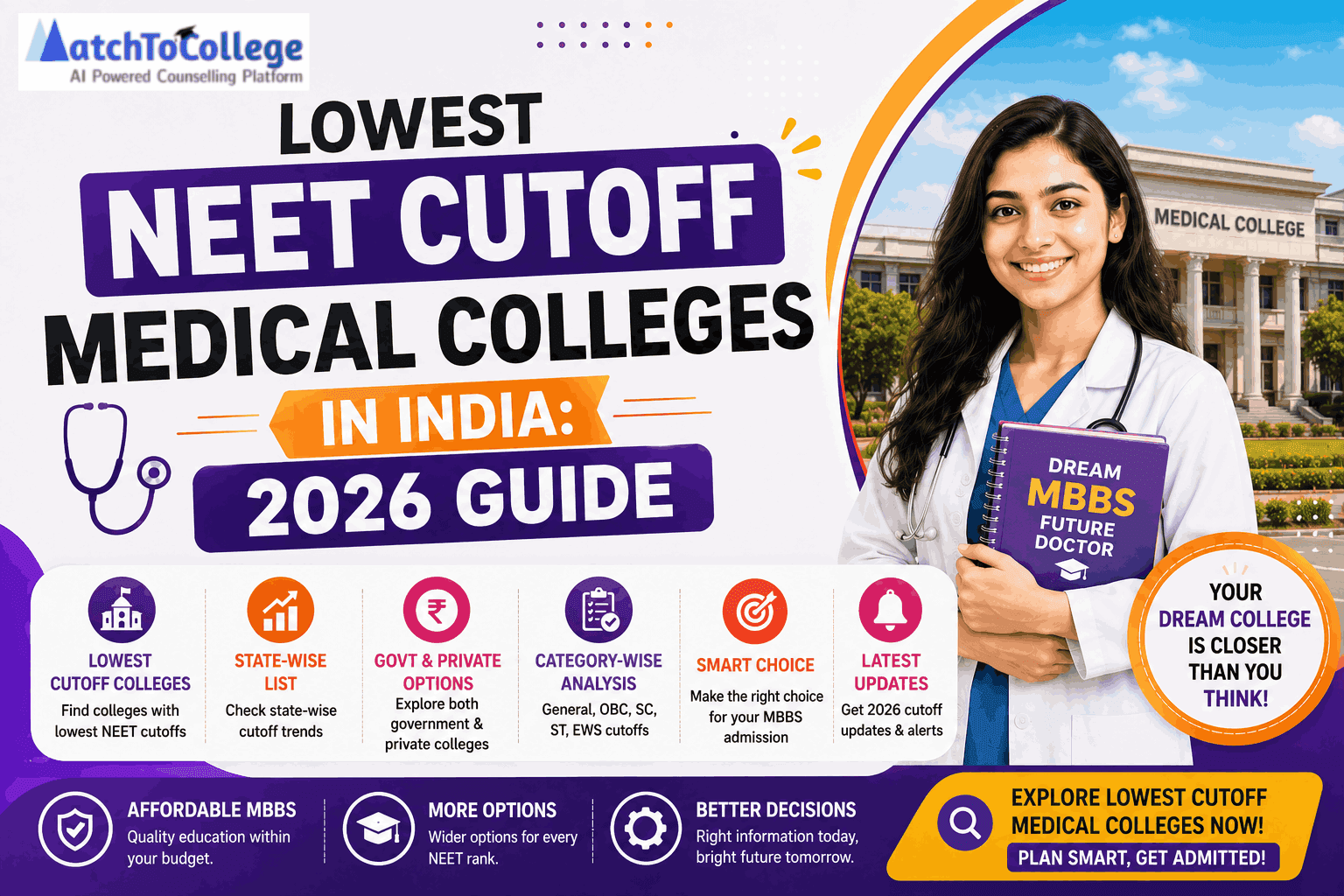
The journey to becoming a doctor in India is marked by intense competition and high academic stakes. With over 23 lakh students appearing for the National Eligibility cum Entrance Test (NEET-UG), the pressure to secure a seat in a prestigious government medical college is immense.
However, not every aspirant hits the 650+ mark required for top-tier institutions like AIIMS or MAMC. This is where strategic planning comes into play. Understanding which medical colleges have the lowest NEET cutoffs can be the difference between securing an MBBS seat and losing another year to preparation.
At MatchToCollege, we believe that data-driven decisions are the hallmark of successful admissions. By using our advanced NEET College Predictor, students can identify colleges that align with their specific rank and category, even if their scores aren't at the very top of the bell curve.
The NEET cutoff is influenced by several factors, including the difficulty level of the exam, the total number of candidates, and the seat matrix provided by the National Medical Commission (NMC). While the All India Quota (AIQ) cutoffs remain notoriously high, many state-run medical colleges and newly established government institutions offer more accessible entry points through state quota seats.
Furthermore, private medical colleges and deemed universities often have lower cutoffs, albeit with higher tuition fees. For students who have just finished their exams, the first step is often estimating their performance using tools like the NEET OMR Score Calculator. Once you have a raw score, the next logical step is to see where you stand nationally. You can Predict Your NEET 2026 Rank Instantly to understand the competitive landscape before the official results are even announced.
In this comprehensive guide, we will delve deep into the institutions that traditionally have lower cutoff requirements. We will explore the nuances of the 15% All India Quota versus the 85% State Quota, and how geographical location affects your chances. Whether you are aiming for a government seat in a developing state or considering the ROI of a private institution using our Online Courses ROI Calculator for your pre-med prep, this blog serves as your roadmap.
We also provide a specialized NEET Result Checker link for when the big day arrives. Navigating the counseling process requires more than just a good score; it requires an understanding of the 'closing ranks' from previous years. Let's explore how you can secure your future in medicine despite a lower-than-expected NEET score.
Understanding the Factors Influencing Low NEET Cutoffs
The term 'lowest cutoff' is relative and varies significantly depending on the category (General, OBC, SC, ST, EWS) and the quota being applied for. One of the primary reasons some colleges have lower cutoffs is their location.
Newly established Government Medical Colleges (GMCs) in states like Tamil Nadu, Rajasthan, and Uttar Pradesh often see slightly lower closing ranks compared to legacy institutions. This is because these colleges are still building their reputation and infrastructure. However, they provide the same MBBS degree recognized by the NMC.
To get a head start on your planning, you can use the NEET College Predictor to see which of these newer GMCs fall within your expected rank range.
Another critical factor is the 'State Quota.' While the All India Quota (AIQ) pools students from across the country, making it highly competitive, the 85% State Quota is reserved for residents of that particular state.
States like Himachal Pradesh, West Bengal, and Madhya Pradesh historically have lower state-level cutoffs compared to Delhi or Haryana. If you are unsure about your potential rank, it is wise to Predict Your NEET 2026 Rank Instantly. Knowing your rank helps in identifying which state's counseling process you should prioritize. Furthermore, the difficulty of the paper plays a massive role. In years when the Physics section is exceptionally tough, cutoffs tend to drop across the board.
Finally, seat increments play a vital role. Every year, the government adds thousands of seats to bridge the doctor-patient ratio gap. These new seats are often added to peripheral colleges, which naturally lowers the cutoff for that specific year.
Students should keep a close eye on our Domestic Colleges listing page for updates on new seat additions. It is also important to verify your score accurately using the NEET OMR Score Calculator to ensure you are working with the right data points during the counseling rounds.
Top Government Medical Colleges with Historically Lower Closing Ranks
When we look at the data from the past few counseling cycles, certain government colleges consistently appear at the lower end of the AIQ spectrum.
Colleges in the North Eastern states, such as the Regional Institute of Medical Sciences (RIMS) in Imphal or the Agartala Government Medical College, often have lower cutoffs due to their remote locations.
Similarly, GMCs in Andaman and Nicobar Islands often see seats remaining vacant until the Mop-up or Stray Vacancy rounds. For a general category student, while a top college might close at rank 5,000, these peripheral colleges might accept ranks up to 15,000 or even 20,000 under AIQ.
In states like Chhattisgarh and Odisha, several new GMCs have been inaugurated in districts like Kanker, Koraput, and Puri. These institutions are excellent options for students who want a government seat but have a rank between 20,000 and 40,000. To see a tailored list, use our NEET College Predictor.
It's not just about the score; it's about the strategy of choice filling during the Medical Counselling Committee (MCC) rounds. Students often make the mistake of only filling top-tier colleges and missing out on these viable options. Before you finalize your list, check the NEET Result Checker to confirm your official standings.
Additionally, some states offer 'Rural Service Bonds' that are more stringent than others. Colleges in these areas might have lower cutoffs because some students shy away from the mandatory service commitment. However, for an aspiring doctor, this is a great way to gain clinical experience while securing a subsidized education.
If you are worried about the financial aspects of even a government seat or considering the transition to a career path, our Career Pathway Matcher can help you see if medicine remains your best fit or if allied health sciences offer a better ROI using the Online Courses ROI Calculator.
Private Medical Colleges and Deemed Universities: A Viable Alternative?
If your NEET score doesn't qualify you for a government seat, private medical colleges and deemed universities are the next best step. Institutions like Dr. DY Patil Medical College (Pune), Santosh Medical College (Ghaziabad), and various institutions under the Vinayaka Missions Research Foundation often have much lower NEET cutoffs—sometimes just slightly above the qualifying percentile.
The trade-off, however, is the fee structure. Tuition fees for these institutions can range from 15 lakhs to 25 lakhs per annum. This is a significant investment, and students should use the Education Loan EMI Calculator to understand the long-term financial implications of such a move.
Deemed universities participate in a centralized counseling process, making them accessible to students from all over India. While the cutoffs are low, the quality of education and infrastructure is often world-class. To explore these options, you can browse through our Domestic Colleges database to compare facilities and hospital bed strength.
If the high costs of private education in India seem daunting, many students look towards our MBBS Abroad options, where the cutoff requirements are minimal (only NEET qualification is needed) and the total cost is often lower than private colleges in India.
Before committing to a high-fee private seat, it is crucial to perform a thorough analysis.
Ask yourself: Will You Actually Finish Your Online Degree? or in this case, your rigorous medical program? The academic load in medicine is heavy regardless of the college's cutoff. Using the Are You on the Right Path to Your Dream Career? tool can provide psychological insights into your readiness for the medical profession.
For those who decide to stay in India, ensuring you have the right rank data via the NEET Rank Predictor is the first step toward a successful private college admission.
Counseling Strategy: How to Secure a Seat with a Low Score
Securing an MBBS seat with a low NEET score is 40% preparation and 60% counseling strategy. The first mistake students make is neglecting the 'Mop-up' and 'Stray Vacancy' rounds.
Many high-scoring students vacate seats in peripheral government colleges when they get upgraded or choose a different path, leaving seats open for those with lower ranks.
By using the NEET College Predictor, you can identify which colleges had vacancies in these late rounds in previous years. This historical data is a goldmine for students on the edge of the cutoff.
Another strategy is to look at states with 'Open' private medical college policies. States like Karnataka, Uttar Pradesh, and Bihar allow students from other states to apply for seats in their private medical colleges. While the cutoffs for 'Category A' seats (subsidized) are high, the 'Category B' and 'Category C' (Management/NRI) seats have significantly lower requirements.
Before you dive into the paperwork, calculate your potential debt-to-income ratio using the Education Loan EMI Calculator to ensure you are making a sustainable financial decision.
For those who find the Indian medical landscape too restrictive, the path to becoming a doctor doesn't end here. Many choose to pursue MBBS Abroad in countries like Georgia, Kazakhstan, or Uzbekistan. These countries offer admissions to students with just the NEET qualifying marks (usually around 130-150 for General category).
Use our NEET Result Checker to see if you've met the qualifying threshold. Remember, the goal is to become a competent medical professional; the name of the college on your degree matters less than your clinical skills and your performance in the NEXT (National Exit Test) exam later on.
Share this Article
FAQFrequently Asked Questions
Q: Which state has the lowest NEET cutoff for government medical colleges?
Q: Can I get MBBS with 400 marks in NEET?
Q: Is there a difference between AIQ and State Quota cutoffs?
Q: What is the best tool to predict my medical college based on NEET score?
Top Colleges Covered in this Blog
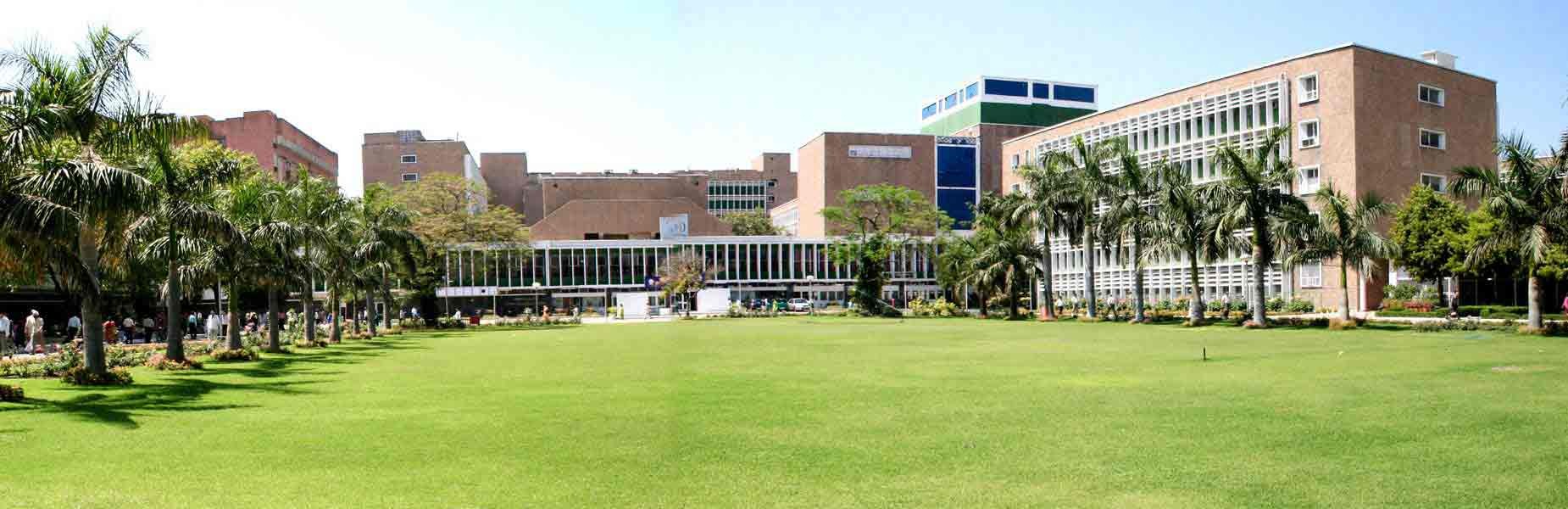
All India Institute Of Medical Sciences
All India Institute Of Medical Sciences
The All India Institutes of Medical Sciences (AIIMS) is a group of autonomous government public medical universities of higher education under the jurisdiction of Ministry of Health and Family Welfare, Government of India. These institutes have been declared by an Act of Parliament as Institutes of National Importance. AIIMS New Delhi, the forerunner institute, was established in 1956. Since then, 24 more institutes were announced. As of January 2023, twenty institutes are operating and four more are expected to become operational until 2025. Proposals were made for six more AIIMS under the leadership of Narendra Modi. It is considered as pioneer health institution of Asia.
Total Fees
₹1K - ₹8K
Total Courses
17

Maulana Azad Medical College
Maulana Azad Medical College
The foundation stone of MAMC was laid on Saturday, 24th October 1959, by Union Home Minister Pandit Govind Ballabh Pant. The event was reported by all major newspapers. Here is the excerpt from the Hindustan Times dated October 25th, 1959. Laying the foundation stone of the new building of the Maulana Azad Medical College on a 30-acre land, Pandit Pant paid a great tribute to Maulana Azad. The Home Minister said Maulana Azad was one of the greatest patriots of the country who combined statesmanship with profound scholarship. His memories would inspire his countrymen for his long devotion to the service of humanity.
Total Fees
₹720 - ₹39K
Total Courses
5
Get More Info About Lowest NEET Cutoff Medical Colleges in India
Recommended Reading

LBSIM Delhi & GIBS 2027 Admissions Open: Apply Online Now
LBSIM Delhi and GIBS Bangalore open 2027 admissions. Explore PGDM, MBA, and BBA application details, early bird offers, and WBJEE/TNEA 2026 counseling updates.

Best Online MBA Specializations for High-Paying Careers 2026
Discover the most lucrative online MBA specializations for 2026-27. Compare ROI, career growth, and use our AI tools to find your perfect management path.

Top Career Opportunities After an Online MBA in 2026-27
Discover high-paying career paths and roles after an online MBA in 2026-27. Explore salary trends, ROI, and tools to navigate your future professional success.