

JEE Advanced Marks vs Rank: Your Definitive Guide to IIT Admissions
Admission & Info Tools
Need Expert Assistance?
Our counselors can help you with fee structures, eligibility guidelines, and upcoming admission cutoffs instantly.
Direct Application Tools

🎯 MatchToCollege AI Recommendation: Planning your counselling or choice filling? Check your seat allotment probability across premier colleges using the JEE Advanced College Predictor.
Key Highlights & JEE Advanced Overview
The Joint Entrance Examination (Advanced) is the gateway to the prestigious Indian Institutes of Technology (IITs). Understanding its structure and key statistics is fundamental to your preparation strategy. Here's a snapshot of what JEE Advanced entails:
| Parameter | Details |
| Exam Name | JEE Advanced (Joint Entrance Examination Advanced) |
| Conducting Body | One of the seven zonal IITs (rotational) |
| Exam Mode | Computer Based Test (CBT) |
| Number of Papers | Two (Paper 1 & Paper 2) |
| Duration per Paper | 3 Hours |
| Total Marks (2026) | 360 (typically) |
| Total Candidates Appeared (2026) | 1,79,694 |
| Total Candidates Qualified (2026) | 56,880 |
| Rank 1 Marks (2026) | 330 out of 360 |
The dynamic nature of JEE Advanced means the exact pattern and marking scheme can vary slightly each year. However, the core objective remains consistent: to identify the brightest minds for engineering education at the IITs.
Eligibility Criteria & Selection Process
To even dream of an IIT seat, you must first meet the stringent eligibility criteria for JEE Advanced. It's a multi-stage process designed to select candidates with strong academic foundations and problem-solving abilities.
Eligibility Requirements:
- JEE Main Qualification: Candidates must be among the top 2,50,000 successful candidates (including all categories) in JEE Main Paper 1.
- Age Limit: Candidates should have been born on or after October 1, 1999. A five-year relaxation is provided for SC/ST/PwD candidates.
- Number of Attempts: A candidate can attempt JEE Advanced a maximum of two times in consecutive years.
- Academic Performance: Candidates must have passed their Class 12th (or equivalent) examination with at least 75% aggregate marks (65% for SC/ST/PwD candidates) or be in the top 20 percentile of their respective boards.
Selection Stages:
- JEE Main Qualification: The first hurdle is to qualify for JEE Advanced by securing a rank within the top 2,50,000 in JEE Main.
- JEE Advanced Examination: This comprises two papers (Paper 1 and Paper 2), each of three hours duration, covering Physics, Chemistry, and Mathematics. Both papers are mandatory.
- Aggregate Marks & Rank List: Your final rank is determined by the aggregate marks obtained in both Paper 1 and Paper 2.
- Tie-Breaking Criteria: In case two or more candidates secure the same aggregate marks, the following tie-breaking rules are applied sequentially:
- Higher marks in Mathematics.
- Higher marks in Physics.
- Candidates with the same marks in all subjects will be assigned the same rank.
- Counselling & Seat Allotment: Qualified candidates participate in JoSAA (Joint Seat Allocation Authority) counselling based on their JEE Advanced rank and preferences.
JEE Advanced Marks vs Rank Analysis (2026 Trends)
Understanding the marks vs rank correlation is paramount for strategic preparation. While the exact cutoffs fluctuate annually based on factors like exam difficulty and the number of applicants, analyzing past trends provides invaluable insights. For JEE Advanced 2026, we observed a competitive landscape where even a slight difference in marks could lead to a significant rank variation. Here's an illustrative breakdown of marks vs rank for various categories based on the 2026 trends:
JEE Advanced 2026 Marks vs Rank (Common Rank List - CRL)
| Marks Range (Out of 360) | Expected CRL Rank Range |
| 300+ | 1 - 50 |
| 250-299 | 51 - 500 |
| 200-249 | 501 - 2,000 |
| 150-199 | 2,001 - 8,000 |
| 100-149 | 8,001 - 20,000 |
JEE Advanced 2026 Marks vs Rank (Gen-EWS Category)
| Marks Range (Out of 360) | Expected Gen-EWS Rank Range |
| 180+ | 1 - 500 |
| 150-179 | 501 - 2,000 |
| 120-149 | 2,001 - 5,000 |
JEE Advanced 2026 Marks vs Rank (OBC-NCL Category)
| Marks Range (Out of 360) | Expected OBC-NCL Rank Range |
| 190+ | 1 - 1,000 |
| 160-189 | 1,001 - 4,000 |
| 130-159 | 4,001 - 10,000 |
JEE Advanced 2026 Marks vs Rank (SC Category)
| Marks Range (Out of 360) | Expected SC Rank Range |
| 100+ | 1 - 1,500 |
| 80-99 | 1,501 - 5,000 |
| 60-79 | 5,001 - 10,000 |
JEE Advanced 2026 Marks vs Rank (ST Category)
| Marks Range (Out of 360) | Expected ST Rank Range |
| 80+ | 1 - 1,000 |
| 60-79 | 1,001 - 3,000 |
| 40-59 | 3,001 - 6,000 |
Please Note: These tables provide an illustrative overview based on 2026 trends and official reports. Actual ranks can vary. For a personalized prediction of your admission chances into top IITs based on your JEE Advanced rank, utilize our JEE Advanced College Predictor. It's an invaluable tool to gauge your standing and explore potential college options.
Top IITs & Illustrative Admission Scenarios
Aspiring for an IIT is a dream shared by many, but securing a seat in the top-tier institutions like IIT Bombay, Delhi, Madras, or Kanpur requires not just a good rank, but often a stellar one. While specific marks for admission vary greatly by branch and category, understanding the general competitive landscape is key.
For instance, securing a seat in Computer Science Engineering (CSE) at IIT Bombay or IIT Delhi typically demands a CRL rank within the top 100-200. Other sought-after branches like Electrical Engineering or Mechanical Engineering at these premier IITs might see cutoffs extending to CRL ranks of 500-1500. For newer IITs or less competitive branches, the rank requirement can be higher.
The questions like "How many marks required in JEE Advanced for IIT Madras?" or "How many marks required in JEE Advanced for IIT Delhi?" are best answered by analyzing the previous year's opening and closing ranks for specific branches and categories. These figures are dynamic and are influenced by the total number of applicants, exam difficulty, and seat matrix.
To gain a clearer picture of your prospects for specific IITs and branches, we strongly recommend using the MatchToCollege JEE Advanced College Predictor. This tool leverages extensive data to help you understand which IITs and branches you might qualify for based on your expected rank.
Strategic Preparation & Admissions Checklist
Success in JEE Advanced is a marathon, not a sprint. A well-structured preparation strategy, coupled with a clear understanding of the admission process, will significantly boost your chances.
Preparation Strategy:
- Master the Fundamentals: Ensure a strong grasp of Physics, Chemistry, and Mathematics concepts from your Class 11th and 12th syllabi.
- Practice Regularly: Solve a vast number of problems, including previous year's JEE Advanced papers. This helps in understanding the exam pattern and time management.
- Analyze Mock Tests: Take mock tests regularly and thoroughly analyze your performance to identify weak areas and improve speed and accuracy.
- Focus on Problem-Solving: JEE Advanced emphasizes conceptual understanding and application. Practice complex, multi-concept problems.
- Stay Updated: Keep an eye on official announcements regarding exam patterns, syllabus, and important dates on jeeadv.ac.in.
Admissions Checklist:
- JEE Main Qualification: Ensure you qualify for JEE Advanced by securing a good rank in JEE Main.
- Registration for JEE Advanced: Complete your registration on the official portal within the stipulated timelines.
- Admit Card: Download your admit card well in advance and check all details.
- Exam Day Preparedness: Be familiar with the CBT interface and reach the exam center on time.
- Response Sheet & Answer Key: After the exam, check the official response sheet and provisional answer key.
- Result & Rank Card: Download your JEE Advanced result and rank card from the official website.
- JoSAA Counselling: Participate actively in JoSAA counselling, filling your choices strategically based on your rank and preferences.
- Document Verification: Keep all necessary documents (academic certificates, category certificates, etc.) ready for verification during counselling.
Career Scope, Placements & Expected ROI
An engineering degree from an IIT is a hallmark of academic excellence and opens doors to unparalleled career opportunities. The return on investment (ROI) from an IIT education is exceptionally high, considering the quality of education, research facilities, and robust placement records.
Placement Insights:
- High Average Packages: IITs consistently report some of the highest average placement packages in India, often ranging from INR 15-25 LPA for B.Tech graduates, with top offers soaring much higher (INR 40-80+ LPA).
- Diverse Recruiters: Leading companies from various sectors, including IT, consulting, finance, core engineering, and startups, actively recruit from IIT campuses.
- Global Opportunities: Many IIT graduates secure international placements or pursue higher studies at top global universities.
Career Opportunities:
- Core Engineering Roles: Design, R&D, manufacturing, and operations in various industries.
- IT & Software Development: Software engineering, data science, AI/ML, cybersecurity.
- Consulting & Finance: Management consulting, investment banking, data analytics.
- Entrepreneurship: Many IIT graduates go on to found successful startups, leveraging the innovative ecosystem.
- Higher Education & Research: Pursuing M.Tech, MS, or PhD degrees in India or abroad.
The rigorous curriculum, exposure to cutting-edge research, and a vibrant campus life at IITs not only equip you with technical skills but also foster critical thinking, leadership qualities, and a problem-solving mindset, making you highly sought after in the global job market.
🏛️ Looking for Admissions & College Cutoffs? Explore verified fee structures, seat matrices, and real student reviews across top institutions on the MatchToCollege Top Colleges & Universities in India Directory.
Frequently Asked Questions
Q: How is the JEE Advanced rank determined?
Your JEE Advanced rank is determined by the aggregate marks you score in both Paper 1 and Paper 2. In case of a tie between candidates, specific tie-breaking rules are applied, prioritizing marks in Mathematics, then Physics, and finally assigning the same rank if all subject marks are identical.
Q: What subjects are included in the JEE Advanced exam?
The JEE Advanced exam comprises questions from three core subjects: Physics, Chemistry, and Mathematics. Both Paper 1 and Paper 2 will have sections dedicated to these three subjects, testing your conceptual understanding and problem-solving abilities.
Q: Does the JEE Advanced exam pattern change every year?
Yes, the JEE Advanced exam pattern is known for its dynamic nature. While the fundamental structure (two papers, 3 hours each, CBT mode, PCM subjects) remains consistent, the types of questions asked, marking schemes, and distribution of marks can vary from year to year. Aspirants must stay updated with official announcements.
Q: What are the key factors influencing JEE Advanced marks vs rank correlation?
Several factors influence the marks vs rank correlation, including the overall difficulty level of the exam papers, the total number of candidates who appeared, the number of seats available in IITs, and the performance distribution of the top scorers. These factors collectively determine how a particular score translates into a rank each year.
Q: How can I estimate my chances of getting into an IIT based on my expected JEE Advanced marks?
While past year marks vs rank data provides a good reference, the most accurate way to estimate your chances is by using a reliable college predictor tool. MatchToCollege offers a JEE Advanced College Predictor that analyzes your expected rank against historical cutoffs for various IITs and branches, giving you a personalized admission probability.
Q: When is the JEE Advanced response sheet typically released?
The JEE Advanced response sheet is usually released a few days after the examination. Candidates can download their individual response sheets from the official JEE Advanced website (jeeadv.ac.in) using their login credentials. This allows them to cross-verify their marked answers with the provisional answer key.
Key Highlights & JEE Advanced Overview
The Joint Entrance Examination (Advanced) is the gateway to the prestigious Indian Institutes of Technology (IITs). Understanding its structure and key statistics is fundamental to your preparation strategy. Here's a snapshot of what JEE Advanced entails:
| Parameter | Details |
| Exam Name | JEE Advanced (Joint Entrance Examination Advanced) |
| Conducting Body | One of the seven zonal IITs (rotational) |
| Exam Mode | Computer Based Test (CBT) |
| Number of Papers | Two (Paper 1 & Paper 2) |
| Duration per Paper | 3 Hours |
| Total Marks (2026) | 360 (typically) |
| Total Candidates Appeared (2026) | 1,79,694 |
| Total Candidates Qualified (2026) | 56,880 |
| Rank 1 Marks (2026) | 330 out of 360 |
The dynamic nature of JEE Advanced means the exact pattern and marking scheme can vary slightly each year. However, the core objective remains consistent: to identify the brightest minds for engineering education at the IITs.
Eligibility Criteria & Selection Process
To even dream of an IIT seat, you must first meet the stringent eligibility criteria for JEE Advanced. It's a multi-stage process designed to select candidates with strong academic foundations and problem-solving abilities.
Eligibility Requirements:
- JEE Main Qualification: Candidates must be among the top 2,50,000 successful candidates (including all categories) in JEE Main Paper 1.
- Age Limit: Candidates should have been born on or after October 1, 1999. A five-year relaxation is provided for SC/ST/PwD candidates.
- Number of Attempts: A candidate can attempt JEE Advanced a maximum of two times in consecutive years.
- Academic Performance: Candidates must have passed their Class 12th (or equivalent) examination with at least 75% aggregate marks (65% for SC/ST/PwD candidates) or be in the top 20 percentile of their respective boards.
Selection Stages:
- JEE Main Qualification: The first hurdle is to qualify for JEE Advanced by securing a rank within the top 2,50,000 in JEE Main.
- JEE Advanced Examination: This comprises two papers (Paper 1 and Paper 2), each of three hours duration, covering Physics, Chemistry, and Mathematics. Both papers are mandatory.
- Aggregate Marks & Rank List: Your final rank is determined by the aggregate marks obtained in both Paper 1 and Paper 2.
- Tie-Breaking Criteria: In case two or more candidates secure the same aggregate marks, the following tie-breaking rules are applied sequentially:
- Higher marks in Mathematics.
- Higher marks in Physics.
- Candidates with the same marks in all subjects will be assigned the same rank.
- Counselling & Seat Allotment: Qualified candidates participate in JoSAA (Joint Seat Allocation Authority) counselling based on their JEE Advanced rank and preferences.
JEE Advanced Marks vs Rank Analysis (2026 Trends)
Understanding the marks vs rank correlation is paramount for strategic preparation. While the exact cutoffs fluctuate annually based on factors like exam difficulty and the number of applicants, analyzing past trends provides invaluable insights. For JEE Advanced 2026, we observed a competitive landscape where even a slight difference in marks could lead to a significant rank variation. Here's an illustrative breakdown of marks vs rank for various categories based on the 2026 trends:
JEE Advanced 2026 Marks vs Rank (Common Rank List - CRL)
| Marks Range (Out of 360) | Expected CRL Rank Range |
| 300+ | 1 - 50 |
| 250-299 | 51 - 500 |
| 200-249 | 501 - 2,000 |
| 150-199 | 2,001 - 8,000 |
| 100-149 | 8,001 - 20,000 |
JEE Advanced 2026 Marks vs Rank (Gen-EWS Category)
| Marks Range (Out of 360) | Expected Gen-EWS Rank Range |
| 180+ | 1 - 500 |
| 150-179 | 501 - 2,000 |
| 120-149 | 2,001 - 5,000 |
JEE Advanced 2026 Marks vs Rank (OBC-NCL Category)
| Marks Range (Out of 360) | Expected OBC-NCL Rank Range |
| 190+ | 1 - 1,000 |
| 160-189 | 1,001 - 4,000 |
| 130-159 | 4,001 - 10,000 |
JEE Advanced 2026 Marks vs Rank (SC Category)
| Marks Range (Out of 360) | Expected SC Rank Range |
| 100+ | 1 - 1,500 |
| 80-99 | 1,501 - 5,000 |
| 60-79 | 5,001 - 10,000 |
JEE Advanced 2026 Marks vs Rank (ST Category)
| Marks Range (Out of 360) | Expected ST Rank Range |
| 80+ | 1 - 1,000 |
| 60-79 | 1,001 - 3,000 |
| 40-59 | 3,001 - 6,000 |
Please Note: These tables provide an illustrative overview based on 2026 trends and official reports. Actual ranks can vary. For a personalized prediction of your admission chances into top IITs based on your JEE Advanced rank, utilize our JEE Advanced College Predictor. It's an invaluable tool to gauge your standing and explore potential college options.
Top IITs & Illustrative Admission Scenarios
Aspiring for an IIT is a dream shared by many, but securing a seat in the top-tier institutions like IIT Bombay, Delhi, Madras, or Kanpur requires not just a good rank, but often a stellar one. While specific marks for admission vary greatly by branch and category, understanding the general competitive landscape is key.
For instance, securing a seat in Computer Science Engineering (CSE) at IIT Bombay or IIT Delhi typically demands a CRL rank within the top 100-200. Other sought-after branches like Electrical Engineering or Mechanical Engineering at these premier IITs might see cutoffs extending to CRL ranks of 500-1500. For newer IITs or less competitive branches, the rank requirement can be higher.
The questions like "How many marks required in JEE Advanced for IIT Madras?" or "How many marks required in JEE Advanced for IIT Delhi?" are best answered by analyzing the previous year's opening and closing ranks for specific branches and categories. These figures are dynamic and are influenced by the total number of applicants, exam difficulty, and seat matrix.
To gain a clearer picture of your prospects for specific IITs and branches, we strongly recommend using the MatchToCollege JEE Advanced College Predictor. This tool leverages extensive data to help you understand which IITs and branches you might qualify for based on your expected rank.
Strategic Preparation & Admissions Checklist
Success in JEE Advanced is a marathon, not a sprint. A well-structured preparation strategy, coupled with a clear understanding of the admission process, will significantly boost your chances.
Preparation Strategy:
- Master the Fundamentals: Ensure a strong grasp of Physics, Chemistry, and Mathematics concepts from your Class 11th and 12th syllabi.
- Practice Regularly: Solve a vast number of problems, including previous year's JEE Advanced papers. This helps in understanding the exam pattern and time management.
- Analyze Mock Tests: Take mock tests regularly and thoroughly analyze your performance to identify weak areas and improve speed and accuracy.
- Focus on Problem-Solving: JEE Advanced emphasizes conceptual understanding and application. Practice complex, multi-concept problems.
- Stay Updated: Keep an eye on official announcements regarding exam patterns, syllabus, and important dates on jeeadv.ac.in.
Admissions Checklist:
- JEE Main Qualification: Ensure you qualify for JEE Advanced by securing a good rank in JEE Main.
- Registration for JEE Advanced: Complete your registration on the official portal within the stipulated timelines.
- Admit Card: Download your admit card well in advance and check all details.
- Exam Day Preparedness: Be familiar with the CBT interface and reach the exam center on time.
- Response Sheet & Answer Key: After the exam, check the official response sheet and provisional answer key.
- Result & Rank Card: Download your JEE Advanced result and rank card from the official website.
- JoSAA Counselling: Participate actively in JoSAA counselling, filling your choices strategically based on your rank and preferences.
- Document Verification: Keep all necessary documents (academic certificates, category certificates, etc.) ready for verification during counselling.
Career Scope, Placements & Expected ROI
An engineering degree from an IIT is a hallmark of academic excellence and opens doors to unparalleled career opportunities. The return on investment (ROI) from an IIT education is exceptionally high, considering the quality of education, research facilities, and robust placement records.
Placement Insights:
- High Average Packages: IITs consistently report some of the highest average placement packages in India, often ranging from INR 15-25 LPA for B.Tech graduates, with top offers soaring much higher (INR 40-80+ LPA).
- Diverse Recruiters: Leading companies from various sectors, including IT, consulting, finance, core engineering, and startups, actively recruit from IIT campuses.
- Global Opportunities: Many IIT graduates secure international placements or pursue higher studies at top global universities.
Career Opportunities:
- Core Engineering Roles: Design, R&D, manufacturing, and operations in various industries.
- IT & Software Development: Software engineering, data science, AI/ML, cybersecurity.
- Consulting & Finance: Management consulting, investment banking, data analytics.
- Entrepreneurship: Many IIT graduates go on to found successful startups, leveraging the innovative ecosystem.
- Higher Education & Research: Pursuing M.Tech, MS, or PhD degrees in India or abroad.
The rigorous curriculum, exposure to cutting-edge research, and a vibrant campus life at IITs not only equip you with technical skills but also foster critical thinking, leadership qualities, and a problem-solving mindset, making you highly sought after in the global job market.
🏛️ Looking for Admissions & College Cutoffs? Explore verified fee structures, seat matrices, and real student reviews across top institutions on the MatchToCollege Top Colleges & Universities in India Directory.
Share this Article
FAQFrequently Asked Questions
Q: How is the JEE Advanced rank determined?
Your JEE Advanced rank is determined by the aggregate marks you score in both Paper 1 and Paper 2. In case of a tie between candidates, specific tie-breaking rules are applied, prioritizing marks in Mathematics, then Physics, and finally assigning the same rank if all subject marks are identical.
Q: What subjects are included in the JEE Advanced exam?
The JEE Advanced exam comprises questions from three core subjects: Physics, Chemistry, and Mathematics. Both Paper 1 and Paper 2 will have sections dedicated to these three subjects, testing your conceptual understanding and problem-solving abilities.
Q: Does the JEE Advanced exam pattern change every year?
Yes, the JEE Advanced exam pattern is known for its dynamic nature. While the fundamental structure (two papers, 3 hours each, CBT mode, PCM subjects) remains consistent, the types of questions asked, marking schemes, and distribution of marks can vary from year to year. Aspirants must stay updated with official announcements.
Q: What are the key factors influencing JEE Advanced marks vs rank correlation?
Several factors influence the marks vs rank correlation, including the overall difficulty level of the exam papers, the total number of candidates who appeared, the number of seats available in IITs, and the performance distribution of the top scorers. These factors collectively determine how a particular score translates into a rank each year.
Q: How can I estimate my chances of getting into an IIT based on my expected JEE Advanced marks?
While past year marks vs rank data provides a good reference, the most accurate way to estimate your chances is by using a reliable college predictor tool. MatchToCollege offers a <a href="https://matchtocollege.com/tools/jee-advanced-college-predictor" target="_blank">JEE Advanced College Predictor</a> that analyzes your expected rank against historical cutoffs for various IITs and branches, giving you a personalized admission probability.
Q: When is the JEE Advanced response sheet typically released?
The JEE Advanced response sheet is usually released a few days after the examination. Candidates can download their individual response sheets from the official JEE Advanced website (<a href="https://jeeadv.ac.in" target="_blank">jeeadv.ac.in</a>) using their login credentials. This allows them to cross-verify their marked answers with the provisional answer key.
Top Colleges Covered in this Blog
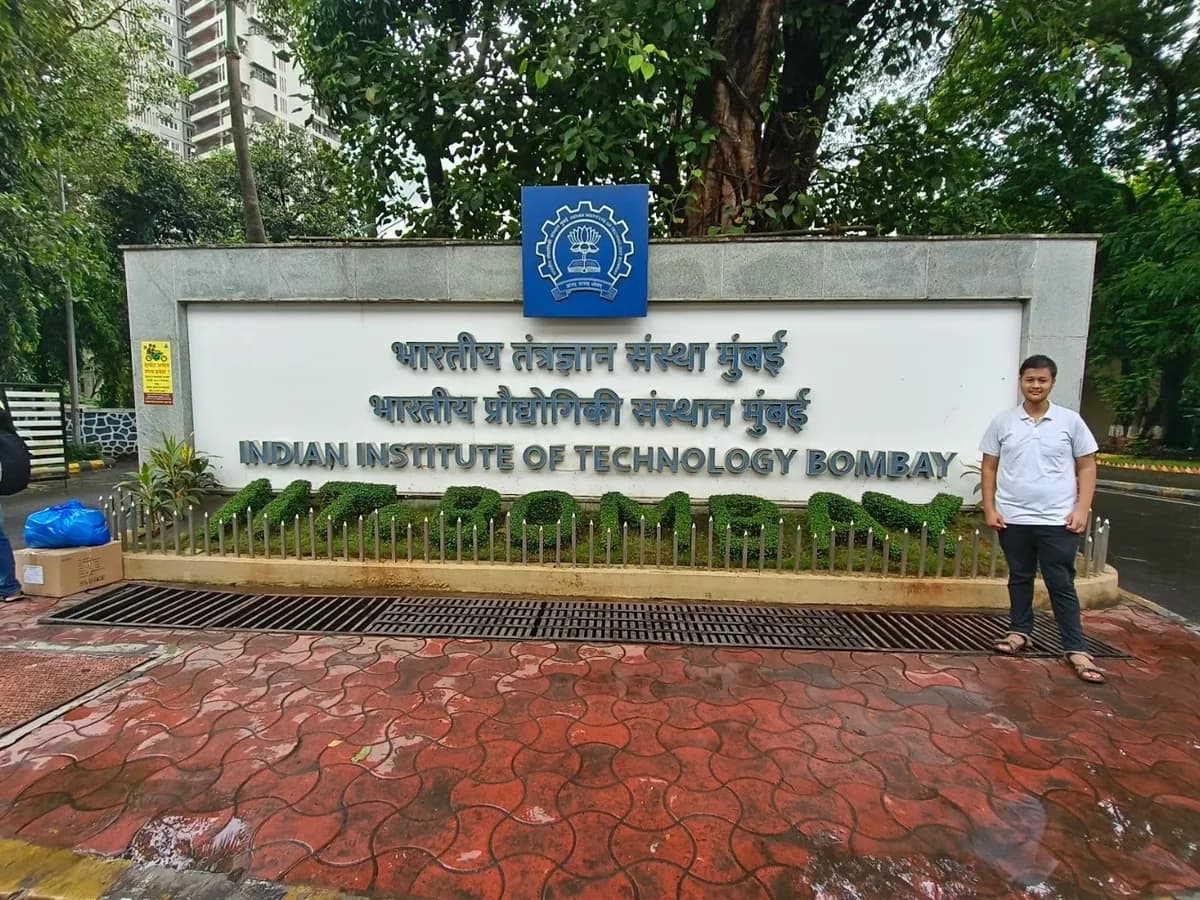

The Indian Institute of Technology Bombay (IIT Bombay or IITB) is a public research university and technical institute located in Mumbai, Maharashtra, India. Established in 1958, it is one of the 23 Indian Institutes of Technology, designated as an Institution of Eminence in 2018. IIT Bombay serves as a Centre of Excellence for India's training, research, and development in science, engineering, and technology. The institute comprises 17 academic departments, 35 additional academic centers, and three schools.
Total Fees
₹81K - ₹15.2L
Total Courses
9
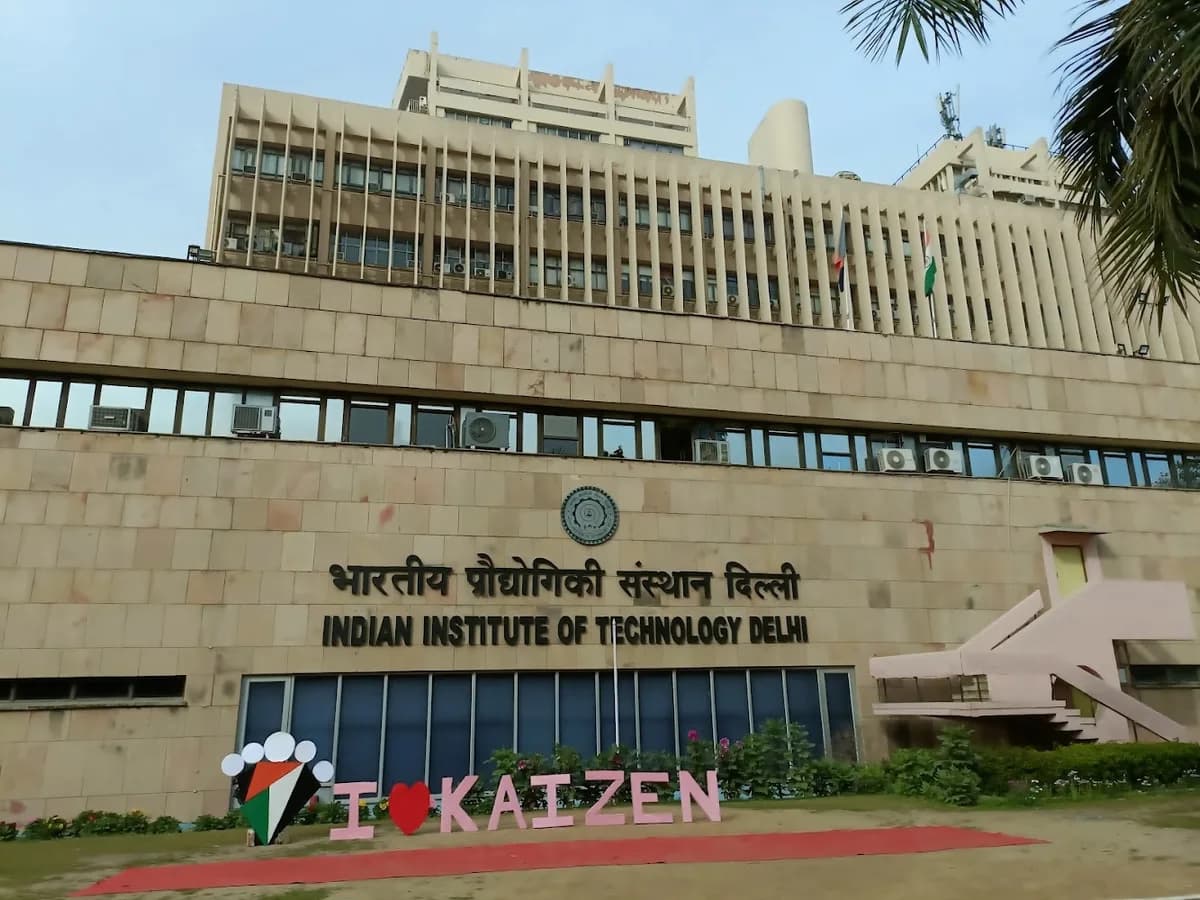
Indian Institute of Technology, Delhi, founded in 1961 in South, Delhi, is a premier academic institution dedicated to higher learning. Conforming to regulatory norms of All India Council for Technical Education (AICTE) through its affiliation with Delhi State University, the institution offers students an integrated foundation across engineering innovation, applied science, computational systems, and advanced technical research. The institution maintains robust academic resources including state-of-the-art computational centers, robotics and IoT laboratories, and core engineering workshops, fostering an active student life and practical competencies. Dedicated to holistic student empowerment, the institution prepares ethical and career-ready professionals who contribute meaningfully to societal and industrial growth.
Total Fees
₹93K - ₹18L
Total Courses
10

Indian Institute of Technology, Madras is a renowned institution of higher learning in Chennai, Tamil Nadu. Equipped with modern research infrastructure, accredited academic schools, and extensive placement partnerships, it prepares students for impactful leadership across global industries.
Total Fees
₹1.5L - ₹12.8L
Total Courses
7
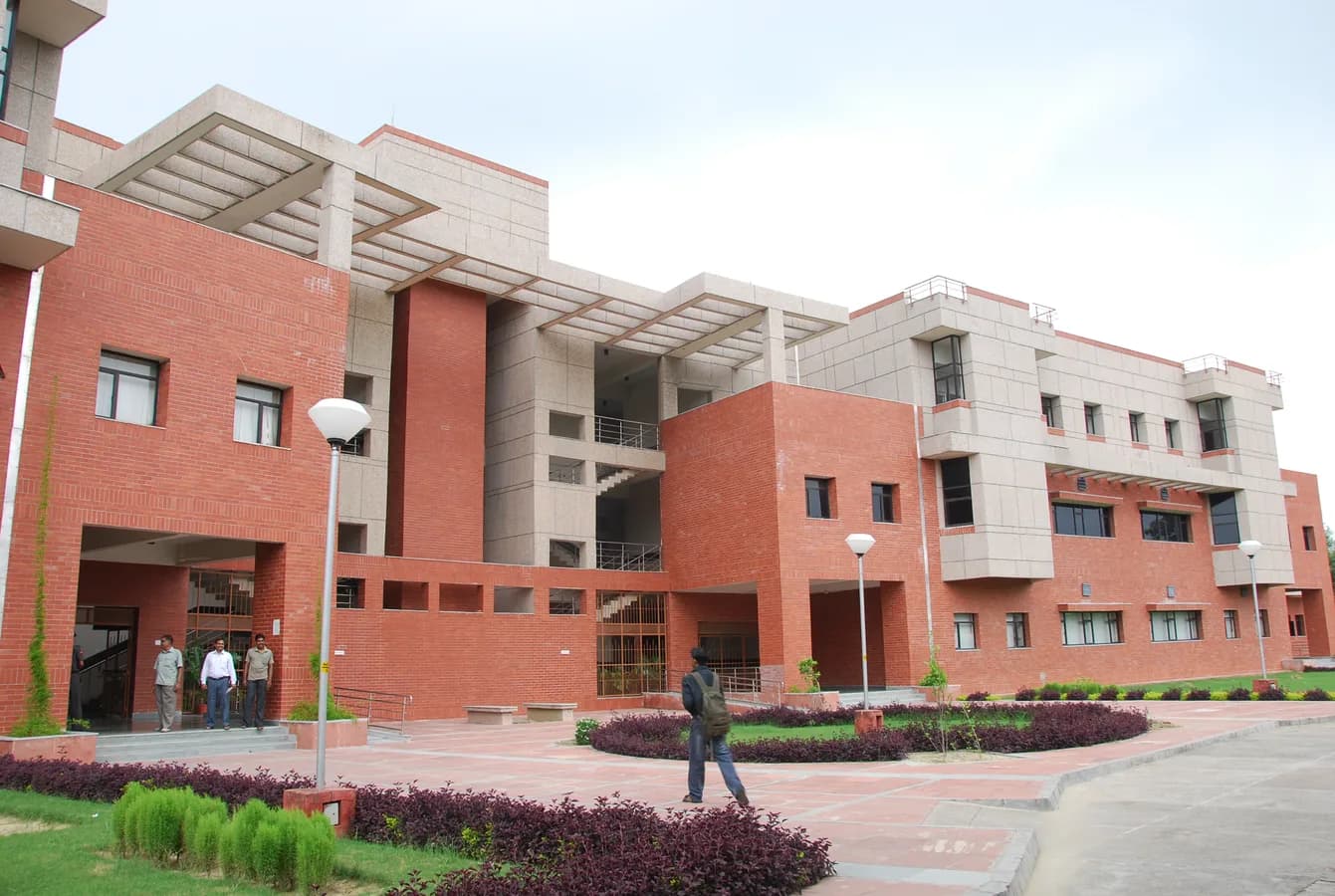

Indian Institute of Technology Kanpur (IITK) is one of the premier engineering institutions in India and was established in 1959 as one of the first IITs. It is recognized as an Institute of National Importance and is known for its excellence in engineering, science, management, and research. IIT Kanpur has consistently ranked among the top technical institutions in India and is known for its strong research culture, innovation, and global collaborations.
Total Fees
₹12K - ₹11.4L
Total Courses
10
Get More Info About JEE Advanced Marks vs Rank
Recommended Reading

VITEEE 2026: Your Definitive Guide to Fees, Seat Matrix & Admission
Navigate VITEEE 2026 admissions with our expert guide on fee structures, seat distribution across campuses, and the crucial Group A/B course distinction. Understand the financial commitment and strategic choices for your B.Tech journey at VIT.

Your Definitive Guide to the CAT Exam Portal & MBA Admission Journey
Unlock your MBA aspirations with our comprehensive guide to the CAT exam portal, from registration to results. Navigate every critical step of your CAT journey with expert insights and strategic advice.

Your Essential Guide to Mastering the CAT Exam: Preparation & Exam Day Strategy
Navigate the crucial final weeks before the CAT exam and ace your test day with this comprehensive guide from MatchToCollege. We cover everything from last-minute preparation to essential exam day protocols, ensuring you're fully prepared.