

Why Indian EdTech is shifting from B2C to B2B.
Admission & Info Tools
Need Expert Assistance?
Our counselors can help you with fee structures, eligibility guidelines, and upcoming admission cutoffs instantly.
Direct Application Tools

India’s EdTech Moves Toward Business
The landscape of Indian EdTech is undergoing a seismic transformation. For years, the sector was dominated by Business-to-Consumer (B2C) models, directly targeting students and parents with promises of better learning, test prep, and career advancement. However, a significant shift is now underway, with an increasing number of platforms migrating towards a Business-to-Business (B2B) approach. This isn't just a fleeting trend; it represents a fundamental re-evaluation of how education technology can best serve its stakeholders, particularly in the realm of higher education counseling and college admissions.
For students aspiring to prestigious universities for MBA, Engineering, Medical, or Study Abroad programs, and their parents navigating the complex admissions process, understanding this shift is crucial. It means a change in how they might access the best guidance and resources. What drove this evolution? Was the B2C model unsustainable? What advantages does B2B offer, and how will it reshape the future of digital learning and personalized career guidance? At MatchToCollege, an AI-powered higher education counseling platform, we're at the forefront of this evolution, leveraging intelligent partnerships to provide unparalleled support. Let's delve into the reasons behind this pivotal shift in the Indian educational technology landscape.
The B2C Hurdles: Why Direct-to-Consumer Models Faced Headwinds
While B2C EdTech companies enjoyed an initial boom, especially during the pandemic, they soon encountered significant challenges. One of the primary hurdles was the exorbitantly high Customer Acquisition Cost (CAC). Reaching and converting individual students or parents directly required massive marketing budgets, often leading to unsustainable business models. Fierce competition meant constant discounting, eroding profit margins and making long-term sustainability difficult. Moreover, student retention proved to be another formidable obstacle; without continuous engagement or integrated support within an institutional framework, many students would drop off after achieving their immediate goals.
This direct-to-consumer model often led to a transactional relationship, focusing on short-term gains rather than holistic student development. The intense market saturation made it difficult for platforms to differentiate themselves, leading to a race to the bottom in terms of pricing. For parents and students, this often meant sifting through countless similar offerings, making it hard to identify truly effective and reliable guidance platforms. The limitations of providing comprehensive, long-term educational and career planning advice through a purely B2C lens became increasingly apparent.
The B2B Advantage: Scalability, Trust, and Deeper Integration
The pivot to B2B offers a compelling alternative, addressing many of the shortcomings of the B2C model. By partnering directly with educational institutions – schools, colleges, and universities – EdTech companies can achieve much greater scalability. Instead of acquiring individual students one by one, a single institutional partnership can provide access to hundreds or thousands of students, significantly reducing CAC and improving efficiency. This model fosters institutional trust; parents and students are often more receptive to services endorsed or provided directly by their educational establishments, seeing them as more credible and integrated.
B2B partnerships enable deeper integration of digital learning and counseling solutions into the existing academic ecosystem. This means platforms can offer comprehensive, long-term support for student success, from initial career exploration and college matching to application assistance and post-admission guidance. Colleges benefit by offering enhanced resources to their prospective and enrolled students, improving enrollment rates and student satisfaction. This collaborative approach creates a more robust, reliable, and mutually beneficial education ecosystem, ensuring that students receive consistent, high-quality guidance throughout their academic journey.
MatchToCollege: Empowering the B2B EdTech Revolution
At MatchToCollege, we wholeheartedly embrace the power and potential of the B2B EdTech model, especially in higher education counseling. By partnering with schools and colleges, we extend our intelligent career guidance and college matching capabilities to a broader student base, ensuring that personalized advice is accessible and consistent.
Our platform leverages cutting-edge data analytics and AI algorithms to understand individual student profiles, academic strengths, aspirations, and career interests. We then match them with the most suitable MBA, Engineering, Medical, or Study Abroad programs and institutions globally. This not only streamlines the complex admissions process but also ensures better fit and higher student success rates. For institutions, MatchToCollege provides valuable insights into student preferences and market trends, helping them attract the right talent and optimize their outreach strategies. We are committed to fostering an education ecosystem where technology serves as a bridge, connecting students to their ideal academic paths through trusted institutional partnerships.
B2C vs B2B EdTech: Understanding the Big Shift in India
| Aspect | B2C EdTech | B2B EdTech |
| Target Audience | Individual students | Schools, and colleges |
| Revenue Model | Subscriptions & course sales | Long-term contracts & partnerships |
| Customer Acquisition Cost | High | Moderate |
| Scalability | Depends on user growth | Easier institutional scaling |
| Retention Rate | Often lower | Higher due to contracts |
| Marketing Focus | Social media & ads | Relationship & enterprise sales |
| Product Customization | Generalized courses | Tailored institutional solutions |
| Revenue Stability | Unpredictable | More predictable |
| User Engagement | Individual-based | Organization-wide |
| Growth Strategy | Rapid user acquisition | Strategic partnerships |
| Examples | Test prep apps, online courses | LMS, campus solutions, workforce training |
| Main Challenge | High competition & churn | Longer sales cycle |
| Long-Term Potential | Volatile | Sustainable & scalable |
Share this Article
FAQFrequently Asked Questions
Q: What does B2C and B2B mean in EdTech?
In EdTech, B2C (Business-to-Consumer) platforms directly market and sell educational services (e.g., test prep, online courses) to individual students or parents. B2B (Business-to-Business) platforms partner with educational institutions (schools, colleges, universities) to provide their services, which are then offered to students through the institution.
Q: How does the shift from B2C to B2B benefit students seeking higher education?
This shift primarily benefits students by providing more integrated, trusted, and often more comprehensive access to educational resources and counseling. Instead of having to find and pay for individual services, students may receive high-quality, AI-powered career guidance and college matching tools directly from their schools or colleges, ensuring more reliable and holistic support throughout their higher education journey.
Get More Info About Why Indian EdTech is shifting from B2C to B2B.
Recommended Reading
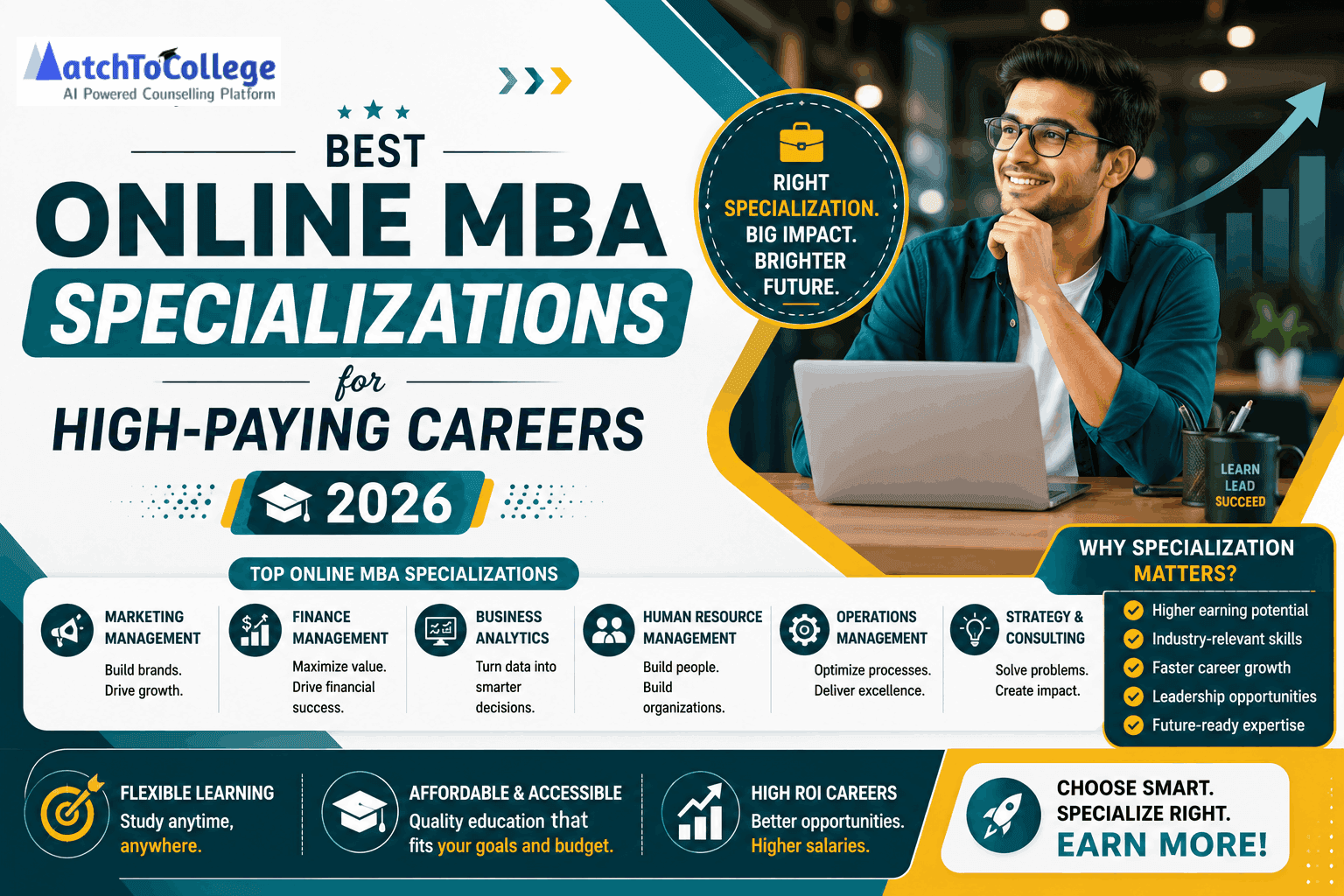
Best Online MBA Specializations for High-Paying Careers 2026
Discover the most lucrative online MBA specializations for 2026-27. Compare ROI, career growth, and use our AI tools to find your perfect management path.
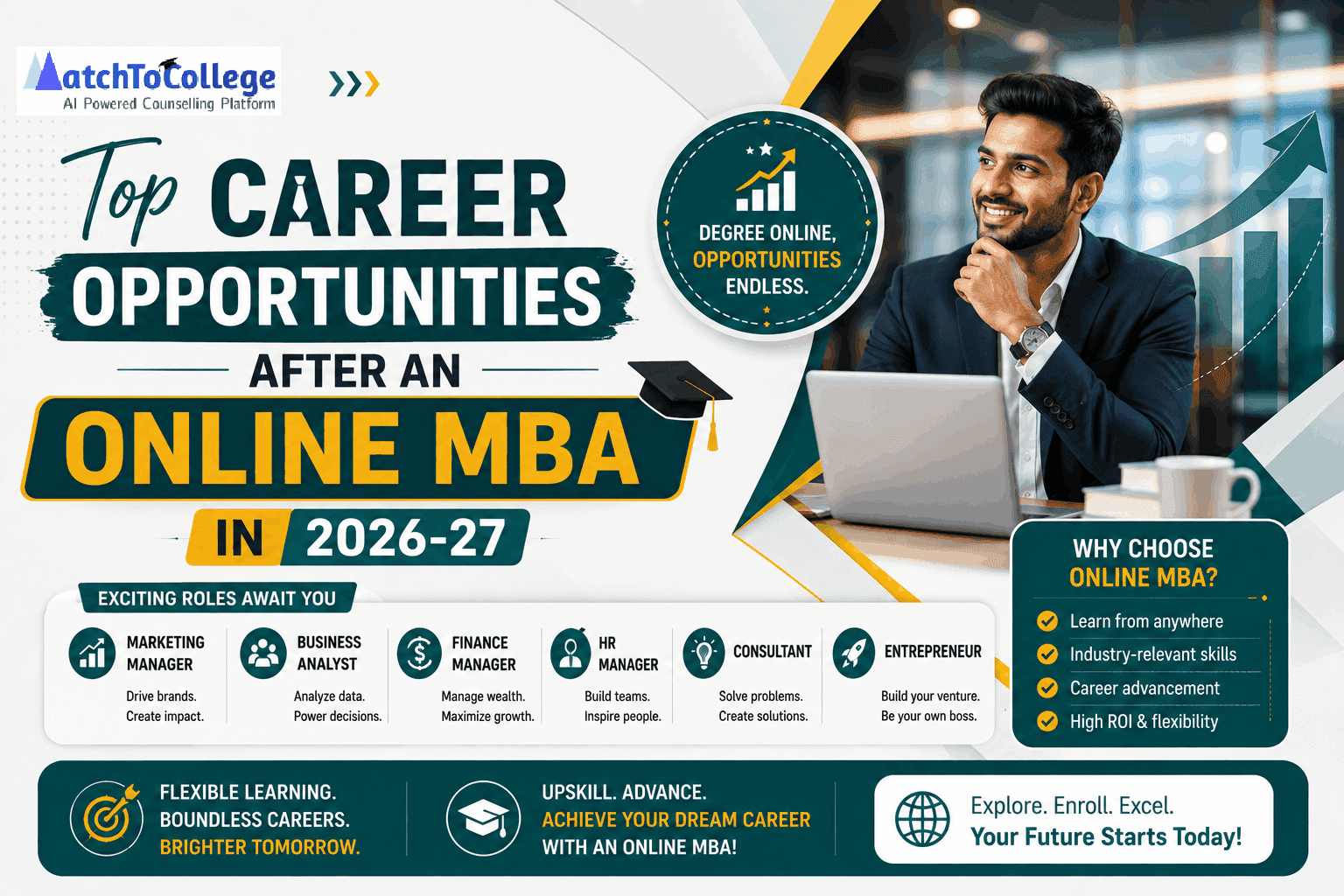
Top Career Opportunities After an Online MBA in 2026-27
Discover high-paying career paths and roles after an online MBA in 2026-27. Explore salary trends, ROI, and tools to navigate your future professional success.
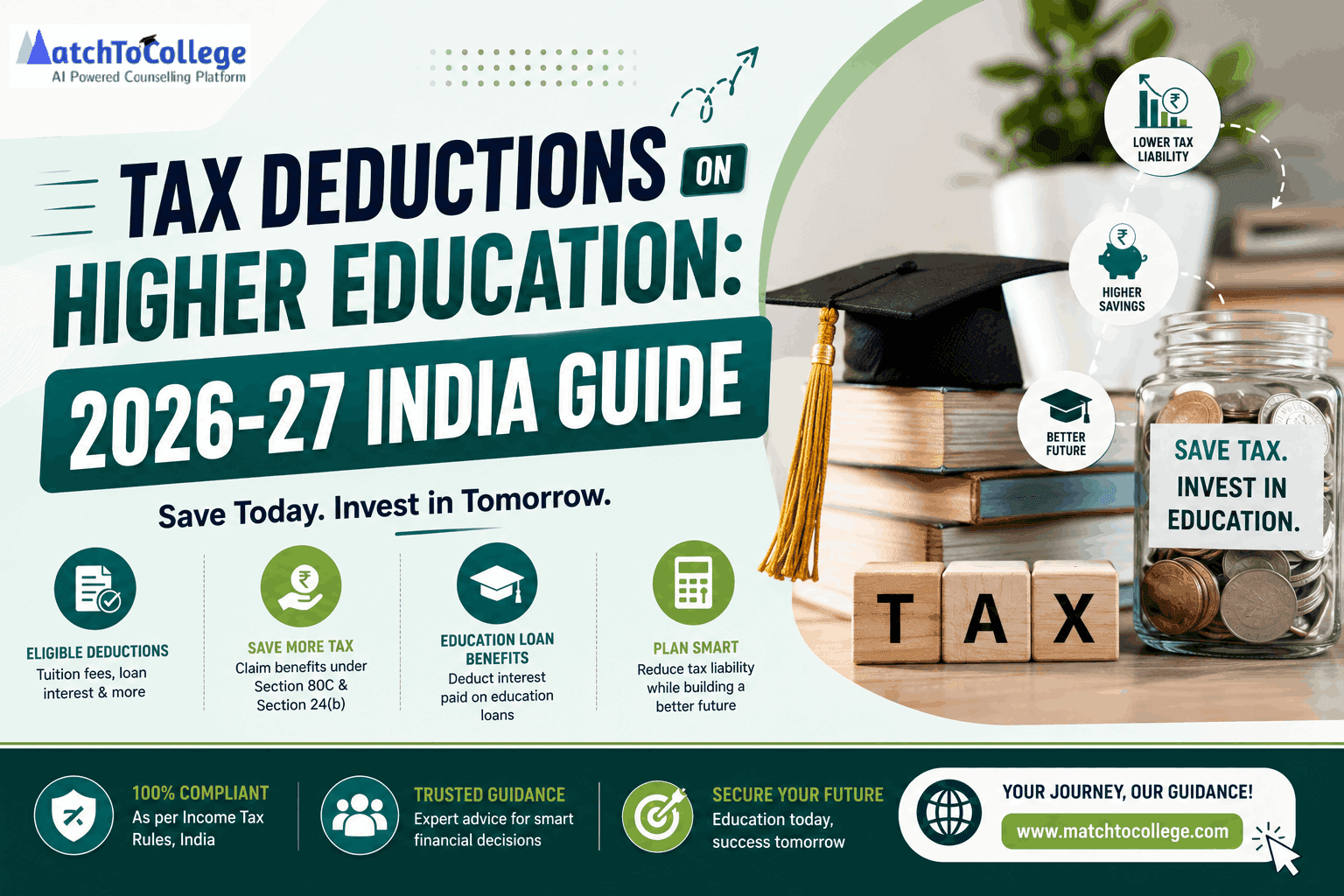
Tax Deductions on Higher Education: 2026-27 India Guide
Maximize your savings with our guide on tax deductions for higher education fees in India for FY 2026-27. Learn about Section 80C, 80E, and upskilling benefits.