

India's Economic Future: Trends for Business & Careers 2026
Admission & Info Tools
Need Expert Assistance?
Our counselors can help you with fee structures, eligibility guidelines, and upcoming admission cutoffs instantly.
Direct Application Tools

India's Economic Future: Trends for Business & Careers 2026
India's economic trajectory continues to be a captivating story of growth and transformation, projected to be one of the world's fastest-growing major economies. As we navigate the mid-2020s, the nation stands at a pivotal juncture, poised for significant shifts that will reshape its business landscape and, consequently, the career opportunities available to its vast youth population. For students and parents contemplating higher education, understanding these impending economic trends is not merely academic; it's a strategic imperative for informed decision-making and long-term career planning.
The year 2026 isn't far off, and the decisions made today regarding educational pathways and skill development will profoundly impact future career readiness. The pace of change, driven by technological advancements and evolving global dynamics, means that traditional career paths are often being redefined. From accelerating digital transformations and AI adoption to a critical push towards sustainable practices and navigating complex geopolitical landscapes, several macroeconomic factors are converging to create a dynamic and sometimes unpredictable environment for businesses across various sectors in India. Recognizing these early can give aspiring professionals a distinct, competitive edge.
At MatchToCollege, an AI-powered higher education counselling platform, we believe in empowering students with foresight and strategic guidance. Our mission is to navigate you through the complexities of college admissions and career planning by providing cutting-edge, data-driven insights. This comprehensive analysis delves into the key economic trends expected to dominate India's business ecosystem by 2026, offering a crucial roadmap for students, parents, and educators alike. We'll explore how these trends will influence specific industries, emerging skill requirements, and the overall job market, helping you align your educational journey with future economic realities to build a resilient and rewarding career.
Understanding the future of the Indian economy is absolutely critical for selecting the right university courses, identifying promising career paths, and ultimately, securing a fulfilling and prosperous professional future. Whether you're considering a competitive engineering program, an advanced medical degree, a globally recognized MBA, or ambitious study abroad opportunities, the insights provided here will highlight the sectors poised for exponential growth and the competencies that will be in highest demand. Let's explore the powerful forces that will shape India's economic destiny and, by extension, your professional one.
Digital Transformation & AI Dominance
The acceleration of digital transformation is arguably the most pervasive economic trend shaping India. By 2026, Artificial Intelligence (AI) and Machine Learning (ML) will no longer be niche technologies but core operational components across virtually every sector. Businesses are rapidly adopting AI for everything from customer service and supply chain optimization to data analytics and product development. This widespread integration means a seismic shift in required skill sets.
India's burgeoning tech sector and vibrant startup ecosystem are at the forefront of this revolution. Sectors like FinTech, EdTech, Healthcare IT, and e-commerce are experiencing exponential growth, driven by AI-powered solutions that enhance efficiency, personalize experiences, and create new market opportunities. For students, this translates into a surging demand for professionals proficient in AI development, data science, cybersecurity, cloud computing, and advanced software engineering. Universities offering specialized courses in these domains will become increasingly crucial. Understanding ethical AI, prompt engineering, and human-computer interaction will also be vital, signaling a need for interdisciplinary learning that combines technical prowess with critical thinking and ethical considerations. The future workforce must not only be digitally literate but also adaptable to rapidly evolving technological paradigms.
Green Economy & Sustainable Growth Imperatives
As global awareness of climate change intensifies, India is making significant strides towards building a robust "Green Economy." By 2026, the impetus for sustainable development will move beyond policy mandates to become a fundamental driver of business strategy and consumer choice. This trend encompasses renewable energy generation (solar, wind), electric vehicles (EVs), sustainable agriculture, waste management, and green infrastructure projects.
The government's ambitious targets for renewable energy capacity and the 'net-zero' commitment are fostering massive investments in this sector, creating a wave of new job opportunities. Businesses are increasingly prioritizing ESG (Environmental, Social, and Governance) factors, not just for compliance but as a core component of their brand value and long-term profitability. This shift creates demand for professionals in environmental engineering, sustainability consulting, renewable energy project management, green finance, and ecological conservation. Students pursuing degrees in environmental science, energy engineering, urban planning, or even business with an ESG specialization will find themselves at the forefront of this transformative wave. The need for innovative solutions to environmental challenges will also fuel entrepreneurship in climate tech and sustainable product development, offering exciting career pathways for those with a passion for impact and innovation.
Geopolitical Dynamics & Global Trade Realignments
The global geopolitical landscape is in constant flux, and its ripples are significantly impacting India's economic outlook for 2026. Shifts in international relations, trade agreements, and supply chain vulnerabilities, exacerbated by recent global events, are driving businesses worldwide to reassess their dependencies. India is emerging as a critical beneficiary of the "China+1" strategy, where global manufacturers seek to diversify their production bases beyond a single country.
This realignment presents a monumental opportunity for India to bolster its manufacturing capabilities, attract foreign direct investment (FDI), and solidify its position as a reliable global supply chain hub. Sectors like electronics manufacturing, pharmaceuticals, textiles, and automotive components are particularly poised for growth as companies look to de-risk their operations. This trend necessitates a skilled workforce in advanced manufacturing, logistics, international trade law, global supply chain management, and data-driven market analysis. Students considering careers in international business, engineering with a focus on manufacturing, or economics with an emphasis on global trade will find a dynamic and expanding field. Developing cross-cultural communication skills and a deep understanding of international compliance will be invaluable for navigating this increasingly interconnected yet complex global business environment.
India's Demographic Dividend & Skill Imperative
India possesses the world's largest youth population, a demographic dividend that represents an unparalleled engine for economic growth. By 2026, this vast pool of young talent will continue to drive consumer demand, fuel entrepreneurship, and power various industries. However, realizing the full potential of this dividend hinges critically on addressing the persistent skill gap that often exists between academic output and industry requirements.
While the sheer volume of the workforce is an asset, businesses are increasingly demanding a blend of technical expertise and crucial soft skills, including critical thinking, problem-solving, adaptability, creativity, and effective communication. The rapid evolution of technology and business models means that lifelong learning and continuous upskilling will not be optional, but essential for career longevity. Educational institutions and platforms like MatchToCollege play a vital role in bridging this gap by guiding students towards programs that emphasize not just theoretical knowledge but also practical application, internships, and the development of future-proof competencies. Sectors like retail, hospitality, services, and domestic manufacturing will particularly benefit from a well-trained, adaptable workforce. Students who proactively invest in developing a diverse skill portfolio will be highly sought after, capable of thriving in a rapidly evolving job market and contributing significantly to India's sustained economic growth.
Share this Article
FAQFrequently Asked Questions
Q: How will these economic trends affect job opportunities for graduates in India by 2026?
The economic trends will lead to a surge in demand for digitally skilled professionals (AI, Data Science, Cybersecurity), experts in green technologies (renewable energy, sustainability), and those proficient in advanced manufacturing and supply chain management. While some traditional roles may evolve, new opportunities will emerge in sectors driven by technology, sustainability, and diversified global trade. Adaptability and continuous learning will be key for success.
Q: What skills should students focus on to thrive in India's future economy?
To thrive by 2026, students should prioritize a blend of technical and soft skills. Technical skills include AI/ML, data analytics, cloud computing, cybersecurity, and environmental engineering. Crucial soft skills encompass critical thinking, problem-solving, creativity, adaptability, digital literacy, and strong communication. Interdisciplinary learning and practical experience (internships) will also be highly beneficial.
Q: How can MatchToCollege help students prepare for these economic changes?
MatchToCollege leverages AI to provide personalized higher education counselling. We help students understand future economic trends and their impact on careers, identify courses and colleges aligned with high-demand skills, and strategize for admissions to programs that prepare them for India's evolving job market. Our platform offers insights into emerging industries and helps you future-proof your educational and career choices.
Get More Info About India's Economic Future
Recommended Reading
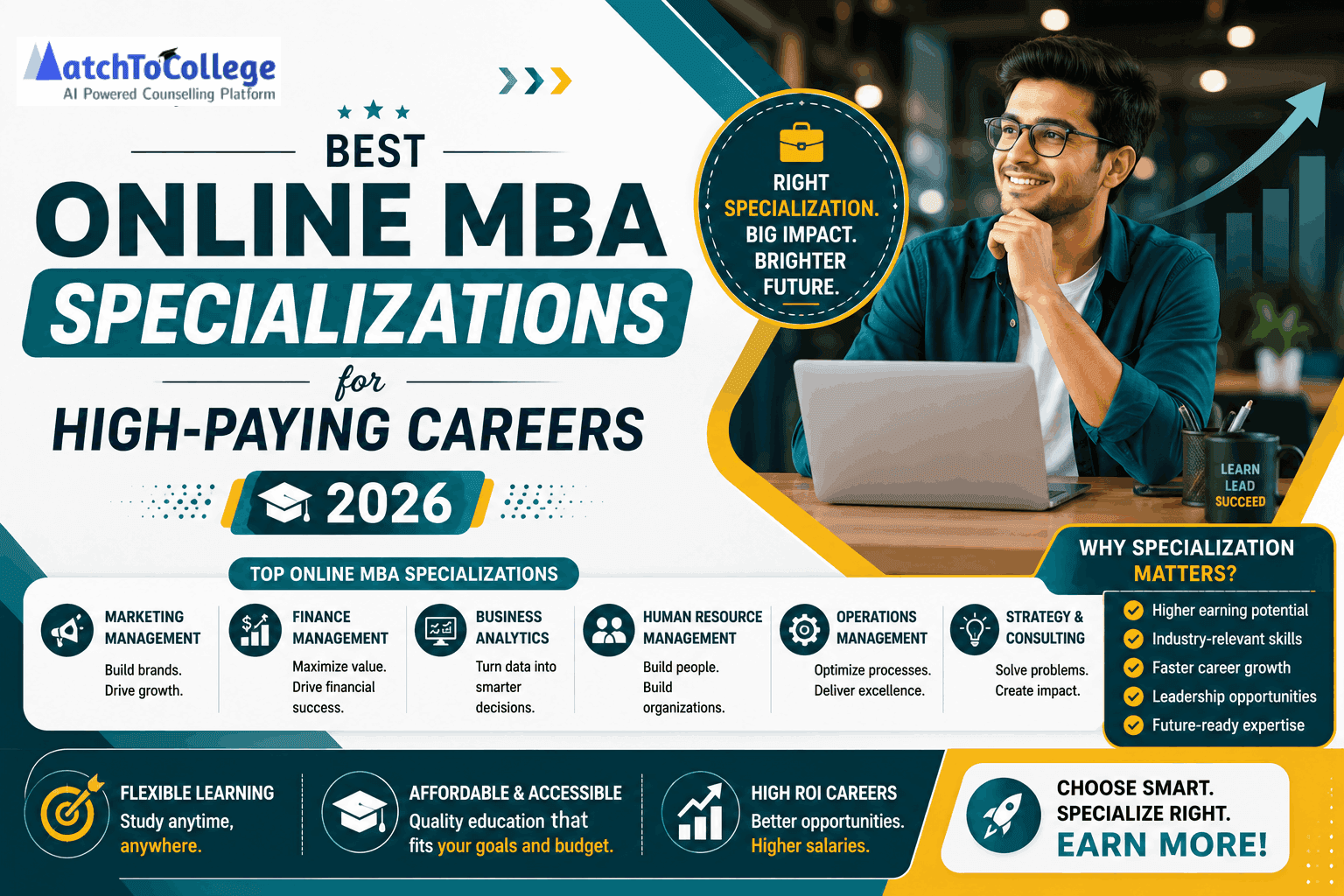
Best Online MBA Specializations for High-Paying Careers 2026
Discover the most lucrative online MBA specializations for 2026-27. Compare ROI, career growth, and use our AI tools to find your perfect management path.
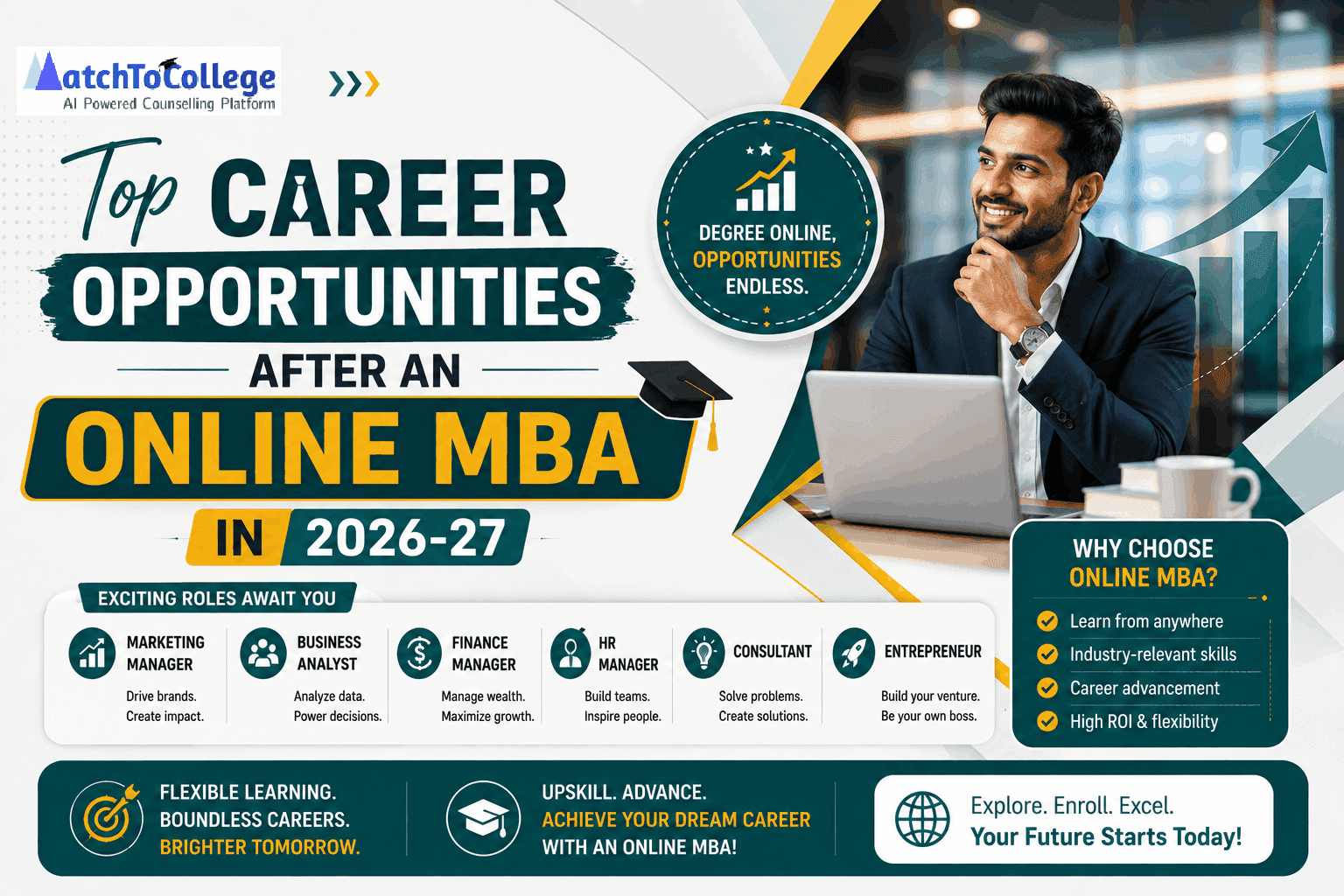
Top Career Opportunities After an Online MBA in 2026-27
Discover high-paying career paths and roles after an online MBA in 2026-27. Explore salary trends, ROI, and tools to navigate your future professional success.

Tax Deductions on Higher Education: 2026-27 India Guide
Maximize your savings with our guide on tax deductions for higher education fees in India for FY 2026-27. Learn about Section 80C, 80E, and upskilling benefits.