

Humanities to Corporate: Your Ultimate Career Guide
Admission & Info Tools
Need Expert Assistance?
Our counselors can help you with fee structures, eligibility guidelines, and upcoming admission cutoffs instantly.
Direct Application Tools
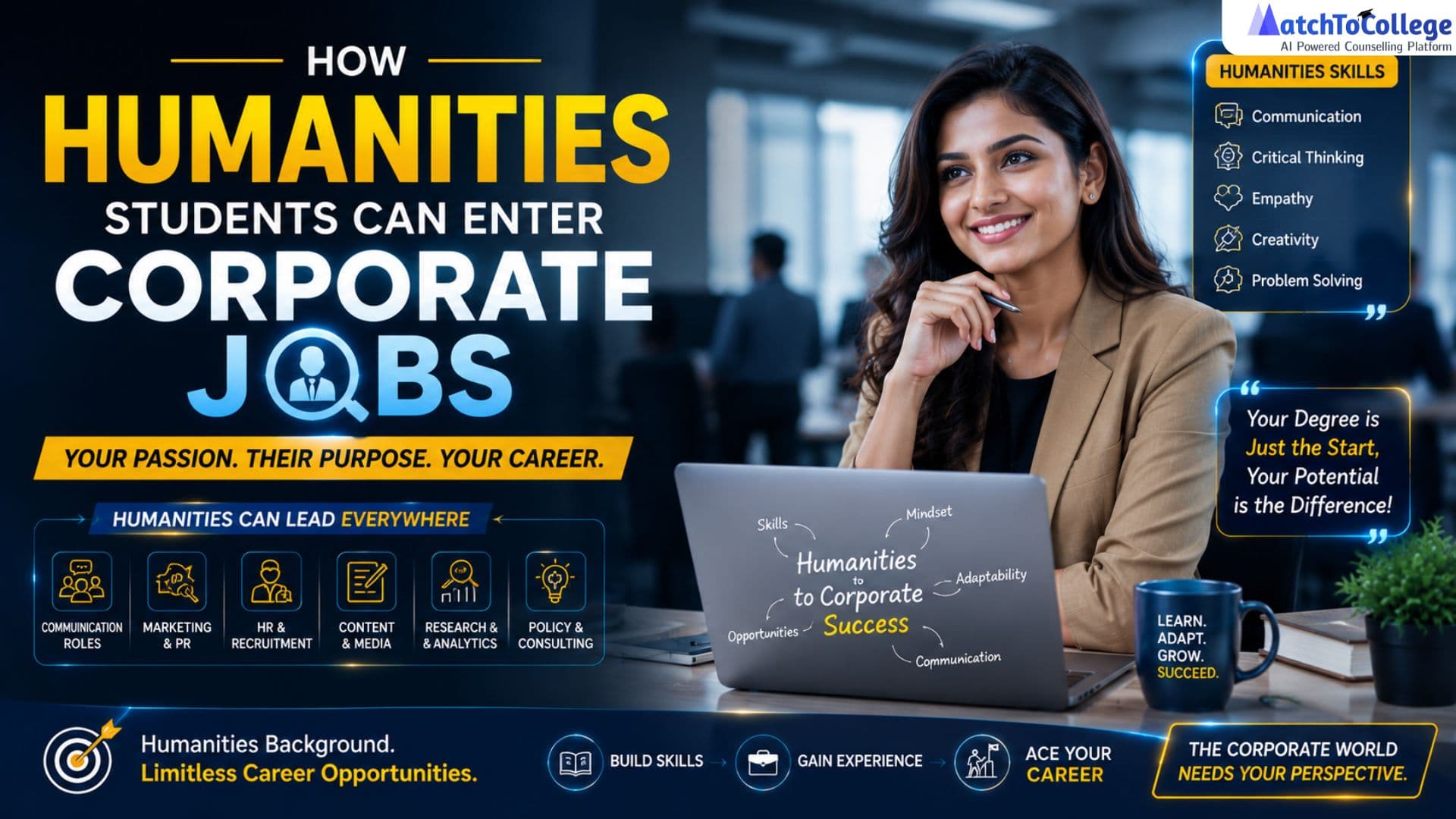
Humanities to Corporate Career Path
A common misconception is that a humanities degree offers limited career opportunities, especially in the corporate sector. In reality, humanities graduates possess some of the most sought-after skills in today's workplace, including critical thinking, communication, creativity, problem-solving, and adaptability.
As businesses face increasingly complex challenges, employers value professionals who can analyze information, understand human behavior, communicate effectively, and think strategically. These strengths make humanities graduates well-suited for a wide range of corporate roles across industries.
Why Humanities Graduates Are Valuable to Employers
| Humanities Skill | Corporate Value |
| Critical Thinking | Supports strategic decision-making and problem-solving |
| Communication Skills | Improves collaboration, presentations, and client interactions |
| Research & Analysis | Helps interpret information and identify insights |
| Creativity | Drives innovation, content creation, and brand development |
| Adaptability | Enables success in rapidly changing business environments |
| Ethical Reasoning | Supports responsible leadership and decision-making |
Corporate Career Paths for Humanities Graduates
| Career Area | Potential Roles |
| Marketing & Communications | Content Strategist, Digital Marketer, Public Relations Executive |
| Human Resources | HR Executive, Talent Acquisition Specialist, Learning & Development Coordinator |
| Consulting | Business Analyst, Strategy Associate, Research Consultant |
| Media & Content | Content Writer, Editor, Corporate Communications Specialist |
| Sales & Business Development | Business Development Executive, Client Relationship Manager |
| Project Management | Project Coordinator, Operations Associate |
| Customer Success | Customer Experience Specialist, Client Success Manager |
How to Transition into Corporate Roles
| Strategy | Benefit |
| Develop Industry-Specific Skills | Improves employability in target sectors |
| Complete Certifications | Demonstrates practical expertise |
| Gain Internship Experience | Builds professional exposure and confidence |
| Strengthen Digital Skills | Enhances competitiveness in modern workplaces |
| Build a Strong Professional Network | Creates access to opportunities and mentorship |
| Showcase Transferable Skills | Highlights the value of a humanities background |
In-Demand Skills to Complement a Humanities Degree
| Skill Area | Examples |
| Digital Marketing | SEO, Content Marketing, Social Media Management |
| Business Analytics | Data Interpretation, Reporting, Research |
| Project Management | Planning, Coordination, Team Collaboration |
| Communication | Presentation, Writing, Stakeholder Management |
| Technology Literacy | Digital Tools, AI Awareness, Business Software |
A humanities degree is not a barrier to corporate success—it is a strong foundation for it. The ability to think critically, communicate effectively, analyze complex issues, and adapt to change makes humanities graduates valuable across industries.
By combining these strengths with practical skills, internships, and professional development, students can successfully build rewarding careers in marketing, consulting, human resources, communications, business operations, and many other corporate fields.
MatchToCollege helps students identify career opportunities, skill-building pathways, and higher education options that align with their interests and long-term professional goals.
Unlocking Your Humanities Superpowers: Skills Employers Crave
Many humanities students underestimate the value of the skills they develop during their studies. In reality, humanities programs cultivate highly transferable competencies that employers actively seek across industries. These skills enable graduates to analyze complex problems, communicate effectively, understand human behavior, and adapt to changing business environments.
The key to success is recognizing these strengths and clearly demonstrating how they contribute to organizational goals.
| Humanities Skill | Corporate Application | Business Value |
| Critical Thinking & Analytical Reasoning | Strategic planning, business analysis, problem-solving | Supports informed decision-making and innovation |
| Communication Skills | Presentations, report writing, client communication, content creation | Enhances collaboration and stakeholder engagement |
| Research & Information Synthesis | Market research, competitive analysis, business intelligence | Helps organizations make data-informed decisions |
| Adaptability & Perspective-Taking | Team collaboration, customer relations, change management | Improves flexibility in dynamic work environments |
| Creativity & Innovation | Marketing campaigns, product development, brand strategy | Drives growth and competitive advantage |
How Humanities Skills Translate into Corporate Success
| Academic Experience | Workplace Application |
| Analyzing texts and arguments | Evaluating business challenges and opportunities |
| Conducting research projects | Gathering and interpreting market insights |
| Writing essays and reports | Creating business reports and professional communications |
| Participating in debates and discussions | Presenting ideas and influencing stakeholders |
| Studying cultures, history, and society | Understanding customer behavior and market trends |
How to Showcase These Skills
| Strategy | Benefit |
| Highlight transferable skills on your resume | Demonstrates relevance to employers |
| Use real examples from academic projects | Provides evidence of your capabilities |
| Connect skills to business outcomes | Shows practical value in a corporate setting |
| Emphasize problem-solving abilities | Aligns with employer expectations |
| Showcase communication and research strengths | Differentiates you from other candidates |
Humanities graduates possess a unique combination of analytical thinking, communication, research, adaptability, and creativity. These skills are highly relevant across corporate functions, including marketing, consulting, human resources, communications, customer success, and business operations. By effectively communicating these strengths, humanities students can position themselves as valuable contributors and successful professionals in the corporate world.
Strategic Pathways: Bridging Your Degree to Corporate Roles
A humanities degree provides valuable transferable skills, but successfully transitioning into a corporate career often requires strategic preparation. By combining your academic strengths with practical experience, industry knowledge, and professional networking, you can significantly improve your career prospects and stand out to employers.
| Strategy | Action | Benefit |
| Gain Practical Experience | Pursue internships, part-time roles, or volunteer opportunities | Builds workplace skills and strengthens your resume |
| Develop Industry-Specific Skills | Learn digital marketing, data analytics, project management, or business communication | Increases employability and job readiness |
| Earn Professional Certifications | Complete relevant online courses and certifications | Demonstrates commitment to continuous learning |
| Build a Professional Network | Connect with alumni, professionals, and recruiters | Creates access to mentorship and job opportunities |
| Explore Higher Education Options | Consider specialized master's programs or professional qualifications | Provides advanced expertise and industry exposure |
Recommended Skill Areas for Humanities Graduates
| Skill Area | Examples |
| Digital Marketing | SEO, Content Marketing, Social Media Analytics |
| Data Analytics | Excel, Power BI, Data Visualization, Basic Python |
| Project Management | Planning, Coordination, Agile Methodologies |
| Business Communication | Presentation Skills, Corporate Writing, Stakeholder Management |
| Human Resources | Recruitment, Employee Engagement, Talent Development |
Networking Tips for Career Growth
| Networking Activity | Purpose |
| Connect with Alumni | Learn from professionals with similar academic backgrounds |
| Attend Career Fairs | Explore job opportunities and employer expectations |
| Participate in Industry Events | Gain insights into current market trends |
| Conduct Informational Interviews | Understand specific roles and career paths |
| Maintain an Active Professional Profile | Build visibility and credibility with employers |
When to Consider Further Education
A postgraduate qualification can be beneficial if you want to:
- Enter specialized industries or leadership roles
- Transition into a new career field
- Develop advanced business or technical skills
- Expand your professional network
- Improve long-term career growth opportunities
| Popular Postgraduate Options | Career Focus |
| MBA | Management and Leadership |
| Master's in Communications | Media, PR, Corporate Communications |
| Master's in Public Policy | Government, Research, Policy Analysis |
| Master's in Data Analytics | Business Intelligence and Analytics |
| Master's in Human Resources | Talent Management and Organizational Development |
Humanities graduates can build successful corporate careers by combining their strong analytical, communication, and problem-solving abilities with practical experience and industry-relevant skills. Internships, certifications, networking, and strategic higher education choices can help bridge the gap between academic learning and corporate expectations, creating a strong foundation for long-term professional success.
Crafting Your Narrative: Resumes, Interviews & Beyond
A humanities degree provides valuable skills, but success in the corporate job market depends on how effectively you communicate those strengths to employers. Your goal is to translate academic experiences into business-relevant skills that demonstrate your ability to contribute to organizational success.
| Area | Best Practice | Why It Matters |
| Resume | Highlight transferable skills and measurable achievements | Shows practical value to employers |
| Cover Letter | Connect your humanities background to the role and company | Demonstrates relevance and motivation |
| Interview | Use real examples to showcase skills and accomplishments | Builds credibility and confidence |
| LinkedIn Profile | Create a professional and engaging online presence | Enhances visibility and networking opportunities |
1. Build a Results-Oriented Resume
Rather than simply listing coursework or academic activities, focus on the skills and outcomes you achieved.
| Instead of Writing | Write This |
| Wrote essays and reports | Analyzed complex information and presented findings through detailed reports |
| Completed research projects | Conducted research, synthesized data, and developed evidence-based recommendations |
| Participated in group assignments | Collaborated with diverse teams to deliver projects within deadlines |
| Led a student club | Managed team activities, coordinated events, and improved member engagement |
Resume Tips:
- Use strong action verbs.
- Highlight leadership, communication, research, and problem-solving skills.
- Quantify achievements whenever possible.
- Tailor your resume to each job application.
2. Write a Strong Cover Letter
Your cover letter allows you to explain how your humanities education prepares you for a corporate role.
| What to Include | Purpose |
| Interest in the role | Shows enthusiasm and commitment |
| Relevant transferable skills | Demonstrates your suitability |
| Examples of achievements | Provides evidence of your capabilities |
| Alignment with company goals | Shows you understand the organization |
Focus on how your analytical thinking, communication abilities, research expertise, and adaptability can help solve business challenges.
3. Prepare for Interviews
Employers want to understand how your skills apply in real-world situations.
| Skill | Example Topics to Discuss |
| Problem-Solving | Academic research projects or challenges overcome |
| Communication | Presentations, debates, writing projects |
| Teamwork | Group assignments, volunteer work, student organizations |
| Leadership | Events organized, initiatives led, responsibilities managed |
Use the STAR Method (Situation, Task, Action, Result) to structure your responses and clearly demonstrate impact.
4. Build a Professional Online Presence
A strong LinkedIn profile can significantly improve your career opportunities.
| LinkedIn Best Practice | Benefit |
| Complete your profile | Improves professional credibility |
| Highlight key skills and achievements | Attracts recruiters and employers |
| Connect with industry professionals | Expands your network |
| Share relevant content and insights | Demonstrates industry interest |
| Engage in professional discussions | Builds visibility and expertise |
Key Humanities Skills Employers Value
| Skill | Corporate Application |
| Critical Thinking | Strategic planning and decision-making |
| Communication | Client relations, presentations, content creation |
| Research | Market analysis and business intelligence |
| Adaptability | Managing change and solving new challenges |
| Creativity | Innovation, branding, and marketing initiatives |
| Collaboration | Working effectively in teams |
Your humanities background is a competitive advantage when presented effectively. Employers value professionals who can think critically, communicate clearly, conduct research, solve problems, and adapt to change. By crafting a strong resume, writing targeted cover letters, preparing for interviews, and building a professional online presence, you can successfully position yourself for a wide range of corporate career opportunities.
Share this Article
FAQFrequently Asked Questions
Q: What corporate jobs are most suitable for humanities graduates?
Humanities graduates excel in roles requiring strong communication, critical thinking, and analytical skills. Common corporate paths include marketing (content creation, PR, digital strategy), human resources, consulting (management, strategy), project management, public relations, policy analysis, technical writing, sales, and even product management where understanding user behavior is key. Your ability to understand diverse perspectives is highly valued.
Q: How can a humanities degree stand out to corporate recruiters?
To stand out, focus on showcasing your transferable skills: critical thinking, complex problem-solving, exceptional communication (written and verbal), research, and adaptability. Tailor your resume and cover letter to highlight these skills using action verbs and quantifiable achievements. Gain practical experience through internships or relevant projects, and network proactively. Clearly articulate how your unique perspective adds value to the company during interviews. MatchToCollege can help you identify relevant skills and opportunities.
Get More Info About Humanities to Corporate
Recommended Reading

Mastering Haloalkanes & Haloarenes for NEET: Your Essential Chemistry Guide
Unlock top scores in NEET Chemistry by mastering Haloalkanes and Haloarenes. This guide covers syllabus, weightage, key concepts, and effective preparation strategies for this crucial organic chemistry chapter.

NEET PG Counselling 2026: Your Definitive Guide to MD/MS Admissions
Navigate NEET PG 2026 counselling with this comprehensive guide from MatchToCollege. Understand registration, choice filling, seat allotment, and secure your MD/MS admission.

MHT CET 2027 Syllabus & Preparation Guide: Your Roadmap to Engineering Success
Unlock your potential for Maharashtra's top engineering and pharmacy colleges with our comprehensive MHT CET 2027 guide. Master the syllabus, exam pattern, and proven strategies for success.