

Higher Ed Market: Economic Factors Shaping College Marketing
Admission & Info Tools
Need Expert Assistance?
Our counselors can help you with fee structures, eligibility guidelines, and upcoming admission cutoffs instantly.
Direct Application Tools
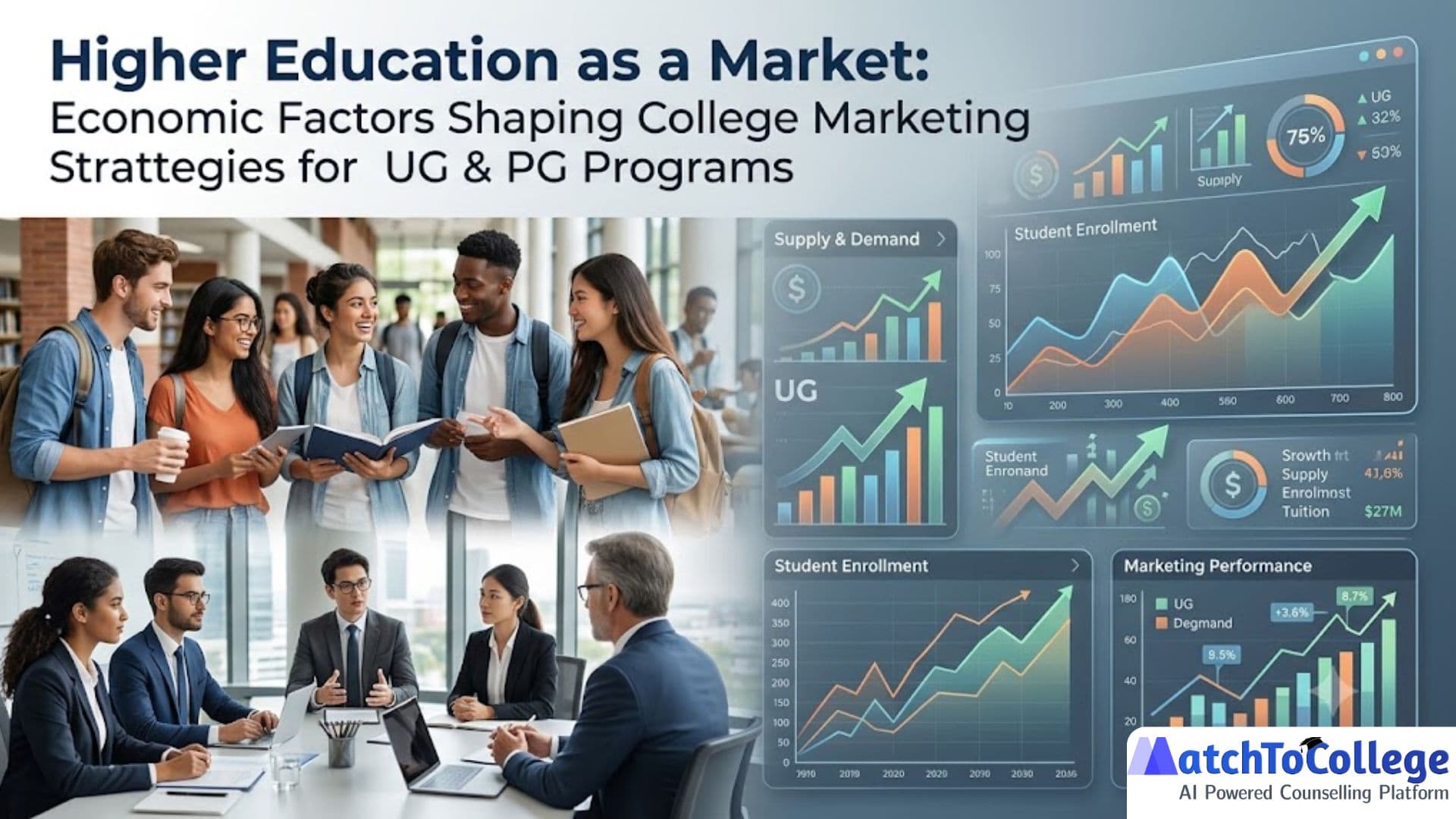
Economic trends shaping college marketing.
Higher education is no longer just about studying—it has become a highly competitive global market. Universities today operate like brands, competing for students by offering better programs, career outcomes, and overall value.
Higher Education as a Market
| Aspect | What It Means for Students |
| Rising tuition fees | Education is becoming more expensive, so cost matters more |
| Cost of living | Living expenses affect where students choose to study |
| ROI (Return on Investment) | Students focus on jobs and salary after graduation |
| Competition among universities | Colleges promote themselves more aggressively |
| Scholarships & discounts | Used to attract high-quality or financially constrained students |
What’s Really Changing?
Earlier, universities focused mainly on teaching. Now they focus on:
- Building strong career outcomes
- Marketing “future success” instead of just courses
- Creating attractive programs and campus experiences
- Competing globally for UG and PG students
In simple terms:
Universities are not just selling education anymore—they are selling career opportunities, lifestyle, and long-term value.
How Universities Make Marketing Decisions
They carefully decide:
- Which courses to promote (based on job demand)
- What scholarships to offer (to attract students)
- How to position their brand (affordable, premium, career-focused, etc.)
- Which student needs to target (UG vs PG, local vs international)
What This Means for Students & Parents
It can feel confusing because every college looks “best” in its own marketing. But behind this messaging are real economic factors like funding, demand, and job trends.
So students should focus on:
- Course value and career outcomes
- Total cost (fees + living expenses)
- Long-term ROI, not just brand name
How We Help at MatchToCollege
We simplify this complex system by:
- Matching your profile with the right colleges
- Considering cost, career goals, and preferences
- Helping you understand what actually fits you, not just what is marketed
Higher education today is shaped by economics as much as academics. Understanding this helps you make smarter, more informed choices for your future.
Higher Education: A Dynamic Marketplace
Higher education has changed a lot. Universities are no longer focused only on academic reputation. Today, they work in a highly competitive global market where attracting students, funding, and reputation all matter equally.
Higher Education as a Competitive Market
| Earlier Approach | Today’s Approach |
| Focus on academic prestige | Focus on students, jobs, and outcomes |
| Limited competition | Global competition between universities |
| Basic admissions process | Data-driven student recruitment |
| General courses | Specialized and career-focused programs |
What Is Driving This Change?
Several big factors are reshaping universities:
- Demographic shifts: Changing student populations in different regions
- Globalization: Students now choose universities across countries
- Technology growth: Online learning and digital platforms increase competition
- Rising expectations: Students want strong career outcomes, not just degrees
How Universities Compete Today
To attract students, universities now actively promote:
- Academic strengths and top programs
- Campus life and student experience
- Placement records and salary outcomes
- Scholarships and financial support
In simple terms: universities now “market” themselves like brands.
Student Recruitment Today
Universities use data and trends to understand:
- Where future students are coming from
- What courses are in demand
- What students expect from a degree
- How to improve enrollment and retention
This is known as student recruitment trends, and it plays a key role in decision-making.
What Has Changed in Higher Education Strategy?
- More specialized and job-oriented programs
- Stronger marketing and digital promotion
- Focus on student satisfaction and retention
- Increased competition for global rankings and reputation
Higher education today is not just about teaching—it is about strategy, competition, and student demand. Universities must constantly adapt to attract and retain students in a fast-changing global environment.
Economic Undercurrents Shaping University Marketing
Higher education marketing is strongly shaped by economic conditions. Universities adjust how they promote UG and PG programs based on changes in the economy, government policies, and global trends.
Key Economic Factors in Higher Education Marketing
| Economic Factor | How It Affects Universities |
| National economy | Influences student spending power and loan access |
| Government funding | Impacts tuition fees and institutional budgets |
| Global economy | Affects international student mobility and demand |
| Currency fluctuations | Change affordability for foreign students |
| Geopolitical stability | Influences student willingness to study abroad |
1. Impact of National Economy
The overall economic condition of a country directly affects education demand:
- During economic downturns:
- Students become more cost-sensitive
- Universities highlight affordability
- More focus on scholarships and financial aid
- During economic growth:
- Demand for premium programs increases
- Universities promote high-end facilities and experiences
- Specialized and high-fee programs gain attention
2. Role of Government Funding and Policy
Government decisions strongly shape university strategies:
- Reduced public funding may lead to:
- Higher tuition fees
- Increased reliance on private funding
- More aggressive student recruitment efforts
- Policy changes can also influence:
- Scholarship availability
- Admission rules
- Program expansion or cuts
Universities must clearly communicate these changes to students through marketing and outreach.
3. Globalization and International Education Market
Higher education is now a global market. This means:
- Students choose universities across countries
- Institutions compete internationally for talent
- Economic and political changes affect enrollment trends
Key global factors include:
- Currency exchange rates (affect affordability)
- Visa policies and immigration rules
- Political stability in destination countries
4. How Universities Adapt Their Marketing
To respond to these economic pressures, institutions adjust their messaging:
- Highlight affordability during financial uncertainty
- Promote ROI (placements and salaries) in competitive markets
- Target international students with global outreach campaigns
- Emphasize scholarships and funding support
Economic conditions don’t just affect students—they directly shape how universities design, price, and market their UG and PG programs. Understanding these factors helps students see beyond marketing and make more informed education choices.
Tuition, ROI, and Affordability: The Student-Consumer Perspective
From a student’s point of view, the biggest factors shaping college choices today are cost, value, and career return. With higher education becoming expensive, students and parents carefully evaluate whether a degree is truly worth the investment.
Key Student-Focused Economic Factors
| Factor | What Students Think About |
| Tuition fees | Can I afford the course? |
| ROI (Return on Investment) | Will I get a good job and salary? |
| Overall affordability | Total cost including living + study expenses |
| Financial aid | Scholarships and loans available |
| Career outcomes | Placement rate and job opportunities |
1. Rising Cost and Affordability Pressure
Higher education costs are increasing, so students now:
- Compare fees across colleges more carefully
- Look for scholarships and financial aid
- Consider living expenses along with tuition
- Avoid unnecessary student debt
This creates what is often called an “affordability crisis”, where cost becomes a major decision factor.
2. Focus on Return on Investment (ROI)
Students and parents now ask one key question:
“What will I get after this degree?”
So universities respond by marketing:
- High placement rates
- Strong salary packages
- Internship opportunities
- Industry connections
In simple terms, education is now seen as an investment, not just a qualification.
3. How Universities Market Value
To address cost concerns, colleges highlight:
- Scholarships and financial aid packages
- Strong alumni success stories
- Job-ready skills and training
- Campus recruitment records
These messages are designed to show that the degree pays back over time.
4. Special Focus in Postgraduate (PG) Programs
For PG students, expectations are even higher because they are:
- Already investing in advanced education
- Often aiming for career growth or switching fields
So universities emphasize:
- Specialized and industry-relevant skills
- Faster career advancement
- Networking opportunities with professionals
- Direct pathways to high-paying roles
Today’s students don’t just choose colleges based on reputation. They carefully analyze cost, career outcomes, and long-term value, and universities shape their marketing around proving that investment is worth it.
Share this Article
FAQFrequently Asked Questions
Q: Why is higher education increasingly viewed as a market?
Higher education is seen as a market due to intense competition among institutions for students and funding, the rising cost of tuition, and students' growing expectation of a clear return on investment (ROI) for their educational expenditure. Universities now employ sophisticated marketing and recruitment strategies, similar to businesses, to attract and retain students for both undergraduate and postgraduate programs.
Q: What are the primary economic factors influencing college marketing strategies?
Key economic factors include fluctuating tuition fees, the perceived return on investment (ROI) in terms of career outcomes, government funding levels and policies, the overall economic health of a region or nation, and global economic trends affecting international student mobility. These factors dictate program development, pricing, financial aid offerings, and promotional messaging.
Q: How does MatchToCollege assist students in navigating this complex higher education market?
MatchToCollege's AI-powered platform helps students by providing personalized guidance that considers not only academic profiles but also the economic realities of higher education. We demystify college marketing strategies, helping students understand the value propositions of different institutions, identify affordable options, and connect with programs that align with their career aspirations and financial capacities, ensuring informed decision-making.
Get More Info About Higher Ed Market
Recommended Reading
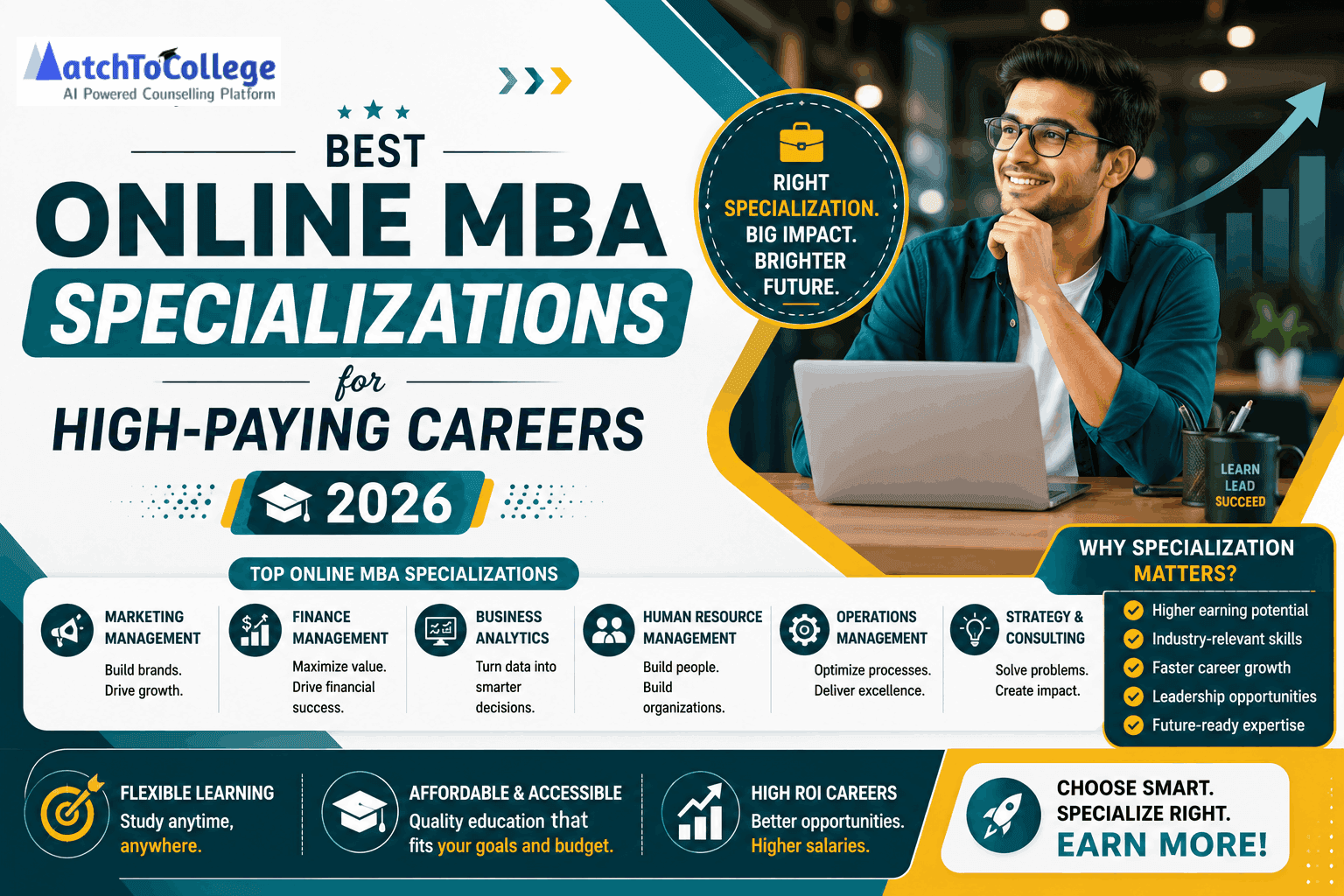
Best Online MBA Specializations for High-Paying Careers 2026
Discover the most lucrative online MBA specializations for 2026-27. Compare ROI, career growth, and use our AI tools to find your perfect management path.

Top Career Opportunities After an Online MBA in 2026-27
Discover high-paying career paths and roles after an online MBA in 2026-27. Explore salary trends, ROI, and tools to navigate your future professional success.

Tax Deductions on Higher Education: 2026-27 India Guide
Maximize your savings with our guide on tax deductions for higher education fees in India for FY 2026-27. Learn about Section 80C, 80E, and upskilling benefits.