

Govt vs Private vs Deemed Medical Colleges: 2026 Comparison
Admission & Info Tools
Need Expert Assistance?
Our counselors can help you with fee structures, eligibility guidelines, and upcoming admission cutoffs instantly.
Direct Application Tools

As of the most recent National Medical Commission (NMC) data, India houses 706 medical colleges offering a total of 1,08,940 MBBS seats. However, the financial disparity between these institutions is staggering; a student in a top-tier government college might pay less than ₹5,000 per year, while a student at a high-end Deemed University could face annual tuition fees exceeding ₹25,00,000.
For students appearing for the upcoming entrance cycle, understanding the structural differences between Government, Private, and Deemed institutions is no longer just about academic preference—it is a critical financial and career decision. We actively track the closing ranks for these categories, and you can use our NEET College Predictor to see which category aligns with your current preparation level.
The choice between these colleges often hinges on the 'Bond' system, clinical load, and the source of funding. Government medical colleges (GMCs) are funded by the state or central government, offering highly subsidized education in exchange for mandatory rural service bonds ranging from one to five years. In contrast, Private Medical Colleges are owned by trusts or societies and are subject to state-level fee regulatory committees for 50% of their seats (as per the proposed NMC fee guidelines).
Deemed Universities, however, are autonomous institutions recognized by the UGC, granting them full control over their fee structures and curriculum, which often results in superior infrastructure but significantly higher costs. To visualize how your score translates to these tiers, you can Predict Your NEET 2026 Rank Instantly based on your mock test performance.
Quality of education in the medical field is synonymous with 'clinical exposure.' While Deemed Universities like Kasturba Medical College (Manipal) or Hamdard Institute (Delhi) offer world-class simulation labs and research facilities, traditional GMCs like Grant Medical College (Mumbai) or MMC (Chennai) provide a volume of patient flow that is virtually impossible to replicate in the private sector.
This high patient-to-student ratio is vital for mastering diagnostic skills before entering a residency. Before committing to a high-fee institution, it is essential to perform a financial feasibility check using our Education Loan EMI Calculator to understand the long-term debt implications of a ₹1 crore MBBS degree.
The Massive Fee Divergence: Government vs. Deemed Institutions
The primary differentiator in Indian medical education is the tuition fee. Government Medical Colleges (GMCs) are the most sought-after due to their affordability. For instance, Maulana Azad Medical College (MAMC) in Delhi has an annual fee of roughly ₹4,500, while many state GMCs in Maharashtra or Gujarat range between ₹1,00,000 and ₹2,00,000 per annum.
These seats are filled via two routes: the 15% All India Quota (AIQ) and the 85% State Quota. If you are calculating your potential costs, you might need to use a million to crore calculator to understand the total package for private options, which often include hidden costs like hostel fees, development charges, and caution deposits.
Private Medical Colleges fall into a middle ground. Following the NMC's directive, 50% of seats in private colleges are intended to have fees at par with government colleges in that state, though implementation varies by region. The remaining seats, often termed 'Management Quota,' can cost between ₹10,00,000 and ₹20,00,000 annually.
Deemed Universities, however, operate on a different scale entirely. Schools like Amrita Vishwa Vidyapeetham or DY Patil Medical College frequently have tuition fees ranging from ₹18,00,000 to ₹30,00,000 per year. Over a 5.5-year course, including the internship, the total expenditure can easily touch ₹1.2 Crore to ₹1.5 Crore. Use our Calculate Your University ROI Compare tool to see if the high investment in a Deemed University matches the expected salary of a junior resident in your target state.
Share this Article
FAQFrequently Asked Questions
Q: Is the degree from a Deemed University as valid as a Government college?
Yes, as long as the Deemed University is recognized by the National Medical Commission (NMC). Both degrees allow you to practice medicine in India and sit for the NEET PG or NEXT exams.
Q: What is the average fee for a Private Medical College in India?
Private college fees typically range from ₹8 Lakhs to ₹18 Lakhs per annum for the state quota/management seats, excluding hostel and miscellaneous charges.
Q: Do Government Medical Colleges have better placements?
In medicine, 'placements' don't work like engineering. However, GMC graduates often find it easier to clear PG entrance exams due to their extensive clinical experience, and they are highly preferred in both government and private hospital recruitments.
Top Colleges Covered in this Blog
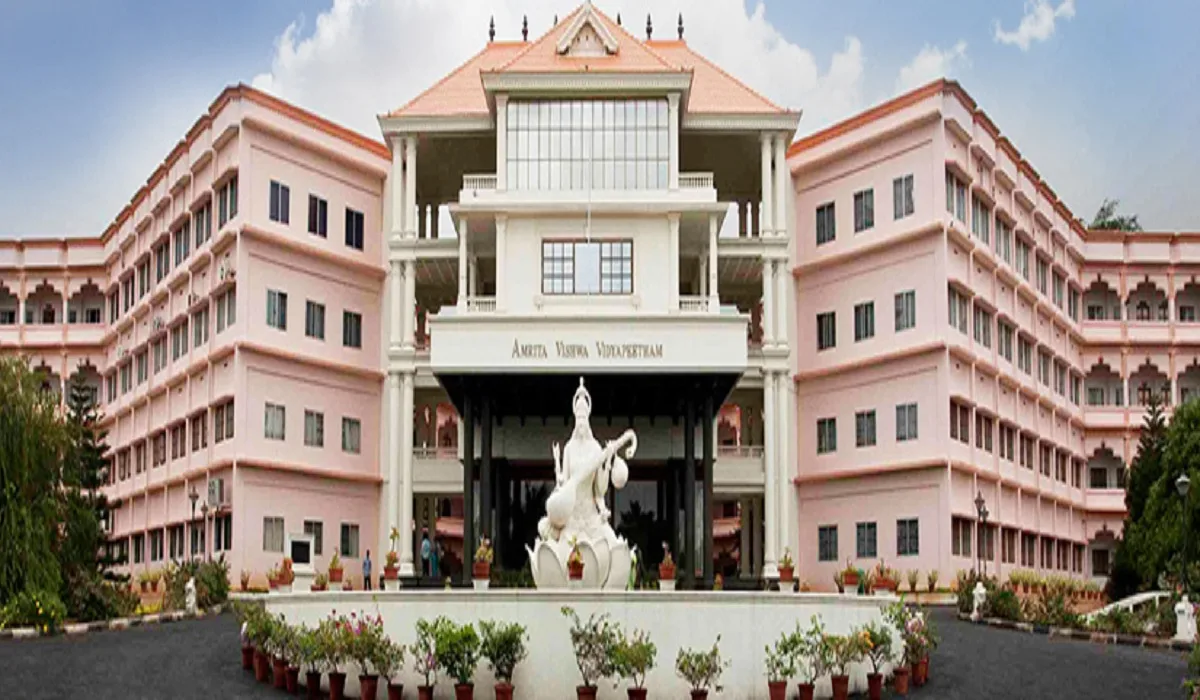

Amrita Vishwa Vidyapeetham is a multi-campus, multi-disciplinary deemed university in India, established in 1994. It is known for its strong emphasis on research, innovation, and value-based education. The university offers a wide range of undergraduate, postgraduate, and doctoral programs in engineering, management, medicine, arts, and sciences. It consistently ranks among the top private universities in India and has collaborations with global institutions.
Total Fees
₹99K - ₹27.7L
Total Courses
13
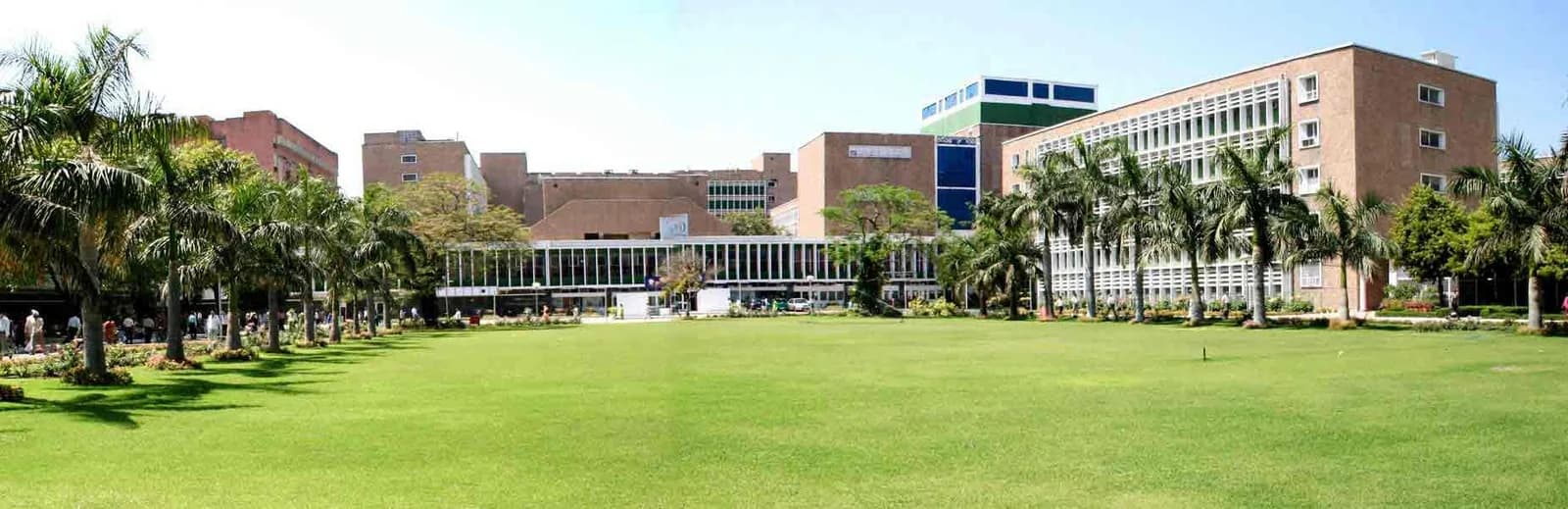
The All India Institutes of Medical Sciences (AIIMS) is a group of autonomous government public medical universities of higher education under the jurisdiction of Ministry of Health and Family Welfare, Government of India. These institutes have been declared by an Act of Parliament as Institutes of National Importance. AIIMS New Delhi, the forerunner institute, was established in 1956. Since then, 24 more institutes were announced. As of January 2023, twenty institutes are operating and four more are expected to become operational until 2025. Proposals were made for six more AIIMS under the leadership of Narendra Modi. It is considered as pioneer health institution of Asia.
Total Fees
₹1K - ₹8K
Total Courses
17
Get More Info About Govt vs Private vs Deemed Medical Colleges
Recommended Reading

NEET Exam Tomorrow: Last-Minute Strategy to Maximize Your Score
NEET is tomorrow—here’s your complete last-day strategy covering revision, exam hall tips, and mistakes to avoid for maximum accuracy and performance.
GATE Previous Year Question Papers with Official Answer Keys (2007–2026) – Download PDF by Branch
Download official GATE previous year question papers with answer keys PDF from 2007 to 2026. Access branch-wise question papers for Computer Science (CS), Data Science (DA), Mechanical (ME), Electronics (EC), Electrical (EE), and Civil (CE) by IIT Madras.

NEET Exam Day Do’s and Don’ts (Must Read Before Leaving Home)
Students appearing for the National Eligibility cum Entrance Test (NEET) must follow strict exam day guidelines set by the National Testing Agency. From required documents and dress code to prohibited items, this guide covers the most important NEET exam day do’s and don’ts to help candidates avoid last-minute problems at the exam center.