

MBBS Fees 2026-27: Govt College Comparison & Updates
Admission & Info Tools
Need Expert Assistance?
Our counselors can help you with fee structures, eligibility guidelines, and upcoming admission cutoffs instantly.
Direct Application Tools
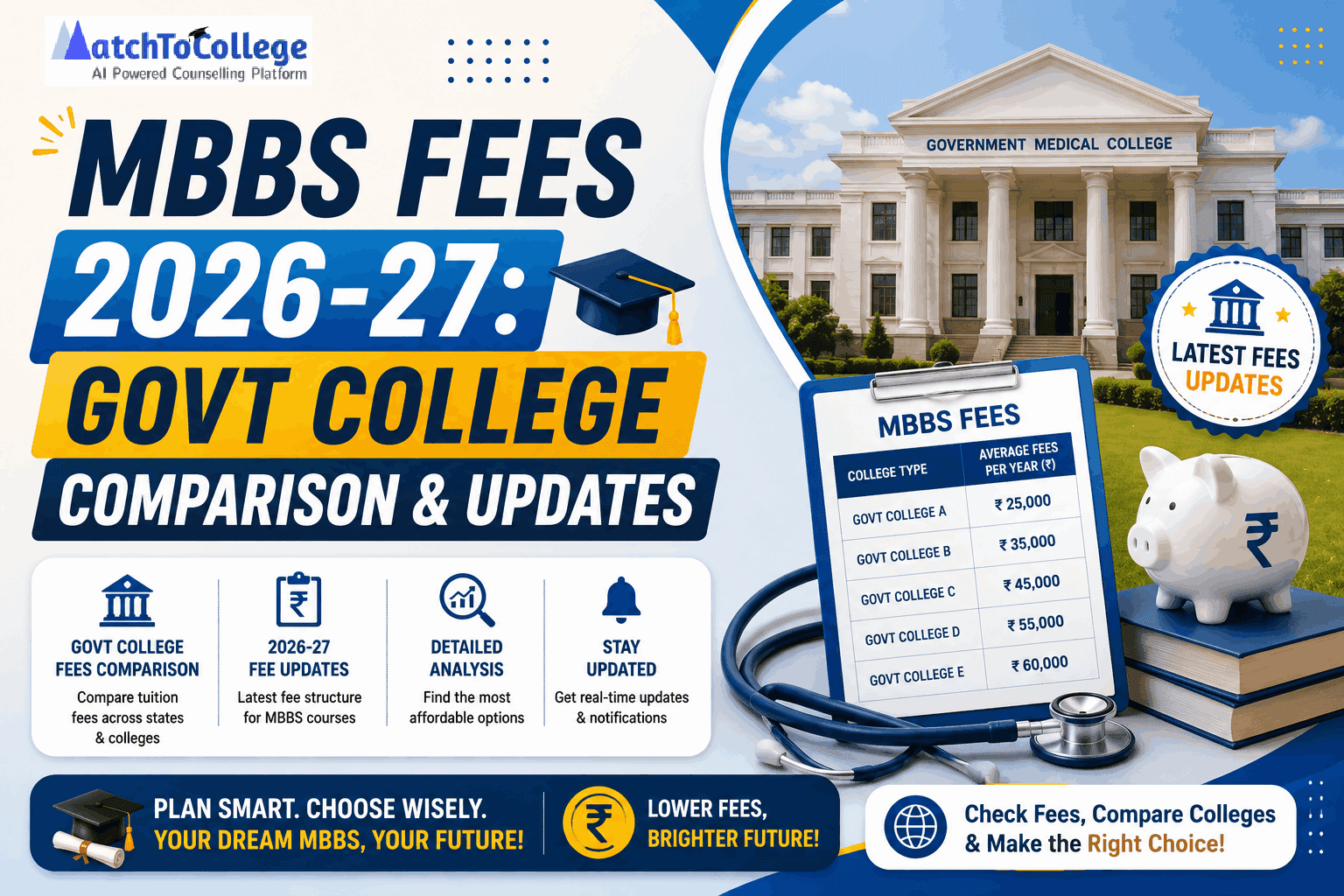
Breaking News for aspiring medical professionals! As we rapidly approach the 2026-27 academic session, the landscape of Government MBBS fees in India is once again a hot topic, demanding immediate attention from students and parents alike. The dream of donning the white coat is often shadowed by concerns about affordability, making a clear understanding of fee structures paramount. This crucial news update from MatchToCollege brings you the latest insights, potential policy shifts, and a comprehensive comparison to help you navigate the complex financial aspects of securing a coveted MBBS seat.
The National Medical Commission (NMC) continues to play a pivotal role in shaping medical education regulations, and while specific directives for 2026-27 fees are eagerly awaited, past discussions around standardizing fees, even for a percentage of private college seats, signal a dynamic environment. For government colleges, while fees are historically more accessible, understanding regional variations, potential inflationary adjustments, and state-specific policies becomes critical. We understand the urgency; every rupee saved is a step closer to your medical career. That's why MatchToCollege, your AI-powered higher education counselling platform, is committed to delivering timely, accurate, and actionable information.
Preparing for NEET 2026 is just one part of the journey; understanding the financial commitment is equally important. Will your dream college remain within budget? What are the factors driving potential fee changes? We delve deep into these questions, providing you with an authoritative outlook on what to expect for the 2026-27 MBBS admissions. Stay informed, stay prepared, and let MatchToCollege be your trusted guide in this competitive journey. Don't leave your future to chance; arm yourself with the latest data and powerful tools.
Decoding the 2026-27 Government MBBS Fee Landscape: What to Expect
The financial outlay for an MBBS degree in a government college remains significantly lower than its private counterparts, making these institutions the primary target for thousands of NEET aspirants. However, the exact fee figures for the 2026-27 session are subject to a confluence of factors, including state government budgets, inflationary pressures, and directives from the National Medical Commission (NMC).
While a dramatic overhaul of government college fees is less common than in the private sector, annual incremental increases are typical. Prospective students must monitor announcements from respective state Directorate of Medical Education (DME) and the Medical Counselling Committee (MCC) for All India Quota (AIQ) seats.
It's vital to recognize that fees can vary not just between states but sometimes even between different government colleges within the same state. These variations often account for infrastructure, facilities, and sometimes even the year of establishment. Understanding these nuances is key to effective financial planning. If you're considering how to manage potential costs, our Education Loan EMI Calculator can help you project repayment options for any potential education financing.
State-wise Fee Variations: A Glimpse into Key Regions for 2026-27
The diversity of India is reflected in its medical education fee structures. States like Delhi, Maharashtra, Uttar Pradesh, Karnataka, and Tamil Nadu, which host a large number of premier government medical colleges, often present distinct fee policies. For example, some states might have slightly higher tuition fees but lower miscellaneous charges, while others might follow a different model.
The domicile status plays a crucial role here, as state quota seats (85% of total seats) typically have lower fees than All India Quota (AIQ) seats (15% of total seats), though both fall under the government fee umbrella. Early research into specific state policies for 2026-27 is highly recommended.
To get a clearer picture of your options, after understanding the fee landscape, you'll need to know which colleges your NEET 2026 score might qualify you for. Utilize our powerful NEET College Predictor to instantly explore colleges based on your expected performance. Not sure about your rank yet? Instantly Predict Your NEET 2026 Rank and then proceed to predict your college options. This proactive approach will empower you to make informed decisions as the 2026-27 admission cycle unfolds.
Navigating Admissions and Financial Planning for MBBS 2026-27
Success in NEET 2026 is undoubtedly the primary gateway to an MBBS seat. With counseling processes for AIQ and state quotas typically commencing after NEET results (usually in July-August for the preceding academic year), aspiring students must be ready with both their academic credentials and a robust financial plan.
Keep an eye on official announcements from regulatory bodies and counselling authorities. The actual fee structures are often released during the counselling information bulletins.
Beyond tuition, remember to factor in other costs such as hostel fees, examination fees, books, and living expenses.
These can significantly add to the overall expenditure. MatchToCollege provides holistic guidance, ensuring you are prepared for every aspect of your higher education journey. Are you confident this is the right path for you? Our Career Pathway Matcher can help affirm your choice or explore alternatives. For a broader view of medical and other top-tier institutions, explore our extensive listings on Domestic Colleges.
Share this Article
FAQFrequently Asked Questions
Q: Are government MBBS fees likely to increase significantly in 2026-27?
While significant increases are less common in government MBBS colleges compared to private institutions, minor annual increments due to inflation and revised state policies are possible. Students should expect fee declarations during the official counseling rounds by MCC and respective state DMEs.
Q: How can I compare MBBS fees for different government colleges?
To compare fees, refer to the information bulletins released by the Medical Counselling Committee (MCC) for All India Quota and the Directorate of Medical Education (DME) of specific states for state quota seats during the 2026-27 admission cycle. These documents will provide the official fee structures for participating government colleges. Tools like MatchToCollege's NEET College Predictor can help you identify target colleges.
Q: What are the main components of MBBS fees in government colleges?
The primary components of MBBS fees in government colleges typically include tuition fees, university enrollment fees, security deposits (refundable), and various miscellaneous charges such as library fees, lab fees, and development funds. Hostel fees and mess charges are usually separate and vary by institution. It's crucial to check the detailed fee breakdown provided by each college or counseling authority.
Get More Info About MBBS Fees 2026-27
Recommended Reading

LBSIM Delhi & GIBS 2027 Admissions Open: Apply Online Now
LBSIM Delhi and GIBS Bangalore open 2027 admissions. Explore PGDM, MBA, and BBA application details, early bird offers, and WBJEE/TNEA 2026 counseling updates.

Best Online MBA Specializations for High-Paying Careers 2026
Discover the most lucrative online MBA specializations for 2026-27. Compare ROI, career growth, and use our AI tools to find your perfect management path.

Top Career Opportunities After an Online MBA in 2026-27
Discover high-paying career paths and roles after an online MBA in 2026-27. Explore salary trends, ROI, and tools to navigate your future professional success.