

Future MBA Careers: What Employers Seek by 2030
Admission & Info Tools
Need Expert Assistance?
Our counselors can help you with fee structures, eligibility guidelines, and upcoming admission cutoffs instantly.
Direct Application Tools
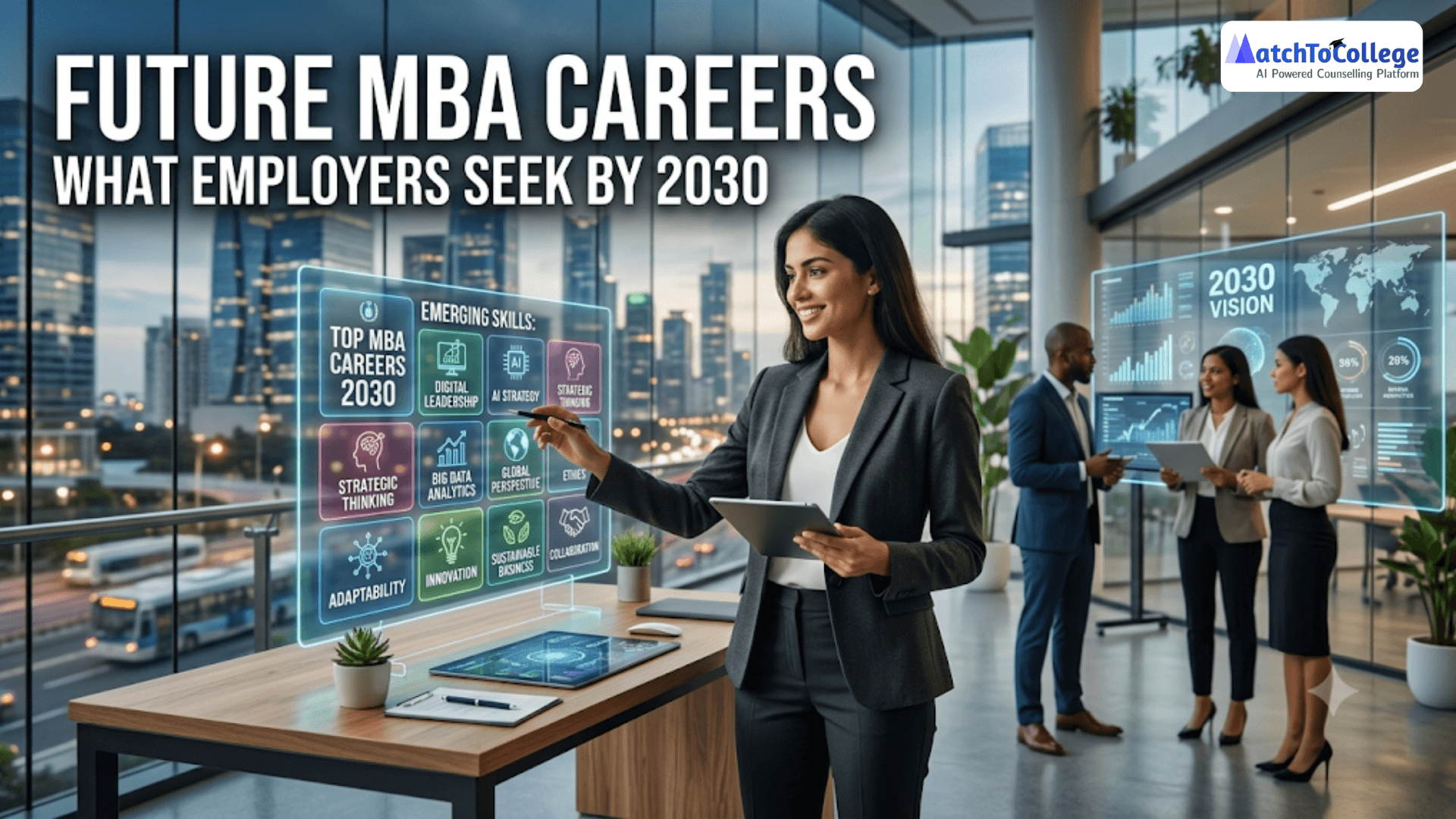
Future MBA Careers
The landscape of global business is shifting at an unprecedented pace, driven by technological innovation, evolving societal values, and dynamic economic forces. For aspiring leaders considering an MBA, understanding what the future holds isn't just an advantage—it's a necessity. What competencies will employers prioritize? Which industries will offer the most promising opportunities? And how can today's students prepare themselves for a world that will look remarkably different by 2030?
As we stand on the cusp of a new era, the traditional MBA skillset, while foundational, is no longer sufficient. Companies are increasingly seeking professionals who are not only adept at core business functions but also possess a robust blend of digital fluency, ethical leadership, and profound adaptability. The demand is growing for strategists who can navigate complex data landscapes, champions who can drive sustainable growth, and innovators who can harness emerging technologies like Artificial Intelligence (AI) and Machine Learning (ML) for competitive advantage.
This comprehensive guide delves into the future of MBA careers, offering insights into the critical skills, mindsets, and experiences that will define success for the next generation of business leaders. We'll explore the tectonic shifts occurring across industries and pinpoint the key attributes that will make MBA graduates indispensable by 2030. From mastering advanced analytics to cultivating emotional intelligence, and from embracing the principles of Environmental, Social, and Governance (ESG) to fostering a culture of continuous learning, the path to a high-impact MBA career is undergoing a profound transformation.
For students and parents navigating these complex choices, platforms like MatchToCollege are invaluable resources. Our AI-powered higher education counselling platform is designed precisely to help you identify the programs and pathways that align with these future demands, ensuring your investment in an MBA yields maximum returns in a rapidly evolving job market. Join us as we explore the future and equip you with the knowledge to make informed decisions for a prosperous career.
The Evolving Business Landscape: Drivers of Change by 2030
Understanding the future of MBA careers necessitates a deep dive into the forces reshaping the global business environment. By 2030, several macro trends will have fundamentally altered how businesses operate, innovate, and compete. These drivers directly influence the types of talent employers will seek and the challenges MBA graduates will be expected to solve.
| Key Trend | Impact on MBA Careers by 2030 | Skills Employers Will Seek |
| Digital Transformation & the AI Revolution | AI and Machine Learning are reshaping business operations, automating routine tasks, improving decision-making, and enabling innovative business models. MBA graduates will be expected to leverage AI strategically while addressing ethical and operational challenges. | AI literacy, digital transformation, data analytics, predictive analytics, algorithmic thinking, technology strategy, AI governance, digital fluency |
| Sustainability, ESG & Stakeholder Capitalism | Sustainability and ESG have become central to business strategy. Organizations seek leaders who can balance profitability with environmental and social responsibility while meeting stakeholder expectations. | ESG strategy, sustainable business management, ethical leadership, circular economy, supply chain sustainability, corporate governance, stakeholder management |
| Global Interconnectedness & Geopolitical Volatility | Global markets, international supply chains, and geopolitical uncertainties require business leaders who can navigate cross-border operations and manage diverse teams effectively. | Global business strategy, cross-cultural communication, international trade knowledge, geopolitical awareness, risk management, regulatory compliance |
| The Future of Work & Workforce Automation | Automation and evolving workplace models are transforming how organizations operate. MBA graduates must lead workforce transformation, manage hybrid teams, and foster continuous learning in an AI-driven environment. | Change management, people leadership, workforce planning, organizational agility, reskilling and upskilling, hybrid team management, innovation and adaptability |
Core Competencies Redefined: Essential Skills for 2030 MBA Graduates
Given these drivers of change, the skillset employers seek in MBA graduates is evolving rapidly. While traditional business acumen remains vital, a new set of critical competencies will differentiate top talent by 2030. These skills can broadly be categorized into technological fluency, human-centric leadership, and strategic agility.
Technological Fluency Beyond Basics
Gone are the days when an MBA could coast on general management skills alone. By 2030, a deep understanding of core technologies will be non-negotiable.
| Skill | Why It Matters |
| AI & Machine Learning | Use AI strategically, manage AI projects, and understand ethical implications. |
| Data Analytics & Business Intelligence | Analyze data, generate insights, and support data-driven decisions. |
| Cybersecurity Awareness | Protect business data, manage digital risks, and ensure compliance. |
| Digital Transformation Leadership | Lead technology adoption and drive organizational digital change. |
The Human Element: Soft Skills for a Digital World
Paradoxically, as technology advances, the demand for uniquely human skills intensifies. These 'soft skills' become the differentiator in a world where many analytical tasks can be automated.
| Skill | Why It Matters |
| Emotional Intelligence (EQ) | Builds strong leadership, teamwork, and conflict resolution skills. |
| Adaptability & Resilience | Helps professionals respond effectively to change and uncertainty. |
| Critical Thinking & Problem-Solving | Enables informed decisions and innovative business solutions. |
| Ethical Leadership & Integrity | Promotes responsible decision-making and builds stakeholder trust. |
| Collaboration & Cross-Cultural Communication | Supports effective teamwork in diverse and global work environments. |
Strategic Acumen for a Complex World
The strategic challenges facing businesses will become more intricate, requiring a nuanced approach.
| Skill | Why It Matters |
| ESG Strategy & Impact Management | Drives sustainable growth while balancing financial, environmental, and social goals. |
| Innovation & Entrepreneurship | Identifies new opportunities and fosters business growth through innovation. |
| Global Business Acumen | Helps navigate international markets, regulations, and global business challenges. |
Emerging Career Paths & Industry Shifts for MBA Graduates
The evolution of required skills naturally leads to shifts in desirable career paths and industry opportunities. MBA graduates by 2030 will find themselves poised for roles that may not even fully exist today, particularly in areas intersecting technology, sustainability, and strategy.
| Career Category | Emerging Roles by 2030 |
| Tech-Enabled Roles | AI/ML Strategy & Product Manager, Digital Transformation Lead, Data Ethics Officer, Cybersecurity Business Strategist |
| Sustainability & ESG Careers | Chief Sustainability Officer (CSO), ESG Consultant/Analyst, Circular Economy Specialist |
| Strategic & Advisory Roles | Future of Work Strategist, Innovation & R&D Manager, FinTech & Green Finance Specialist, Healthcare Analytics & Operations Manager |
The key takeaway is that an MBA in 2030 will open doors not just to traditional corporate ladders, but to dynamic, cross-functional roles that demand a blend of technical understanding, strategic foresight, and ethical leadership. The ability to identify and capitalize on these emerging trends will be crucial for a successful post-MBA career.
The Role of Lifelong Learning and Upskilling in MBA Careers
The rapid pace of change means that an MBA degree is no longer a terminal qualification; it's a foundational step in a journey of continuous learning. By 2030, employers will not just look at a candidate's credentials, but also at their commitment to ongoing professional development and their demonstrated capacity for lifelong learning.
This means MBA graduates must cultivate a growth mindset, always seeking to acquire new skills and adapt to evolving technologies and methodologies. This could involve:
| Learning Method | Purpose |
| Micro-Credentials & Certifications | Gain expertise in emerging fields like AI, blockchain, data analytics, and sustainable finance. |
| Executive Education Programs | Upgrade leadership skills and stay current with evolving business practices. |
| Online Learning Platforms | Learn new technologies, software tools, and industry trends through flexible courses. |
| Industry Associations & Networking | Build professional connections, exchange knowledge, and stay updated on industry best practices. |
The ability to 'unlearn' old paradigms and 'relearn' new ones will be a critical skill. Employers will value individuals who proactively invest in their intellectual capital, demonstrating the agility and foresight necessary to lead in an unpredictable future. An MBA provides the framework, but continuous upskilling provides the competitive edge.
How MatchToCollege Prepares You for Tomorrow's MBA Landscape
Navigating the complexities of MBA admissions and career planning in such a dynamic environment can be daunting. This is where MatchToCollege becomes an indispensable partner for prospective MBA students and their families.
Our AI-powered higher education counselling platform is specifically designed to bridge the gap between your aspirations and the future demands of the MBA job market. Here's how MatchToCollege helps you future-proof your MBA career:
- Personalized Program Matching: Our advanced algorithms analyze your profile, career goals, and the evolving employer demands to recommend MBA programs that are strong in areas like AI, ESG, data analytics, and global leadership – the very skills employers will seek by 2030.
- Skill Gap Analysis: We help you identify current skill gaps relative to future job market requirements, allowing you to strategically choose electives, internships, or pre-MBA courses that build critical competencies.
- Career Path Visualization: Gain clarity on emerging career paths post-MBA, understanding the trajectories and required skillsets for roles in tech strategy, sustainable business, FinTech, and more.
- Application Optimization: Receive tailored advice on crafting applications that highlight your potential to thrive in a future-focused business environment, showcasing your adaptability, digital fluency, and leadership potential.
- Real-time Market Insights: Access continuously updated data and insights on MBA trends, employer preferences, and salary expectations, ensuring your decisions are based on the most current information available.
With MatchToCollege, you don't just apply to an MBA program; you strategically invest in a future-ready career. We empower you to make informed decisions that align with the demands of 2030 and beyond, ensuring your MBA journey leads to impactful and fulfilling leadership opportunities.
The Evolving Business Landscape: Drivers of Change by 2030
Understanding the future of MBA careers necessitates a deep dive into the forces reshaping the global business environment. By 2030, several macro trends will have fundamentally altered how businesses operate, innovate, and compete. These drivers directly influence the types of talent employers will seek and the challenges MBA graduates will be expected to solve.
| Key Trend | Impact on MBA Careers by 2030 | Skills Employers Will Seek |
| Digital Transformation & the AI Revolution | AI and Machine Learning are reshaping business operations, automating routine tasks, improving decision-making, and enabling innovative business models. MBA graduates will be expected to leverage AI strategically while addressing ethical and operational challenges. | AI literacy, digital transformation, data analytics, predictive analytics, algorithmic thinking, technology strategy, AI governance, digital fluency |
| Sustainability, ESG & Stakeholder Capitalism | Sustainability and ESG have become central to business strategy. Organizations seek leaders who can balance profitability with environmental and social responsibility while meeting stakeholder expectations. | ESG strategy, sustainable business management, ethical leadership, circular economy, supply chain sustainability, corporate governance, stakeholder management |
| Global Interconnectedness & Geopolitical Volatility | Global markets, international supply chains, and geopolitical uncertainties require business leaders who can navigate cross-border operations and manage diverse teams effectively. | Global business strategy, cross-cultural communication, international trade knowledge, geopolitical awareness, risk management, regulatory compliance |
| The Future of Work & Workforce Automation | Automation and evolving workplace models are transforming how organizations operate. MBA graduates must lead workforce transformation, manage hybrid teams, and foster continuous learning in an AI-driven environment. | Change management, people leadership, workforce planning, organizational agility, reskilling and upskilling, hybrid team management, innovation and adaptability |
Core Competencies Redefined: Essential Skills for 2030 MBA Graduates
Given these drivers of change, the skillset employers seek in MBA graduates is evolving rapidly. While traditional business acumen remains vital, a new set of critical competencies will differentiate top talent by 2030. These skills can broadly be categorized into technological fluency, human-centric leadership, and strategic agility.
Technological Fluency Beyond Basics
Gone are the days when an MBA could coast on general management skills alone. By 2030, a deep understanding of core technologies will be non-negotiable.
| Skill | Why It Matters |
| AI & Machine Learning | Use AI strategically, manage AI projects, and understand ethical implications. |
| Data Analytics & Business Intelligence | Analyze data, generate insights, and support data-driven decisions. |
| Cybersecurity Awareness | Protect business data, manage digital risks, and ensure compliance. |
| Digital Transformation Leadership | Lead technology adoption and drive organizational digital change. |
The Human Element: Soft Skills for a Digital World
Paradoxically, as technology advances, the demand for uniquely human skills intensifies. These 'soft skills' become the differentiator in a world where many analytical tasks can be automated.
| Skill | Why It Matters |
| Emotional Intelligence (EQ) | Builds strong leadership, teamwork, and conflict resolution skills. |
| Adaptability & Resilience | Helps professionals respond effectively to change and uncertainty. |
| Critical Thinking & Problem-Solving | Enables informed decisions and innovative business solutions. |
| Ethical Leadership & Integrity | Promotes responsible decision-making and builds stakeholder trust. |
| Collaboration & Cross-Cultural Communication | Supports effective teamwork in diverse and global work environments. |
Strategic Acumen for a Complex World
The strategic challenges facing businesses will become more intricate, requiring a nuanced approach.
| Skill | Why It Matters |
| ESG Strategy & Impact Management | Drives sustainable growth while balancing financial, environmental, and social goals. |
| Innovation & Entrepreneurship | Identifies new opportunities and fosters business growth through innovation. |
| Global Business Acumen | Helps navigate international markets, regulations, and global business challenges. |
Emerging Career Paths & Industry Shifts for MBA Graduates
The evolution of required skills naturally leads to shifts in desirable career paths and industry opportunities. MBA graduates by 2030 will find themselves poised for roles that may not even fully exist today, particularly in areas intersecting technology, sustainability, and strategy.
| Career Category | Emerging Roles by 2030 |
| Tech-Enabled Roles | AI/ML Strategy & Product Manager, Digital Transformation Lead, Data Ethics Officer, Cybersecurity Business Strategist |
| Sustainability & ESG Careers | Chief Sustainability Officer (CSO), ESG Consultant/Analyst, Circular Economy Specialist |
| Strategic & Advisory Roles | Future of Work Strategist, Innovation & R&D Manager, FinTech & Green Finance Specialist, Healthcare Analytics & Operations Manager |
The key takeaway is that an MBA in 2030 will open doors not just to traditional corporate ladders, but to dynamic, cross-functional roles that demand a blend of technical understanding, strategic foresight, and ethical leadership. The ability to identify and capitalize on these emerging trends will be crucial for a successful post-MBA career.
The Role of Lifelong Learning and Upskilling in MBA Careers
The rapid pace of change means that an MBA degree is no longer a terminal qualification; it's a foundational step in a journey of continuous learning. By 2030, employers will not just look at a candidate's credentials, but also at their commitment to ongoing professional development and their demonstrated capacity for lifelong learning.
This means MBA graduates must cultivate a growth mindset, always seeking to acquire new skills and adapt to evolving technologies and methodologies. This could involve:
| Learning Method | Purpose |
| Micro-Credentials & Certifications | Gain expertise in emerging fields like AI, blockchain, data analytics, and sustainable finance. |
| Executive Education Programs | Upgrade leadership skills and stay current with evolving business practices. |
| Online Learning Platforms | Learn new technologies, software tools, and industry trends through flexible courses. |
| Industry Associations & Networking | Build professional connections, exchange knowledge, and stay updated on industry best practices. |
The ability to 'unlearn' old paradigms and 'relearn' new ones will be a critical skill. Employers will value individuals who proactively invest in their intellectual capital, demonstrating the agility and foresight necessary to lead in an unpredictable future. An MBA provides the framework, but continuous upskilling provides the competitive edge.
How MatchToCollege Prepares You for Tomorrow's MBA Landscape
Navigating the complexities of MBA admissions and career planning in such a dynamic environment can be daunting. This is where MatchToCollege becomes an indispensable partner for prospective MBA students and their families.
Our AI-powered higher education counselling platform is specifically designed to bridge the gap between your aspirations and the future demands of the MBA job market. Here's how MatchToCollege helps you future-proof your MBA career:
- Personalized Program Matching: Our advanced algorithms analyze your profile, career goals, and the evolving employer demands to recommend MBA programs that are strong in areas like AI, ESG, data analytics, and global leadership – the very skills employers will seek by 2030.
- Skill Gap Analysis: We help you identify current skill gaps relative to future job market requirements, allowing you to strategically choose electives, internships, or pre-MBA courses that build critical competencies.
- Career Path Visualization: Gain clarity on emerging career paths post-MBA, understanding the trajectories and required skillsets for roles in tech strategy, sustainable business, FinTech, and more.
- Application Optimization: Receive tailored advice on crafting applications that highlight your potential to thrive in a future-focused business environment, showcasing your adaptability, digital fluency, and leadership potential.
- Real-time Market Insights: Access continuously updated data and insights on MBA trends, employer preferences, and salary expectations, ensuring your decisions are based on the most current information available.
With MatchToCollege, you don't just apply to an MBA program; you strategically invest in a future-ready career. We empower you to make informed decisions that align with the demands of 2030 and beyond, ensuring your MBA journey leads to impactful and fulfilling leadership opportunities.
Share this Article
FAQFrequently Asked Questions
Q: What are the most crucial skills for MBA graduates by 2030?
By 2030, the most crucial skills for MBA graduates will include a blend of technological fluency (e.g., AI/ML acumen, data analytics), human-centric leadership (e.g., emotional intelligence, adaptability, ethical decision-making), and strategic acumen (e.g., ESG strategy, innovation, global business understanding). The ability to lead digital transformation and manage diverse, automated workforces will also be paramount.
Q: Which industries will offer the best opportunities for MBA graduates in 2030?
Industries poised for significant growth and offering strong opportunities for MBA graduates by 2030 include technology (especially AI, cloud, and cybersecurity), sustainable business and ESG consulting, FinTech, healthcare innovation, and strategic consulting with a focus on digital transformation and sustainability. Roles in these sectors will often be interdisciplinary, requiring a blend of technical and leadership skills.
Q: How can an MBA program prepare me for the future job market?
An MBA program can prepare you for the future job market by offering specialized courses in areas like data science, AI strategy, sustainable finance, and digital marketing. Look for programs with strong practical components, experiential learning, and opportunities for cross-functional projects. Additionally, networking, career services, and alumni mentorship are crucial for understanding and adapting to evolving employer demands. Platforms like MatchToCollege can help identify programs best aligned with these future-focused skill sets.
Q: Will 'soft skills' still be important for MBA careers by 2030?
Absolutely. In fact, 'soft skills' – or human-centric leadership skills – will be more important than ever by 2030. As automation handles more analytical and routine tasks, uniquely human attributes like emotional intelligence, critical thinking, creativity, adaptability, and ethical leadership will become the primary differentiators. The ability to collaborate, communicate effectively across cultures, and inspire diverse teams will be indispensable for future MBA leaders.
Q: How can MatchToCollege help me prepare for future MBA careers?
MatchToCollege leverages AI to provide personalized guidance for future MBA careers. We help you by matching your profile and aspirations with programs strong in future-relevant skills (AI, ESG, data analytics), conducting skill gap analyses, visualizing emerging career paths, optimizing your application to highlight future-proof potential, and providing real-time market insights. Our goal is to ensure your MBA investment strategically aligns with the demands of 2030 and beyond.
Get More Info About Future MBA Careers
Recommended Reading
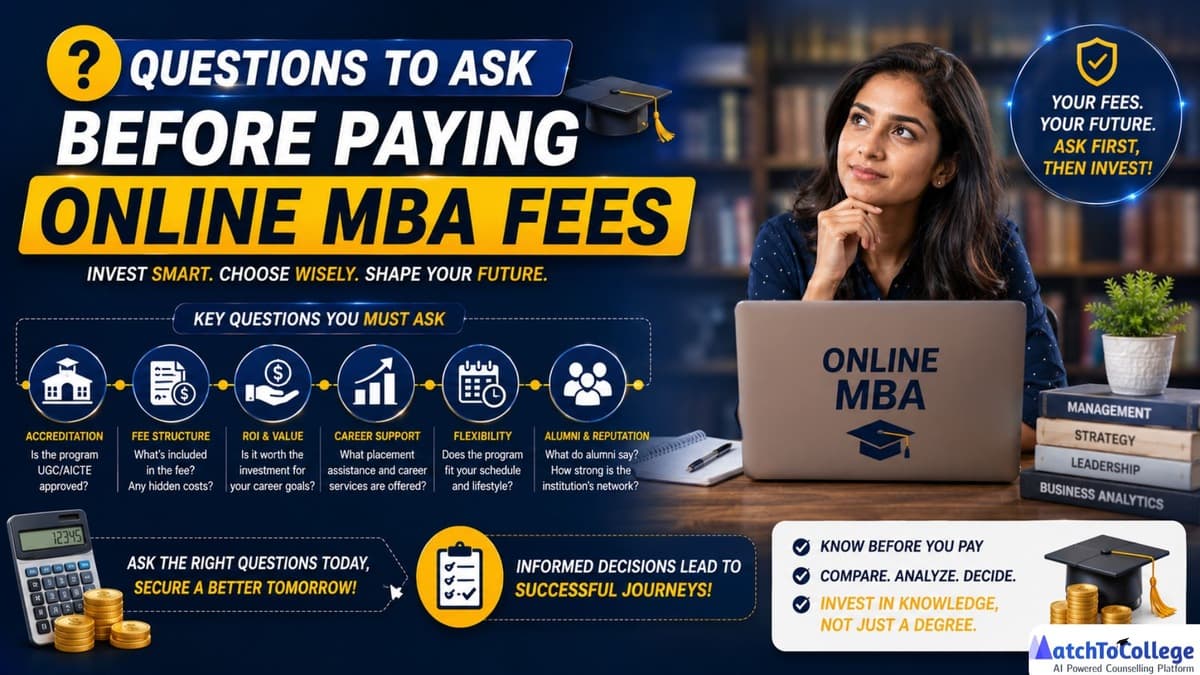
Online MBA Fees: 7 Vital Questions Before You Commit
Paying for an Online MBA? Don't rush! Discover 7 essential questions to ask about accreditation, costs, and career services before you pay your fees. Make a smart investment.

Top Careers After MBA in Marketing: Your Future Unlocked
Unlock your potential! Discover the most lucrative and impactful careers after an MBA in Marketing. From brand management to digital strategy, find your path.
Boost Your Career: The Power of an Online MBA
Unlock career growth with a flexible Online MBA. Discover top programs, navigate applications, and balance work-life. Your professional future starts here.