

FMS Delhi vs IIM Ahmedabad: Is FMS the MBA ROI Champion?
Admission & Info Tools
Need Expert Assistance?
Our counselors can help you with fee structures, eligibility guidelines, and upcoming admission cutoffs instantly.
Direct Application Tools
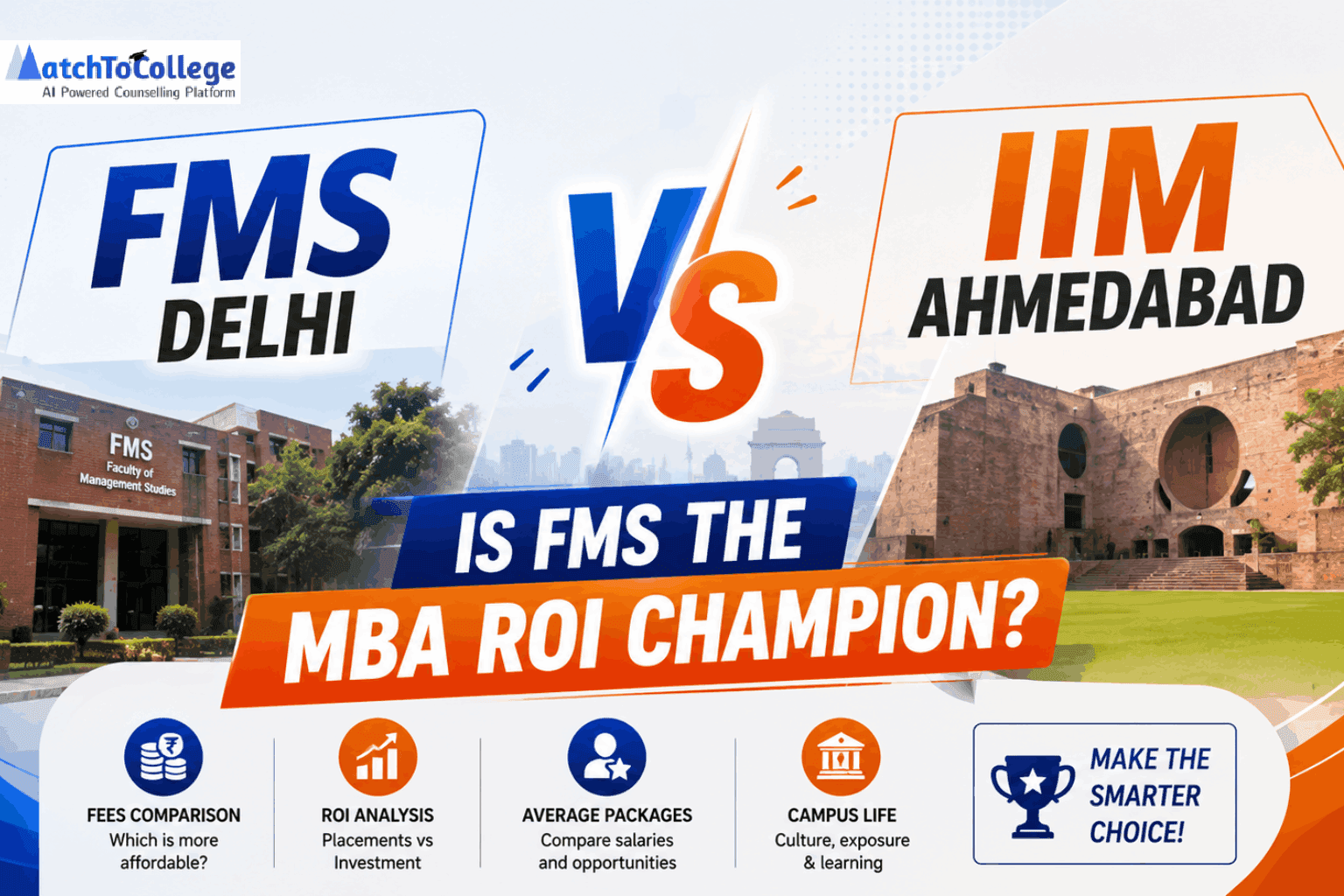
In the 2024 admission cycle, a candidate securing a seat at the Faculty of Management Studies (FMS), University of Delhi, faces a total tuition outlay of approximately ₹2,00,000 for the entire two-year MBA program. Simultaneously, a student entering the Post Graduate Programme (PGP) at IIM Ahmedabad (IIMA) commits to a fee structure nearing ₹25,00,000. This 1,150% difference in capital expenditure serves as the foundation for the most debated comparison in Indian management education.
While IIM Ahmedabad consistently holds the #1 spot in the NIRF rankings, FMS Delhi maintains a legendary status as the 'CEO Factory' primarily due to its fiscal accessibility and high-octane placement statistics. For aspirants weighing these two giants, the decision isn't merely about ranking; it is about calculating the time-to-recovery for their investment. To assist in these calculations, we provide a specialized Calculate Your University ROI Compare tool to help you visualize the long-term wealth gap between these two debt profiles.
The debate between the Red Building of Dreams and the Walled City of Wisdom isn't just about the initial fee. It involves analyzing the diversity of recruiters, the global reach of the alumni network, and the 'campus life' trade-offs. FMS Delhi operates under the aegis of a central university, meaning it lacks the sprawling, residential gated-campus luxury of IIMA’s Vastrapur campus.
However, for a student who secures a ₹34.1 LPA average package from FMS, the return on investment is mathematically unparalleled in the global education landscape. At MatchToCollege, we analyze these placement trends annually to ensure our CAT College Predictor reflects the shifting cut-offs and sectional requirements for both institutions, which often demand a 99.5+ percentile for general category candidates.
The Mathematical Reality: Fees vs. Day-One CTC
The core of the ROI argument lies in the debt-to-income ratio. At IIM Ahmedabad, the majority of students take education loans ranging from ₹20 lakhs to ₹25 lakhs. Even with preferential interest rates for premier institutes, the monthly EMI can hover around ₹30,000 to ₹40,000 for a significant duration of their early career. In contrast, an FMS student often funds their education through personal savings or a minor loan that can be liquidated within the first three months of their professional life. If you are planning your finances, use our Education Loan EMI Calculator to see how an IIMA loan impacts your take-home salary versus the FMS debt-free model.
Looking at the 2023-2024 placement data, FMS Delhi reported an average CTC of ₹34.1 LPA, with the median standing at ₹31 LPA. IIM Ahmedabad, while yet to release the fully audited IPRS report for the most recent cycle, traditionally sees averages between ₹33 LPA and ₹35 LPA for its domestic pool. When the salary outputs are so closely aligned, the input cost becomes the deciding factor for ROI. Using a Million to Rupees Calculator, one can see that the total cost at FMS is barely 0.02 million USD, a figure that is unheard of for a top-tier global MBA equivalent. This allows FMS graduates the 'risk-taking' freedom to join early-stage startups or pursue niche consulting roles without the pressure of a massive monthly EMI debt trap.
Placement Diversity: Consulting, Finance, and Product Management
Recruiters often treat FMS Delhi and IIM Ahmedabad as 'Tier-1' or 'Super-League' targets, but the volume of offers varies. IIM Ahmedabad remains the undisputed king for global strategy consulting firms like MBB (McKinsey, BCG, Bain) and elite investment banks. While these firms do visit FMS, the number of 'Day 0' roles at IIMA is significantly higher due to the sheer size of the batch and the historical legacy of the brand. For a student whose sole goal is 'Goldman Sachs IBD' or 'McKinsey Global,' IIMA offers a slightly higher statistical probability of success.
However, FMS Delhi excels in Marketing and FMCG roles. Brands like HUL, P&G, and ITC have a long-standing 'special relationship' with the North Campus. The marketing curriculum and the senior-junior mentorship at FMS are geared towards these sectors. If you are transitioning from a technical background, you may need to convert your previous scores; our CGPA to Percentage Calculator can help ensure your academic profile meets the rigorous shortlisting criteria of these top-tier recruiters.
Furthermore, the competitive nature of the FMS cohort—where every student is a high-percentiler—creates an environment that mirrors the intensity of IIMA, albeit in a more urban, non-residential setting. The choice often comes down to whether you prefer the structured, rigorous 'IIMA Method' of case studies or the more flexible, industry-integrated approach of FMS.
Share this Article
FAQFrequently Asked Questions
Q: Is FMS Delhi really better than IIM Ahmedabad for ROI?
Yes, purely from a mathematical standpoint of 'Salary vs. Fees.' FMS fees are roughly 1/12th of IIMA, while average salaries are nearly identical.
Q: Does IIM Ahmedabad have a better placement record than FMS?
IIM Ahmedabad generally attracts more 'Super-Dream' roles in International Finance and Global Consulting, whereas FMS is a powerhouse for Marketing and Domestic roles.
Q: Can I get into FMS with a 98 percentile in CAT?
For the General category, it is extremely difficult. FMS usually requires a 99.5+ percentile, though weightage is also given to sectional scores and academic diversity.
Get More Info About FMS Delhi vs IIM Ahmedabad
Recommended Reading
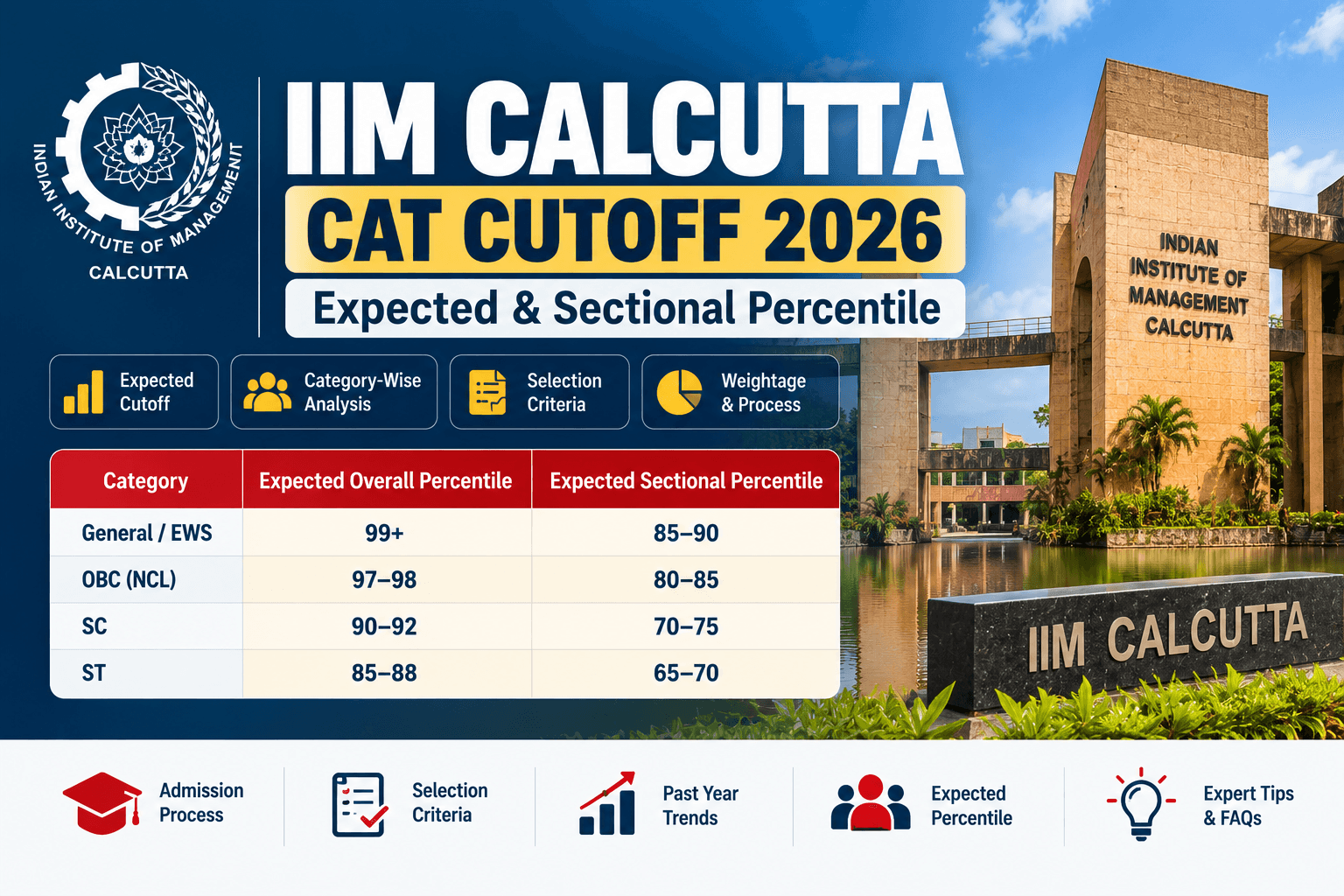
IIM Calcutta CAT Cutoff 2026: Expected & Sectional Percentile
IIM Calcutta CAT Cutoff 2026: Check the expected overall and sectional percentile, category-wise qualifying cutoff, selection criteria, CAT weightage and admission process for the 2027–29 MBA batch.
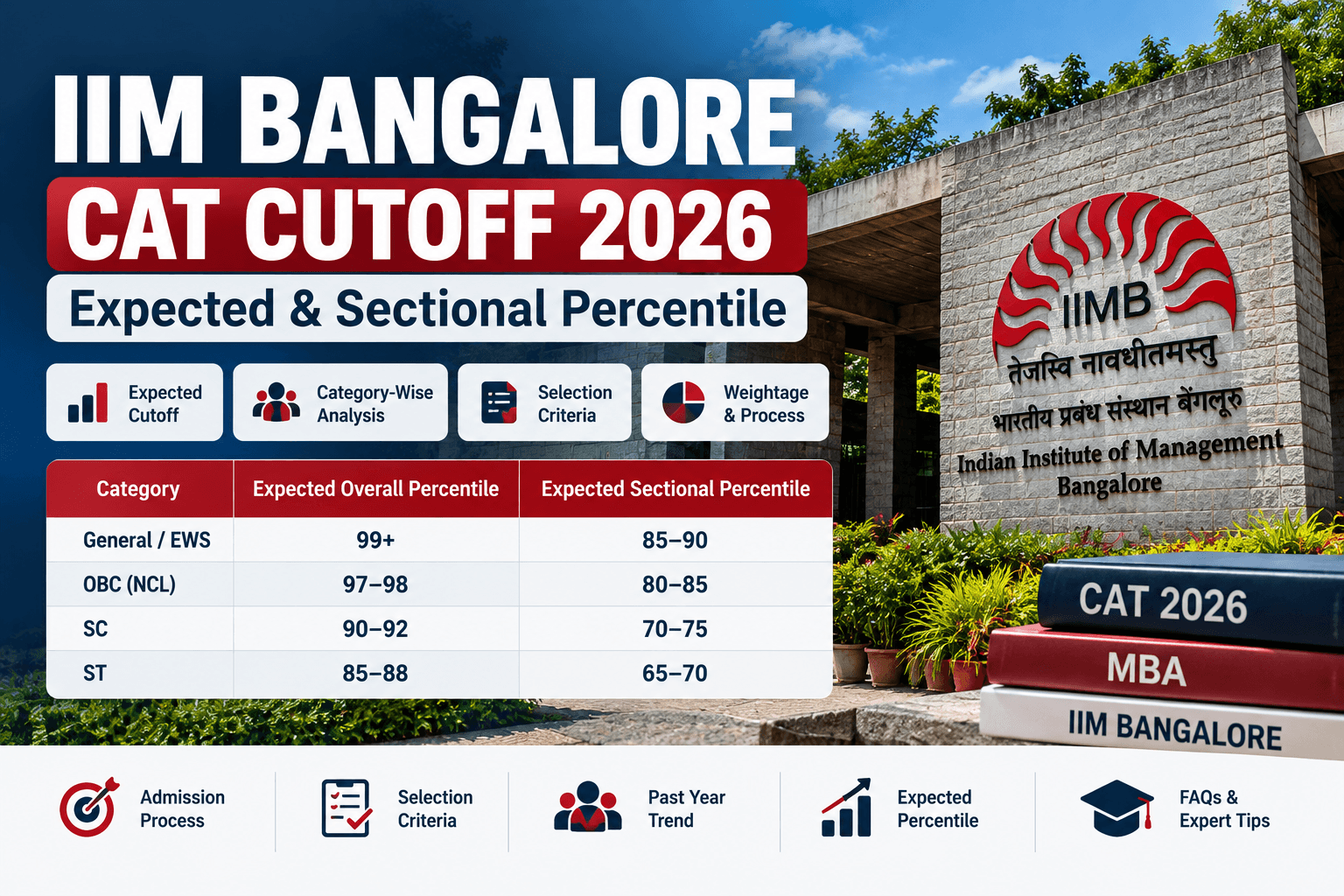
IIM Bangalore CAT Cutoff 2026: Expected & Sectional Percentile
IIM Bangalore CAT Cutoff 2026: Check the expected overall and sectional percentile, category-wise qualifying cutoff, selection criteria, CAT weightage and admission process for the 2027–29 MBA batch.
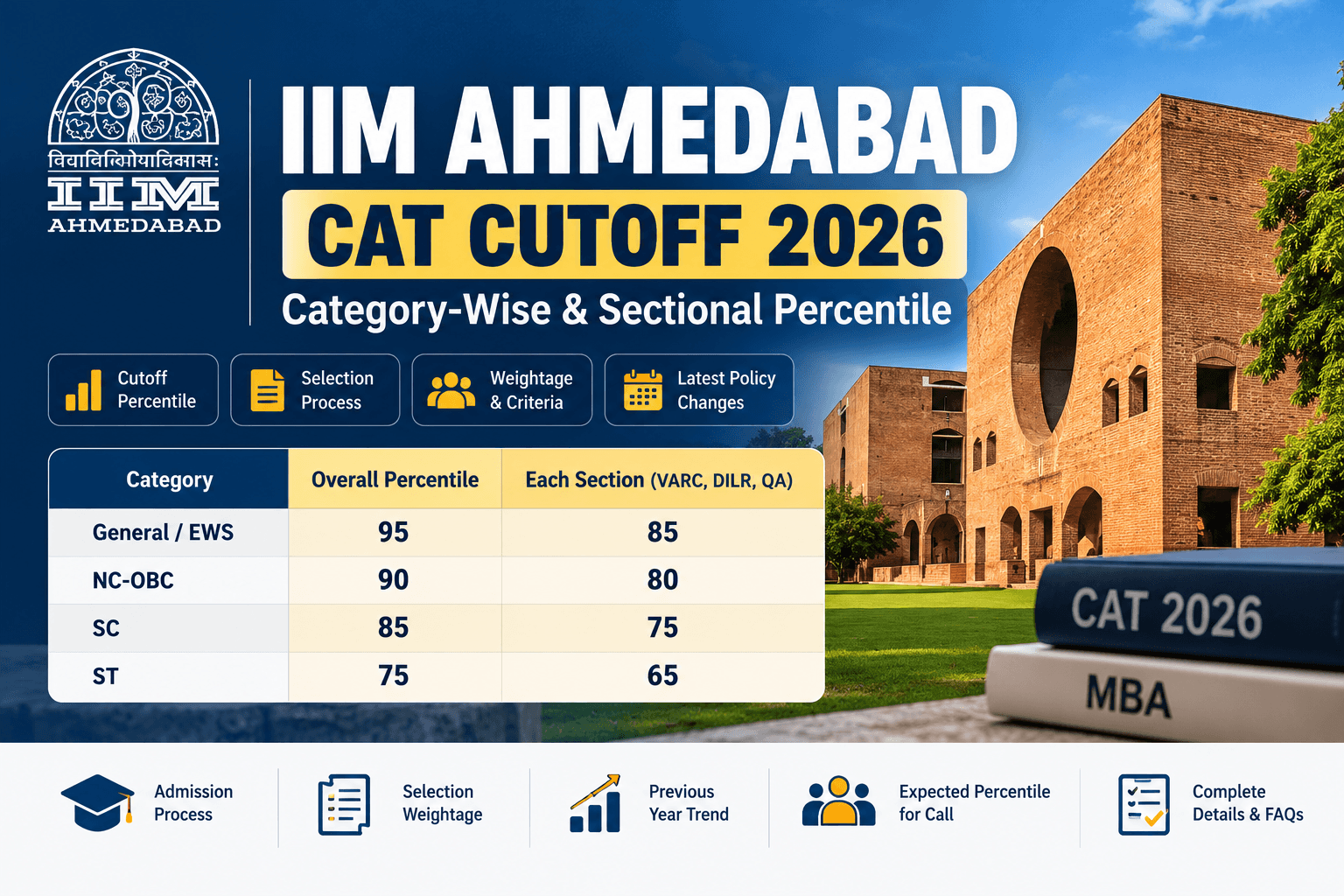
IIM Ahmedabad CAT Cutoff 2026: Expected & Sectional Percentile
Quick answer: For the PGP 2027–29 batch (CAT 2026), IIM Ahmedabad's minimum cutoff is 95 percentile overall and 85 in each section for General/EWS candidates. Reports of the revised policy say the cutoffs are unchanged from the previous cycle, which had already jumped from 80/70 the year before. Clearing the minimum only makes you eligible; it does not guarantee an interview call.