

First Year MBBS in India: Subjects, Schedule & DH Tips
Admission & Info Tools
Need Expert Assistance?
Our counselors can help you with fee structures, eligibility guidelines, and upcoming admission cutoffs instantly.
Direct Application Tools
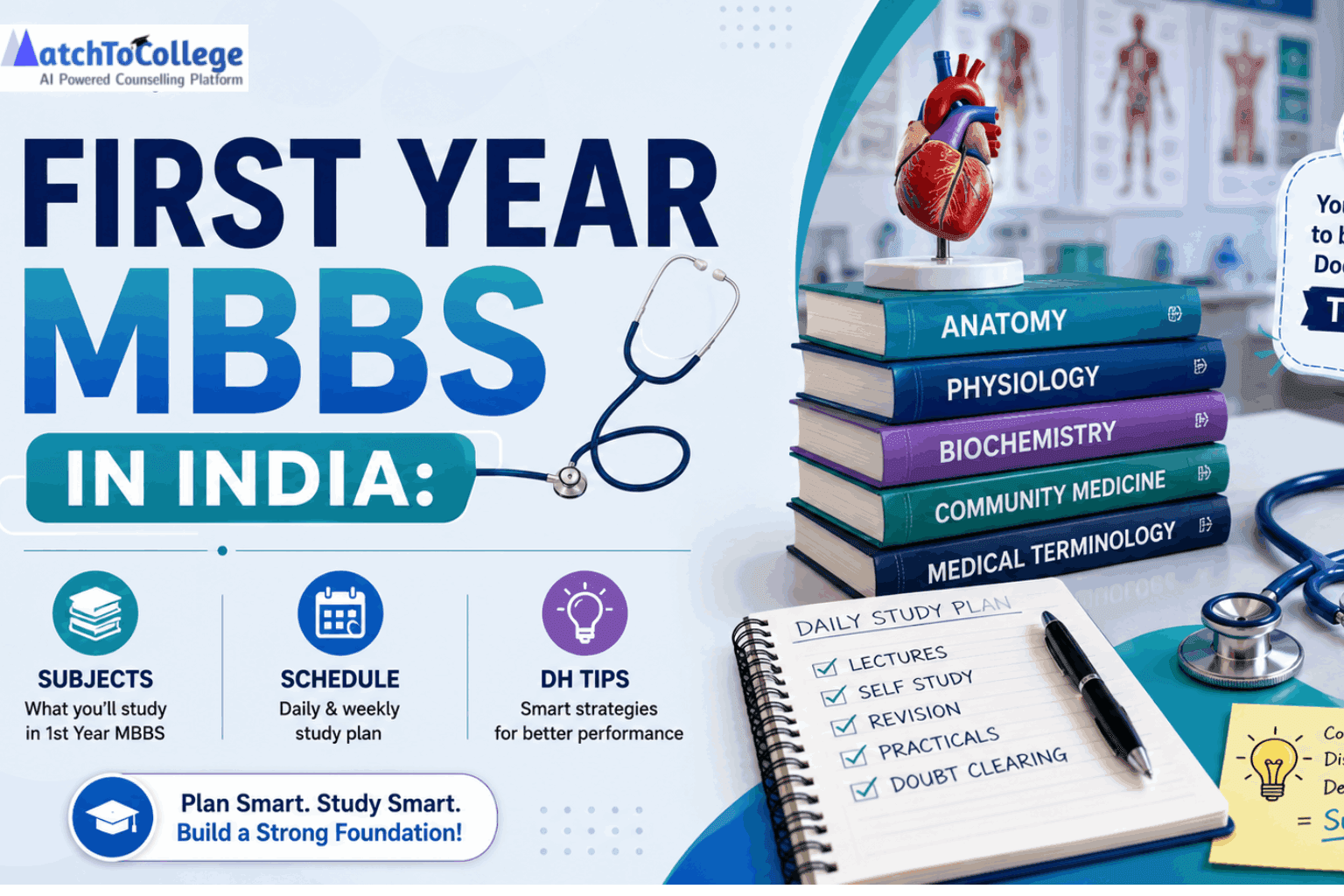
In India, the transition into a medical college marks the beginning of the First Professional Year, a phase now governed by the Competency-Based Undergraduate Curriculum (CBME) introduced in 2019. Unlike previous decades where the first year stretched for 18 months, the current National Medical Commission (NMC) guidelines compress this intensive period into approximately 13 months, including examination time.
Students are required to maintain a strict 75% attendance in theory and 80% in practicals to even qualify for the university exams. While many candidates utilize our NEET 2026 Rank Predictor to gauge their entry into these institutions, the reality of the academic load begins on Day 1. This guide breaks down the core subjects—Anatomy, Physiology, and Biochemistry—alongside the rigorous 8:00 AM to 4:00 PM daily schedule and the unique psychological challenge of the dissection hall.
The Anatomy Dissection Hall: Navigating Your First Teacher
The Dissection Hall (DH) is the cornerstone of the first-year experience. It is where theory meets reality. Most medical colleges in India dedicate at least 10 to 12 hours a week to dissection. Your 'First Teacher' is the cadaver, and the respect shown in this hall is paramount. The air is thick with the scent of formaldehyde, a preservative that can cause watery eyes and a lingering smell on clothes for beginners. To manage this, students often apply a small amount of peppermint oil or Vicks under their nostrils, though most acclimate within two weeks.
Success in the DH requires a specific set of tools: a high-quality scalpel (usually handle number 4 with blade 22 or 24), blunt and pointed forceps, and a pair of surgical scissors. It is not about 'cutting' but rather 'reflecting' skin and fascia to reveal the underlying structures. Following Cunningham’s Manual of Practical Anatomy is the standard protocol.
Students are divided into batches (usually 10-15 students per cadaver), and the process is systematic—starting with the upper limb or thorax and moving toward the abdomen and head-neck region. The goal is to identify nerves, arteries, and muscles as they appear in real life, which rarely matches the neatly color-coded diagrams in textbooks like Gray's Anatomy. Pro-tip: Focus on the 'relations' of organs—what sits in front, behind, or beside a structure—as these are favorite questions for external examiners during vivas.
The Academic Trio: Mastering Anatomy, Physiology, and Biochemistry
The curriculum is divided into three distinct yet overlapping departments. Anatomy is the most voluminous, encompassing Gross Anatomy, Histology (microscopic study of tissues), Embryology, and Osteology. Students must master the landmarks of every bone in the human body.
Textbooks like B.D. Chaurasia or Vishram Singh are the gold standards in Indian medical colleges. Physiology shifts the focus from 'where it is' to 'how it works.' This subject covers the cardiovascular system, respiratory mechanics, and renal function. Clinical practicals in Physiology involve learning to record blood pressure, perform hematology experiments (like RBC and WBC counting), and conducting human experiments such as ECG interpretation or lung function tests. During these labs, students often use tools like our BMI Calculator to understand the clinical parameters of their peer 'subjects.'
Biochemistry, often underestimated, is the study of the molecular basis of life. It involves complex metabolic pathways like the Krebs cycle, Glycolysis, and the Urea cycle. The focus has shifted from rote memorization of structures to understanding the clinical significance of enzymes and hormones. For instance, understanding glucose metabolism is directly linked to diagnosing and managing Diabetes Mellitus. Students typically rely on textbooks by U. Satyanarayana or Pankaja Naik to navigate these biochemical frontiers.
Balancing these three subjects requires a tactical approach, as failing any one of them in the professional exams results in a 'supplementary' attempt, which can delay your progress into the second year.
Share this Article
FAQFrequently Asked Questions
Q: What are the passing marks for first-year MBBS in India?
A student must score a minimum of 50% in theory and 50% in practicals (including internal assessment and viva) separately for each subject to pass.
Q: Is the first year of MBBS the hardest?
Many consider it the hardest because of the sheer volume of new terminology in Anatomy and the transition to a high-pressure environment, though subsequent years have more clinical complexity.
Q: How many subjects are there in first-year MBBS?
There are three primary subjects: Anatomy, Physiology, and Biochemistry. Additionally, students are introduced to Community Medicine and Early Clinical Exposure (ECE).
Q: Which books are best for Anatomy in India?
BD Chaurasia’s Human Anatomy is the most popular for exams, while Gray’s Anatomy for Students is recommended for conceptual depth. Cunningham’s Manual is essential for dissection.
Get More Info About First Year MBBS in India
Recommended Reading
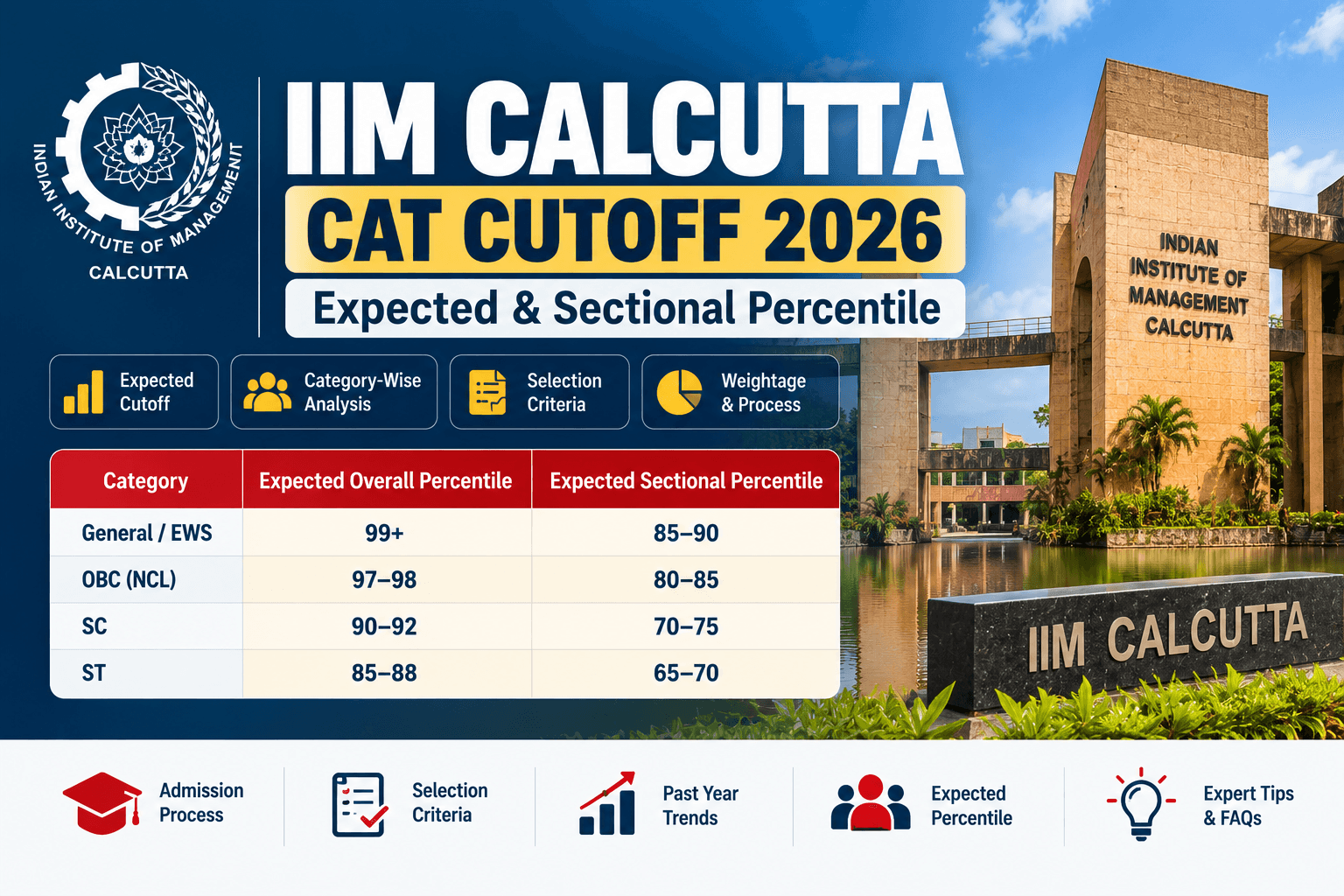
IIM Calcutta CAT Cutoff 2026: Expected & Sectional Percentile
IIM Calcutta CAT Cutoff 2026: Check the expected overall and sectional percentile, category-wise qualifying cutoff, selection criteria, CAT weightage and admission process for the 2027–29 MBA batch.
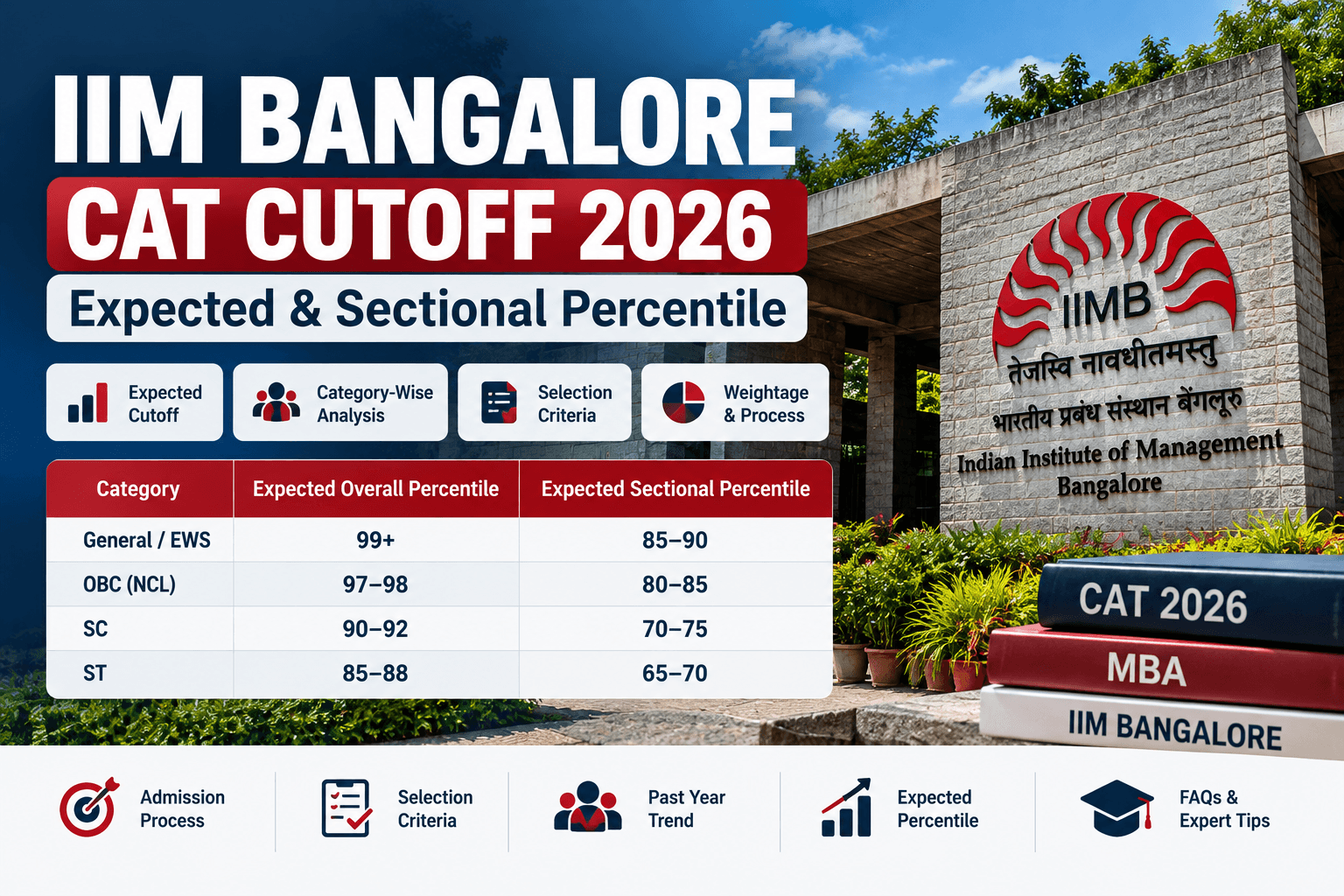
IIM Bangalore CAT Cutoff 2026: Expected & Sectional Percentile
IIM Bangalore CAT Cutoff 2026: Check the expected overall and sectional percentile, category-wise qualifying cutoff, selection criteria, CAT weightage and admission process for the 2027–29 MBA batch.
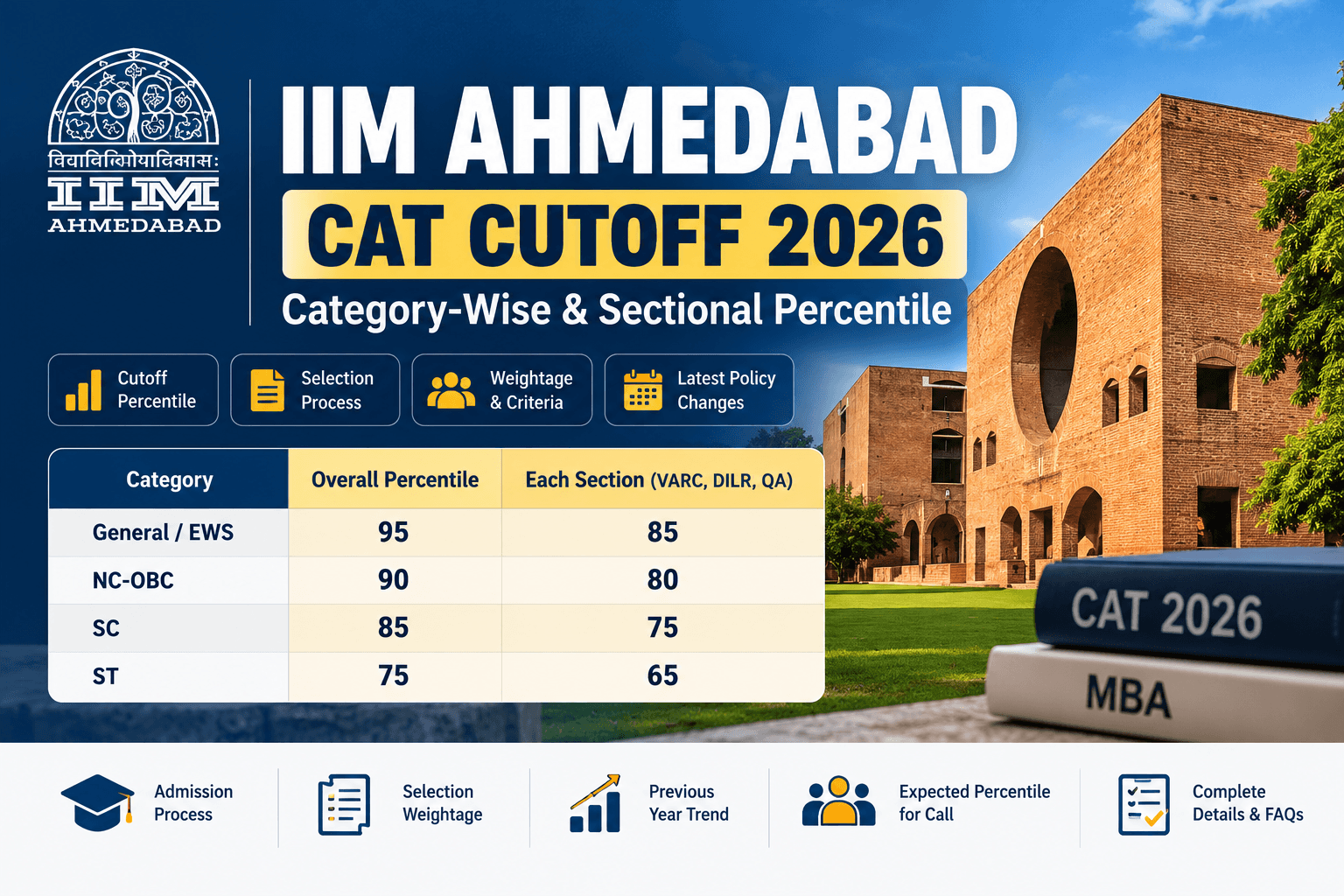
IIM Ahmedabad CAT Cutoff 2026: Expected & Sectional Percentile
Quick answer: For the PGP 2027–29 batch (CAT 2026), IIM Ahmedabad's minimum cutoff is 95 percentile overall and 85 in each section for General/EWS candidates. Reports of the revised policy say the cutoffs are unchanged from the previous cycle, which had already jumped from 80/70 the year before. Clearing the minimum only makes you eligible; it does not guarantee an interview call.