

Executive MBA Guide 2026: Benefits, Eligibility & Fees
Admission & Info Tools
Need Expert Assistance?
Our counselors can help you with fee structures, eligibility guidelines, and upcoming admission cutoffs instantly.
Direct Application Tools

Executive MBA guide 2026
An Executive MBA (EMBA) is designed for working professionals, managers, and senior executives who want to strengthen their leadership skills, expand their business knowledge, and accelerate career growth—without leaving their jobs.
Unlike a regular MBA, an EMBA allows professionals to continue working while studying through flexible weekend, evening, or online classes. It is ideal for those aiming for senior management, leadership, entrepreneurship, or C-suite roles.
This Complete Executive MBA Guide 2026 by MatchToCollege covers everything you need to know—from eligibility and fees to benefits, career opportunities, and choosing the right program.
What You'll Learn in This Guide
| Topic | What You'll Discover |
| Executive MBA Overview | What an EMBA is and how it works. |
| Benefits | Career growth, leadership development, salary potential, and networking opportunities. |
| Eligibility | Educational qualifications, work experience, and admission requirements. |
| Fees | Tuition fees, payment options, scholarships, and ROI. |
| Executive MBA vs MBA | Key differences between a regular MBA and an Executive MBA. |
| Top Colleges | Leading Executive MBA programs in India and abroad. |
| Career Opportunities | Leadership roles, promotions, entrepreneurship, and executive-level positions. |
| Admission Process | Step-by-step guide to applying for EMBA programs in 2026. |
Why Choose an Executive MBA?
| Benefit | How It Helps |
| Continue Working | Earn your degree without taking a career break. |
| Leadership Development | Build strategic thinking and decision-making skills. |
| Career Advancement | Increase opportunities for promotions and executive roles. |
| Industry Networking | Connect with experienced professionals, alumni, and business leaders. |
| Higher Salary Potential | Improve earning potential with advanced management skills. |
| Flexible Learning | Weekend, evening, hybrid, or online learning options. |
| Immediate Application | Apply classroom learning directly to your current job. |
Why Trust MatchToCollege?
Choosing the right Executive MBA is a major career decision. MatchToCollege helps you compare programs, understand eligibility, evaluate fees and ROI, and find the best EMBA based on your experience, career goals, and budget.
If you're ready to move into senior leadership, management, or entrepreneurship, an Executive MBA can help you achieve your goals. Explore top Executive MBA programs, compare universities, and make an informed decision with MatchToCollege as your trusted higher education partner.
What is an Executive MBA (EMBA)?
An Executive MBA (EMBA) is a postgraduate management program designed for experienced professionals, managers, entrepreneurs, and senior executives who want to develop advanced leadership and strategic management skills without leaving their jobs.
Unlike a regular MBA, an EMBA offers flexible learning through weekend, evening, hybrid, or online classes, allowing professionals to balance work and studies. The program focuses on solving real business challenges, improving decision-making, and preparing participants for senior leadership roles.
Executive MBA vs Regular MBA
| Feature | Executive MBA (EMBA) | Regular MBA |
| Target Audience | Mid-to-senior level professionals with work experience | Fresh graduates and early-career professionals |
| Work Experience | Usually 3–10+ years (varies by university) | May require little or no work experience |
| Program Format | Part-time, weekend, online, hybrid, or modular | Primarily full-time classroom-based |
| Duration | Typically 18–24 months | Usually 2 years (full-time) |
| Learning Focus | Leadership, strategic management, and real-world business challenges | Core business fundamentals and management concepts |
| Career Impact | Career advancement, leadership roles, promotions, and executive positions | Career entry, role transition, or management foundation |
| Networking | Learn alongside experienced professionals, business leaders, and executives | Network with students from diverse academic backgrounds |
| Class Schedule | Designed for working professionals | Requires full-time academic commitment |
Why Choose an Executive MBA?
- Continue working while earning your degree.
- Develop leadership and strategic decision-making skills.
- Apply classroom learning directly to your current job.
- Expand your professional network with experienced executives.
- Prepare for senior management, C-suite, and entrepreneurial roles.
- Increase your career growth and earning potential.
An Executive MBA is the ideal choice for professionals who want to accelerate their careers, strengthen leadership capabilities, and gain a competitive edge without taking a career break.
Top Benefits of Pursuing an EMBA in 2026
Investing in an Executive MBA in 2026 offers a multitude of benefits that can profoundly impact your professional trajectory and personal growth:
- Accelerated Career Advancement: An EMBA signals to employers your commitment to leadership and strategic growth, often leading to promotions, higher-level roles, and increased responsibilities within your organization or a new company.
- Enhanced Leadership and Strategic Skills: The curriculum is designed to sharpen your decision-making, problem-solving, and critical thinking abilities, equipping you with the tools to navigate complex business environments and lead high-performing teams.
- Unparalleled Networking Opportunities: You'll join a cohort of accomplished professionals from diverse industries and backgrounds. This creates a powerful network of peers, mentors, and future collaborators that extends far beyond the classroom.
- Immediate Application of Learning: Because you continue working, you can directly apply new concepts and strategies learned in class to real-time challenges in your workplace, leading to tangible improvements and demonstrating immediate ROI.
- Significant Salary Increase Potential: Post-EMBA, graduates often report substantial salary bumps and improved compensation packages, making the financial investment worthwhile in the long run.
- Global Perspective and Exposure: Many EMBA programs include international modules, offering exposure to global business practices and cross-cultural management, vital for leadership in today's interconnected world.
Eligibility Criteria for Executive MBA Programs
While specific requirements vary by institution, most Executive MBA programs look for candidates who demonstrate significant professional experience and leadership potential. Here are the common eligibility criteria you'll encounter for 2026 admissions:
- Professional Work Experience: This is arguably the most crucial requirement. Most programs demand a minimum of 5-10 years of progressive work experience, with a significant portion in a management or leadership role.
- Academic Background: A bachelor's degree from an accredited institution is generally mandatory. While specific GPA requirements exist, many top programs consider your professional achievements to compensate for a less-than-stellar undergraduate record.
- GMAT/GRE (Optional for many): While some programs still require the GMAT or GRE, an increasing number of EMBA programs offer waivers for candidates with extensive work experience, advanced degrees, or proven quantitative abilities. Always check the specific program's policy.
- Essays and Letters of Recommendation: You'll need to submit compelling essays outlining your career goals, reasons for pursuing an EMBA, and how you will contribute to the cohort. Strong letters of recommendation, typically from supervisors or colleagues, are also essential.
- Interview: A personal interview is a standard part of the admissions process, allowing the admissions committee to assess your leadership potential, communication skills, and fit with the program's culture.
- Company Sponsorship/Support: While not always mandatory, demonstrating company support (even if not financial) can be a strong positive, indicating your employer values your growth.
Understanding Executive MBA Fees and Funding Options
The investment in an Executive MBA can be substantial, often ranging from $70,000 to over $200,000 for top-tier programs. These fees typically cover tuition, books, course materials, international modules, and sometimes accommodation and meals during residency periods. Understanding the financial commitment and exploring various funding avenues is crucial:
- Program Costs: Research specific program fees thoroughly, as they vary widely. Remember to account for indirect costs like travel, technology, and potential lost income if you reduce work hours.
- Employer Sponsorship: Many companies recognize the value of an EMBA for their executives and offer partial or full sponsorship. Presenting a strong business case to your employer detailing the ROI for the company can be effective.
- Scholarships and Fellowships: Business schools and external organizations offer various scholarships specifically for EMBA candidates, often based on merit, diversity, industry background, or leadership potential. Don't overlook these opportunities.
- Student Loans: Both federal and private student loans are available to cover EMBA costs. Explore interest rates, repayment terms, and eligibility carefully.
- Personal Savings and Investments: Many candidates use their personal savings to fund a portion of their EMBA, demonstrating their commitment and reducing loan dependency.
While the upfront cost is significant, consider the long-term Return on Investment (ROI) through career advancement, increased earning potential, and an invaluable professional network. Many EMBA graduates find their investment pays off within a few years post-graduation.
Choosing the Right EMBA Program with MatchToCollege
Navigating the vast landscape of Executive MBA programs to find the perfect fit can be overwhelming. This is where MatchToCollege becomes your invaluable partner. Our advanced AI-powered platform simplifies the entire process, providing personalized recommendations and expert guidance tailored to your unique profile and career aspirations.
We analyze your work experience, academic background, career goals, and even your preferred learning style to match you with EMBA programs that align perfectly with your needs. Beyond just rankings, MatchToCollege offers data-driven insights into program specializations, curriculum flexibility, faculty expertise, alumni networks, and funding opportunities. Whether you're targeting a global EMBA, a program with a strong focus on technology, or one known for its leadership development, our platform helps you cut through the noise.
Let MatchToCollege streamline your application journey for 2026. From identifying the best-fit programs and understanding specific admission criteria to crafting compelling essays and preparing for interviews, we provide comprehensive support every step of the way. Unlock your full potential and make a strategic investment in your future with confidence. Your ideal Executive MBA program is just a match away!
Share this Article
FAQFrequently Asked Questions
Q: What is the typical duration of an Executive MBA program?
Most Executive MBA programs are designed to be completed in 18 to 24 months. They are structured to accommodate working professionals, often with classes held on weekends, evenings, or in concentrated modules to minimize disruption to their careers.
Q: Is a GMAT/GRE score always required for EMBA admissions?
No, a GMAT or GRE score is not always required for Executive MBA programs. While some top programs may still request it, an increasing number offer waivers for candidates with significant work experience, advanced degrees, or strong professional achievements, recognizing their proven capabilities.
Q: How does an EMBA differ from a Part-Time MBA?
While both allow you to work, an EMBA targets mid-to-senior level professionals with extensive experience (5-10+ years), focusing on strategic leadership. A Part-Time MBA is typically for younger professionals with less experience, offering more foundational business knowledge. EMBA cohorts are often smaller, more experienced, and curriculum is more applied.
Get More Info About Executive MBA Guide 2026
Recommended Reading

Best Online MBA Specializations for High-Paying Careers 2026
Discover the most lucrative online MBA specializations for 2026-27. Compare ROI, career growth, and use our AI tools to find your perfect management path.

Top Career Opportunities After an Online MBA in 2026-27
Discover high-paying career paths and roles after an online MBA in 2026-27. Explore salary trends, ROI, and tools to navigate your future professional success.
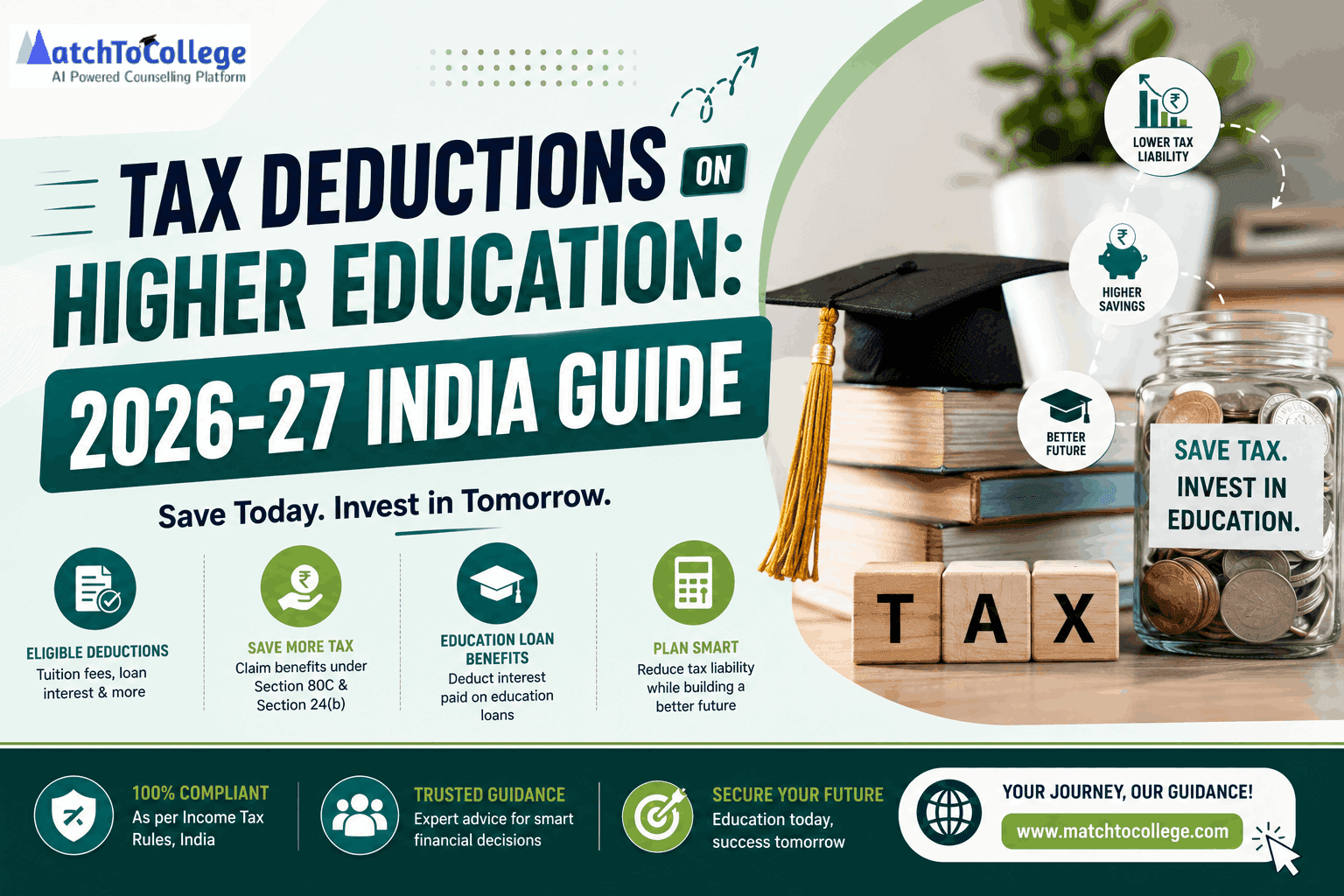
Tax Deductions on Higher Education: 2026-27 India Guide
Maximize your savings with our guide on tax deductions for higher education fees in India for FY 2026-27. Learn about Section 80C, 80E, and upskilling benefits.