

Essential HR Skills for Graduates: Your Path to Success
Admission & Info Tools
Need Expert Assistance?
Our counselors can help you with fee structures, eligibility guidelines, and upcoming admission cutoffs instantly.
Direct Application Tools

Learn today. Lead tomorrow.
The Human Resources (HR) profession is undergoing a profound and exhilarating transformation. Once primarily viewed as an administrative function, modern HR has evolved into a strategic business imperative, central to organizational success, employee well-being, and competitive advantage.
For aspiring HR leaders currently pursuing their degrees, the landscape they are entering is dynamic, challenging, and filled with immense opportunity. However, simply possessing a degree is no longer sufficient; understanding and mastering the essential workplace skills before graduation is not just an advantage—it’s an absolute necessity for long-term career success.
The bridge from academia to the corporate world can often feel like a leap into the unknown. Many HR graduates find themselves grappling with the gap between theoretical knowledge and practical application.
This is where proactive skill development becomes paramount. Employers today are not just looking for candidates with textbook knowledge; they seek agile, adaptable, and critically thinking professionals who can hit the ground running, contribute meaningfully, and drive innovation from day one.
They need individuals who understand human capital management not just as a concept, but as a living, breathing component of business strategy.
At MatchToCollege, we are dedicated to empowering students like you to not only select the perfect higher education institution but also to prepare holistically for your post-graduation career.
Our AI-powered platform goes beyond admissions guidance, offering insights and tools to help you identify and cultivate the in-demand skills that employers are actively seeking. We believe that true career readiness begins long before you walk across the graduation stage.
This comprehensive guide is designed to illuminate the critical skills HR students must master to excel in today's competitive job market. We will delve into the key HR competencies that will define your trajectory, from mastering HR analytics and digital fluency to honing interpersonal communication and strategic business acumen.
By focusing on these areas, you can transform yourself from a knowledgeable student into a highly sought-after, workplace-ready HR professional.
Our aim is to provide actionable insights and practical advice, ensuring you don't just graduate, but graduate ready to lead the future of HR and make an immediate impact in your chosen field.
Let's explore how you can strategically position yourself for an impactful and rewarding career in human resources.
The Evolving Landscape of HR: Why Skills Matter More Than Ever
The modern HR department is a far cry from its predecessors. Driven by rapid technological advancements, globalization, changing workforce demographics, and the gig economy, the HR function has shifted dramatically.
It’s no longer solely about payroll and paperwork; it's about talent strategy, organizational development, fostering inclusive cultures, and leveraging data to drive business outcomes.
This transformation means that generic business skills are no longer sufficient for HR professionals. Instead, a specialized set of competencies, deeply rooted in both people management and business strategy, is required.
Future HR leaders must be able to navigate complex challenges, champion change, and understand how human capital directly impacts a company's bottom line.
The emphasis has moved from transactional HR to strategic HR, demanding a new breed of professionals who are well-equipped to contribute to organizational success in meaningful and measurable ways.
Core Competencies Every HR Graduate Must Master
To stand out in a competitive job market and genuinely contribute to an organization, HR students need to develop a robust skill set that goes beyond academic theory.
Here are the indispensable competencies:
Data Literacy and HR Analytics
- In an increasingly data-driven world, HR decisions are no longer based on gut feelings. HR analytics involves collecting, analyzing, and interpreting HR data to make informed decisions about recruitment, retention, compensation, and performance. Understanding metrics like employee turnover rates, time-to-hire, and training effectiveness allows HR to demonstrate its strategic value and contribute to business intelligence. Data literacy means not just knowing how to use tools but understanding what the data signifies and how it can be leveraged for predictive insights and workforce planning.
Digital Fluency and HR Technology
- The proliferation of HR technology (HR Tech), including Human Resources Information Systems (HRIS), Applicant Tracking Systems (ATS), performance management software, and even AI-powered recruitment tools, has revolutionized HR operations. Digital fluency is about more than just basic computer skills; it means being comfortable with new software, adapting to emerging technologies, and understanding how these tools can streamline processes, enhance efficiency, and improve the employee experience. Familiarity with cloud-based platforms and virtual collaboration tools is also crucial in today's hybrid work environments.
Communication and Interpersonal Skills
- At its heart, HR is about people. Therefore, exceptional communication and interpersonal skills are non-negotiable. This includes clear written and verbal communication, active listening, empathy, negotiation, and conflict resolution. HR professionals act as a bridge between employees and management, requiring the ability to articulate policies, provide constructive feedback, manage diverse personalities, and foster a positive, productive work environment. The capacity to build rapport and trust is fundamental for effective employee relations.
Change Management and Adaptability
- Organizations are in a constant state of flux due to market shifts, technological advancements, and evolving business strategies. Change management is the process of guiding individuals and organizations through transitions. HR plays a pivotal role in facilitating this process, minimizing resistance, and ensuring a smooth transition. Graduates must develop the ability to anticipate change, communicate its necessity, and support employees through the adaptation process. Adaptability and resilience are key traits for any HR professional navigating these dynamic environments.
Business Acumen and Strategic Thinking
- To be a true strategic partner, HR professionals must possess strong business acumen. This involves understanding the company's industry, market position, financial drivers, operational processes, and overall business strategy. It means connecting HR initiatives directly to organizational goals and demonstrating how talent management strategies contribute to profitability and competitive advantage. Strategic thinking allows HR to move beyond reactive problem-solving to proactive planning and long-term vision setting.
Ethical Leadership and Diversity & Inclusion (D&I)
- Maintaining high ethical standards is paramount in HR, as professionals often handle sensitive employee information and navigate complex legal and moral dilemmas. Graduates must understand and uphold principles of fairness, transparency, and compliance. Furthermore, fostering Diversity & Inclusion (D&I) is no longer just a buzzword; it's a strategic imperative for innovation and employee engagement. HR students need to be advocates for inclusive practices, ensuring equitable opportunities and a workplace where all employees feel valued and respected.
How to Develop These Skills Before Graduation
While your academic curriculum provides a strong foundation, actively seeking opportunities to apply and refine these skills is crucial. Here’s how you can proactively build your HR arsenal:
| Skill Category | Why It's Crucial | How to Develop It (Before Graduation) |
| HR Analytics & Data Literacy | Drives evidence-based decisions, workforce planning, and demonstrates HR's strategic value. | Excel proficiency, statistical software basics, HRIS data interpretation, analytics projects, online courses. |
| Digital Fluency & HR Tech | Navigating HRIS, ATS, virtual platforms, and emerging AI tools for efficiency. | Hands-on experience with HR software (simulations/internships), online HR tech courses, understanding AI applications. |
| Communication & Interpersonal | Essential for conflict resolution, employee engagement, feedback, and stakeholder management. | Public speaking, professional writing (blogs/reports), group projects, active listening practice, internships, student leadership. |
| Change Management | Guiding organizations through transitions, fostering adaptability and resilience. | Study change models (e.g., Kotter's), participate in organizational development projects, lead campus initiatives. |
| Business Acumen | Aligning HR strategies with overall business goals to drive profitability and growth. | Read business news, take business electives, understand financial statements, company analysis projects, case studies. |
| Ethical Leadership & D&I | Building fair, inclusive, and compliant workplaces; fostering a positive culture. | Ethics courses, D&I workshops, volunteer work, understanding labor laws, participating in campus D&I initiatives. |
- Internships and Co-ops: Hands-on experience is invaluable. Seek out internships in various HR functions to gain practical exposure.
- Certifications: Consider pursuing certifications like SHRM-CP or HRCI-aPHR (Associate Professional in Human Resources) which demonstrate foundational knowledge and commitment.
- Professional Organizations: Join student chapters of HR associations (e.g., SHRM – Society for Human Resource Management) to network and access resources.
- Online Courses and Workshops: Platforms like Coursera, edX, and LinkedIn Learning offer specialized courses in HR analytics, specific HR software, and change management.
- Volunteer Work & Leadership Roles: Taking on leadership roles in student organizations or volunteering for community projects can hone your communication, ethical decision-making, and organizational skills.
- Networking: Connect with HR professionals through informational interviews, LinkedIn, and career fairs to gain insights and mentorship.
Your Journey to HR Excellence Starts Now!
The journey from an HR student to a successful HR professional is marked by continuous learning and strategic skill development. By proactively mastering these essential workplace skills before graduation, you're not just preparing for a job; you're building a foundation for a fulfilling and impactful career.
The HR field offers immense opportunities to shape organizational culture, empower employees, and drive strategic growth. With the right competencies, you'll be an invaluable asset to any organization.
Ready to embark on a career where you can truly make a difference? Let MatchToCollege be your partner in navigating both your educational and career pathways.
Our platform is designed to help you identify programs that align with your career aspirations and equip you with the knowledge to stand out. Explore how we can support your journey to becoming a future HR leader!
Share this Article
FAQFrequently Asked Questions
Q: What is the single most critical skill for HR students to learn before graduating?
While all skills are crucial, <b>Business Acumen and Strategic Thinking</b> is arguably the most critical. It allows HR professionals to connect people strategies directly to organizational goals, proving HR's value as a strategic partner rather than just an administrative function. Without understanding the business, other HR skills cannot be effectively applied to drive company success.
Q: How can MatchToCollege help me prepare for an HR career?
MatchToCollege goes beyond college admissions. Our AI-powered platform helps you identify higher education programs that align with your career goals, including those strong in HR. We also provide resources and guidance on developing in-demand skills, connect you with insights on career pathways, and help you understand what employers are looking for, preparing you holistically for your post-graduation HR career.
Q: Are HR certifications important for entry-level HR professionals?
Yes, <b>HR certifications</b> like the aPHR (Associate Professional in Human Resources) from HRCI or specialized certificates from SHRM can be highly beneficial for entry-level professionals. They demonstrate a foundational understanding of HR principles, a commitment to the profession, and can give you a competitive edge in the job market, signaling to employers that you are serious about your career.
Get More Info About Essential HR Skills for Graduates
Recommended Reading
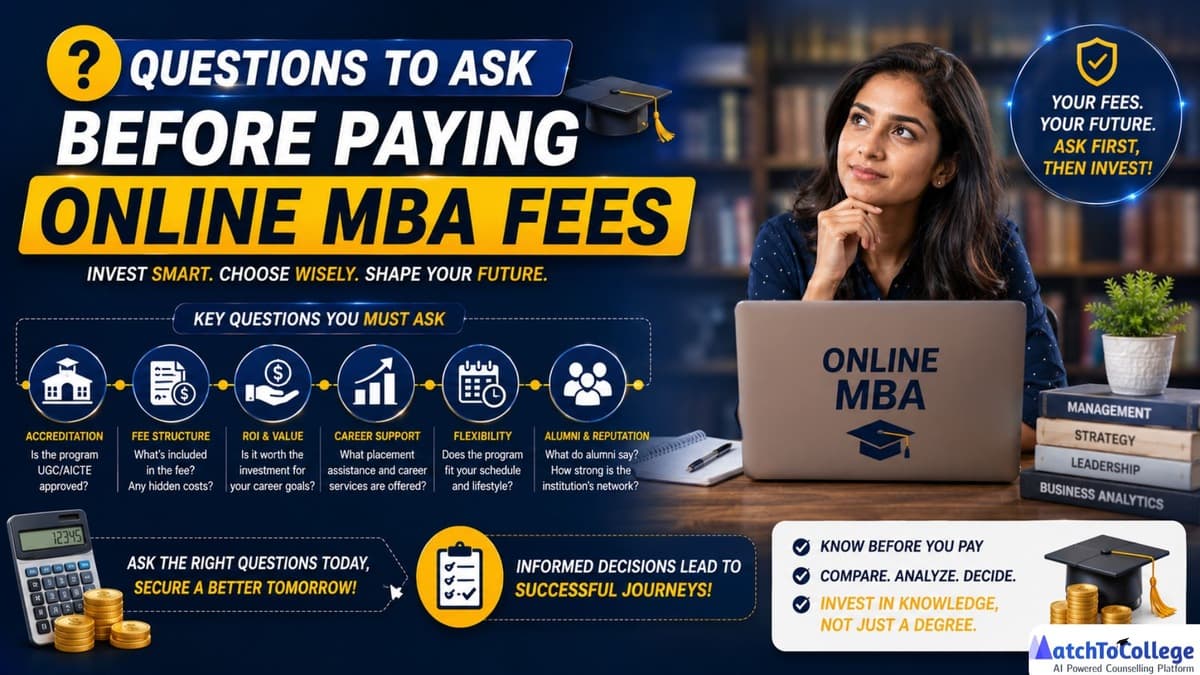
Online MBA Fees: 7 Vital Questions Before You Commit
Paying for an Online MBA? Don't rush! Discover 7 essential questions to ask about accreditation, costs, and career services before you pay your fees. Make a smart investment.

Top Careers After MBA in Marketing: Your Future Unlocked
Unlock your potential! Discover the most lucrative and impactful careers after an MBA in Marketing. From brand management to digital strategy, find your path.
Boost Your Career: The Power of an Online MBA
Unlock career growth with a flexible Online MBA. Discover top programs, navigate applications, and balance work-life. Your professional future starts here.