

College Reviews: Do They Impact Your Admission Chances?
Admission & Info Tools
Need Expert Assistance?
Our counselors can help you with fee structures, eligibility guidelines, and upcoming admission cutoffs instantly.
Direct Application Tools
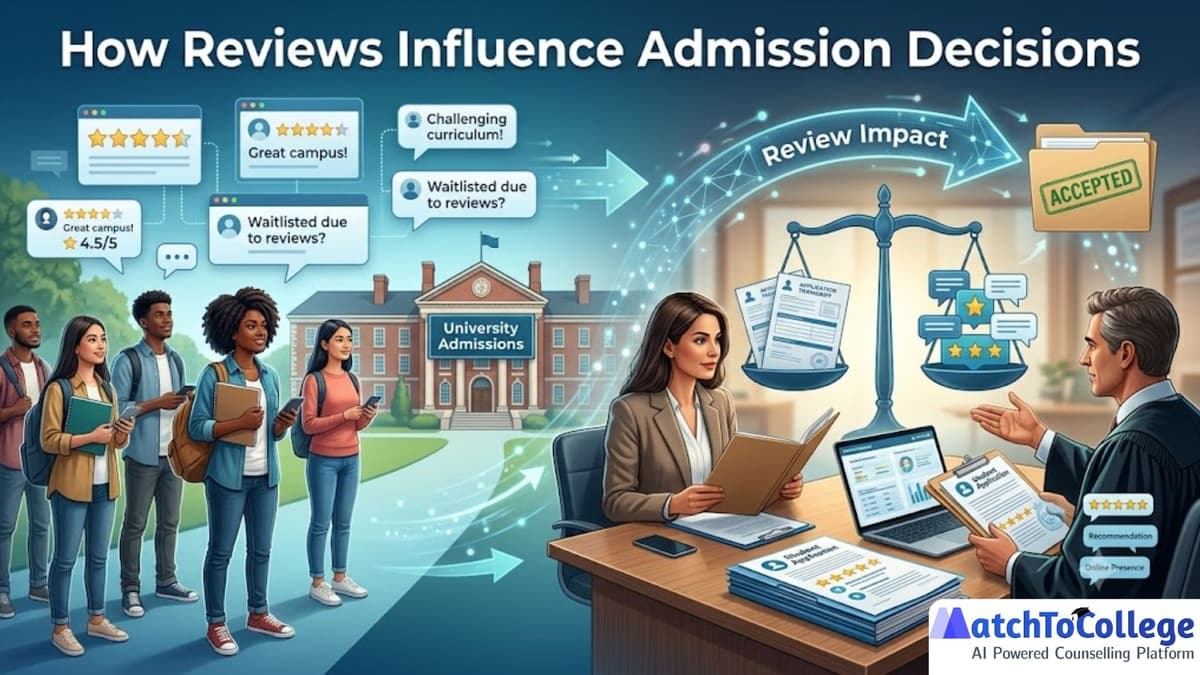
Admissions influenced by student reviews.
In today’s digital world, students and parents have access to endless information about colleges—rankings, websites, forums, and especially online reviews. These reviews shape opinions, but their role in actual admissions is often misunderstood.
Do College Reviews Affect Admissions?
| Type of Impact | Reality |
| Direct impact | Admissions officers do NOT evaluate individual public reviews |
| Indirect impact | Yes, reviews influence reputation and student perception |
| Student decision-making | Strong influence on where students apply |
So, reviews don’t directly decide your admission—but they do shape how colleges are perceived overall.
What Admissions Teams Actually Consider
Admissions decisions are mainly based on:
- Academic scores (GPA, entrance exams)
- Personal statement or SOP
- Extracurricular activities
- Interviews (if applicable)
- Eligibility criteria
A random negative review about hostel or cafeteria does not affect selection.
Then Why Do Reviews Matter?
Even if they are not directly used in admissions decisions, reviews influence:
- Overall institution reputation
- Student application interest
- Perceived campus experience
- Trust in placements and facilities
In simple terms: reviews influence demand, not individual admission decisions.
How Online Reviews Shape College Perception
| Review TypeWhat It Influences | |
| Student testimonials | Campus life expectations |
| Alumni feedback | Career outcomes perception |
| Ranking platforms | Brand value of the institution |
| Social media discussions | Popularity and trust |
Indirect Effect on Admissions
Reviews can indirectly impact admissions because:
- Good reviews → More applications → Higher competition
- Negative reviews → Fewer applications → Easier admission in some cases
- Strong reputation → Higher cut-offs due to demand
So while not part of selection criteria, reviews influence the competition level.
How Students Should Use Reviews Wisely
Instead of relying on one opinion, students should:
- Compare multiple review sources
- Focus on patterns, not isolated comments
- Check official placement and academic data
- Cross-verify with university websites
How MatchToCollege Helps
Platforms like MatchToCollege help students:
- Filter genuine and relevant information
- Understand real career outcomes beyond reviews
- Match profiles with suitable universities
- Make data-driven decisions instead of opinion-based ones
College reviews do not directly decide admissions, but they strongly influence reputation, demand, and student choices. The smartest approach is to use them as a guide—not a final decision factor.
The Direct vs. Indirect Influence of Reviews on Admissions Committees
When your application is reviewed, admissions teams focus on your personal profile, not public opinions about the college. Their goal is to understand you—your academic ability, potential, and fit.
What Admissions Committees Actually Evaluate
| Core Criteria | What It Means |
| Academic record | Grades, subjects, consistency |
| Standardized tests | Entrance exams or test scores |
| Extracurriculars | Leadership, activities, achievements |
| Recommendation letters | Teacher or mentor feedback |
| Personal statement | Your story, goals, motivation |
Public reviews on platforms like Niche, Unigo, or Reddit are not part of the official evaluation process for individual applicants.
So Do Online Reviews Matter at All?
Yes—but only indirectly.
1. Influence on College Reputation
- Positive reviews improve overall perception of the institution
- Negative feedback can affect how students feel about a college
- Reputation impacts how many students apply, not who gets selected
2. Impact on Application Competition
| Review Trend | Result |
| Strong positive reputation | More applications, higher competition |
| Mixed or negative perception | Fewer applications, potentially lower competition |
| Strong brand image | Higher cut-off standards due to demand |
So reviews shape demand for admission, not the evaluation itself.
3. How Reviews Shape Student Decision-Making
Students use reviews to understand:
- Campus culture (“vibe”)
- Teaching quality and workload
- Hostel and facilities experience
- Career outcomes and placements
This helps students decide where to apply, not whether they get admitted.
4. Demonstrated Interest: The Subtle Link
Reviews can still matter indirectly when you apply.
If you:
- Research student experiences
- Understand campus culture
- Explain why that environment fits your goals
You show genuine interest and preparation
Admissions teams value applicants who clearly understand:
- Why the college suits them
- How they will contribute to campus life
- What they expect from the program
Online reviews do not decide admissions—but they shape perception, competition levels, and how well students understand a college.
Admissions decisions are based on your profile, not public opinions. But using reviews smartly helps you:
- Choose better-fit colleges
- Write stronger applications
- Show clearer motivation and research
In short: reviews don’t open or close admission doors—but they help you decide which doors are worth knocking on.
How Prospective Students Can Leverage Reviews to Strengthen Their Application
Instead of treating college reviews as something that directly affects admissions, students should use them as a smart research tool to improve their application strategy and decision-making.
Think of reviews as real student “data” that helps you understand what a college is actually like beyond brochures and official websites.
How to Use College Reviews Effectively
| Use Case | How It Helps You |
| Personal statement | Adds real insights and specific details to your essays |
| Interview prep | Helps you ask better questions and show awareness |
| College fit | Helps you choose a place where you can truly succeed |
| Hidden opportunities | Reveals clubs, labs, and activities not highlighted officially |
1. Strengthen Your Personal Statement
Student reviews often mention:
- Favorite professors
- Unique courses
- Campus traditions
- Real learning experiences
2. Prepare Better for Interviews
Reviews can help you understand:
- Campus culture and student life
- Common challenges students face
- Active student organizations
So in interviews, you can:
- Ask meaningful, informed questions
- Show awareness of the university environment
- Demonstrate genuine interest beyond rankings
3. Understand True College Fit
Beyond rankings and prestige, reviews help you answer:
- Will I enjoy the campus environment?
- Does the teaching style match my learning needs?
- Will I feel comfortable and supported here?
This helps you apply to colleges where you are more likely to succeed and stay motivated.
4. Discover Hidden Opportunities
Student feedback often reveals things not clearly shown on official websites, such as:
- Niche clubs and communities
- Research labs and faculty projects
- Volunteer and internship opportunities
- Student-led initiatives
Including these in your application can make it more specific and memorable.
How MatchToCollege Helps
MatchToCollege helps you turn scattered information into clarity by:
- Analyzing your profile and goals
- Matching you with colleges that fit your needs
- Combining academic data with real student experiences
- Helping you make confident, informed decisions
College reviews are not just opinions—they are useful insights. When used wisely, they help you:
- Write stronger applications
- Prepare better for interviews
- Choose the right-fit college
- Discover hidden opportunities
In short: reviews don’t just describe colleges—they can actively improve how you apply to them.
Institutional Reputation and MatchToCollege's Role in Navigating the Landscape
Overall sentiment in online reviews doesn’t directly decide your admission, but it does shape how a college is perceived—and that perception can influence how competitive the admissions process becomes.
How Online Reviews Connect to College Reputation
| What Reviews Reflect | Impact on Colleges |
| Campus culture | Shapes student expectations |
| Academic support | Builds trust in teaching quality |
| Career services | Influences placement reputation |
| Student satisfaction | Affects overall institutional image |
When these factors are consistently positive, a college builds a stronger reputation, which can lead to higher demand and greater selectivity.
The Indirect Chain of Influence
Here’s how it works in practice:
Online reviews → Public perception → Number of applications → Competition level → Admission difficulty
So while reviews are not part of your application evaluation, they can still influence:
- How many students apply
- How selective the university becomes
- The overall competitiveness of admission
Important Clarification
- Individual reviews do NOT affect your admission decision
- Admissions committees focus on your profile (grades, SOP, activities, etc.)
- But institutional reputation—partly shaped by reviews—affects overall selectivity
Why Reputation Matters for Students
A college with strong public perception often means:
- Higher applicant competition
- Stronger peer group
- Better perceived value in the job market
- More competitive admission standards
How Students Should Interpret This
Instead of focusing on single opinions, students should:
- Look for patterns across multiple reviews
- Combine reviews with official data (placements, rankings, courses)
- Use insights to judge fit, not just prestige
How MatchToCollege Helps
MatchToCollege helps students make sense of this complex landscape by:
- Combining academic data with real-world student feedback
- Showing how reputation may influence selectivity
- Matching students to colleges based on both fit and outcomes
- Helping avoid decisions based only on rankings or hype
Online reviews don’t control admissions—but they do shape reputation, and reputation shapes competition. Understanding this connection helps students make smarter, more realistic choices about where to apply and why.
In short: reviews don’t decide your admission, but they do influence how hard it is to get in—and whether a college is truly the right fit for you.
Share this Article
FAQFrequently Asked Questions
Q: Do college admissions officers directly read online reviews of their own institution when evaluating applications?
Generally, no. Admissions committees primarily focus on your academic record, essays, recommendations, and extracurriculars. They do not typically consult public online reviews for individual admission decisions. Their interest lies in your specific qualifications and how you fit their institution's profile.
Q: How can I use student reviews to improve my college application?
You can leverage student reviews to strengthen your application by using them as a research tool. Use insights from reviews to tailor your personal statement, showcasing genuine interest in specific programs or campus life. They can also help you prepare for interviews, understand the college's culture, and ensure the institution is truly a good 'fit' for you, leading to a more authentic and compelling application.
Q: Do negative online reviews ever hurt a college's reputation and indirectly affect admissions?
Yes, while not directly impacting individual applications, a consistent pattern of negative reviews can impact a college's overall institutional reputation. This can subtly influence prospective students' perceptions, potentially affecting the volume and quality of their applicant pool, thereby indirectly making admissions more or less competitive depending on the nature of the feedback.
Get More Info About College Reviews
Recommended Reading

Best Online MBA Specializations for High-Paying Careers 2026
Discover the most lucrative online MBA specializations for 2026-27. Compare ROI, career growth, and use our AI tools to find your perfect management path.

Top Career Opportunities After an Online MBA in 2026-27
Discover high-paying career paths and roles after an online MBA in 2026-27. Explore salary trends, ROI, and tools to navigate your future professional success.

Tax Deductions on Higher Education: 2026-27 India Guide
Maximize your savings with our guide on tax deductions for higher education fees in India for FY 2026-27. Learn about Section 80C, 80E, and upskilling benefits.