

Career Myths vs. Reality: Your Guide to Future Success
Admission & Info Tools
Need Expert Assistance?
Our counselors can help you with fee structures, eligibility guidelines, and upcoming admission cutoffs instantly.
Direct Application Tools
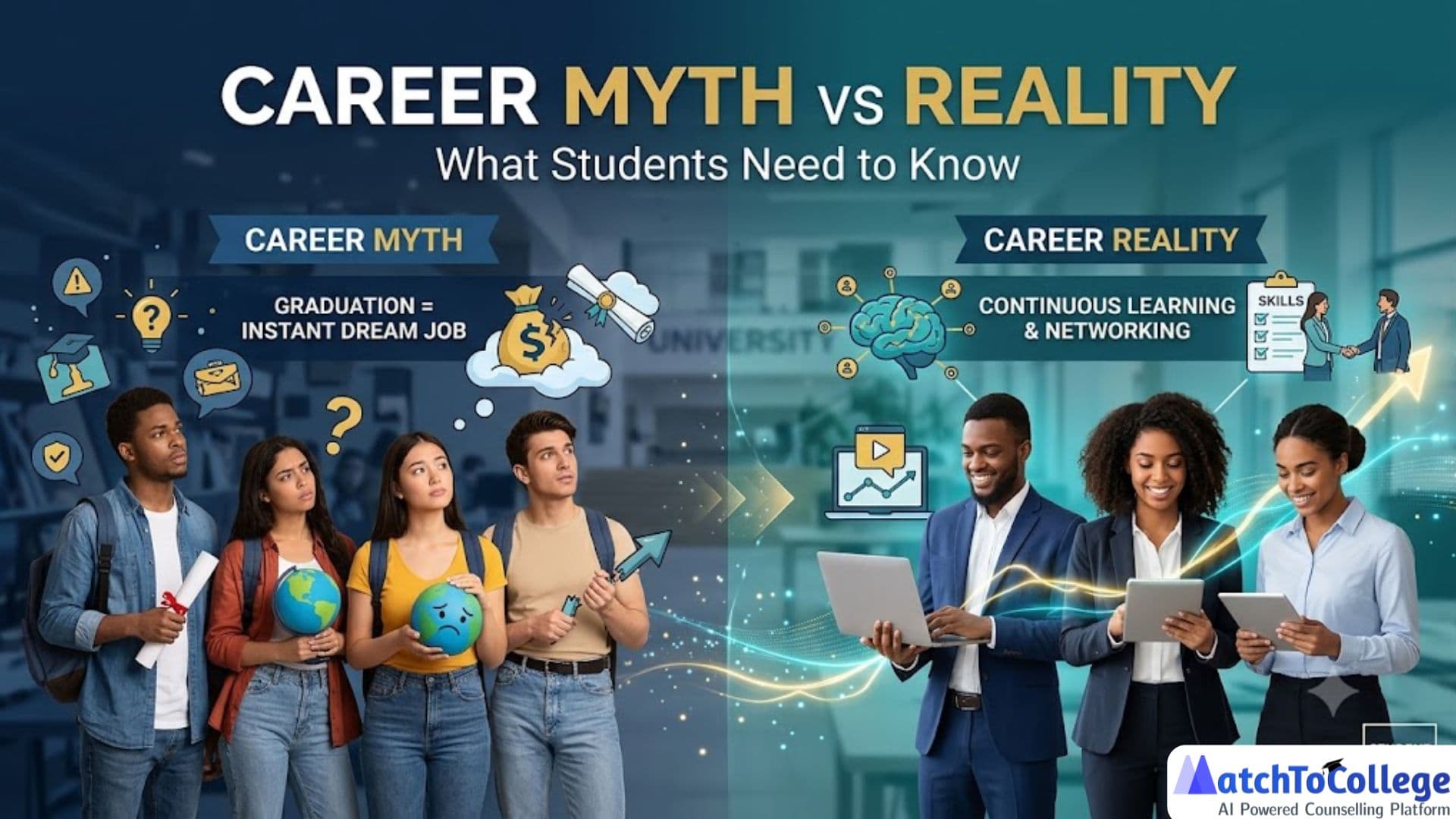
Debunking career myths for students.
Choosing a career after school can be exciting but also confusing. Students and parents often receive advice based on outdated beliefs, social pressure, or common misconceptions about success.
These career myths can create stress, limit opportunities, and lead students toward choices that may not match their interests, skills, or goals. Understanding the reality behind these myths helps students make smarter decisions about courses, colleges, and career paths.
Common Career Myths vs Reality
| Career Myth | Reality |
| “You must have a perfect career plan from the beginning.” | Career goals can change as you learn more about yourself, industries, and new opportunities. |
| “One degree decides your entire career.” | Skills, experience, continuous learning, and adaptability play a major role in career growth. |
| “Only popular careers lead to success.” | Success is possible in many fields when your skills and interests match the right opportunities. |
| “High grades guarantee career success.” | Academic performance is important, but practical skills, experience, and communication also matter. |
| “Following trends is the safest career choice.” | A career should balance market demand with your strengths, interests, and long-term goals. |
| “Changing careers means failure.” | Career changes are common and can lead to better opportunities and personal growth. |
How to Make Better Career Decisions
| Step | Action |
| Understand Yourself | Identify your interests, strengths, skills, and career preferences. |
| Explore Options | Research different fields, industries, and career opportunities. |
| Develop Skills | Build technical and soft skills required for your chosen career. |
| Gain Experience | Use internships, projects, and practical learning opportunities. |
| Seek Guidance | Take advice from mentors, professionals, and career counseling platforms. |
How MatchToCollege Helps
| Feature | How It Supports Students |
| AI-Powered Guidance | Analyzes interests, skills, and goals to suggest suitable career paths. |
| Career Exploration | Helps students understand different fields and opportunities. |
| College & Program Matching | Recommends suitable courses and institutions based on career goals. |
| Personalized Roadmaps | Creates a clear plan for education, skills, and career growth. |
Career success is not based on following myths or copying others’ choices. It comes from understanding yourself, exploring opportunities, building skills, and making informed decisions. With personalized guidance from platforms like MatchToCollege, students can discover a career path that matches their abilities, interests, and future goals.
Myth 1: You Must Have Your Entire Career Path Mapped Out Now
Reality: Adaptability and Exploration Matter
Many students believe they must have a fixed career plan before entering college. However, this creates unnecessary pressure and ignores the fact that careers and industries keep changing.
Successful professionals often change career directions, explore new fields, or work in roles that did not exist when they started college. Your first choice does not have to define your entire professional journey.
Why Exploration Is Important
| Action | Benefit |
| Develop Transferable Skills | Skills like communication, problem-solving, teamwork, and adaptability help in any career. |
| Explore Different Interests | Helps you discover new career possibilities and hidden strengths. |
| Take Internships & Volunteer Opportunities | Provides real-world experience and helps you understand different fields. |
| Try Interdisciplinary Learning | Builds a broader skill set and prepares you for changing industries. |
| Stay Open to Change | Allows you to adapt to new opportunities and career trends. |
You do not need to have your entire career figured out before college. Focus on learning, exploring, building skills, and staying adaptable. A flexible mindset and continuous growth will help you succeed in an evolving professional world.
Myth 2: Follow Your Passion, and the Money Will Follow
Reality: Passion Needs Skills, Planning, and Market Awareness
Following your passion is important, but passion alone may not always lead to career success. A successful career requires a balance between personal interests, skills, education, and job market opportunities.
Many students believe that loving a field is enough to build a successful career. However, long-term success comes from developing valuable skills and finding opportunities where your passion can create real-world value.
How to Turn Passion into a Successful Career
| Factor | |
| Passion | Keeps you motivated and engaged in your work. |
| Skills | Helps you perform well and become valuable in your field. |
| Education & Training | Provides the knowledge and qualifications needed for career growth. |
| Market Demand | Ensures your skills match available career opportunities. |
| Practical Experience | Helps you apply your knowledge in real-world situations. |
Finding the Right Career Balance
A successful career often combines:
What You Love + What You Are Good At + What the Market Needs + What Creates Value
Passion is a powerful starting point, but career success requires skills, education, experience, and market understanding. By combining what you enjoy with what the world needs, you can build a career that is both meaningful and financially rewarding.
Myth 3: Your College Major Dictates Your Entire Future Career
Reality: Skills, Experience, and Continuous Learning Matter More
Many students believe that their college major decides their future career path. However, in today’s changing job market, employers focus not only on your degree but also on your skills, experience, and ability to learn.
A major provides a foundation, but your career opportunities can expand through practical experience, projects, internships, and continuous skill development.
What Matters More Than Just Your Degree?
| Factor | Why It Matters |
| Transferable Skills | Skills like communication, teamwork, critical thinking, and problem-solving are valuable across industries. |
| Practical Experience | Internships, projects, and real-world exposure help you apply your knowledge effectively. |
| Continuous Learning | Learning new tools and skills helps you adapt to changing career requirements. |
| Networking | Professional connections can create new opportunities and career guidance. |
| Adaptability | The ability to learn and change helps you succeed in diverse career paths. |
Examples of Career Flexibility
| Academic Background | Possible Career Opportunities |
| English Major | Content strategy, communication, technology marketing |
| Philosophy Graduate | Data analysis, consulting, research, business roles |
| Engineering Graduate | Technology, management, entrepreneurship, research |
| Business Graduate | Marketing, finance, consulting, product management |
Your degree is only the beginning of your career journey. Skills, experience, adaptability, and continuous learning play a major role in shaping your professional success. By developing a strong skill set and staying open to opportunities, you can build a successful career across different industries.
How MatchToCollege Helps You Navigate Career Realities
Understanding career realities can be daunting, but you don't have to face it alone. MatchToCollege leverages AI-powered insights and expert counselling to provide personalized guidance. Our platform helps you:
- Discover Best-Fit Programs: Beyond popular choices, we identify colleges and majors that align with your unique profile, interests, and future career aspirations.
- Identify In-Demand Skills: We highlight the skills most valued in various industries, helping you tailor your educational journey.
- Explore Diverse Pathways: From MBA programs and engineering to medical schools and study abroad opportunities, we showcase how different educational paths can lead to fulfilling careers.
- Bust Personal Myths: Our advisors and data-driven tools help you challenge preconceived notions and expand your horizons.
By providing clarity and comprehensive resources, MatchToCollege empowers you to make informed decisions, transforming career uncertainty into a strategic advantage. Let us help you build a future based on reality, not myth.
Share this Article
FAQFrequently Asked Questions
Q: Is it okay not to know my exact career path while applying to college?
Absolutely! It's very common not to have a precise career path defined. College is a journey of exploration. Focus on majors that align with your broad interests, develop transferable skills, and leverage internships to discover what truly resonates with you. MatchToCollege can help you find programs that offer flexibility and a wide range of career options.
Q: How can I balance following my passion with choosing a practical major?
The key is to find the intersection of your passion, natural talents, and market demand. Instead of choosing one over the other, look for ways to integrate them. For example, if you're passionate about art but concerned about job prospects, consider graphic design, animation, or architectural studies. MatchToCollege can provide data-driven insights to help you identify majors and career fields where your passion can be both fulfilling and financially viable, considering higher education options like MBA or specialized engineering programs.
Q: Will my college major truly limit my future career opportunities?
No, your major is a foundation, not a limitation. While it provides specialized knowledge, employers increasingly value soft skills (critical thinking, communication, problem-solving) and the ability to learn new things. Many professionals pursue careers unrelated to their degree. Focus on gaining diverse experiences, building a strong skill set, and committing to lifelong learning. MatchToCollege helps you identify colleges known for producing adaptable graduates across various sectors.
Get More Info About Career Myths vs. Reality
Recommended Reading
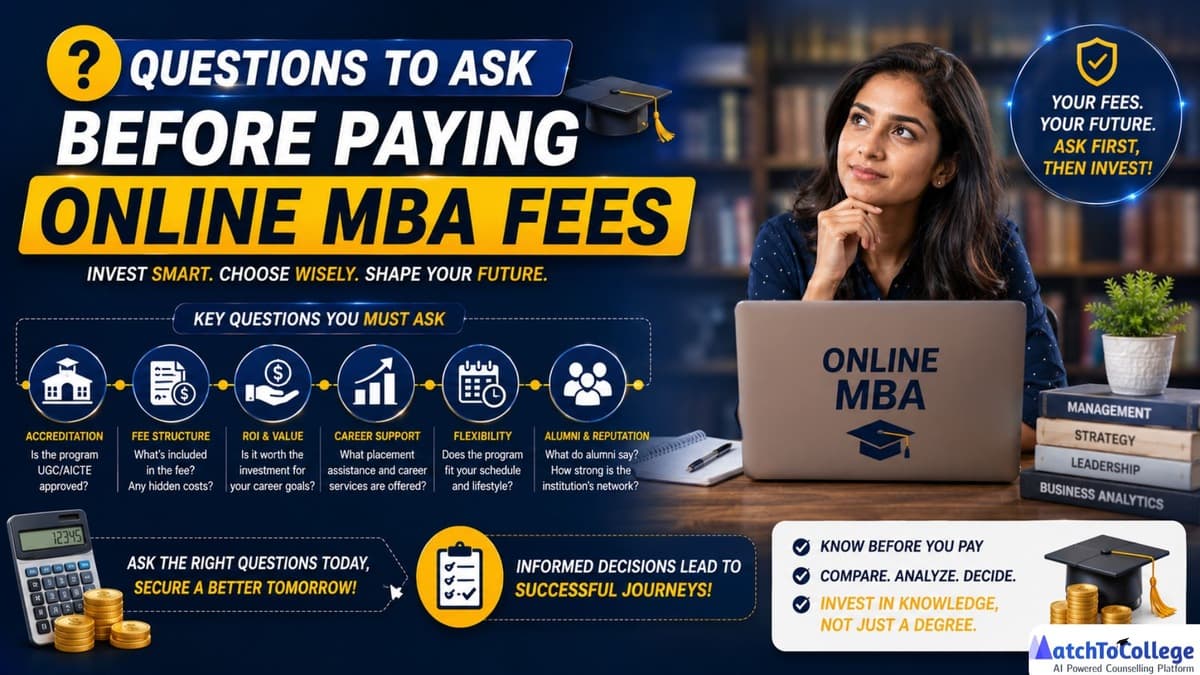
Online MBA Fees: 7 Vital Questions Before You Commit
Paying for an Online MBA? Don't rush! Discover 7 essential questions to ask about accreditation, costs, and career services before you pay your fees. Make a smart investment.

Top Careers After MBA in Marketing: Your Future Unlocked
Unlock your potential! Discover the most lucrative and impactful careers after an MBA in Marketing. From brand management to digital strategy, find your path.
Boost Your Career: The Power of an Online MBA
Unlock career growth with a flexible Online MBA. Discover top programs, navigate applications, and balance work-life. Your professional future starts here.