

BDS, BAMS, BHMS vs. MBBS Abroad: Long-Term ROI Analysis
Admission & Info Tools
Need Expert Assistance?
Our counselors can help you with fee structures, eligibility guidelines, and upcoming admission cutoffs instantly.
Direct Application Tools
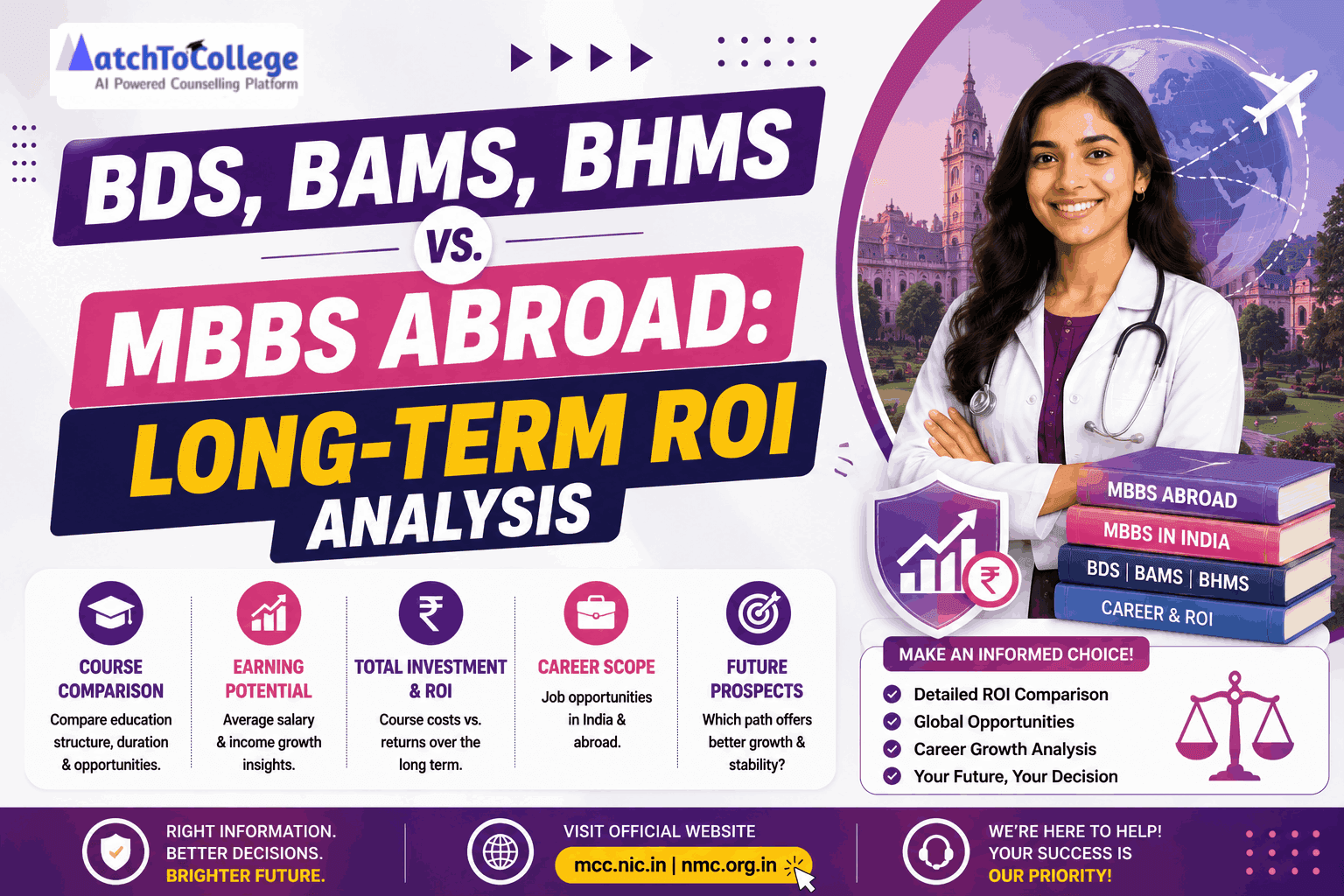
In the 2024 NEET-UG cycle, over 2.4 million candidates competed for a mere 1,08,940 MBBS seats across India, leaving hundreds of thousands of high-scoring students at a crossroads. The choice typically narrows down to two distinct financial and professional paths: enrolling in domestic allied sciences like Bachelor of Dental Surgery (BDS), Bachelor of Ayurvedic Medicine and Surgery (BAMS), or Bachelor of Homeopathic Medicine and Surgery (BHMS), versus pursuing an MBBS degree in countries such as Uzbekistan, Kazakhstan, or Georgia.
While the allure of the 'Dr.' prefix is universal, the Return on Investment (ROI) differs significantly when factoring in the cost of education, the time to licensure, and the saturation of local markets. At MatchToCollege, we analyze the current fee structures and intake capacities of MBBS abroad universities to help students calculate which path matches their financial reality. This comparison breaks down the fiscal and professional trajectory of these degrees over a 10-year horizon, moving beyond the initial prestige to the actual bank balance.
Initial Capital Outlay: Domestic Allied Science vs. Foreign Allopathy
The financial barrier to entry varies wildly between these paths. A BAMS or BHMS seat in a private Indian college typically costs between ₹15 lakh and ₹25 lakh for the entire duration, while BDS management quota seats can escalate to ₹30 lakh or ₹40 lakh in Tier-1 cities like Bangalore or Mumbai. Conversely, an MBBS program in Uzbekistan or Kazakhstan often ranges from ₹20 lakh to ₹35 lakh, inclusive of tuition and hostel fees.
Using the Education Loan EMI Calculator is essential here; students often find that the monthly interest on a ₹40 lakh BDS seat exceeds the starting salary of a junior dentist in a private clinic, which currently averages ₹15,000 to ₹25,000 per month.
For those considering the foreign route, the 'sticker price' is often lower than private Indian MBBS seats (which can exceed ₹1 crore), but it carries hidden costs like annual travel, visa renewals, and the mandatory National Exit Test (NExT) coaching. Our data indicates that while BAMS and BHMS have lower entry costs in government setups, the private sector costs for these degrees often overlap with the budget for a high-quality medical university in Eastern Europe or Central Asia.
Before committing, students should use the NEET College Predictor to see if their score qualifies for a lower-cost government BAMS seat, which offers the highest possible ROI due to negligible tuition fees and stable government job prospects.
The Licensure Hurdle: FMGE and the Time-to-Earnings Ratio
The 'Time-to-Earnings' ratio is where the ROI for MBBS abroad often takes a hit. A student pursuing BAMS or BHMS in India can begin practicing or join a hospital immediately after completing their internship. In contrast, an MBBS graduate from abroad must clear the Foreign Medical Graduate Examination (FMGE)—soon to be replaced by NExT—to practice in India. Historically, the FMGE pass percentage has hovered between 10% and 25% [VERIFY]. If a student fails to clear this exam on the first attempt, they face a 'dead period' of six months to a year where their earning potential is zero, despite having spent lakhs on their degree.
Furthermore, the NExT regulations will soon mandate a standardized exit exam for all, but the transition period currently favors domestic graduates who are already integrated into the Indian clinical system. Students can assess their academic standing by using the NEET Rank Predictor to determine if their current preparation levels suggest they can handle the rigorous screening required for foreign graduates.
An MBBS abroad degree yields zero ROI if the graduate cannot obtain a license to practice, making the 'pass-rate' of the chosen foreign university a more critical metric than the tuition fee itself.
Market Saturation: The Oversupply of BDS vs. the AYUSH Renaissance
Market demand dictates long-term earnings. The dental market in urban India is currently saturated; the dentist-to-population ratio in cities is often 1:5,000, far exceeding the WHO recommendation of 1:7,500. This has led to a stagnation in BDS salaries. On the other hand, the AYUSH sector (BAMS and BHMS) is experiencing a resurgence, supported by government initiatives and a growing global interest in integrative medicine. BAMS graduates are increasingly being hired for Community Health Officer (CHO) roles with starting salaries ranging from ₹25,000 to ₹40,000, plus incentives.
When comparing this to an MBBS abroad graduate who clears NExT, the latter's starting salary as a Junior Resident in a private hospital is typically ₹50,000 to ₹70,000. However, the MBBS graduate has a higher ceiling for specialization. To see how these paths diverge financially over five years, we recommend students use the University ROI Calculator to input expected local salaries versus foreign degree costs. While the MBBS graduate may earn more eventually, the BAMS graduate often reaches a 'break-even' point 3-4 years earlier because they avoid the expensive foreign residency and licensure delays.
Long-Term Career Growth: Specialization and Global Mobility
The 10-year ROI outlook shifts heavily in favor of MBBS abroad if the student intends to specialize (MD/MS) or move globally. An MBBS degree is a prerequisite for USMLE (USA), PLAB (UK), or AMC (Australia) pathways. While BAMS and BHMS graduates have limited international mobility in clinical roles, an MBBS graduate from a WHO-recognized foreign university can eventually earn ten times their Indian counterparts by practicing abroad. However, this requires additional investment in foreign licensing exams, which can cost upwards of ₹10 lakh.
If the goal is to remain in India, the growth trajectory for BDS requires a significant secondary investment in a Master of Dental Surgery (MDS) to remain competitive, which adds another 3 years of study and more tuition fees. For those unsure which path aligns with their long-term temperament, the Career Pathway Matcher can help identify if your strengths lie in the surgical precision of dentistry, the holistic approach of BAMS, or the intensive clinical life of an MBBS doctor. In the long run, MBBS (even from abroad) offers more diverse career pivots into hospital administration, medical coding, or the pharmaceutical industry compared to the more specialized allied sciences.
Share this Article
FAQFrequently Asked Questions
Q: Is BAMS better than MBBS abroad for a middle-class student?
BAMS in a government or low-cost private college often provides a faster break-even point and lower debt risk. However, MBBS abroad offers higher long-term salary potential if the student clears the NExT/FMGE exam on the first attempt.
Q: What is the average starting salary for a BDS graduate in 2026?
In urban Tier-1 cities, junior dentists can expect ₹15,000 to ₹30,000. ROI improves significantly only after 5-7 years of private practice or after completing an MDS specialization.
Q: Can I practice in India immediately after MBBS abroad?
No. You must complete a mandatory internship in India and pass the FMGE (now transitioning to NExT) to register with the National Medical Commission (NMC).
Get More Info About BDS, BAMS, BHMS vs. MBBS Abroad
Recommended Reading
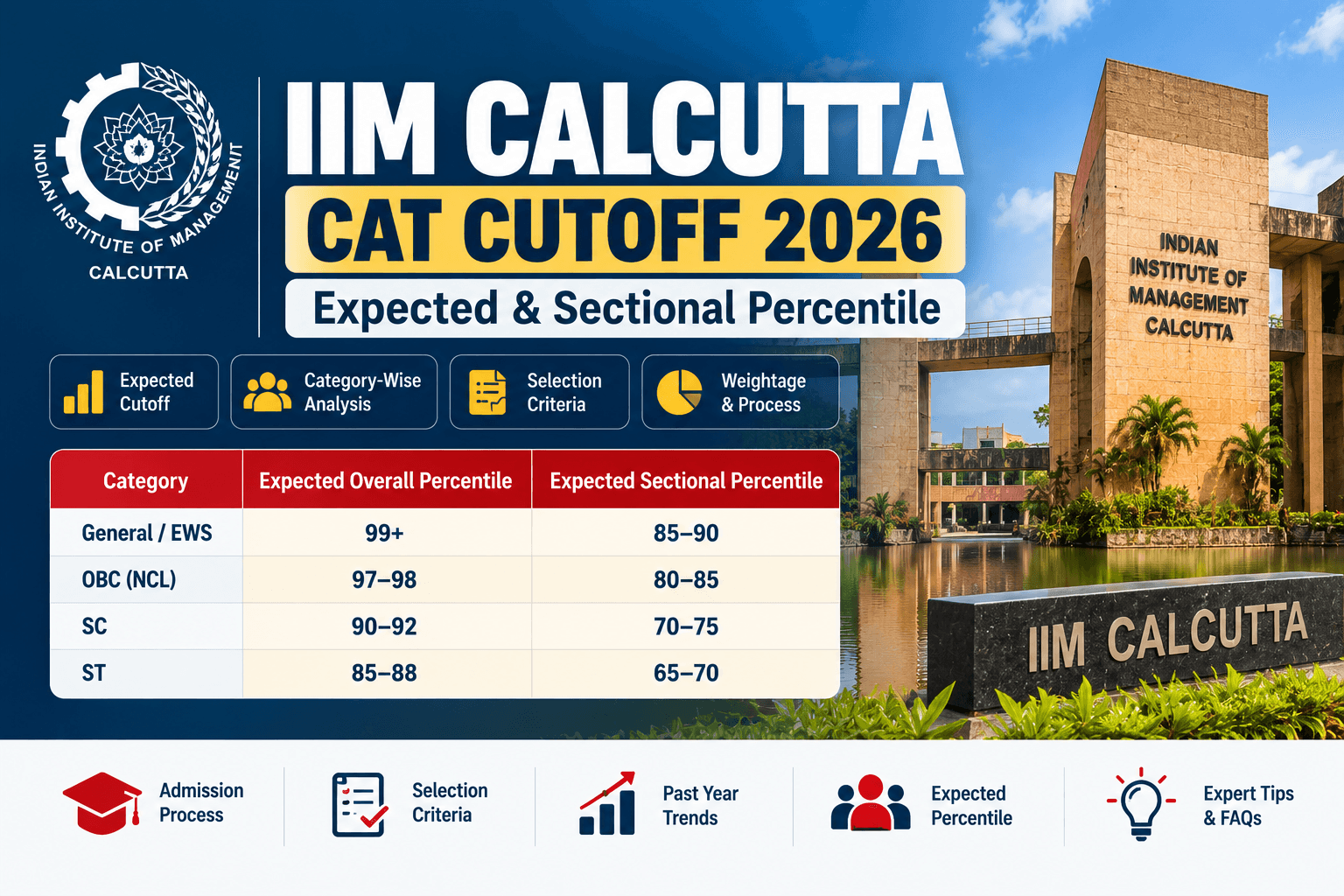
IIM Calcutta CAT Cutoff 2026: Expected & Sectional Percentile
IIM Calcutta CAT Cutoff 2026: Check the expected overall and sectional percentile, category-wise qualifying cutoff, selection criteria, CAT weightage and admission process for the 2027–29 MBA batch.
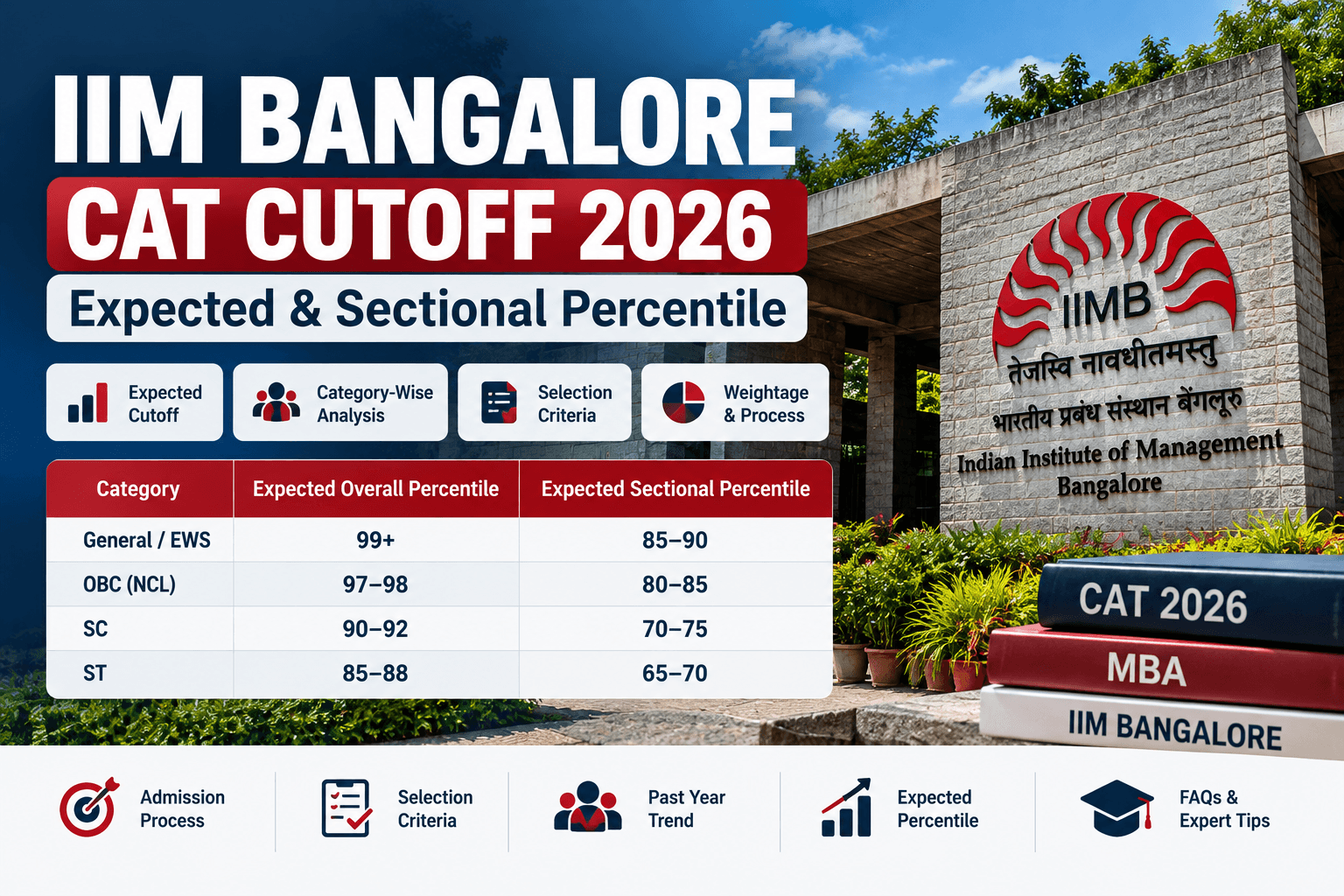
IIM Bangalore CAT Cutoff 2026: Expected & Sectional Percentile
IIM Bangalore CAT Cutoff 2026: Check the expected overall and sectional percentile, category-wise qualifying cutoff, selection criteria, CAT weightage and admission process for the 2027–29 MBA batch.
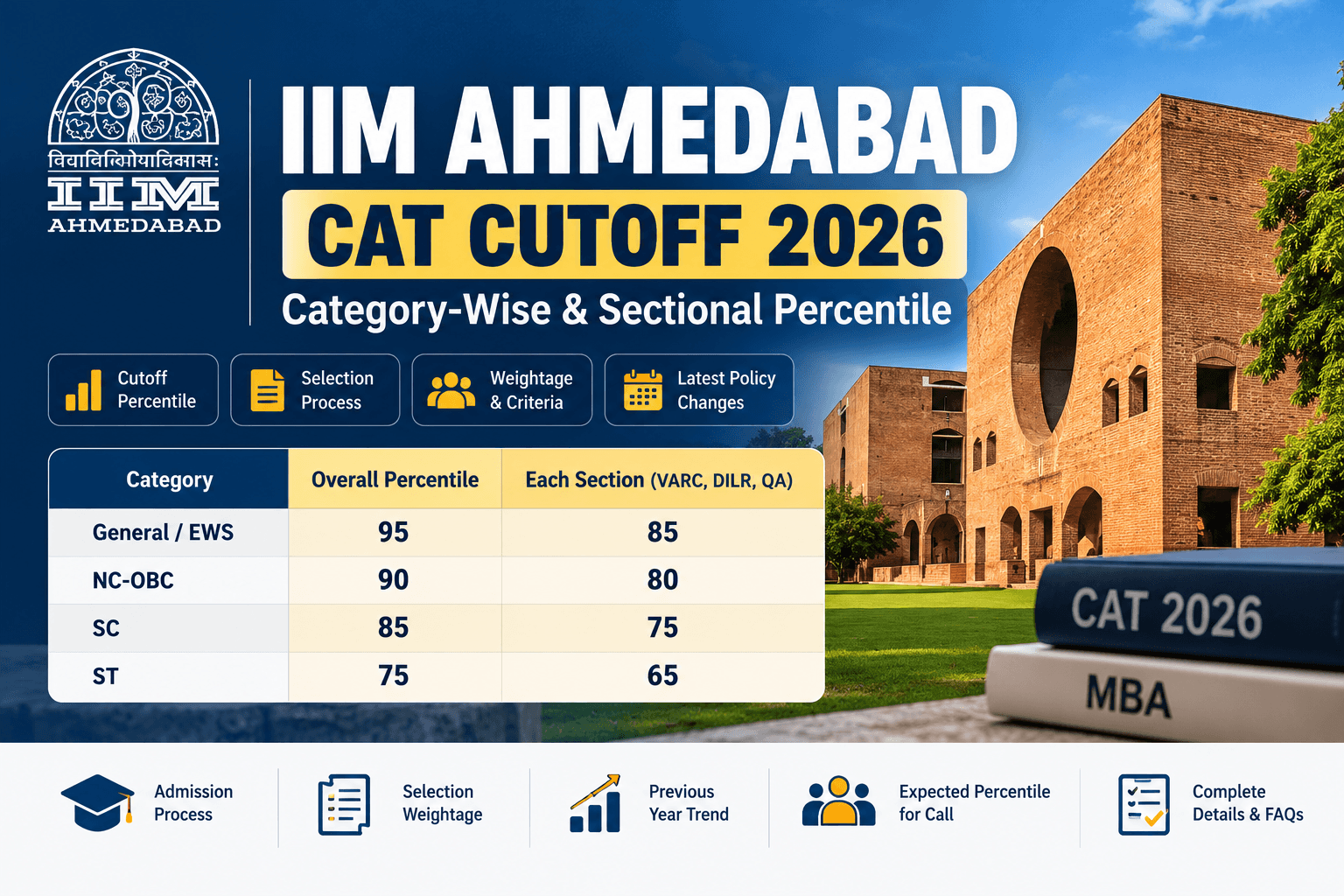
IIM Ahmedabad CAT Cutoff 2026: Expected & Sectional Percentile
Quick answer: For the PGP 2027–29 batch (CAT 2026), IIM Ahmedabad's minimum cutoff is 95 percentile overall and 85 in each section for General/EWS candidates. Reports of the revised policy say the cutoffs are unchanged from the previous cycle, which had already jumped from 80/70 the year before. Clearing the minimum only makes you eligible; it does not guarantee an interview call.