

AI & Tech: The Future of Medical Education 2026-27
Admission & Info Tools
Need Expert Assistance?
Our counselors can help you with fee structures, eligibility guidelines, and upcoming admission cutoffs instantly.
Direct Application Tools
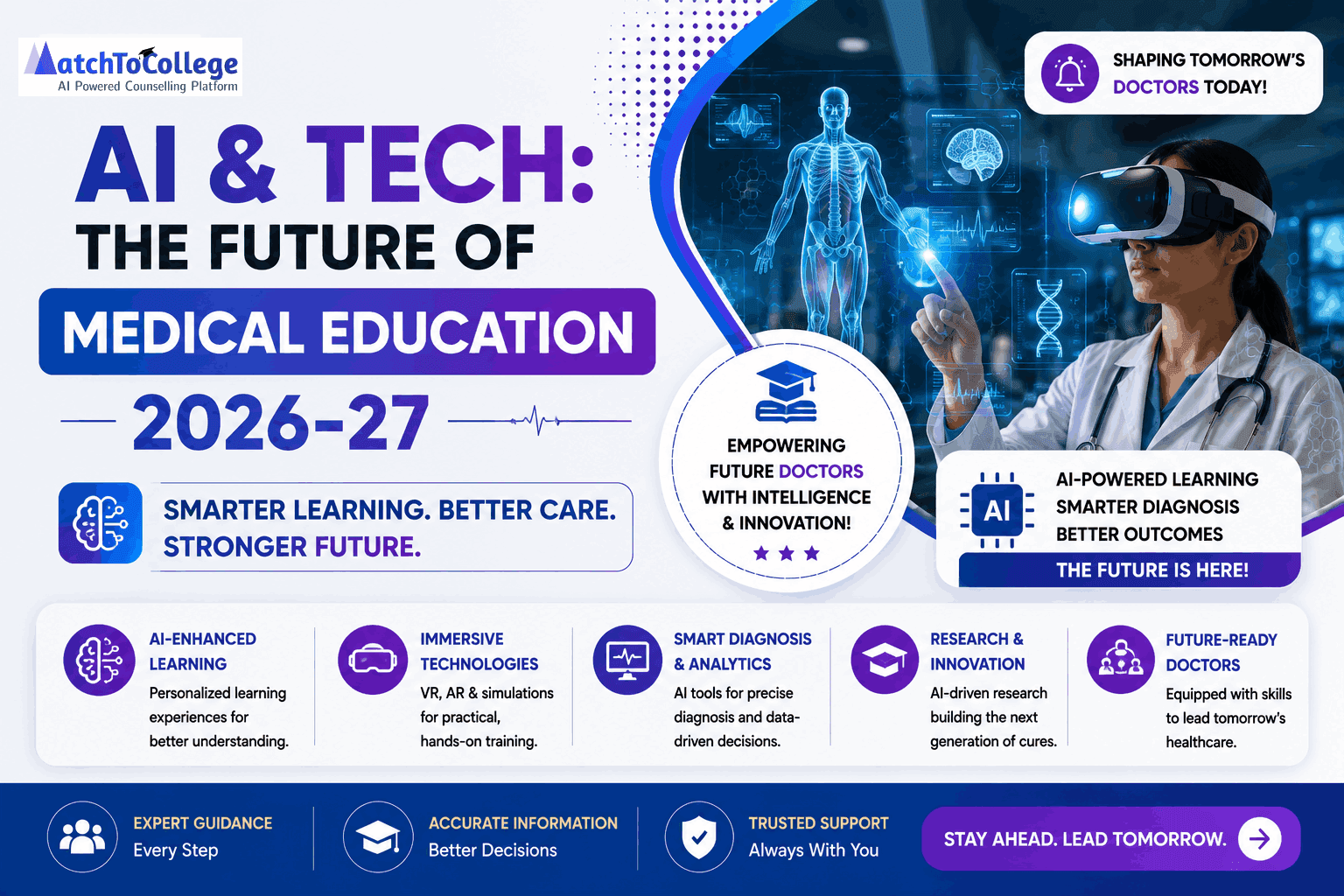
The landscape of medical education is undergoing a seismic shift as we approach the 2026-27 academic cycle. For decades, the path to becoming a doctor was defined by massive textbooks, grueling rote memorization, and physical cadaver labs. However, the integration of Artificial Intelligence (AI) and immersive technologies is fundamentally rewriting this curriculum.
As a prospective medical student or a concerned parent, understanding these shifts is crucial. The medical doctor of 2030 will not just be a healer but a tech-savvy practitioner who navigates data as expertly as they do a stethoscope.
In 2026, the 'sage on the stage' model of lecture-based learning is being replaced by 'guide on the side' interactive experiences. AI-powered platforms are now capable of analyzing a student's performance in real-time, identifying specific weaknesses in neuroanatomy or pharmacology, and tailoring a bespoke study plan. This personalized approach ensures that no student is left behind while allowing high-achievers to accelerate their learning. MatchToCollege is at the forefront of this transition, helping students identify institutions that have successfully integrated these futuristic pedagogies into their core curriculum.
Moreover, the advent of generative AI has introduced 'virtual patients'—sophisticated AI agents that can simulate thousands of medical scenarios, complete with diverse demographic backgrounds and complex comorbidities. This allows students to practice clinical reasoning and bedside manner in a risk-free environment long before they step into a hospital ward. The 2026-27 session marks the point where these technologies move from experimental pilot programs to standard requirements for accreditation. This blog explores the specific ways technology is transforming the medical training journey and what you need to know to stay ahead in the competitive admissions landscape.
AI-Driven Personalized Learning and Adaptive Curricula
By the 2026-27 academic year, the traditional 'one-size-fits-all' medical curriculum will be largely obsolete. AI-driven adaptive learning platforms are now the backbone of pre-clinical years. These systems use machine learning algorithms to track a student’s interaction with digital courseware.
If a student struggles with the biochemical pathways of the Krebs cycle, the AI identifies the gap and serves supplemental 3D visualizations, interactive quizzes, and simplified summaries to reinforce the concept before moving forward.
This level of personalization extends beyond simple remediation.
It allows for a 'Competency-Based Medical Education' (CBME) model to truly flourish. Instead of spending a fixed four weeks on a module, students can progress as soon as they demonstrate mastery. This data-driven approach provides faculty with detailed analytics, enabling them to intervene with targeted support for students who are truly at risk, rather than spending time on generalized lectures that half the class may already understand.
For parents, this means a more efficient education where the focus is on genuine skill acquisition rather than just passing tests.
Furthermore, AI tools are being used to curate personalized medical libraries for students. Using Natural Language Processing (NLP), these tools scan thousands of the latest research papers and clinical trials, summarizing those most relevant to the student’s current module or research interest.
This ensures that the medical education received in 2026 is not based on textbooks written five years prior, but on the most current, evidence-based data available. MatchToCollege helps students find universities that prioritize these AI-integrated learning environments, ensuring they are trained at the cutting edge of the field.
Generative AI as a Clinical Co-Pilot and Diagnostic Assistant
As we enter 2026-27, the role of Generative AI in medical education has shifted from a 'cheating concern' to a 'mandatory competency.' Medical schools are now teaching students how to use AI as a clinical co-pilot. Large Language Models (LLMs) specifically trained on medical corpora, such as advanced versions of Med-PaLM, are integrated into the daily workflow of students.
These AI assistants help students draft differential diagnoses, suggest potential drug interactions, and summarize complex patient histories in seconds.
The focus of education has shifted from memorizing facts to 'Prompt Engineering' for healthcare and 'AI Oversight.' Students are trained to critically evaluate AI-generated suggestions, looking for hallucinations or biases.
This is a critical skill for the doctors of tomorrow, who will use AI to handle the 'information overload' of modern medicine. Instead of spending hours searching through electronic health records (EHRs), students use AI to extract the most relevant data points, allowing them to spend more time on patient interaction and complex decision-making.
Furthermore, AI is being used to simulate patient communication. Students interact with 'AI standardized patients' that can display a wide range of emotions, cultural nuances, and even difficult personality traits.
These AI agents can speak dozens of languages, helping students prepare for the diverse patient populations they will encounter in global medical practice. The ability to practice breaking bad news or de-escalating an anxious patient with an AI that provides instant feedback on tone and empathy is a game-changer for the 2026-27 curriculum. MatchToCollege guides students toward programs that offer this innovative blend of technology and soft-skill development.
Big Data, Predictive Analytics, and Population Health
In the 2026-27 academic cycle, medical education is moving beyond the individual patient to look at the 'Big Data' of whole populations. Students are now required to be proficient in data science and predictive analytics. Modern medical schools are integrating data sets from wearable devices, genomic sequencing, and social determinants of health into their case studies. Students learn how to use AI to predict which patients are at the highest risk of re-admission or which communities are likely to see an outbreak of a specific condition.
This shift represents a move toward 'Precision Medicine.' Instead of learning the 'average' reaction to a medication, students use AI tools to understand how a patient’s unique genetic makeup influences their response to treatment. The curriculum now includes modules on 'Health Informatics,' where students learn to navigate the complex data ecosystems of modern hospitals. This training is essential because, by 2027, the majority of healthcare decisions will be data-augmented.
For the student, this means the 'Medical Entrance' prep now involves a basic understanding of statistics and computational logic. For the parent, it means ensuring their child is looking at schools that offer dual-degree programs (like MD/Masters in Data Science) or integrated tech-tracks. MatchToCollege’s AI-driven counseling platform analyzes these program nuances, matching students with institutions that will make them leaders in the data-driven healthcare era. We look at curriculum depth in health-tech to ensure our candidates are prepared for the 2026-27 admissions standards.
Ethics and the Human Element in a Tech-First Curriculum
With the rise of AI in the 2026-27 medical curriculum, there is a renewed and vital focus on medical ethics and the 'Human Element.' As AI takes over the more routine tasks of diagnosis and data analysis, the unique role of the physician as an empathetic healer becomes even more prominent. Medical schools are responding by increasing the weight of humanities, ethics, and communication skills in their graduation requirements. The question is no longer 'Can you diagnose this?' but 'How do you help the patient navigate the emotional reality of this diagnosis?'
Students are now engaged in deep-dive seminars on the ethics of AI, discussing topics such as algorithmic bias in healthcare, data privacy, and the 'black box' problem where an AI provides a correct diagnosis but cannot explain why. The 2026-27 curriculum emphasizes 'Shared Decision Making,' where the doctor acts as an intermediary between the AI’s data-driven recommendations and the patient’s personal values and lifestyle. This balance is what will define the elite medical professionals of the next decade.
Moreover, the integration of technology actually allows for more 'human' time. By automating the hours of paperwork that used to plague medical students and residents, technology in 2027 is freeing them to return to the bedside. Training now includes 'Empathy Labs' where students use VR to experience the world from the perspective of a patient with Parkinson’s disease or vision loss, fostering a deeper level of compassion. When choosing a college through MatchToCollege, we emphasize schools that maintain this balance, ensuring that the tech-savvy doctors of the future remain, above all, doctors of the heart.
Share this Article
FAQFrequently Asked Questions
Q: How will AI change medical school admissions in 2026?
Admissions will increasingly look for 'tech-literacy' alongside high grades. Applicants who demonstrate an understanding of how AI integrates with healthcare and those who have experience with data science or digital health tools will have a significant advantage.
Q: Is VR replacing traditional anatomy labs entirely?
In many top-tier schools for the 2026-27 session, VR is the primary teaching tool, while physical dissection is reserved for advanced surgical electives. This provides a more scalable and detailed learning experience.
Q: Will doctors be replaced by AI by 2027?
No. Instead, AI is becoming a 'Clinical Co-Pilot.' The 2026-27 medical education focus is on 'Augmented Intelligence,' where the doctor uses AI to enhance their own diagnostic and treatment capabilities.
Q: How can MatchToCollege help with 2026 medical admissions?
MatchToCollege uses its own AI algorithms to match students with medical schools that align with their tech interests and career goals, specifically focusing on institutions that are leaders in digital health education.
Get More Info About AI & Tech
Recommended Reading
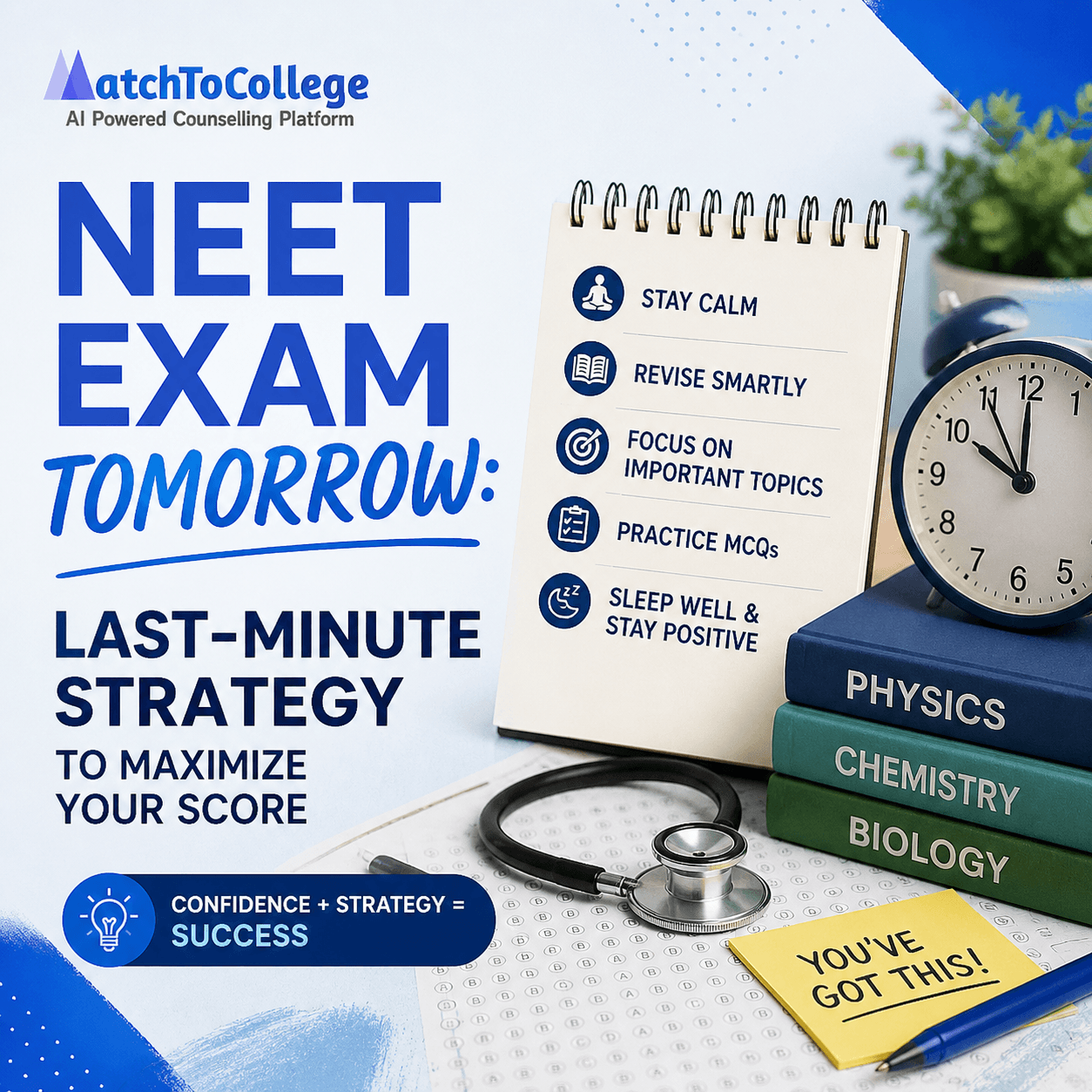
NEET Exam Tomorrow: Last-Minute Strategy to Maximize Your Score
NEET is tomorrow—here’s your complete last-day strategy covering revision, exam hall tips, and mistakes to avoid for maximum accuracy and performance.
GATE Previous Year Question Papers with Official Answer Keys (2007–2026) – Download PDF by Branch
Download official GATE previous year question papers with answer keys PDF from 2007 to 2026. Access branch-wise question papers for Computer Science (CS), Data Science (DA), Mechanical (ME), Electronics (EC), Electrical (EE), and Civil (CE) by IIT Madras.
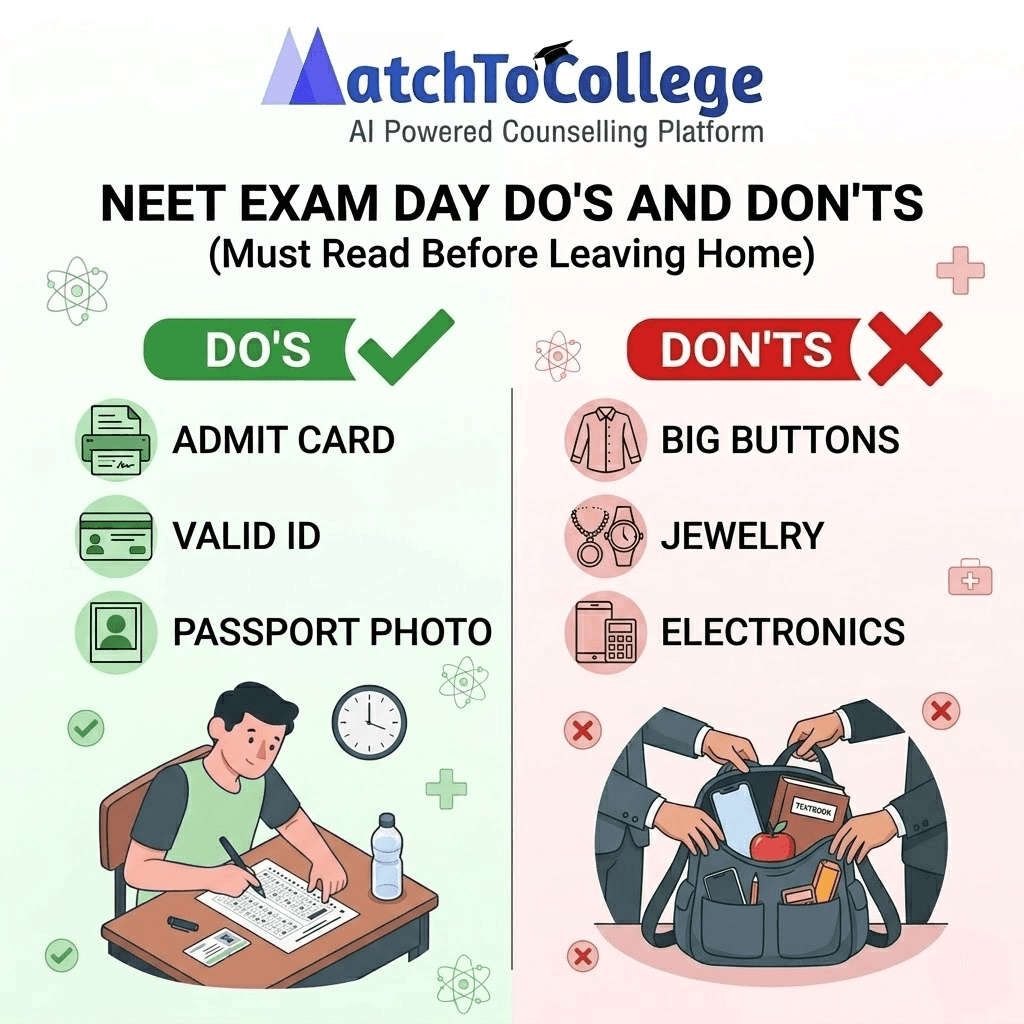
NEET Exam Day Do’s and Don’ts (Must Read Before Leaving Home)
Students appearing for the National Eligibility cum Entrance Test (NEET) must follow strict exam day guidelines set by the National Testing Agency. From required documents and dress code to prohibited items, this guide covers the most important NEET exam day do’s and don’ts to help candidates avoid last-minute problems at the exam center.