

10 Essential Questions Before Accepting Your First Job Offer
Admission & Info Tools
Need Expert Assistance?
Our counselors can help you with fee structures, eligibility guidelines, and upcoming admission cutoffs instantly.
Direct Application Tools
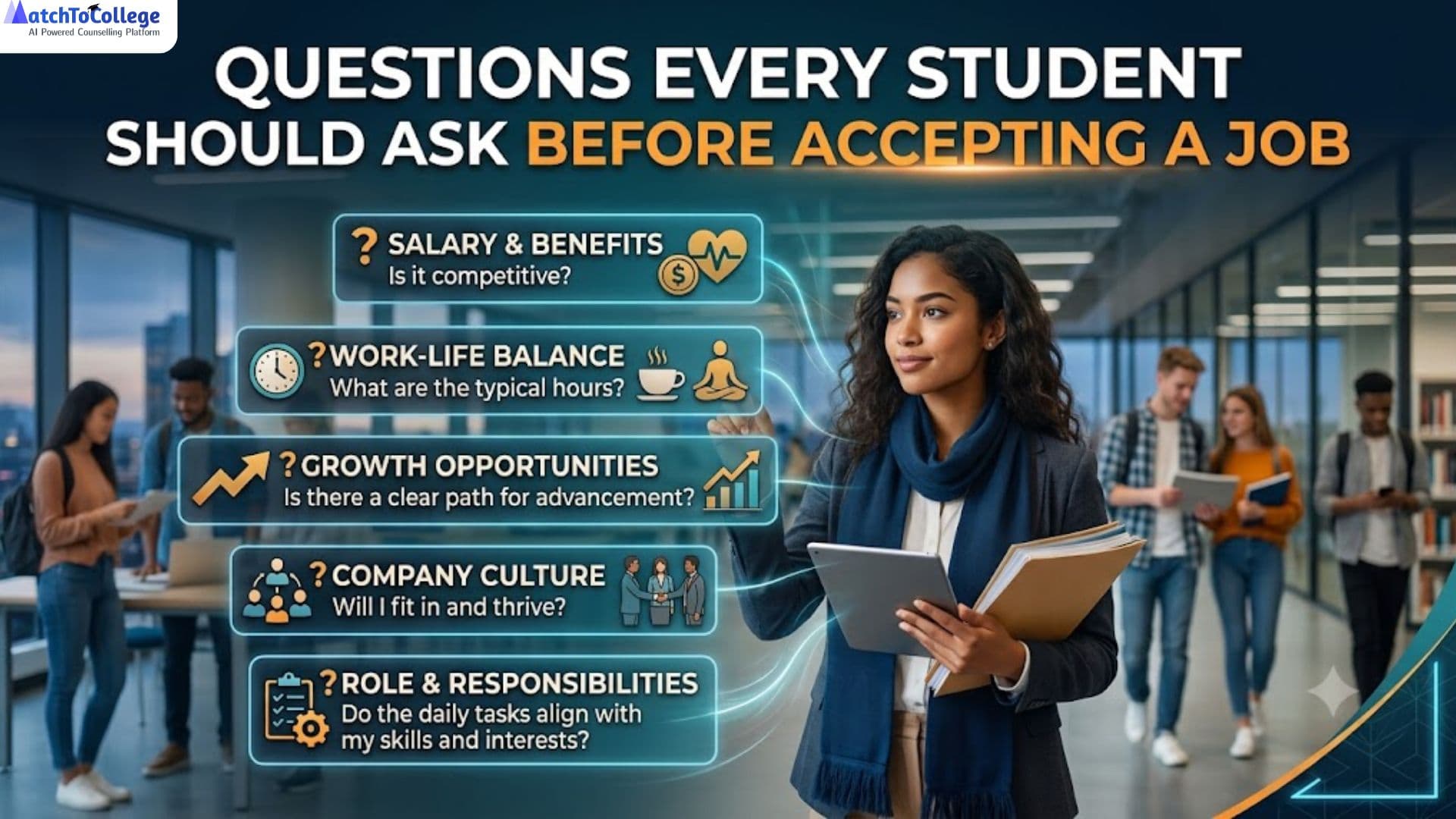
Career guide for student interviews.
Receiving a job offer is an exciting achievement, but before accepting it, it is important to gather all the necessary information. A job is more than just a salary—it should also support your career growth, learning, work-life balance, and long-term goals. Asking the right questions helps you make an informed decision and choose a role that fits your skills, interests, and future aspirations.
Important Questions to Ask Before Accepting a Job
| Topic | Questions to Ask |
| Job Role | What are my daily responsibilities? What are the key expectations for this role? |
| Training & Onboarding | Will I receive training or mentoring during the initial months? |
| Career Growth | What are the opportunities for promotions, learning, and career development? |
| Company Culture | What is the work environment like? How does the company support teamwork and employee well-being? |
| Work Schedule | What are the working hours? Is there flexibility or remote work options? |
| Salary & Benefits | What is the salary package? What benefits, bonuses, insurance, or leave policies are included? |
| Performance Evaluation | How is employee performance measured and reviewed? |
| Learning Opportunities | Does the company provide certifications, workshops, or professional development programs? |
| Team & Manager | Who will I work with, and who will be my reporting manager? |
| Future Opportunities | What are the long-term growth opportunities within the company? |
Why Asking Questions Is Important
- Understand your job responsibilities clearly.
- Learn about career growth opportunities.
- Evaluate the company culture and work environment.
- Understand the complete compensation and benefits package.
- Make a confident and informed career decision.
Tips Before Accepting a Job Offer
- Read the offer letter carefully.
- Compare multiple job offers if available.
- Ask for clarification if anything is unclear.
- Consider both short-term and long-term career goals.
- Choose a role that supports your professional growth and personal well-being.
Before accepting a job offer, take time to ask important questions about the role, company, salary, learning opportunities, and career growth. A well-informed decision will help you start your career with confidence and build a strong foundation for long-term success.
Questions About the Role & Responsibilities
Understanding the daily realities of your potential job is paramount. It’s easy to get caught up in the excitement of an offer, but clarity on your day-to-day tasks, expectations, and how your role contributes to the bigger picture is vital for job satisfaction and successful professional development.
| Question | Why It Is Important |
| What will a typical day look like in this role? | Helps you understand your daily responsibilities and decide if the job matches your expectations. |
| What are the key performance indicators (KPIs) or success metrics for this position? | Clarifies how your performance will be measured and what is expected from you. |
| Who will I report to, and what is their management style? | Helps you understand your reporting structure and working relationship with your manager. |
| Will I have opportunities to work with different teams or on cross-functional projects? | Shows whether you can gain diverse experience and develop new skills. |
| What challenges do new employees usually face in this role? | Helps you prepare for potential challenges and understand the support available during onboarding. |
Asking these questions demonstrates your proactive nature and commitment to understanding the nuances of the position, beyond just the job description.
Questions About Company Culture & Growth
A company's culture significantly impacts your well-being, productivity, and overall job satisfaction. Beyond the job itself, the environment you work in and the opportunities for advancement are critical considerations for your long-term career path.
| Question | Why It Is Important |
| How would you describe the company culture? | Helps you understand teamwork, communication style, innovation, and the overall work environment. |
| What opportunities are available for professional development and training? | Shows whether the company supports learning through mentorship, courses, workshops, and skill development programs. |
| What does career progression look like for this role? | Helps you understand future growth opportunities, promotions, and possible career paths within the company. |
| How does the company support diversity, equity, and inclusion (DEI)? | Helps you evaluate whether the workplace encourages respect, equal opportunities, and employee support. |
| What is the company’s approach to work-life balance? | Helps you understand expectations around working hours, remote work options, flexibility, and leave policies. |
These insights will help you determine if the company's values align with yours and if it’s a place where you can thrive long-term, building on the foundation MatchToCollege helped you establish.
Questions About Compensation & Benefits
Understanding the complete compensation package is essential before accepting a job offer. Salary is important, but benefits, incentives, and financial security also play a major role in your overall career decision.
| Question | Why It Is Important |
| What is the complete compensation package, including salary, bonuses, and future raises? | Helps you understand your total earning potential and opportunities for salary growth. |
| What health insurance benefits are provided? | Clarifies coverage details, employee contributions, and support for your healthcare needs. |
| What are the retirement savings options? | Helps you plan for long-term financial security through retirement benefits and employer contributions. |
| Are there stock options, profit-sharing, or long-term incentives? | Helps you understand additional financial benefits beyond your regular salary. |
| What is the policy for paid time off (PTO), sick leave, and holidays? | Helps you understand leave benefits and maintain a healthy work-life balance. |
Why Understanding Compensation Matters
- Know your complete financial benefits.
- Compare offers effectively.
- Plan your short-term and long-term financial goals.
- Identify opportunities for negotiation.
- Ensure the offer meets your personal and career needs.
Tips Before Accepting the Offer
- Review the complete offer letter carefully.
- Consider salary along with benefits and growth opportunities.
- Ask questions about unclear terms.
- Negotiate respectfully if needed.
- Evaluate the overall value of the offer, not just the starting salary.
A job offer is more than just a paycheck. Understanding your salary, bonuses, insurance, retirement benefits, incentives, and leave policies helps you make a smart career decision and choose an opportunity that supports your financial stability and overall well-being.
Share this Article
FAQFrequently Asked Questions
Q: Is it okay to ask about salary and benefits during the first interview?
It's generally best to wait until the employer brings up compensation or until you receive a job offer. Asking too early might make it seem like salary is your primary motivator. Once an offer is made, discussing the full compensation package and benefits is expected and encouraged to ensure clarity.
Q: How do I know if the company culture is a good fit for me?
Besides asking direct questions during the interview process, pay close attention to the environment. Observe interactions between employees, the office atmosphere, and how interviewers describe their daily work. Glassdoor reviews, LinkedIn insights, and informational interviews with current or former employees can also provide valuable perspectives on company culture and work-life balance.
Get More Info About 10 Essential Questions Before Accepting Your First Job Offer
Recommended Reading

Online MBA Fees: 7 Vital Questions Before You Commit
Paying for an Online MBA? Don't rush! Discover 7 essential questions to ask about accreditation, costs, and career services before you pay your fees. Make a smart investment.

Top Careers After MBA in Marketing: Your Future Unlocked
Unlock your potential! Discover the most lucrative and impactful careers after an MBA in Marketing. From brand management to digital strategy, find your path.

Boost Your Career: The Power of an Online MBA
Unlock career growth with a flexible Online MBA. Discover top programs, navigate applications, and balance work-life. Your professional future starts here.