

10 College Decisions Shaping Your Career for a Decade
Admission & Info Tools
Need Expert Assistance?
Our counselors can help you with fee structures, eligibility guidelines, and upcoming admission cutoffs instantly.
Direct Application Tools
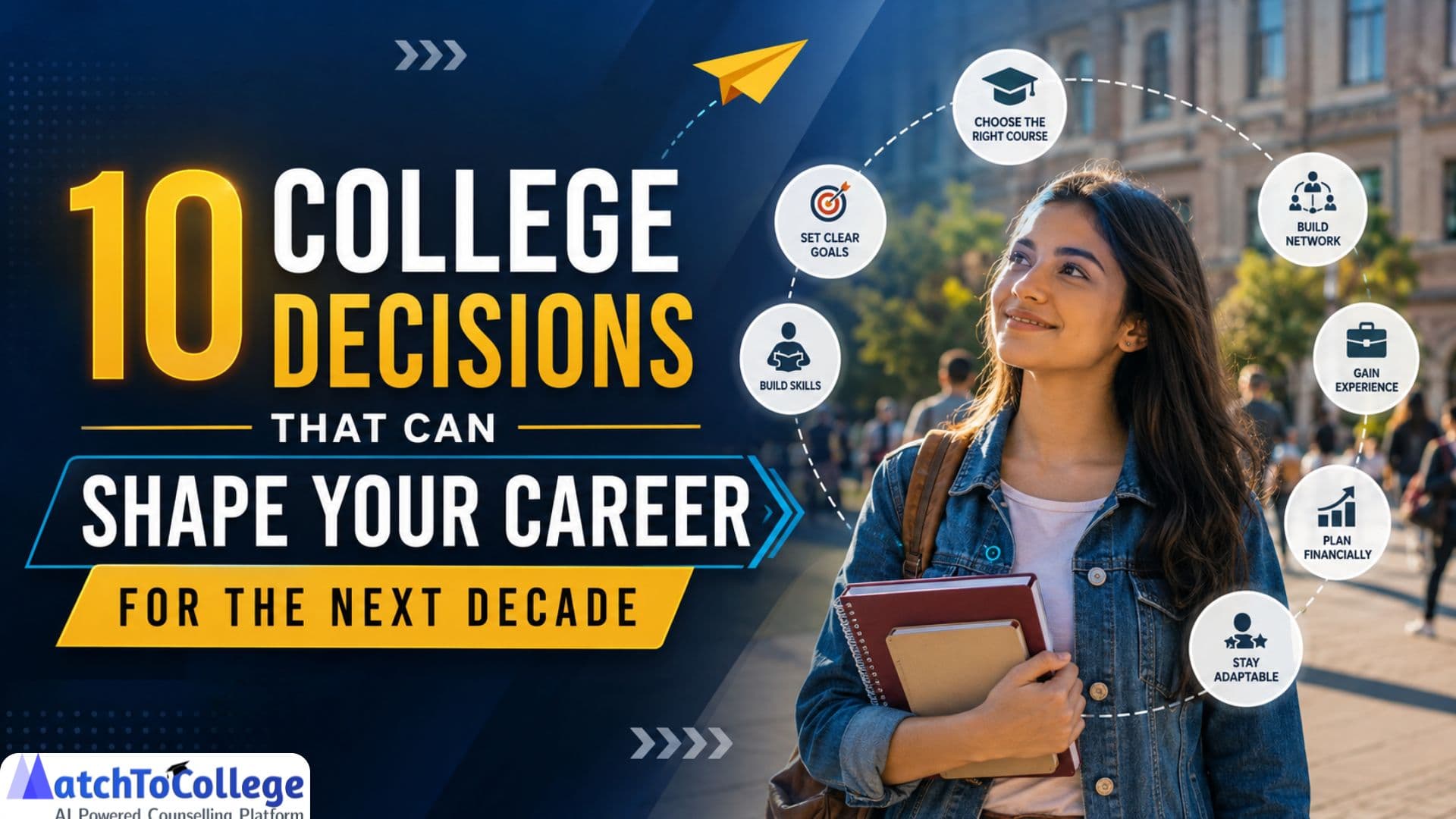
College decisions that shape your career
Higher education is not just about earning a degree—it is a strategic phase that shapes your long-term career path. Every academic, financial, and personal choice you make during college can influence your opportunities for the next decade and beyond.
Why College Decisions Matter Today
- Job markets are fast-changing and highly competitive
- Skills become outdated quickly without continuous learning
- Employers value practical skills, experience, and adaptability
- Early decisions can significantly impact career direction and income potential
College is not just a learning phase—it is a career-building platform where you actively design your future.
10 College Decisions That Impact Your Career
| Decision Area | Why It Matters |
| 1. Choosing Your Major | Determines your core career direction and job eligibility |
| 2. Selecting Specializations | Helps you gain niche, high-demand skills |
| 3. Internship Choices | Builds real-world experience and industry exposure |
| 4. Certification Courses | Adds job-ready, technical, or professional skills |
| 5. College/University Selection | Impacts brand value, exposure, and networking opportunities |
| 6. Skill Development Activities | Enhances employability beyond academics |
| 7. Networking & Connections | Opens doors to mentorships and job referrals |
| 8. Project & Research Work | Builds problem-solving and practical experience |
| 9. Financial Planning (Fees/Loans) | Affects long-term financial stability and freedom |
| 10. Career Planning & Guidance | Helps align education with long-term goals |
How These Decisions Impact Your Future
- Short-term impact: Internships, certifications, and skills improve job readiness
- Long-term impact: Major, specialization, and networking shape career growth
- Overall impact: Determines earning potential, job satisfaction, and career stability
Smart Approach for Students
- Plan your college journey like a career roadmap
- Focus on skills + experience + exposure, not just grades
- Make informed decisions based on industry demand and future trends
College years are a powerful opportunity to build your future. With the right choices, students can transform education into a strong career foundation for the next 10 years.
Platforms like MatchToCollege help students and parents make these decisions wisely through personalized, AI-driven guidance and expert counseling support.
Laying the Academic Foundation for Your Future
1. Choosing Your Major: Core of Your Career Identity
Your major is the foundation of your professional path, shaping your knowledge, skills, and early career opportunities. While modern careers are often interdisciplinary, your major still plays a key role in defining your direction.
Key Considerations:
- Long-term career relevance and industry demand
- Job growth and future opportunities in the field
- Alignment with your interests, strengths, and aptitude
- Avoid trend-based decisions; focus on sustainable career value
Important Insight:
The best major is where your passion meets future opportunity, not just current popularity.
2. Minor or Double Major: Expanding Career Options
Adding a minor or double major helps you build a more versatile and competitive profile in today’s job market.
| Option | What It Means | Benefits |
| Minor | Secondary focus alongside your main major | Adds complementary skills and specialization |
| Double Major | Two full academic majors | Broader expertise and stronger versatility |
Why It Matters:
- Enhances employability with diverse skill sets
- Creates interdisciplinary career opportunities
- Helps you stand out in competitive job markets
Examples:
- Engineering + Business Minor → Tech + Management roles
- Economics + Data Science → Finance + Analytics careers
Key Consideration:
- Double major increases workload significantly
- Choose only if it aligns with your long-term career vision
Your major defines your core identity, while a minor or double major expands your career flexibility. Together, they help you build a stronger, more future-ready academic profile aligned with evolving industry demands.
Strategic Engagement & Experience Beyond the Classroom
3. Selecting the Right Institution: More Than a Degree
A university is not just a place to earn a degree—it is a complete career-building ecosystem that shapes your exposure, opportunities, and growth.
Key Factors to Consider:
- Location and industry access (tech hubs, corporate cities, etc.)
- Strength of specific programs in your chosen field
- Alumni network and industry connections
- Career services, placements, and internship support
- Campus culture and peer environment
Important Insight:
A lower-ranked university with strong industry exposure and internships can sometimes offer better career outcomes than a higher-ranked one with limited practical opportunities.
4. Embracing Extracurriculars: Learning Beyond Classrooms
Extracurricular activities play a major role in building real-world skills and personality development.
Why They Matter:
- Develop leadership and teamwork skills
- Improve communication and problem-solving abilities
- Enhance time management and adaptability
- Strengthen your resume with real experiences
Examples of Activities:
- Student clubs and organizations
- Sports and cultural events
- Volunteering and social work
- Student government or leadership roles
Key Insight:
Focus on meaningful involvement, not just adding activities for resume value. Depth of participation matters more than quantity.
5. Internships & Work Experience: Connecting Theory to Reality
Internships are one of the most powerful ways to prepare for your career by gaining hands-on industry experience.
Key Benefits:
- Apply academic knowledge in real-world settings
- Explore different career paths before graduating
- Build professional networks and industry connections
- Increase chances of full-time job offers
Other Valuable Experiences:
- Part-time jobs
- Freelance work
- Volunteer roles with skill development
Important Insight:
Early and relevant work experience significantly improves job readiness and career direction.
- The right institution provides opportunity and exposure
- Extracurriculars build essential soft skills and personality
- Internships bridge the gap between education and employment
Together, these choices shape a strong, career-ready profile that goes far beyond academics alone.
Building Networks, Global Perspectives & Future-Proofing
6. The Power of Networking: Building Career Connections
College is one of the best times to build a strong professional network that can shape your future opportunities.
Key Networking Opportunities:
- Professors and academic mentors
- Alumni networks
- Guest lectures and industry speakers
- Career fairs, seminars, and workshops
Why It Matters:
- Access to mentorship and career guidance
- Internship and job referrals
- Industry insights and real-world advice
- Opportunities that go beyond academic performance
Key Insight:
Strong relationships can open doors that grades alone may not.
7. Study Abroad Opportunities: Global Exposure
Studying abroad provides a powerful combination of education, culture, and personal growth.
Key Benefits:
- Exposure to global education systems
- Development of cross-cultural communication skills
- Improved adaptability and independence
- Stronger global career perspective
Why Employers Value It:
- Ability to work in diverse environments
- Strong problem-solving in unfamiliar situations
- Global mindset and cultural awareness
Key Insight:
Even short-term international programs can significantly enhance your career profile.
8. Graduate School Decisions: Planning the Next Step
Choosing whether to pursue higher studies like Master’s, MBA, PhD, or professional degrees is a major career decision.
Key Considerations:
- Industry requirements for advanced degrees
- Timing: immediate study vs. work experience first
- Long-term career goals and specialization needs
Common Paths:
- MBA for leadership and management roles
- Master’s for technical specialization
- PhD for research and academic careers
Key Insight:
The right choice depends on your career direction, not just academic preference.
9. Managing Finances Wisely: Long-Term Impact of Debt
Financial decisions during college can significantly affect your career freedom and lifestyle.
Key Factors:
- Student loans and repayment burden
- Scholarships and grants opportunities
- Work-study and part-time income options
Why It Matters:
- High debt may limit early career choices
- Financial stability allows risk-taking and flexibility
- Better planning supports long-term independence
Key Insight:
Financial health directly influences your ability to choose the right career path—not just the highest-paying one.
10. Cultivating Essential Soft Skills: The Real Career Differentiator
Soft skills often define long-term success more than technical knowledge alone.
Core Soft Skills:
- Communication
- Critical thinking
- Emotional intelligence
- Creativity
- Resilience and adaptability
How to Develop Them:
- Group projects and presentations
- Leadership roles in clubs or organizations
- Problem-solving activities
- Real-world internships and teamwork
Key Insight:
Soft skills are the “X-factor” that differentiate average professionals from high achievers.
Your college journey is shaped not only by academics but also by:
- Networking (connections)
- Global exposure (study abroad)
- Higher education planning (graduate school)
- Financial decisions (debt management)
- Soft skills (career success drivers)
Together, these factors build a strong foundation for a successful, flexible, and future-ready career over the next decade.
Share this Article
FAQFrequently Asked Questions
Q: How can MatchToCollege help me make these crucial college decisions?
MatchToCollege uses AI-powered algorithms to analyze your academic profile, interests, and career aspirations to provide personalized recommendations for majors, universities, scholarships, and career pathways, helping you make informed decisions for your future.
Q: Is it better to choose a major based on passion or job market demand?
Ideally, you should find a balance. While passion fuels motivation, understanding job market trends and transferable skills related to your major is crucial. MatchToCollege can help you explore fields where your passion intersects with growing career opportunities and long-term relevance.
Q: How important are extracurriculars for career shaping?
Extracurriculars are extremely important. They develop critical soft skills like leadership, teamwork, and problem-solving that are highly valued by employers. They also demonstrate initiative and can provide unique experiences that differentiate you in a competitive job market.
Get More Info About 10 College Decisions Shaping Your Career for a Decade
Recommended Reading
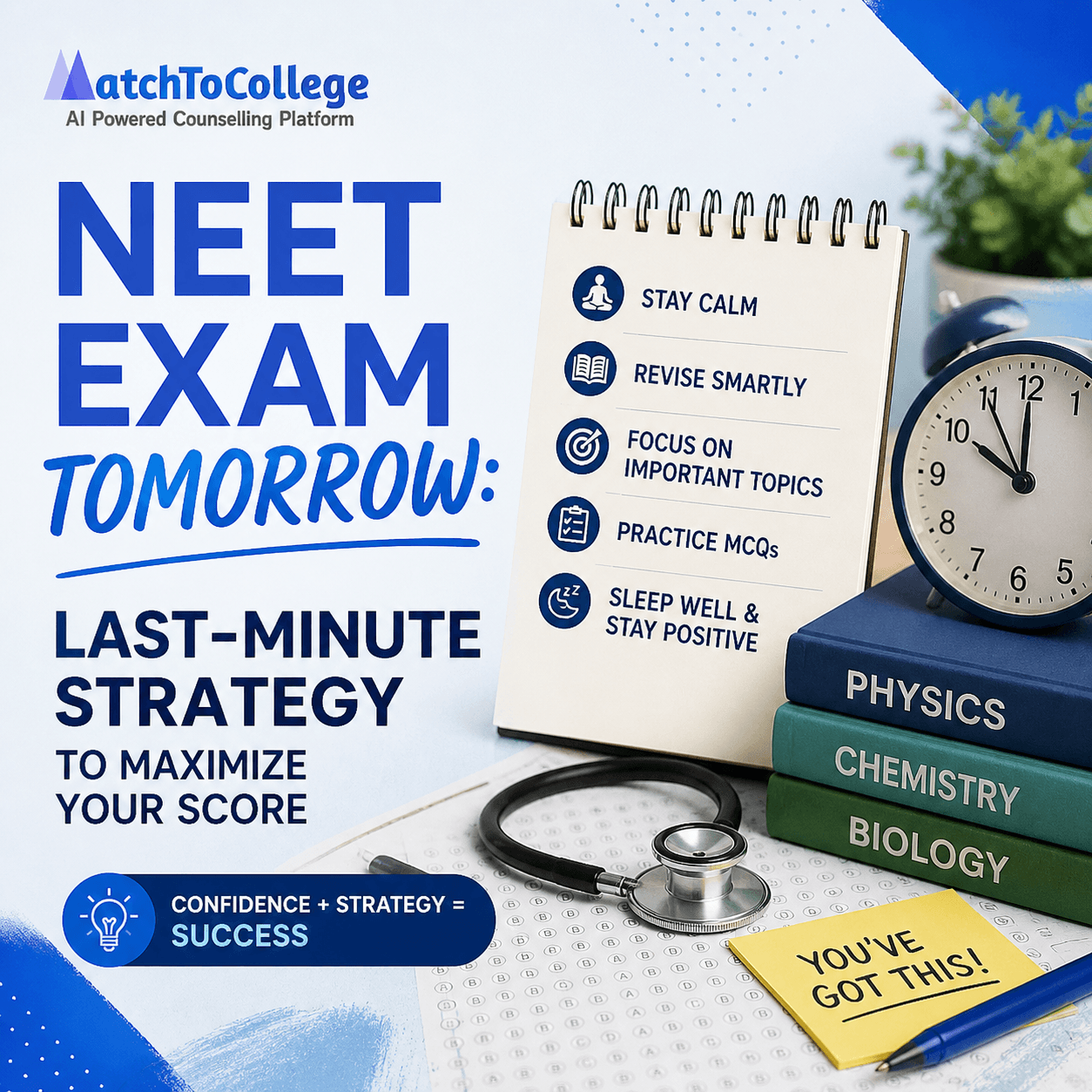
NEET Exam Tomorrow: Last-Minute Strategy to Maximize Your Score
NEET is tomorrow—here’s your complete last-day strategy covering revision, exam hall tips, and mistakes to avoid for maximum accuracy and performance.
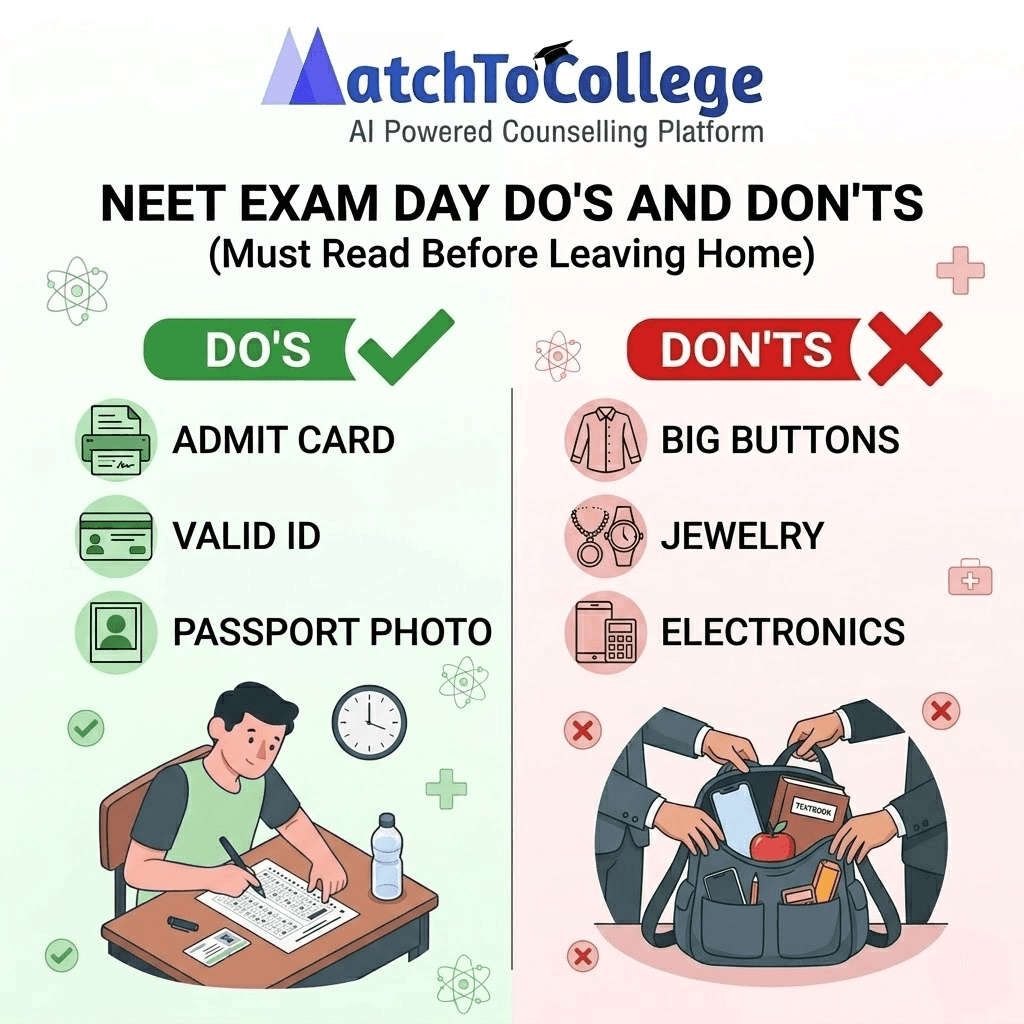
NEET Exam Day Do’s and Don’ts (Must Read Before Leaving Home)
Students appearing for the National Eligibility cum Entrance Test (NEET) must follow strict exam day guidelines set by the National Testing Agency. From required documents and dress code to prohibited items, this guide covers the most important NEET exam day do’s and don’ts to help candidates avoid last-minute problems at the exam center.
GATE Previous Year Question Papers with Official Answer Keys (2007–2026) – Download PDF by Branch
Download official GATE previous year question papers with answer keys PDF from 2007 to 2026. Access branch-wise question papers for Computer Science (CS), Data Science (DA), Mechanical (ME), Electronics (EC), Electrical (EE), and Civil (CE) by IIT Madras.