

Mastering CAT: Your Definitive Guide to Practice Questions & Exam Success
Admission & Info Tools
Need Expert Assistance?
Our counselors can help you with fee structures, eligibility guidelines, and upcoming admission cutoffs instantly.
Direct Application Tools

Share this Article
🎯 MatchToCollege AI Recommendation: Planning your counselling or choice filling? Check your seat allotment probability across premier colleges using the CAT College Predictor.
Key Highlights & CAT Exam Overview
The Common Admission Test (CAT) is the gateway to India's premier MBA programs. Understanding its structure is the first step towards effective preparation. The exam is designed to assess your aptitude across various domains critical for management studies. Here’s a snapshot of the CAT exam pattern:
| Parameter | Details |
| Exam Mode | Computer-Based Test (CBT) |
| Total Duration | 120 minutes (2 hours) |
| Sectional Time Limit | 40 minutes per section |
| Total Sections | 3 (VARC, DILR, Quantitative Aptitude) |
| Total Questions | Typically 66 (subject to minor changes annually) |
| Marking Scheme | +3 for correct answer, -1 for incorrect answer (MCQs) No negative marking for TITA (Type In The Answer) questions |
| Language | English |
The CAT exam is meticulously designed to evaluate your analytical, logical, and verbal reasoning skills, alongside your quantitative abilities. Each section is equally important, and a balanced approach to preparation is key.
Eligibility Criteria & Selection Process for IIMs
To be eligible for the CAT exam and subsequently for admission to IIMs and other top B-schools, candidates must meet specific criteria:
- Educational Qualification: A Bachelor's Degree with at least 50% marks or equivalent CGPA (45% for SC/ST/PwD candidates) from a recognized university.
- Final Year Students: Candidates appearing for their final year Bachelor's degree examination are also eligible, provided they complete their degree requirements within the stipulated time.
- Age Limit: There is no age limit to appear for the CAT exam.
- Number of Attempts: There is no restriction on the number of attempts for CAT.
The selection process for IIMs typically involves multiple stages:
- CAT Examination: Candidates must appear for and secure a competitive percentile in the CAT exam.
- Shortlisting for Interview: Based on CAT scores, academic record, work experience, and diversity factors, candidates are shortlisted for the next stages.
- Written Ability Test (WAT) & Personal Interview (PI): Shortlisted candidates undergo a WAT to assess their writing skills and a PI to evaluate their communication, leadership potential, and overall fit for the MBA program.
- Final Merit List: A composite score, considering CAT percentile, WAT/PI performance, academic profile, and work experience, is used to generate the final merit list for admission.
Top B-Schools & Strategic Fee Considerations
India boasts a vibrant landscape of B-schools, with the Indian Institutes of Management (IIMs) leading the pack, followed by other prestigious institutions like FMS Delhi, SPJIMR, XLRI, MDI, and ISB. While the allure of a top-tier MBA is undeniable, it's crucial to consider the investment involved and the potential return on investment (ROI).
| Institution Type | Estimated Annual Fees (INR) |
| Top IIMs (A, B, C, L, K) | 20 - 25 Lakhs |
| Newer/Baby IIMs | 12 - 18 Lakhs |
| Other Top Private B-Schools | 15 - 25 Lakhs |
| Tier-2 B-Schools | 8 - 15 Lakhs |
These figures are approximate and can vary significantly. When evaluating colleges, look beyond just the fee structure. Consider the faculty, curriculum, industry connections, and, most importantly, placement statistics. A higher fee might be justified by a stronger brand, better learning experience, and superior placement opportunities, leading to a quicker ROI.
To understand your chances of securing a seat in these coveted institutions based on your CAT performance, we highly recommend utilizing our CAT College Predictor. This powerful tool helps you assess your admission probability into IIMs, FMS Delhi, SPJIMR, and other top B-schools by analyzing your CAT percentile and other profile details.
Strategic Preparation: Mastering CAT Practice Questions
Consistent practice with CAT questions is the cornerstone of a winning strategy. It's not just about solving problems; it's about understanding patterns, improving speed, and refining accuracy. Here's how to approach your practice:
1. Leverage Previous Year CAT Question Papers
The most authentic source for practice is the official CAT previous year question papers. These papers offer invaluable insights into:
- Exam Difficulty: Get a real feel for the challenge level.
- Question Types: Familiarize yourself with the exact format and nature of questions asked.
- Topic Weightage: Identify high-frequency topics across VARC, DILR, and QA.
- Time Management: Practice solving under timed conditions to improve speed and efficiency.
Solve these papers slot-wise, simulating the actual exam environment. Analyze your performance meticulously, noting areas of strength and weakness.
2. Section-Wise Practice & Focus Areas
- Verbal Ability & Reading Comprehension (VARC): This section is often dominated by Reading Comprehension (RC) passages. Practice diverse RC topics, focusing on comprehension, inference, and critical reasoning. For Verbal Ability, work on parajumbles, para completion, and odd-one-out questions. Consistent reading of high-quality articles and editorials is crucial.
- Data Interpretation & Logical Reasoning (DILR): This section demands sharp analytical skills. Practice a wide variety of sets, including arrangements, blood relations, binary logic, puzzles, and data interpretation graphs/tables. The key is to identify the underlying logic quickly and efficiently.
- Quantitative Aptitude (QA): Arithmetic, Algebra, Geometry, and Number Systems form the core of QA. Arithmetic topics like Profit & Loss, Ratios, Percentages, and Time & Work are consistently high-weightage. Algebra often includes questions on quadratic equations, functions, and inequalities. Practice a mix of conceptual problems and application-based questions.
3. Mock Test Analysis: Your Growth Blueprint
Regularly taking full-length mock tests is non-negotiable. However, the real value lies in the post-mock analysis. Dedicate ample time to:
- Review Every Question: Understand why you got a question right or wrong.
- Identify Weak Areas: Pinpoint topics or question types where you consistently struggle.
- Analyze Time Spent: See if you're spending too much time on certain questions or sections.
- Refine Strategy: Based on your analysis, adjust your attempt strategy for the next mock.
Remember, the goal is not just to solve questions, but to solve them strategically and accurately within the given time constraints. Consistent, smart practice will build your confidence and competence for the CAT.
Career Scope, Placements & Expected ROI
An MBA from a reputable institution opens doors to a plethora of career opportunities across diverse sectors. The return on investment (ROI) from an MBA is not just financial, but also encompasses skill development, networking, and accelerated career growth.
1. Diverse Career Opportunities
MBA graduates are highly sought after in various roles and industries:
- Consulting: Management consulting, strategy consulting, IT consulting.
- Finance: Investment banking, corporate finance, wealth management, private equity.
- Marketing & Sales: Brand management, product management, digital marketing, business development.
- Operations & Supply Chain: Logistics, supply chain optimization, project management.
- Human Resources: Talent acquisition, HR strategy, organizational development.
- General Management: Leadership roles, strategic planning, business unit head.
- Entrepreneurship: Many MBA graduates leverage their skills to launch their own ventures.
2. Placement Insights & Average Packages
Top B-schools in India consistently report strong placement seasons with impressive average packages. While specific figures vary year-on-year and across institutions, here's a general outlook:
| Institution Category | Average Annual Package (INR) |
| Top IIMs (A, B, C) | 28 - 35+ Lakhs |
| Other Top IIMs & Tier-1 B-Schools | 20 - 28 Lakhs |
| Tier-2 B-Schools | 10 - 18 Lakhs |
These packages reflect the high demand for skilled management professionals. Beyond the average, many students also secure international placements or roles with significantly higher compensation.
3. Long-term ROI
The true ROI of an MBA extends far beyond the initial placement. It includes:
- Accelerated Career Progression: MBA graduates often climb the corporate ladder faster.
- Enhanced Skillset: Development of leadership, strategic thinking, problem-solving, and communication skills.
- Powerful Network: Access to a vast alumni network and industry connections.
- Global Exposure: Many programs offer international exchange opportunities, broadening perspectives.
Choosing the right MBA program, therefore, is a strategic decision that can shape your entire professional trajectory.
Admissions Checklist & Important Tips
Navigating the CAT admissions process requires careful planning and execution. Here’s a checklist and some crucial tips to keep you on track:
Admissions Checklist:
- Understand the CAT Syllabus: Familiarize yourself with all topics across VARC, DILR, and QA.
- Create a Study Plan: Allocate dedicated time for each section, mock tests, and analysis.
- Gather Study Material: Utilize official CAT papers, reputable guides, and online resources.
- Practice Regularly: Solve a variety of questions daily to build speed and accuracy.
- Take Mock Tests: Simulate exam conditions frequently and analyze results thoroughly.
- Stay Updated: Keep track of CAT notification dates, application deadlines, and exam pattern changes.
- Prepare for WAT/PI: Start honing your communication skills, current affairs knowledge, and self-awareness early.
- Maintain Academic Records: Ensure all your academic documents are in order for applications.
Important Tips from MatchToCollege Mentors:
- Consistency is Key: Regular, focused effort trumps sporadic, intense bursts of study.
- Don't Neglect Any Section: Aim for balanced preparation, as most B-schools have sectional cutoffs.
- Focus on Concepts: A strong conceptual foundation is more valuable than rote learning formulas.
- Manage Your Time: Practice time management during mocks to optimize your performance on exam day.
- Stay Positive & Resilient: The CAT journey can be challenging; maintain a positive mindset and learn from setbacks.
- Seek Guidance: Don't hesitate to reach out to mentors or utilize platforms like MatchToCollege for personalized guidance.
Your MBA dream is within reach with diligent preparation and a strategic approach. We at MatchToCollege are here to support you every step of the way.
🏛️ Looking for Admissions & College Cutoffs? Explore verified fee structures, seat matrices, and real student reviews across top institutions on the MatchToCollege Accredited Online & Distance Colleges Directory.
Frequently Asked Questions
Q: What is the typical weightage of Logical Reasoning topics like Binary Logic in CAT?
While there isn't a fixed number, topics like Binary Logic can appear as standalone questions or as part of a larger set in the Data Interpretation & Logical Reasoning (DILR) section. You can generally expect 1-2 questions directly or indirectly related to Binary Logic within a DILR set. It's crucial to understand the core concepts as they often combine with other logical puzzles.
Q: What is the expected number of questions from Algebra topics like Quadratic Equations in CAT?
Algebra is a significant component of the Quantitative Aptitude section. Within Algebra, you can typically expect 1 to 2 questions specifically from Quadratic Equations. Overall, the Algebra section usually contributes about 7 to 9 questions, covering topics like functions, inequalities, and progressions alongside quadratic equations.
Q: Are there significant differences between CAT exam slots, and how does normalization work?
While the overall structure, sectional breakup, marking scheme, and time limits remain consistent across all CAT exam slots (Slot 1, 2, and 3), the actual questions in each slot are unique. This can lead to slight variations in difficulty levels. To ensure fairness and negate any advantage or disadvantage due to these differences, CAT scores undergo a normalization process. This statistical adjustment ensures that all candidates are evaluated on a comparable scale, irrespective of their exam slot.
Q: What is the distribution of Reading Comprehension questions in the CAT VARC section?
The Verbal Ability & Reading Comprehension (VARC) section of CAT is heavily dominated by Reading Comprehension (RC) passages. Out of the total 24 questions in VARC, approximately 14-16 questions are based on RC passages. The remaining questions typically cover Verbal Ability topics such as parajumbles, para completion, and odd-one-out. Mastering RC is therefore critical for a high VARC score.
Q: What are the sectional time limits for the CAT exam?
The CAT exam has a total duration of 120 minutes (2 hours), divided into three sections: Verbal Ability & Reading Comprehension (VARC), Data Interpretation & Logical Reasoning (DILR), and Quantitative Aptitude (QA). Each of these sections has a strict sectional time limit of 40 minutes. You cannot move to the next section or return to a previous section once the time for the current section expires.
Q: When is the optimal time to practice CAT mock tests for maximum benefit?
It's beneficial to practice CAT mock tests during the day, especially aligning with potential exam slots. Once your CAT admit card is released and your specific slot is known, it's highly recommended to take your mock tests at the exact same time as your actual exam. This practice helps your mind and body adapt to the rigorous 2-hour test environment, ensuring you are optimally alert and focused during your real CAT exam. For instance, if you have an early morning slot, practicing mocks at that time will train your brain to perform effectively when it matters most.
Related Topics
Featured Mentioned Colleges
Explore institutions featured and discussed in this article


With an educational trajectory spanning 11 years since its inception in 2015, FACULTY OF MANAGEMENT STUDIES serves as a prominent seat of learning in Rajkot, Gujarat. Affiliated with Marwadi University and adhering to statutory benchmarks established by All India Council for Technical Education (AICTE) / UGC, the institution delivers specialized academic curricula centered on business strategy, financial analytics, corporate governance, and entrepreneurial leadership. Students benefit from contemporary infrastructure featuring management simulation suites, modern boardroom presentation centers, and incubation hubs, designed to support hands-on learning and comprehensive intellectual growth. By combining academic discipline with practical exposure, it equips emerging scholars to meet evolving demands in industry, academia, and public service.
Total Fees
Contact for Fees
Total Courses
3
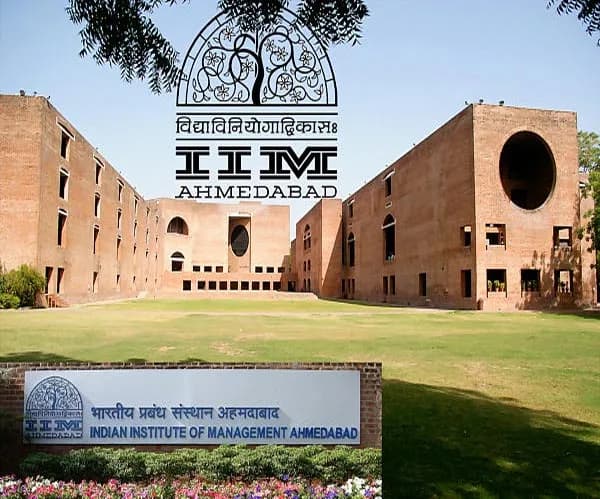

Located in the educational landscape of Ahmedabad, Gujarat, Indian Institute of Management Ahmedabad was established in 1961 to deliver transformative education. Conforming to regulatory norms of All India Council for Technical Education (AICTE) / UGC through its affiliation with Gujarat State University, the institution offers students an integrated foundation across business strategy, financial analytics, corporate governance, and entrepreneurial leadership. The campus is equipped with management simulation suites, modern boardroom presentation centers, and incubation hubs, creating an immersive environment for scholarly development and collaborative innovation. Dedicated to holistic student empowerment, the institution prepares ethical and career-ready professionals who contribute meaningfully to societal and industrial growth.
Total Fees
Contact for Fees
Total Courses
6


Established in 1973, Indian Institute of Management Bangalore is a distinguished institution situated in Bengaluru Urban, Karnataka. Conforming to regulatory norms of All India Council for Technical Education (AICTE) / UGC through its affiliation with Karnataka State University, the institution offers students an integrated foundation across business strategy, financial analytics, corporate governance, and entrepreneurial leadership. The campus is equipped with management simulation suites, modern boardroom presentation centers, and incubation hubs, creating an immersive environment for scholarly development and collaborative innovation. By combining academic discipline with practical exposure, it equips emerging scholars to meet evolving demands in industry, academia, and public service.
Total Fees
Contact for Fees
Total Courses
15


The Indian Institute of Management Calcutta (IIMC) was established as the first national institute for postgraduate studies and research in management by the Government of India in November 1961 in collaboration with the Alfred P. Sloan School of Management (MIT), the Government of West Bengal, the Ford Foundation, and Indian industry. During its initial years, several prominent faculty formed part of its nucleus, including Jagdish Sheth, J. K. Sengupta, and others. Over the years, IIMC has grown into a mature institution with a global reputation, imparting high-quality management education. It has been playing a pioneering role in professionalizing Indian management through its postgraduate and doctoral-level programs, executive training programs, and research and consulting activities. Today, the institute serves as an autonomous body, continually evolving to meet its goals in an ever-changing business environment.
Total Fees
Contact for Fees
Total Courses
11


The IIM Lucknow Noida Campus is a state-of-the-art satellite facility dedicated to executive education and sustainable management. Located in the Delhi-NCR region, it serves as a center of excellence for mid-career professionals, offering full-time residential programs, world-class infrastructure, and a dedicated faculty pool.
Total Fees
Contact for Fees
Total Courses
4


Established in 1996, Indian Institute of Management Kozhikode is a distinguished institution situated in Kozhikode, Kerala. Operating under the academic aegis of Kerala State University and recognized by All India Council for Technical Education (AICTE) / UGC, it provides structured degree programs emphasizing business strategy, financial analytics, corporate governance, and entrepreneurial leadership. The institution maintains robust academic resources including management simulation suites, modern boardroom presentation centers, and incubation hubs, fostering an active student life and practical competencies. Dedicated to holistic student empowerment, the institution prepares ethical and career-ready professionals who contribute meaningfully to societal and industrial growth.
Total Fees
Contact for Fees
Total Courses
12
Get More Info About Mastering CAT
Recommended Articles

INI CET November 2026: Your Definitive Guide to PG Medical Admissions
Aspiring for postgraduate medical specialisation? Our comprehensive guide decodes INI CET November 2026, covering eligibility, exam pattern, key dates, and preparation strategies for MD, MS, MDS, DM, and MCh admissions.

MHT CET Marks vs Percentile vs Rank: Your Definitive Guide to Maharashtra Engineering Admissions
Demystify MHT CET scores with our comprehensive guide on marks, percentile, and rank. Understand how your performance translates into college admissions and strategize effectively for top engineering colleges in Maharashtra.

Mastering JEE Main: Strategic Insights from the 2019 April 12 Shift 1 Paper
Unlock your potential for JEE Main success by analyzing past papers. This guide delves into the 2019 April 12 Shift 1 paper, offering strategic insights and a robust preparation blueprint to help you excel.