

Mastering CAT Mock Tests: Your Ultimate Guide to Top MBA Admissions
Admission & Info Tools
Need Expert Assistance?
Our counselors can help you with fee structures, eligibility guidelines, and upcoming admission cutoffs instantly.
Direct Application Tools

Share this Article
🎯 MatchToCollege AI Recommendation: Planning your counselling or choice filling? Check your seat allotment probability across premier colleges using the CAT College Predictor.
CAT Exam Overview & Mock Test Significance
The Common Admission Test (CAT) is the gateway to India's most prestigious MBA and PGDM programs. Understanding its structure is the first step towards conquering it. Mock tests are not just practice; they are critical simulations that prepare you for the actual exam environment, helping you build stamina, manage time, and strategize effectively. They offer a mirror to your preparation, highlighting areas of strength and those needing focused attention.
CAT Exam Pattern & Marking Scheme
The CAT exam is a computer-based test conducted over a duration of two hours, divided into three distinct sections. Each section has a specific time limit, emphasizing the need for disciplined time management.
| Parameter | Details |
| Exam Duration | 2 Hours (120 minutes) |
| Total Sections | 3 (VARC, DILR, QA) |
| Sectional Time Limit | 40 minutes per section |
| Total Questions | 66 (approx. 24 VARC, 20 DILR, 22 QA) |
| Total Marks | 198 (approx.) |
| Marking Scheme | +3 for correct answer, -1 for incorrect answer (MCQs), 0 for unattempted/non-MCQs |
| Question Types | Multiple Choice Questions (MCQs) & Type-in-the-Answer (TITA) |
The Role of Mock Tests in Your CAT Journey
Regularly attempting full-length mock tests is paramount. It allows you to:
- Familiarize with the Interface: Get comfortable with the online test format.
- Time Management: Practice allocating time efficiently across sections and questions.
- Strategy Formulation: Develop and refine your test-taking strategy, including question selection and pacing.
- Performance Analysis: Identify your strong and weak areas, both conceptually and section-wise.
- Build Stamina: Endure the two-hour rigorous test environment without fatigue.
Eligibility Criteria & Selection Process for MBA
To pursue an MBA from a top Indian B-school, meeting the fundamental eligibility criteria is essential. While specific requirements might vary slightly between institutions, the core prerequisites for appearing in CAT and subsequent admissions remain consistent.
CAT Eligibility Requirements
- Educational Qualification: A Bachelor's Degree with at least 50% marks or equivalent CGPA (45% for SC/ST/PwD candidates) from a recognized university.
- Final Year Students: Candidates in the final year of their Bachelor's degree are also eligible to apply, provided they complete their degree with the required percentage within a stipulated timeframe.
- No Age Limit: There is no age restriction to appear for the CAT exam.
The MBA Selection Journey
The admission process to premier MBA programs typically involves multiple stages:
- CAT Examination: The primary hurdle, where your percentile determines your eligibility for shortlisting.
- Shortlisting by B-Schools: Based on CAT scores, academic profile, work experience (if any), and diversity factors.
- Written Ability Test (WAT): An essay writing component to assess communication and analytical skills.
- Group Discussion (GD): A group exercise to evaluate leadership, teamwork, and communication.
- Personal Interview (PI): A one-on-one interaction to gauge personality, motivation, and fit for the program.
- Final Selection: A composite score based on all these parameters leads to the final admission offer.
Top Colleges & Estimated Fee Comparison
India boasts a vibrant landscape of B-schools offering world-class MBA and PGDM programs. The choice of institution significantly impacts your career trajectory and return on investment (ROI). Here's a glimpse into some of the top categories and their estimated fee structures.
Leading MBA Institutions in India
The following table provides a general overview of top B-school categories and their approximate fee ranges. Please note that these are estimates and actual fees can vary based on the specific program, campus, and year of admission.
| Parameter | Details |
| Top IIMs (A, B, C, L, K, I) | INR 20 - 25 Lakhs |
| Other Established IIMs | INR 15 - 20 Lakhs |
| Tier 1 Private B-Schools (e.g., XLRI, SPJIMR, MDI) | INR 18 - 25 Lakhs |
| Top University Departments (e.g., FMS Delhi, JBIMS Mumbai) | INR 2 - 8 Lakhs |
| Emerging Private B-Schools | INR 10 - 15 Lakhs |
Popular MBA Specializations
B-schools offer a diverse range of specializations to cater to varied career aspirations. Some of the most sought-after include:
- MBA in Finance
- MBA in Marketing
- MBA in Human Resources (HR)
- MBA in Operations Management
- MBA in Business Analytics / Data Science
- MBA in International Business
- MBA in Entrepreneurship
- MBA in Healthcare Management
- MBA in Digital Marketing
Admissions Checklist & Important Tips
A structured approach is key to cracking the CAT and securing admission to your dream B-school. Here’s a comprehensive checklist and some crucial tips to guide your preparation.
1. Understand the CAT Syllabus Thoroughly
The CAT syllabus covers three main areas. A strong foundation in each is non-negotiable.
| Parameter | Details |
| Verbal Ability & Reading Comprehension (VARC) | Reading Comprehension, Para Jumbles, Para Summary, Odd One Out, Sentence Completion, Vocabulary |
| Data Interpretation & Logical Reasoning (DILR) | Tables, Charts, Bar Graphs, Data Sufficiency, Blood Relations, Clocks & Calendars, Syllogism, Seating Arrangement, Sets & Caselets, Family Tree, Data Arrangement, Binary Logic, Puzzles |
| Quantitative Aptitude (QA) | Averages, Percentages, Ratio & Proportion, Simple & Compound Interest, Profit & Loss, Mixtures & Allegations, Time & Work, Time Speed & Distance, Linear & Quadratic Equations, Inequalities, Logarithm, Functions, HCF & LCM, Binomial Theorem, Geometry (Lines, Angles, Triangles, Polygons, Circles, Mensuration), Coordinate Geometry, Sequence & Series, Set Theory, Permutation & Combination, Probability |
2. Develop a Robust Mock Test Strategy
Mock tests are your training ground. Treat each one as the actual CAT exam.
- Regular Practice: Take a full-length mock test at least once a week in the final months of preparation.
- Simulate Exam Conditions: Attempt mocks in a quiet environment, adhering strictly to the time limits.
- Detailed Analysis: This is the most crucial step. After each mock, spend significant time analyzing your performance.
- Review every question, not just the incorrect ones.
- Understand why you got a question wrong (conceptual error, silly mistake, time pressure).
- Identify patterns in your errors and weak topics.
- Track your sectional and overall scores, accuracy, and time spent per question.
- Revise & Re-strategize: Based on your analysis, revisit concepts, practice specific question types, and adjust your test-taking strategy for the next mock.
3. Leverage MatchToCollege Resources
To gain a clearer perspective on your admission chances, utilize our specialized tools. Our CAT College Predictor can help you estimate your call chances into IIMs, FMS Delhi, SPJIMR, and other top B-schools based on your CAT percentile. This insight is invaluable for refining your target college list and understanding cutoff trends.
4. Stay Updated & Maintain Consistency
Keep abreast of any changes in the CAT exam pattern or syllabus. Consistency in your preparation, coupled with smart work, will ultimately lead you to success.
Career Scope, Placements & Expected ROI
An MBA from a reputable institution is a transformative experience, opening doors to diverse and rewarding career opportunities across various sectors. The return on investment (ROI) from an MBA extends beyond just the initial salary package, encompassing long-term career growth, leadership roles, and a robust professional network.
Diverse Career Opportunities Post-MBA
Graduates with an MBA are highly sought after in roles such as:
- Consulting: Management Consultant, Strategy Consultant, IT Consultant
- Finance: Investment Banker, Financial Analyst, Portfolio Manager, Corporate Finance
- Marketing & Sales: Brand Manager, Product Manager, Marketing Analyst, Sales Manager
- Operations: Supply Chain Manager, Operations Analyst, Project Manager
- Human Resources: HR Business Partner, Talent Acquisition Specialist, Compensation & Benefits Manager
- General Management: Leadership roles across various industries
- Technology: Product Management, Business Development in Tech firms
- Entrepreneurship: Starting and scaling your own venture
Placement Insights & Average Packages
Top B-schools in India consistently report strong placement seasons, with leading companies from various sectors recruiting their graduates. While specific figures vary year-on-year and across institutions, average packages from premier B-schools typically range from INR 20 LPA to 35+ LPA. These figures reflect the high demand for skilled management professionals and the value employers place on an MBA degree from a top-tier institution.
Understanding Your Return on Investment (ROI)
Calculating the ROI of an MBA involves considering not just the immediate salary hike but also the long-term career progression, enhanced skill set, leadership development, and the invaluable network you build. While the initial investment in fees might seem substantial, the accelerated career growth, higher earning potential, and access to senior leadership roles often justify the expenditure within a few years of graduation. An MBA is an investment in your future, yielding dividends for decades to come.
🏛️ Looking for Admissions & College Cutoffs? Explore verified fee structures, seat matrices, and real student reviews across top institutions on the MatchToCollege Top Colleges & Universities in India Directory.
Frequently Asked Questions
Q: How many questions are typically asked from Binary Logic in the CAT DILR section?
While there isn't a fixed number, candidates can generally expect 1-2 standalone questions or a small set based on Binary Logic within the Logical Reasoning component of the DILR section. It's an important topic to practice for conceptual clarity.
Q: What is the usual weightage of Quadratic Equations in the CAT Quantitative Aptitude section?
In the Algebra section of CAT's Quantitative Aptitude, candidates can anticipate 1 to 2 questions specifically from Quadratic Equations. Algebra as a whole typically accounts for about 7 to 9 questions, making Quadratic Equations a significant part of it.
Q: What is the difference between Slot 1, 2, and 3 of the CAT exam paper?
There is no difference in the fundamental structure, pattern, sectional breakup, marking scheme, or time limit across the different slots of the CAT exam. However, because each slot features unique sets of questions, there can be slight variations in the difficulty levels. To ensure fairness, CAT scores undergo a normalization process, which adjusts for these differences in difficulty across slots when preparing the final results.
Q: What are common changes observed in the CAT exam pattern over the years?
The CAT exam pattern has seen periodic adjustments. Common changes include modifications to the total number of questions, changes in sectional question distribution (e.g., DILR questions increasing or decreasing), adjustments to the total marks, and sometimes minor increases in application fees. Candidates are also occasionally given the flexibility to select more preferred test cities. It's crucial to refer to the official CAT notification each year for the most accurate and up-to-date information.
Q: What is the best time of day to practice CAT mock tests?
It is highly recommended to practice CAT mock tests during the day, ideally aligning with the actual CAT exam slots (morning, afternoon, or evening). Once your CAT admit card is released and your specific slot is known, try to take your mocks at that exact time. This practice helps your mind and body adapt to the rigorous two-hour test environment during your actual exam slot, optimizing your performance on test day.
Q: Are there any Fill-in-the-Blanks (FIB) based questions in the CAT exam?
While there are no direct Fill-in-the-Blanks based questions in the CAT exam in the traditional sense, practicing FIB questions can significantly improve your understanding of word usage, grammar, and sentence structure. These skills are indirectly beneficial for various Verbal Ability questions, especially those related to sentence correction, para jumbles, and even reading comprehension.
Related Topics
Featured Mentioned Colleges
Explore institutions featured and discussed in this article
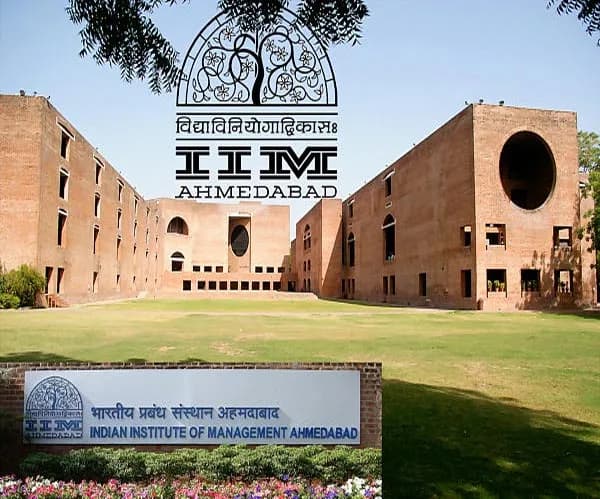

Located in the educational landscape of Ahmedabad, Gujarat, Indian Institute of Management Ahmedabad was established in 1961 to deliver transformative education. Conforming to regulatory norms of All India Council for Technical Education (AICTE) / UGC through its affiliation with Gujarat State University, the institution offers students an integrated foundation across business strategy, financial analytics, corporate governance, and entrepreneurial leadership. The campus is equipped with management simulation suites, modern boardroom presentation centers, and incubation hubs, creating an immersive environment for scholarly development and collaborative innovation. Dedicated to holistic student empowerment, the institution prepares ethical and career-ready professionals who contribute meaningfully to societal and industrial growth.
Total Fees
Contact for Fees
Total Courses
6


Established in 1973, Indian Institute of Management Bangalore is a distinguished institution situated in Bengaluru Urban, Karnataka. Conforming to regulatory norms of All India Council for Technical Education (AICTE) / UGC through its affiliation with Karnataka State University, the institution offers students an integrated foundation across business strategy, financial analytics, corporate governance, and entrepreneurial leadership. The campus is equipped with management simulation suites, modern boardroom presentation centers, and incubation hubs, creating an immersive environment for scholarly development and collaborative innovation. By combining academic discipline with practical exposure, it equips emerging scholars to meet evolving demands in industry, academia, and public service.
Total Fees
Contact for Fees
Total Courses
15


The Indian Institute of Management Calcutta (IIMC) was established as the first national institute for postgraduate studies and research in management by the Government of India in November 1961 in collaboration with the Alfred P. Sloan School of Management (MIT), the Government of West Bengal, the Ford Foundation, and Indian industry. During its initial years, several prominent faculty formed part of its nucleus, including Jagdish Sheth, J. K. Sengupta, and others. Over the years, IIMC has grown into a mature institution with a global reputation, imparting high-quality management education. It has been playing a pioneering role in professionalizing Indian management through its postgraduate and doctoral-level programs, executive training programs, and research and consulting activities. Today, the institute serves as an autonomous body, continually evolving to meet its goals in an ever-changing business environment.
Total Fees
Contact for Fees
Total Courses
11


The IIM Lucknow Noida Campus is a state-of-the-art satellite facility dedicated to executive education and sustainable management. Located in the Delhi-NCR region, it serves as a center of excellence for mid-career professionals, offering full-time residential programs, world-class infrastructure, and a dedicated faculty pool.
Total Fees
Contact for Fees
Total Courses
4


Established in 1996, Indian Institute of Management Kozhikode is a distinguished institution situated in Kozhikode, Kerala. Operating under the academic aegis of Kerala State University and recognized by All India Council for Technical Education (AICTE) / UGC, it provides structured degree programs emphasizing business strategy, financial analytics, corporate governance, and entrepreneurial leadership. The institution maintains robust academic resources including management simulation suites, modern boardroom presentation centers, and incubation hubs, fostering an active student life and practical competencies. Dedicated to holistic student empowerment, the institution prepares ethical and career-ready professionals who contribute meaningfully to societal and industrial growth.
Total Fees
Contact for Fees
Total Courses
12
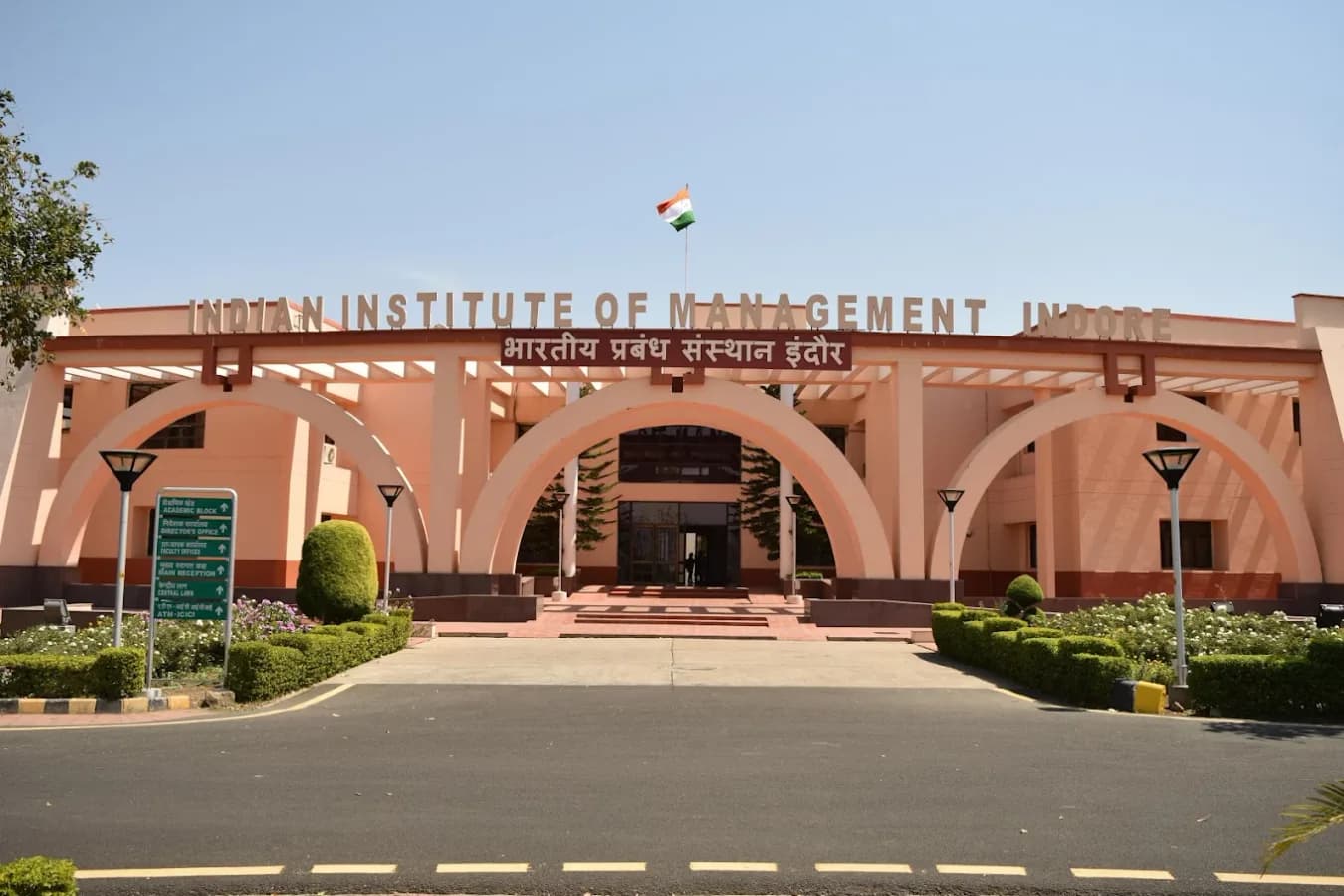

An Institution of Excellence With the objectives of imparting high-quality management education and training, the Department of Higher Education, Ministry of Education, Government of India, established the Indian Institute of Management Indore as an institution of excellence. These institutions are recognized as premier management institutions, comparable to the best in the world for teaching, research, and interaction with industries. Established in 1996, the Indian Institute of Management Indore (IIM Indore) has been a leader in the field of management education, interfacing with the industry, government, and PSUs. It is promoted and nurtured by the Ministry of Education, Government of India, and is an institute of national importance under the Indian Institutes of Management Act 2017. Situated atop a scenic hillock, the 193-acre campus of IIM Indore provides an ideal backdrop for contemplative learning. IIM Indore has the latest in teaching aids, rich learning resources, a strong IT backbone, state-of-the-art sports complex and hostels, and contemporary infrastructure.
Total Fees
Contact for Fees
Total Courses
17


With an educational trajectory spanning 11 years since its inception in 2015, FACULTY OF MANAGEMENT STUDIES serves as a prominent seat of learning in Rajkot, Gujarat. Affiliated with Marwadi University and adhering to statutory benchmarks established by All India Council for Technical Education (AICTE) / UGC, the institution delivers specialized academic curricula centered on business strategy, financial analytics, corporate governance, and entrepreneurial leadership. Students benefit from contemporary infrastructure featuring management simulation suites, modern boardroom presentation centers, and incubation hubs, designed to support hands-on learning and comprehensive intellectual growth. By combining academic discipline with practical exposure, it equips emerging scholars to meet evolving demands in industry, academia, and public service.
Total Fees
Contact for Fees
Total Courses
3
Get More Info About Mastering CAT Mock Tests
Recommended Articles

Mastering JEE Main: Your Evergreen Guide to Strategic Preparation & Past Papers
Unlock your full potential for JEE Main success. This comprehensive guide helps you strategically use past year papers, understand exam patterns, and leverage expert insights for top engineering admissions.

Mastering JEE Main: Your Evergreen Guide to Past Papers & Preparation Strategy
Unlock your full potential for JEE Main by strategically utilizing previous year question papers. This comprehensive guide from MatchToCollege offers insights into exam patterns, effective preparation, and crucial admissions advice.

Mastering JEE Main: Your Evergreen Guide to Past Papers & Exam Strategy
Unlock your full potential for JEE Main success by strategically leveraging past question papers. This comprehensive guide from MatchToCollege provides an in-depth look at exam patterns, difficulty analysis, and effective preparation strategies to help you ace one of India's most competitive engineering entrance exams.