

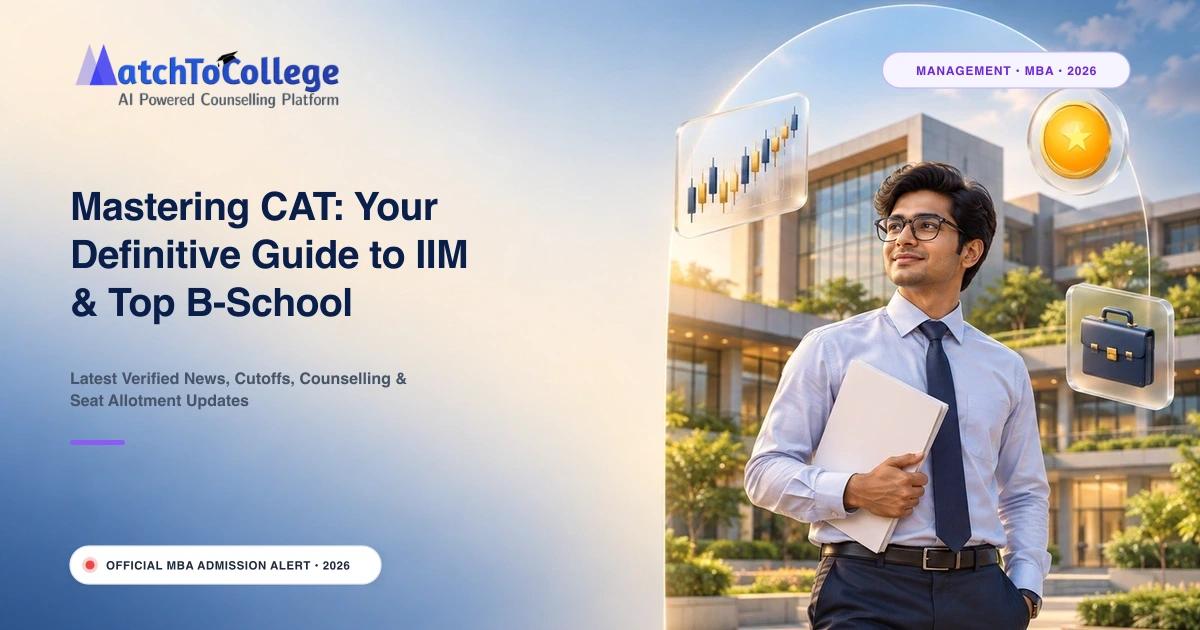
Mastering CAT: Your Definitive Guide to IIM & Top B-School Admissions
Admission & Info Tools
Need Expert Assistance?
Our counselors can help you with fee structures, eligibility guidelines, and upcoming admission cutoffs instantly.
Direct Application Tools
Share this Article
🎯 MatchToCollege AI Recommendation: Planning your counselling or choice filling? Check your seat allotment probability across premier colleges using the CAT College Predictor.
Key Highlights: The CAT Exam at a Glance
The CAT is a computer-based test conducted annually by one of the IIMs, serving as a prerequisite for admission to various postgraduate management programs across India. Understanding its fundamental structure is the first step towards effective preparation. While the exam format has evolved over the years, including changes from papers like the CAT 1990, the core aptitude areas remain consistent.
| Parameter | Details |
| Exam Mode | Computer-Based Test (CBT) |
| Exam Frequency | Once a year (typically November) |
| Duration | 120 minutes (2 hours) |
| Sections | 3 (Verbal Ability & Reading Comprehension, Data Interpretation & Logical Reasoning, Quantitative Ability) |
| Total Questions | 66 (approximate, subject to change) |
| Marking Scheme | +3 for correct, -1 for incorrect (MCQs); No negative marking for TITA questions |
| Official Website | iimcat.ac.in |
Decoding CAT: Eligibility, Registration & Selection Process
Securing a seat in a top MBA program begins with meeting the CAT eligibility criteria and meticulously navigating the application process. Here’s what you need to know:
Eligibility Criteria:
- Educational Qualification: A Bachelor's Degree with at least 50% marks or equivalent CGPA (45% for candidates belonging to Scheduled Caste (SC), Scheduled Tribe (ST), and Persons with Disability (PwD) categories).
- Final Year Students: Candidates appearing for the final year of their Bachelor's degree/equivalent qualification examination can also apply, provided they complete all requirements for the degree by a specified date (usually June/July of the admission year).
- Age Limit: There is no age limit for appearing in the CAT exam.
Registration Process:
The CAT registration is an entirely online process, typically opening in August and closing in September. Candidates must visit the official IIM CAT website (iimcat.ac.in) to create an account, fill in personal and academic details, upload required documents, select preferred IIM programs, and pay the application fee.
Selection Stages:
The admission process for IIMs and other leading B-schools generally involves multiple stages:
- CAT Exam: Your performance in the CAT exam is the primary shortlisting criterion.
- Shortlisting for Interview: Based on your CAT percentile, academic record (10th, 12th, Graduation), work experience, and diversity factors, candidates are shortlisted for the next stage.
- Written Ability Test (WAT) / Group Discussion (GD) / Personal Interview (PI): Shortlisted candidates undergo a WAT (essay writing), a GD (group discussion), and/or a PI. These rounds assess communication skills, leadership potential, general awareness, and clarity of thought.
- Final Merit List: A composite score is calculated, factoring in your CAT score, performance in WAT/GD/PI, academic profile, and work experience, leading to the final admission offer.
Reservation Policy:
IIMs and other government-funded institutions adhere to the reservation policies of the Government of India, including quotas for SC, ST, OBC (Non-Creamy Layer), EWS, and PwD categories.
Strategic Preparation: The Power of Past Papers & Mock Tests
Effective CAT preparation isn't just about studying; it's about strategizing. A well-rounded approach combines conceptual clarity, consistent practice, and rigorous self-assessment. Here's how to build your winning strategy:
Understanding the Exam Pattern:
Familiarize yourself with the current CAT exam pattern, including the number of questions per section, time limits, and marking scheme. This understanding helps in allocating time efficiently during the actual exam.
Leveraging Past Papers:
Solving previous year's CAT question papers is an indispensable part of your preparation. While the format has evolved since papers like the CAT 1990, older papers are still invaluable for:
- Conceptual Clarity: Many fundamental concepts in Quantitative Ability, Data Interpretation, and Verbal Ability remain timeless. Practicing older questions helps solidify these basics.
- Identifying Weak Areas: Consistent practice reveals your strengths and weaknesses, allowing you to focus your study efforts where they're most needed.
- Understanding Question Types: Even with format changes, the underlying logic and problem-solving skills tested often have roots in earlier exams.
- Time Management: Practicing under timed conditions with past papers helps improve speed and accuracy.
The Role of Mock Tests:
Mock tests are your dress rehearsals for the main event. They simulate the actual exam environment, helping you:
- Build Stamina: Get accustomed to sitting for the full duration of the exam.
- Refine Strategy: Experiment with different section-attempting orders and time allocations.
- Analyze Performance: Detailed analysis of mock tests helps pinpoint specific areas for improvement and track progress.
Section-Wise Strategy:
- Verbal Ability & Reading Comprehension (VARC): Focus on improving reading speed and comprehension. Practice diverse reading passages, critical reasoning, and verbal ability questions.
- Data Interpretation & Logical Reasoning (DILR): This section requires strong analytical skills. Practice a variety of puzzles, caselets, and data sets to enhance your ability to interpret and infer information quickly.
- Quantitative Ability (QA): Revisit fundamental concepts from arithmetic, algebra, geometry, and modern math. Practice a wide range of problems to build speed and accuracy.
To truly gauge your readiness and predict your chances, leverage our CAT College Predictor. It's an invaluable resource to see where you stand against top B-school cutoffs and understand your admission probability for IIMs, FMS Delhi, SPJIMR, and other premier institutions.
Top MBA Programs: Colleges, Fees & ROI
India boasts a vibrant ecosystem of B-schools, each offering unique strengths and specializations. While IIMs are often the first choice, several other institutions provide exceptional management education and career prospects. Here's a glimpse at some top colleges and their estimated financial aspects:
| College Name | Estimated Fees (Lakhs INR) / Average ROI |
| IIM Ahmedabad | ~25-30 / High ROI (Avg. Package ~35 LPA+) |
| IIM Bangalore | ~25-30 / High ROI (Avg. Package ~33 LPA+) |
| IIM Calcutta | ~25-30 / High ROI (Avg. Package ~34 LPA+) |
| FMS Delhi | ~2-4 / Exceptional ROI (Avg. Package ~34 LPA+) |
| XLRI Jamshedpur | ~25-28 / High ROI (Avg. Package ~32 LPA+) |
| SPJIMR Mumbai | ~22-24 / High ROI (Avg. Package ~30 LPA+) |
| IIM Lucknow | ~19-21 / Excellent ROI (Avg. Package ~30 LPA+) |
| MDI Gurgaon | ~24-26 / Excellent ROI (Avg. Package ~26 LPA+) |
| IIFT Delhi/Kolkata | ~21-23 / Good ROI (Avg. Package ~20 LPA+) |
| IIM Kozhikode | ~20-22 / Excellent ROI (Avg. Package ~25 LPA+) |
Note: Fees and average packages are approximate and subject to change. ROI is a general indicator based on average placements.
Career Scope, Placements & Expected ROI
An MBA from a top Indian B-school opens doors to a plethora of high-impact career opportunities across diverse sectors. The return on investment (ROI) is not just financial, but also encompasses skill development, networking, and leadership growth.
Diverse Career Paths:
Graduates from premier MBA programs are sought after for roles in:
- Consulting: Management consulting, strategy consulting, IT consulting.
- Finance: Investment banking, corporate finance, private equity, wealth management.
- Marketing & Sales: Brand management, product marketing, digital marketing, sales leadership.
- Operations & Supply Chain: Logistics, supply chain optimization, project management.
- Product Management: Developing and managing product lifecycles in tech and other industries.
- General Management: Leadership roles across various functions in large corporations.
- Entrepreneurship: Many graduates also choose to launch their own ventures.
Placement Insights & Average Packages:
Top B-schools consistently report impressive placement statistics, with leading companies from various sectors participating in recruitment drives. Average packages at IIMs and other top institutions typically range from INR 25-35+ LPA, with the highest offers often exceeding INR 50-70 LPA. These figures reflect the high demand for skilled management professionals and the quality of education imparted.
Beyond the Package:
While salary packages are a significant factor, the true ROI of an MBA extends to:
- Skill Enhancement: Developing critical thinking, problem-solving, leadership, and communication skills.
- Networking Opportunities: Building a strong professional network with peers, alumni, and industry leaders.
- Career Acceleration: Faster progression into senior management and leadership roles.
- Global Exposure: Many programs offer international exchange opportunities and global business perspectives.
The investment in a top MBA program is an investment in your future, promising not just a lucrative career but also a platform for continuous learning and personal growth.
Admissions Checklist & Important Tips
As you prepare for your CAT journey and subsequent MBA applications, keep this checklist and these crucial tips in mind:
Your Admissions Checklist:
- Understand CAT Syllabus: Thoroughly review the syllabus for VARC, DILR, and QA.
- Create a Study Plan: Develop a realistic and consistent study schedule.
- Gather Study Material: Collect relevant textbooks, online resources, and past papers.
- Practice Regularly: Solve questions daily and take sectional tests.
- Take Mock Tests: Regularly attempt full-length mock tests and analyze your performance.
- Research B-Schools: Identify target colleges based on your profile, interests, and career goals.
- Prepare Documents: Keep academic transcripts, work experience certificates, and other necessary documents ready.
- Refine SOP/Essays: If required, start drafting your Statement of Purpose (SOP) and essays early.
- Prepare for WAT/GD/PI: Practice communication skills, stay updated on current affairs, and prepare common interview questions.
Important Tips from Your Mentor:
- Consistency is Key: Regular study, even for short durations, is more effective than sporadic long sessions.
- Focus on Fundamentals: A strong grasp of basic concepts is crucial for all sections.
- Time Management: Practice managing your time effectively during both preparation and the actual exam.
- Stay Updated: Read newspapers and magazines to improve your general awareness and VARC skills.
- Maintain Well-being: Don't neglect your physical and mental health. Take breaks, exercise, and get enough sleep.
- Seek Guidance: Don't hesitate to reach out to mentors, coaching institutes, or online forums for help.
- Believe in Yourself: The CAT journey can be challenging, but self-belief and perseverance will see you through.
Your MBA dream is within reach. With strategic planning, diligent effort, and the right guidance, you can navigate the CAT and secure your place in a leading B-school. We at MatchToCollege are here to support you every step of the way.
🏛️ Looking for Admissions & College Cutoffs? Explore verified fee structures, seat matrices, and real student reviews across top institutions on the MatchToCollege Accredited Online & Distance Colleges Directory.
Frequently Asked Questions
Q: Is solving old CAT papers like CAT 1990 still relevant for current exam preparation?
Yes, absolutely. While the CAT exam format and question distribution have evolved significantly since papers like CAT 1990, older papers remain highly relevant for building foundational concepts in Quantitative Ability, Data Interpretation, and Verbal Ability. They offer a rich pool of questions to strengthen your basics, understand different problem-solving approaches, and improve your conceptual clarity, which is crucial for any CAT aspirant.
Q: What is the typical eligibility for the CAT exam?
To be eligible for the CAT exam, you generally need a Bachelor's Degree with at least 50% marks or an equivalent CGPA. For candidates belonging to Scheduled Caste (SC), Scheduled Tribe (ST), and Persons with Disability (PwD) categories, the minimum requirement is 45%. Final year students can also apply, provided they complete their degree requirements by a specified date, usually before the MBA program commences.
Q: How important are mock tests in CAT preparation?
Mock tests are incredibly important and form a cornerstone of effective CAT preparation. They simulate the actual exam environment, helping you build stamina, refine your time management skills, and experiment with different section-attempting strategies. More importantly, detailed analysis of your mock test performance helps you identify your strengths, pinpoint weak areas, and track your progress, allowing for targeted improvement.
Q: What kind of career opportunities can I expect after an MBA from a top B-school?
An MBA from a top B-school opens doors to a wide array of high-impact career opportunities. Graduates typically find roles in management consulting, investment banking, corporate finance, brand management, product management, operations, and general management across various industries. Many also pursue entrepreneurship. The roles are often leadership-oriented, offering significant career acceleration and competitive compensation.
Q: How can I estimate my chances of getting into an IIM?
Estimating your chances for an IIM involves considering your CAT percentile, academic profile (10th, 12th, graduation scores), work experience, and diversity factors. Each IIM has its own unique shortlisting criteria and weightages. To get a realistic assessment, you can use tools like the MatchToCollege CAT College Predictor, which analyzes your profile against historical cutoffs and criteria to predict your admission probability for various top B-schools, including IIMs.
Related Topics
Featured Mentioned Colleges
Explore institutions featured and discussed in this article


With an educational trajectory spanning 11 years since its inception in 2015, FACULTY OF MANAGEMENT STUDIES serves as a prominent seat of learning in Rajkot, Gujarat. Affiliated with Marwadi University and adhering to statutory benchmarks established by All India Council for Technical Education (AICTE) / UGC, the institution delivers specialized academic curricula centered on business strategy, financial analytics, corporate governance, and entrepreneurial leadership. Students benefit from contemporary infrastructure featuring management simulation suites, modern boardroom presentation centers, and incubation hubs, designed to support hands-on learning and comprehensive intellectual growth. By combining academic discipline with practical exposure, it equips emerging scholars to meet evolving demands in industry, academia, and public service.
Total Fees
Contact for Fees
Total Courses
3
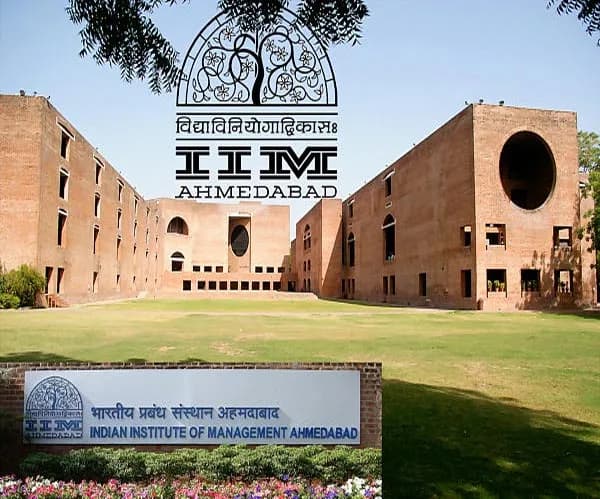

Located in the educational landscape of Ahmedabad, Gujarat, Indian Institute of Management Ahmedabad was established in 1961 to deliver transformative education. Conforming to regulatory norms of All India Council for Technical Education (AICTE) / UGC through its affiliation with Gujarat State University, the institution offers students an integrated foundation across business strategy, financial analytics, corporate governance, and entrepreneurial leadership. The campus is equipped with management simulation suites, modern boardroom presentation centers, and incubation hubs, creating an immersive environment for scholarly development and collaborative innovation. Dedicated to holistic student empowerment, the institution prepares ethical and career-ready professionals who contribute meaningfully to societal and industrial growth.
Total Fees
Contact for Fees
Total Courses
6


Established in 1973, Indian Institute of Management Bangalore is a distinguished institution situated in Bengaluru Urban, Karnataka. Conforming to regulatory norms of All India Council for Technical Education (AICTE) / UGC through its affiliation with Karnataka State University, the institution offers students an integrated foundation across business strategy, financial analytics, corporate governance, and entrepreneurial leadership. The campus is equipped with management simulation suites, modern boardroom presentation centers, and incubation hubs, creating an immersive environment for scholarly development and collaborative innovation. By combining academic discipline with practical exposure, it equips emerging scholars to meet evolving demands in industry, academia, and public service.
Total Fees
Contact for Fees
Total Courses
15


The Indian Institute of Management Calcutta (IIMC) was established as the first national institute for postgraduate studies and research in management by the Government of India in November 1961 in collaboration with the Alfred P. Sloan School of Management (MIT), the Government of West Bengal, the Ford Foundation, and Indian industry. During its initial years, several prominent faculty formed part of its nucleus, including Jagdish Sheth, J. K. Sengupta, and others. Over the years, IIMC has grown into a mature institution with a global reputation, imparting high-quality management education. It has been playing a pioneering role in professionalizing Indian management through its postgraduate and doctoral-level programs, executive training programs, and research and consulting activities. Today, the institute serves as an autonomous body, continually evolving to meet its goals in an ever-changing business environment.
Total Fees
Contact for Fees
Total Courses
11


The IIM Lucknow Noida Campus is a state-of-the-art satellite facility dedicated to executive education and sustainable management. Located in the Delhi-NCR region, it serves as a center of excellence for mid-career professionals, offering full-time residential programs, world-class infrastructure, and a dedicated faculty pool.
Total Fees
Contact for Fees
Total Courses
4

Established in 2006, IIFT KOLKATA is a distinguished institution situated in Kolkata, West Bengal. Conforming to regulatory norms of University Grants Commission (UGC) through its affiliation with Indian Institute of Foreign Trade, Delhi, the institution offers students an integrated foundation across holistic multidisciplinary education, applied research, and professional competence. Students benefit from contemporary infrastructure featuring digital lecture rooms, departmental resource centers, and central library, designed to support hands-on learning and comprehensive intellectual growth. Dedicated to holistic student empowerment, the institution prepares ethical and career-ready professionals who contribute meaningfully to societal and industrial growth.
Total Fees
Contact for Fees
Total Courses
5

Established in 1996, Indian Institute of Management Kozhikode is a distinguished institution situated in Kozhikode, Kerala. Operating under the academic aegis of Kerala State University and recognized by All India Council for Technical Education (AICTE) / UGC, it provides structured degree programs emphasizing business strategy, financial analytics, corporate governance, and entrepreneurial leadership. The institution maintains robust academic resources including management simulation suites, modern boardroom presentation centers, and incubation hubs, fostering an active student life and practical competencies. Dedicated to holistic student empowerment, the institution prepares ethical and career-ready professionals who contribute meaningfully to societal and industrial growth.
Total Fees
Contact for Fees
Total Courses
12
Get More Info About Mastering CAT
Recommended Articles

Mastering JEE Main: Your Evergreen Guide to Strategic Preparation & Admissions
Unlock your full potential for JEE Main with this comprehensive guide from MatchToCollege. Learn how to strategically leverage past papers, understand exam patterns, and craft a winning preparation strategy for admission to India's premier engineering institutions.
Mastering JEE Main: Your Evergreen Guide to Strategic Preparation & Past Paper Analysis
Unlock your full potential for JEE Main success with our comprehensive guide. Learn how to strategically use past papers, understand exam patterns, and optimize your preparation for top engineering colleges.
INI CET: Your Definitive Guide to Postgraduate Medical Admissions
Navigate the INI CET with confidence. This comprehensive guide from MatchToCollege covers eligibility, exam patterns, top institutes, and strategic preparation for your postgraduate medical journey.