

Mastering the CAT Exam: Your Comprehensive Guide to Top MBA Admissions
Admission & Info Tools
Need Expert Assistance?
Our counselors can help you with fee structures, eligibility guidelines, and upcoming admission cutoffs instantly.
Direct Application Tools
Share this Article
🎯 MatchToCollege AI Recommendation: Planning your counselling or choice filling? Check your seat allotment probability across premier colleges using the CAT College Predictor.
Key Highlights & CAT Exam Structure Overview
The CAT is more than just an exam; it's a rigorous assessment of your aptitude across Verbal Ability & Reading Comprehension (VARC), Data Interpretation & Logical Reasoning (DILR), and Quantitative Ability (QA). Understanding its structure is the first step towards strategic preparation. Let's look at the typical pattern, using insights from recent exams like CAT 2023 Slot 3 as a reference point for section-wise distribution and difficulty trends.
| Parameter | Details |
| Exam Name | Common Admission Test (CAT) |
| Conducting Body | One of the IIMs (rotational) |
| Exam Frequency | Once a year |
| Exam Mode | Computer-Based Test (CBT) |
| Total Sections | 3 (VARC, DILR, QA) |
| Total Questions (e.g., CAT 2023) | 66 |
| Total Duration | 120 minutes (40 minutes per section) |
| Marking Scheme | +3 for correct, -1 for incorrect (MCQs); No negative for TITA questions |
| Official Website | iimcat.ac.in |
For instance, in CAT 2023 Slot 3, the VARC section was generally perceived as Easy to Moderate, DILR as Difficult (often the toughest section across slots), and QA as Moderate to Difficult. This variability underscores the need for balanced preparation across all areas.
Eligibility Criteria & Selection Process for IIMs and Top B-Schools
To be eligible for the CAT exam, candidates must meet specific academic requirements. While these are standard, individual B-schools and IIMs may have additional criteria for their final selection process.
CAT Eligibility Criteria:
- Educational Qualification: A Bachelor's Degree with at least 50% marks or equivalent CGPA (45% for SC/ST/PwD candidates) from a recognized university.
- Final Year Students: Candidates appearing for the final year of their Bachelor's degree or equivalent examination, or those awaiting results, are also eligible, provided they complete their degree requirements within a stipulated timeframe.
- Age Limit: There is no age limit for appearing in the CAT exam.
IIM Selection Stages:
The admission process for IIMs and other top B-schools typically involves multiple stages:
- CAT Examination: The primary hurdle, where your percentile score determines your eligibility for shortlisting.
- Shortlisting for Interview: Based on CAT scores, academic performance (10th, 12th, Graduation), work experience, and diversity factors (gender, academic background), candidates are shortlisted for the next stage.
- Written Ability Test (WAT) / Group Discussion (GD): Many IIMs and B-schools conduct a WAT or GD round to assess communication skills, analytical thinking, and leadership potential.
- Personal Interview (PI): This is a crucial stage where your personality, motivation, general knowledge, and fit for the program are evaluated.
- Final Merit List: A composite score, factoring in CAT percentile, WAT/GD, PI performance, academic record, and work experience, is used to generate the final admission offers.
Top Colleges & Estimated Fees / ROI
India boasts a vibrant ecosystem of B-schools, with the IIMs leading the pack. Beyond the IIMs, several other institutions offer world-class MBA programs. When choosing a B-school, consider not just the fees but also the potential Return on Investment (ROI) through placements and career growth. Here’s a glimpse at some top institutions and their estimated fee structures:
| College Name | Estimated Total Fees (INR) |
| IIM Ahmedabad | 23-25 Lakhs |
| IIM Bangalore | 23-25 Lakhs |
| IIM Calcutta | 23-25 Lakhs |
| FMS Delhi | 2-4 Lakhs |
| SPJIMR Mumbai | 20-22 Lakhs |
| XLRI Jamshedpur | 25-27 Lakhs |
| MDI Gurgaon | 20-22 Lakhs |
| IIT Bombay (SJMSOM) | 14-16 Lakhs |
| IIM Lucknow | 19-21 Lakhs |
| IIM Kozhikode | 20-22 Lakhs |
Note: Fees are approximate and subject to change. Always refer to the official college websites for the most current information.
A high CAT percentile opens doors to these institutions. To understand your chances, utilize our CAT College Predictor to gauge your admission probability into IIMs, FMS Delhi, SPJIMR, and other top B-schools based on your CAT percentile.
Admissions Checklist & Important Tips for CAT Preparation
Strategic preparation is paramount for cracking the CAT. Here’s a checklist and some crucial tips to guide your journey:
Your CAT Preparation Checklist:
- Understand the Syllabus: Familiarize yourself with all topics across VARC, DILR, and QA.
- Create a Study Plan: Develop a realistic, section-wise study schedule.
- Master Concepts: Build a strong foundation in fundamental concepts for each section.
- Practice Regularly: Solve a variety of questions, focusing on accuracy and speed.
- Take Mock Tests: Simulate exam conditions regularly to build stamina and identify weaknesses.
- Analyze Mock Tests: This is critical. Review every question, understand mistakes, and refine your strategy.
- Stay Updated: Keep abreast of current affairs for the VARC section and interview rounds.
Important Tips for Each Section:
Verbal Ability and Reading Comprehension (VARC):
- Read Widely: Develop a habit of reading diverse articles, editorials, and books to improve comprehension and vocabulary.
- Practice RC Passages: Focus on identifying the main idea, author's tone, and inferential questions.
- Grammar & Vocabulary: Dedicate time to improving these foundational skills for VA questions.
Data Interpretation and Logical Reasoning (DILR):
- Practice Diverse Sets: DILR is often the most challenging. Solve a wide range of puzzles, seating arrangements, blood relations, and data sets.
- Develop a Strategy: Learn to quickly identify solvable sets and manage time effectively. Don't get stuck on one difficult set.
- Focus on Accuracy: Even if you solve fewer sets, ensure high accuracy.
Quantitative Ability (QA):
- Strengthen Fundamentals: Revisit basic concepts from arithmetic, algebra, geometry, and number systems.
- Practice Shortcuts: Learn quick calculation techniques and mental math.
- Time Management: Practice solving questions under timed conditions to improve speed without sacrificing accuracy.
Remember, consistency and smart work trump sheer hours. Regular revision and performance analysis are your best allies.
Career Scope, Placements & Expected ROI
An MBA from a top-tier Indian B-school opens up a world of opportunities, leading to accelerated career growth and significant earning potential. The Return on Investment (ROI) from a good MBA program is often substantial, both in terms of financial gains and professional development.
Diverse Career Opportunities:
MBA graduates are highly sought after across various sectors and roles:
- Consulting: Management consulting firms like McKinsey, BCG, Bain, and Indian consulting giants recruit heavily.
- Finance: Roles in investment banking, corporate finance, private equity, wealth management, and fintech.
- Marketing & Sales: Brand management, product marketing, digital marketing, and sales leadership in FMCG, tech, and other industries.
- Operations & Supply Chain: Optimizing processes, logistics, and supply chain management in manufacturing, e-commerce, and retail.
- Product Management: Driving product strategy and development in technology companies.
- General Management: Leadership roles across various functions in large corporations.
- Entrepreneurship: Many graduates leverage their MBA skills to launch their own ventures.
Placement Insights & Average Packages:
Top B-schools consistently report excellent placement records, with graduates securing roles in leading national and international companies. While specific figures vary year-on-year and across institutions, the average packages from premier IIMs and other top B-schools typically range from INR 25-35 Lakhs per annum, with the highest packages often exceeding INR 50 Lakhs per annum. Even the newer IIMs and other reputable institutions offer average packages in the range of INR 15-20 Lakhs per annum.
The ROI is not just monetary; it includes a robust alumni network, enhanced leadership skills, strategic thinking abilities, and a holistic understanding of business, which are invaluable throughout your career.
🏛️ Looking for Admissions & College Cutoffs? Explore verified fee structures, seat matrices, and real student reviews across top institutions on the MatchToCollege Top Colleges & Universities in India Directory.
Frequently Asked Questions
Q: How important is the CAT exam for MBA admissions in India?
The CAT exam is critically important as it is the primary gateway to the Indian Institutes of Management (IIMs) and many other top-tier business schools across India. A strong CAT percentile is essential for being shortlisted for the subsequent admission rounds, which typically include Written Ability Tests (WAT) or Group Discussions (GD), and Personal Interviews (PI).
Q: Is understanding past CAT papers, like CAT 2023 Slot 3, beneficial for preparation?
Absolutely. Analyzing past CAT papers, such as CAT 2023 Slot 3, is immensely beneficial. It helps you understand the exam pattern, question types, difficulty levels across sections, and time management strategies. This analysis allows you to identify your strengths and weaknesses, refine your approach, and prepare for the kind of challenges you might face in the actual exam.
Q: What is a good CAT score or percentile for admission to top IIMs?
For the top-tier IIMs (like IIM Ahmedabad, Bangalore, Calcutta), a CAT percentile of 99+ is generally considered excellent for securing an interview call. For other established IIMs and top non-IIM B-schools (like FMS, SPJIMR, XLRI), a percentile in the range of 95-98+ can be competitive. However, the final admission depends on a composite score including academic record, work experience, and interview performance.
Q: How should I approach the Data Interpretation & Logical Reasoning (DILR) section, often considered the toughest?
The DILR section often tests your ability to select the right sets to attempt. Focus on practicing a wide variety of puzzles and data sets. Develop a strategy to quickly scan sets, identify those that seem solvable within a reasonable time, and avoid getting stuck on overly complex ones. Accuracy over quantity is key in DILR.
Q: Can I prepare for CAT effectively while working full-time?
Yes, many successful CAT aspirants prepare while working full-time. The key is disciplined time management, creating a realistic study schedule, and consistent effort. Utilize weekends for mock tests and in-depth analysis, and dedicate a few hours each weekday to concept building and practice. Online resources and coaching can also be very helpful for working professionals.
Related Topics
Featured Mentioned Colleges
Explore institutions featured and discussed in this article
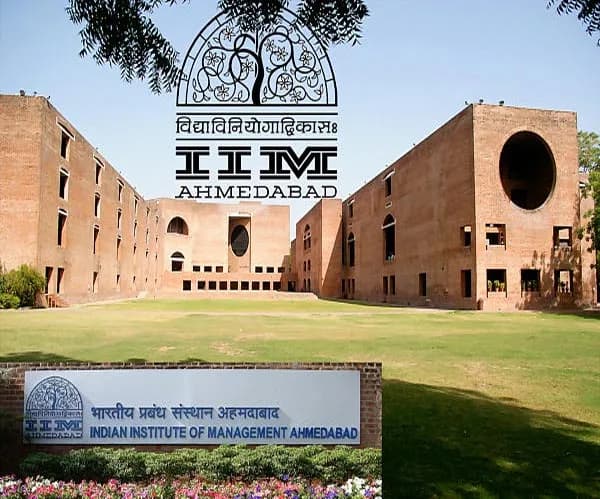

Located in the educational landscape of Ahmedabad, Gujarat, Indian Institute of Management Ahmedabad was established in 1961 to deliver transformative education. Conforming to regulatory norms of All India Council for Technical Education (AICTE) / UGC through its affiliation with Gujarat State University, the institution offers students an integrated foundation across business strategy, financial analytics, corporate governance, and entrepreneurial leadership. The campus is equipped with management simulation suites, modern boardroom presentation centers, and incubation hubs, creating an immersive environment for scholarly development and collaborative innovation. Dedicated to holistic student empowerment, the institution prepares ethical and career-ready professionals who contribute meaningfully to societal and industrial growth.
Total Fees
Contact for Fees
Total Courses
6


Established in 1973, Indian Institute of Management Bangalore is a distinguished institution situated in Bengaluru Urban, Karnataka. Conforming to regulatory norms of All India Council for Technical Education (AICTE) / UGC through its affiliation with Karnataka State University, the institution offers students an integrated foundation across business strategy, financial analytics, corporate governance, and entrepreneurial leadership. The campus is equipped with management simulation suites, modern boardroom presentation centers, and incubation hubs, creating an immersive environment for scholarly development and collaborative innovation. By combining academic discipline with practical exposure, it equips emerging scholars to meet evolving demands in industry, academia, and public service.
Total Fees
Contact for Fees
Total Courses
15
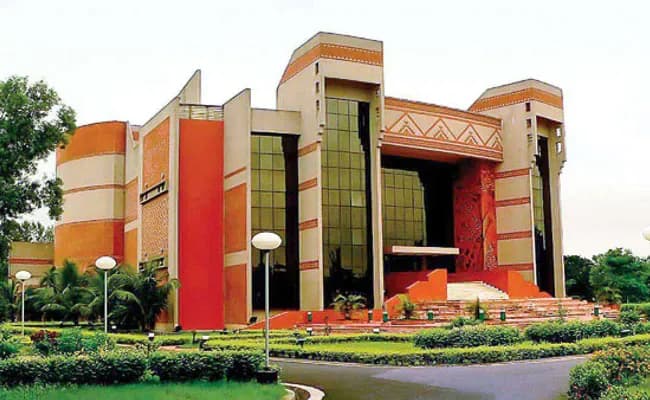

The Indian Institute of Management Calcutta (IIMC) was established as the first national institute for postgraduate studies and research in management by the Government of India in November 1961 in collaboration with the Alfred P. Sloan School of Management (MIT), the Government of West Bengal, the Ford Foundation, and Indian industry. During its initial years, several prominent faculty formed part of its nucleus, including Jagdish Sheth, J. K. Sengupta, and others. Over the years, IIMC has grown into a mature institution with a global reputation, imparting high-quality management education. It has been playing a pioneering role in professionalizing Indian management through its postgraduate and doctoral-level programs, executive training programs, and research and consulting activities. Today, the institute serves as an autonomous body, continually evolving to meet its goals in an ever-changing business environment.
Total Fees
Contact for Fees
Total Courses
11


With an educational trajectory spanning 11 years since its inception in 2015, FACULTY OF MANAGEMENT STUDIES serves as a prominent seat of learning in Rajkot, Gujarat. Affiliated with Marwadi University and adhering to statutory benchmarks established by All India Council for Technical Education (AICTE) / UGC, the institution delivers specialized academic curricula centered on business strategy, financial analytics, corporate governance, and entrepreneurial leadership. Students benefit from contemporary infrastructure featuring management simulation suites, modern boardroom presentation centers, and incubation hubs, designed to support hands-on learning and comprehensive intellectual growth. By combining academic discipline with practical exposure, it equips emerging scholars to meet evolving demands in industry, academia, and public service.
Total Fees
Contact for Fees
Total Courses
3
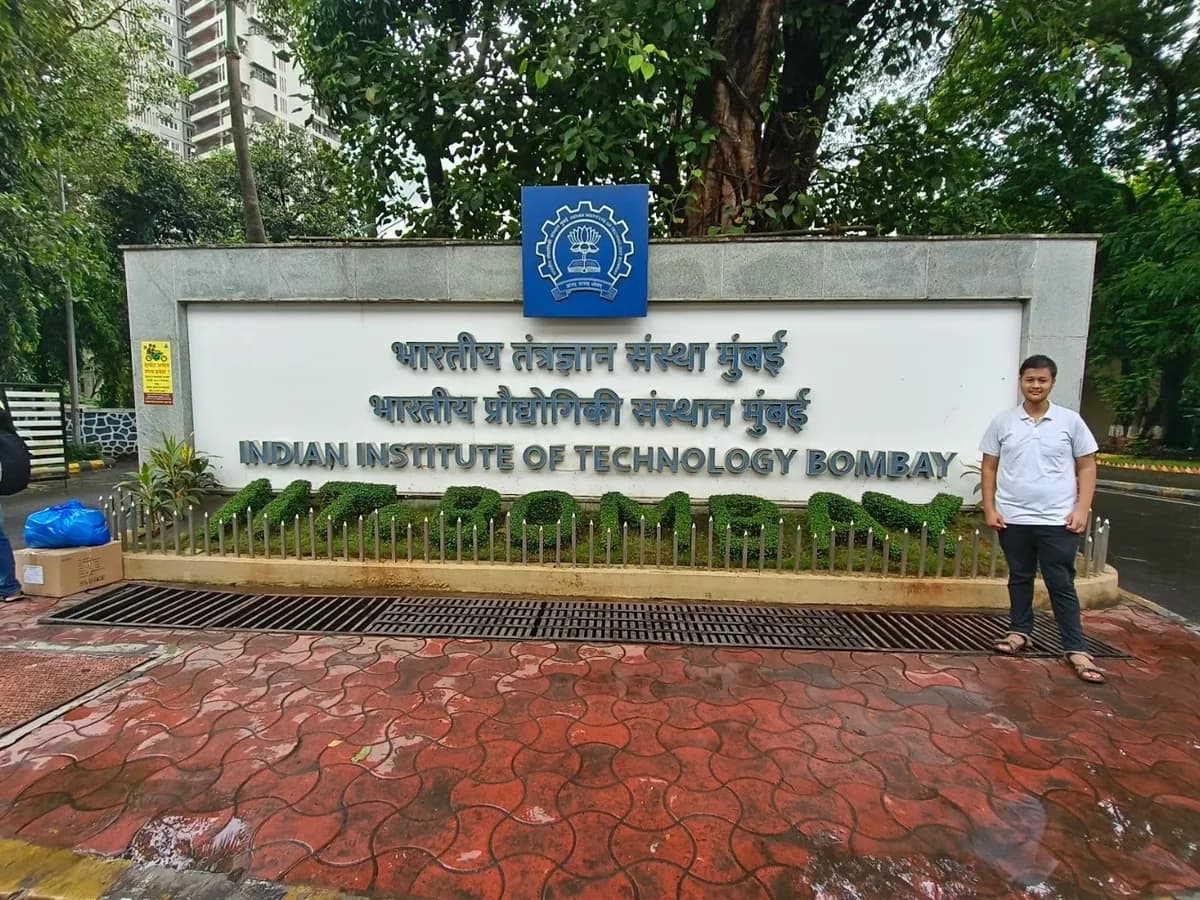

The Indian Institute of Technology Bombay (IIT Bombay or IITB) is a public research university and technical institute located in Mumbai, Maharashtra, India. Established in 1958, it is one of the 23 Indian Institutes of Technology, designated as an Institution of Eminence in 2018. IIT Bombay serves as a Centre of Excellence for India's training, research, and development in science, engineering, and technology. The institute comprises 17 academic departments, 35 additional academic centers, and three schools.
Total Fees
Contact for Fees
Total Courses
9
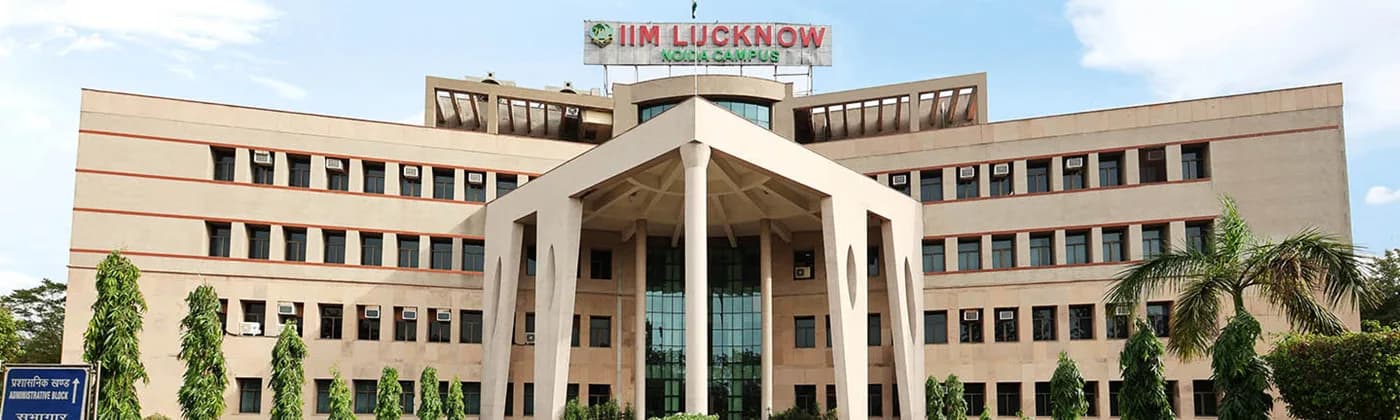

The IIM Lucknow Noida Campus is a state-of-the-art satellite facility dedicated to executive education and sustainable management. Located in the Delhi-NCR region, it serves as a center of excellence for mid-career professionals, offering full-time residential programs, world-class infrastructure, and a dedicated faculty pool.
Total Fees
Contact for Fees
Total Courses
4


Established in 1996, Indian Institute of Management Kozhikode is a distinguished institution situated in Kozhikode, Kerala. Operating under the academic aegis of Kerala State University and recognized by All India Council for Technical Education (AICTE) / UGC, it provides structured degree programs emphasizing business strategy, financial analytics, corporate governance, and entrepreneurial leadership. The institution maintains robust academic resources including management simulation suites, modern boardroom presentation centers, and incubation hubs, fostering an active student life and practical competencies. Dedicated to holistic student empowerment, the institution prepares ethical and career-ready professionals who contribute meaningfully to societal and industrial growth.
Total Fees
Contact for Fees
Total Courses
12
Get More Info About Mastering the CAT Exam
Recommended Articles

VITEEE 2027: Your Definitive Guide to Application Status, Corrections & Admissions
Navigate your VITEEE 2027 application with confidence. This MatchToCollege guide helps you understand application status, manage corrections, and ensure a smooth admission journey.

BITSAT Success Blueprint: Mastering Concepts & Cracking the Exam with PYQs
Unlock your potential for BITSAT with this comprehensive guide, focusing on strategic preparation and the indispensable role of Previous Year Questions (PYQs). Master key concepts and boost your confidence for admission to top BITS campuses.

JEE Main 2027: Your Definitive Guide to Exam Dates, Preparation & Top Colleges
Aspiring engineers, navigate the JEE Main 2027 with confidence. This guide covers everything from expected exam dates and eligibility to preparation strategies and top college insights, empowering your journey to a premier engineering institution.