

Mastering IIT JAM Mathematics: Your Intensive 2-Month Preparation Guide
Admission & Info Tools
Need Expert Assistance?
Our counselors can help you with fee structures, eligibility guidelines, and upcoming admission cutoffs instantly.
Direct Application Tools

Share this Article
🎯 MatchToCollege AI Recommendation: Planning your counselling or choice filling? Check your seat allotment probability across premier colleges using the CAT College Predictor.
Key Highlights & Program Overview
Before we dive into the intensive preparation, let's understand the core structure and key aspects of the IIT JAM Mathematics examination. This overview will help you align your strategy with the exam's demands.
| Parameter | Details |
| Exam Name | IIT Joint Admission Test for M.Sc. (JAM) - Mathematics (MA) |
| Conducting Body | One of the IITs, on a rotational basis |
| Exam Level | National Level Postgraduate Entrance Exam |
| Frequency | Once a year |
| Exam Mode | Computer Based Test (CBT) |
| Duration | 3 Hours |
| Total Marks | 100 Marks |
| Sections | Section A (MCQ), Section B (MSQ), Section C (NAT) |
| Negative Marking | Only in Section A (MCQ) |
| Official Website | jam.iitm.ac.in (or respective IIT conducting body) |
Eligibility Criteria & Selection Process
To sit for the IIT JAM Mathematics exam, aspirants must meet specific eligibility requirements. While this guide focuses on preparation, understanding these criteria is your first step.
- Educational Qualification: Candidates must hold a Bachelor's degree in a relevant discipline with at least 55% aggregate marks or a 5.5 CGPA/CPI on a 10-point scale (50% or 5.0 CGPA/CPI for SC/ST/PwD candidates). The specific subject combinations required for M.Sc. Mathematics vary slightly across IITs, so always refer to the official JAM information brochure for the year you are applying.
- Qualifying Degree: The qualifying degree must be from a recognized university or institution.
- Age Limit: There is no age limit for appearing in IIT JAM.
- Appearing Candidates: Students in their final year of a qualifying degree program are also eligible to apply, provided they submit proof of passing the degree by the stipulated deadline.
Selection Process: The selection for admission to M.Sc. Mathematics programs in IITs and IISc is solely based on the candidate's performance in the IIT JAM Mathematics (MA) paper. A merit list is prepared based on the JAM score, and candidates are then invited for counselling and admission based on their rank and the availability of seats in their chosen institutes and programs. It's a straightforward process where your JAM score is paramount.
Top Colleges & Fee Comparison
Securing a good rank in IIT JAM Mathematics opens doors to prestigious M.Sc. programs at the Indian Institutes of Technology (IITs) and the Indian Institute of Science (IISc). These institutions offer world-class faculty, research opportunities, and a vibrant academic environment. Here's a glimpse at some of the top IITs offering M.Sc. Mathematics and an estimated range of their academic fees.
| Institution | Estimated Annual Fees (M.Sc. Mathematics) |
| IIT Bombay | ₹30,000 - ₹60,000 |
| IIT Delhi | ₹30,000 - ₹60,000 |
| IIT Kanpur | ₹25,000 - ₹55,000 |
| IIT Kharagpur | ₹25,000 - ₹50,000 |
| IIT Madras | ₹30,000 - ₹60,000 |
| IIT Roorkee | ₹25,000 - ₹50,000 |
| IISc Bangalore | ₹20,000 - ₹40,000 |
Note: These fees are approximate and subject to change. They generally exclude hostel and mess charges. Always check the latest fee structure on the official institute websites.
The Return on Investment (ROI) for an M.Sc. in Mathematics from an IIT is exceptionally high. Graduates are highly sought after in various sectors, leading to strong career prospects and competitive salary packages, which we will explore further in the next section.
Career Scope, Placements & Expected ROI
An M.Sc. in Mathematics from a top-tier institution like an IIT or IISc opens up a diverse array of career opportunities, extending far beyond traditional academia. The rigorous analytical and problem-solving skills honed during your postgraduate studies are highly valued across industries.
Diverse Career Paths:
- Academia & Research: Many graduates pursue Ph.D. programs in India or abroad, aiming for careers as professors, researchers, or scientists in universities and research institutions.
- Data Science & Analytics: With a strong foundation in statistics, probability, and algorithms, mathematics postgraduates are ideal candidates for roles as Data Scientists, Machine Learning Engineers, and Business Analysts.
- Finance & Actuarial Science: The financial sector highly values mathematical acumen for roles in quantitative analysis (Quant), risk management, actuarial science, and investment banking.
- Software Development & IT: Logical thinking and problem-solving skills are transferable to software development, algorithm design, and cybersecurity roles.
- Engineering & R&D: Opportunities exist in various engineering domains requiring advanced mathematical modeling, simulation, and optimization.
Placement Insights & Average Packages:
While specific placement data for M.Sc. Mathematics programs can vary annually and across IITs, graduates generally command competitive packages. The average salary for an M.Sc. Mathematics graduate from a top IIT can range from ₹8 LPA to ₹18 LPA, depending on the role, industry, and individual skills. For specialized roles in data science or quantitative finance, packages can be significantly higher. The strong alumni network and brand value of IITs further aid in securing excellent placements.
Expected Return on Investment (ROI):
Considering the relatively modest fee structure at IITs for postgraduate programs and the high earning potential, the ROI is exceptional. The investment in an M.Sc. Mathematics degree from an IIT not only provides a strong academic foundation but also a launchpad for a highly rewarding career, both intellectually and financially. The long-term career growth and opportunities for continuous learning make it a truly valuable pursuit.
Admissions Checklist & Important Tips
My dear aspirants, a focused 2-month plan demands precision and dedication. Here’s your strategic roadmap to conquer IIT JAM Mathematics, broken down week by week, along with essential preparation tips.
Your 8-Week Intensive Study Plan:
| Week | Focus Area & Action Plan |
| Week 1 | Sets, Functions & Basic Algebra: Master fundamental function graphs, domain/range, and properties. Focus on Sets, Relations, Functions, Logarithmic & Exponential functions, Quadratic & Polynomial Equations. |
| Week 2 | Matrices & Determinants: Practice matrix operations, transpose, inverse, determinants, and solving systems of linear equations using Cramer's rule/Gaussian elimination. Understand Rank, Eigenvalues, and Eigenvectors. This is a high-scoring NAT area. |
| Week 3 | Differential Calculus: Learn standard limit forms (L'Hôpital's rule) and first/second derivative tests for local maxima/minima. Cover Limits, Continuity & Differentiability, Rules of Differentiation & Chain Rule, Applications: Maxima, Minima, and Rates. |
| Week 4 | Integral Calculus: Focus on standard integration formulas and evaluating definite integrals using symmetry properties. Cover Definite & Indefinite Integrals, Integration techniques (Substitution, Parts), and Area under basic curves. |
| Week 5 | Vector Algebra & 3D Geometry: Practice vector projections, perpendicular distances, and angle calculations between vectors/planes. Cover Dot & Cross Products, Scalar & Vector Triple Products, Equations of straight lines and planes. |
| Week 6 | Probability & Statistics: Solve problems linked to conditional probability and basic data statistics. Cover Permutations & Combinations, Conditional Probability & Bayes' Theorem, Mean, Variance & Standard Deviation. |
| Week 7 | Differential Equations: Learn first-order and first-degree differential equations, variable separable method, and linear differential equations. Focus on growth/decay models. |
| Week 8 | PYQ Practice & Speed Drills: Dedicate this week to solving 10–12 years of IIT JAM Mathematics Previous Year Questions (PYQs). Practice NAT Section C and improve virtual calculator speed. Solve 15–20 math questions daily. |
Section-wise Preparation Strategy:
| Section | Question Type & Preparation Strategy |
| Section A (MCQs) | 30 Questions: Practice objective questions from all major topics. Focus on accuracy to avoid negative marking. Learn shortcut methods for lengthy calculations. Solve previous year MCQs regularly. |
| Section B (MSQs) | 10 Questions: Understand mathematical concepts, properties, and theorems clearly. Evaluate every option before selecting your answers. Practice questions involving multiple correct statements. Avoid guesswork and verify each option. |
| Section C (NAT) | 20 Questions: Practice numerical problems without relying on answer choices. Improve calculation speed and accuracy. Focus on algebraic calculations, integration, and differential equations. Practice entering answers in the required numerical format. |
Smart Preparation Tips for the Final Two Months:
- Prioritize High-Weightage Topics: Focus on areas like Linear Algebra, Real Analysis, Differential Equations, and Multivariable Calculus, as they consistently carry significant weight.
- Master Previous Year Question Papers (PYQs): PYQs are invaluable. They reveal the exam pattern, question types, and frequently tested concepts. Solve them under timed conditions to simulate the actual exam. Analyze your mistakes thoroughly.
- Regular Mock Tests: Attempt 6-8 full-length mock tests in the last 3-4 weeks. This is non-negotiable. Analyze every mock meticulously, identify weak areas, and work on improving speed and accuracy. Maintain an error log.
- Concept Clarity: Do not just memorize formulas. Understand the underlying concepts and derivations. This helps in tackling unfamiliar problems.
- Time Management: Practice allocating time effectively across sections. Section A has negative marking, so be cautious. Sections B and C have no negative marking, so attempt them carefully.
- Revision is Key: Regularly revise all formulas, theorems, and important concepts. Create short notes for quick review.
- Virtual Calculator Practice: Get comfortable with the official virtual calculator provided in the exam. Speed and accuracy with this tool are crucial for NAT questions.
As your mentor, I urge you to stay consistent and positive. Two months is a sprint, not a marathon. Every day counts. While this guide focuses on IIT JAM, remember that your higher education journey might involve various paths. For those considering an MBA in the future, or if you have friends exploring management programs, MatchToCollege offers a valuable CAT College Predictor to assess admission chances into top B-schools. It's always wise to explore all avenues for your academic and career growth.
🏛️ Looking for Admissions & College Cutoffs? Explore verified fee structures, seat matrices, and real student reviews across top institutions on the MatchToCollege Top Colleges & Universities in India Directory.
Frequently Asked Questions
Q: Is a 2-month preparation period sufficient for IIT JAM Mathematics?
Yes, if you possess a solid undergraduate foundation in mathematics. Two months allows for highly focused revision, intensive problem-solving, and rigorous mock test practice. However, if you are starting from absolute basics, it's a challenging timeline, and you must prioritize high-weightage topics strategically.
Q: Which topics should I prioritize for IIT JAM Mathematics in a short timeframe?
Focus intensely on high-weightage and consistently scoring areas. These include Real Analysis (Sequences, Series, Functions of one variable), Linear Algebra (Matrices, Eigenvalues, Vector Spaces), Multivariable Calculus & Integral Calculus, and Differential Equations. Basic Group Theory also offers easy marks if revised properly.
Q: How many mock tests should I attempt before the IIT JAM exam?
I strongly recommend attempting at least 6 to 8 full-length mock tests during the last 3-4 weeks of your preparation. The real value lies not just in taking them, but in thoroughly analyzing each mock. Maintain an error log to track your mistakes and conceptual gaps; this is far more important than simply giving tests.
Q: What is the best strategy to handle negative marking in IIT JAM?
In Section A (Multiple Choice Questions), where negative marking applies, exercise extreme caution. Only attempt questions you are reasonably confident about. For Sections B (Multiple Select Questions) and C (Numerical Answer Type), there is no negative marking, so you should attempt them carefully, ensuring you don't leave easy questions unanswered due to fear.
Q: What if I find Real Analysis or Linear Algebra particularly challenging?
These are indeed high-weightage areas, and you cannot afford to neglect them. Allocate extra time to these subjects, especially during the initial 3-4 weeks of your preparation. Utilize solved examples extensively and practice previous year questions repeatedly. Remember, concept clarity combined with consistent practice is the only way to master these crucial topics.
Related Topics
Featured Mentioned Colleges
Explore institutions featured and discussed in this article
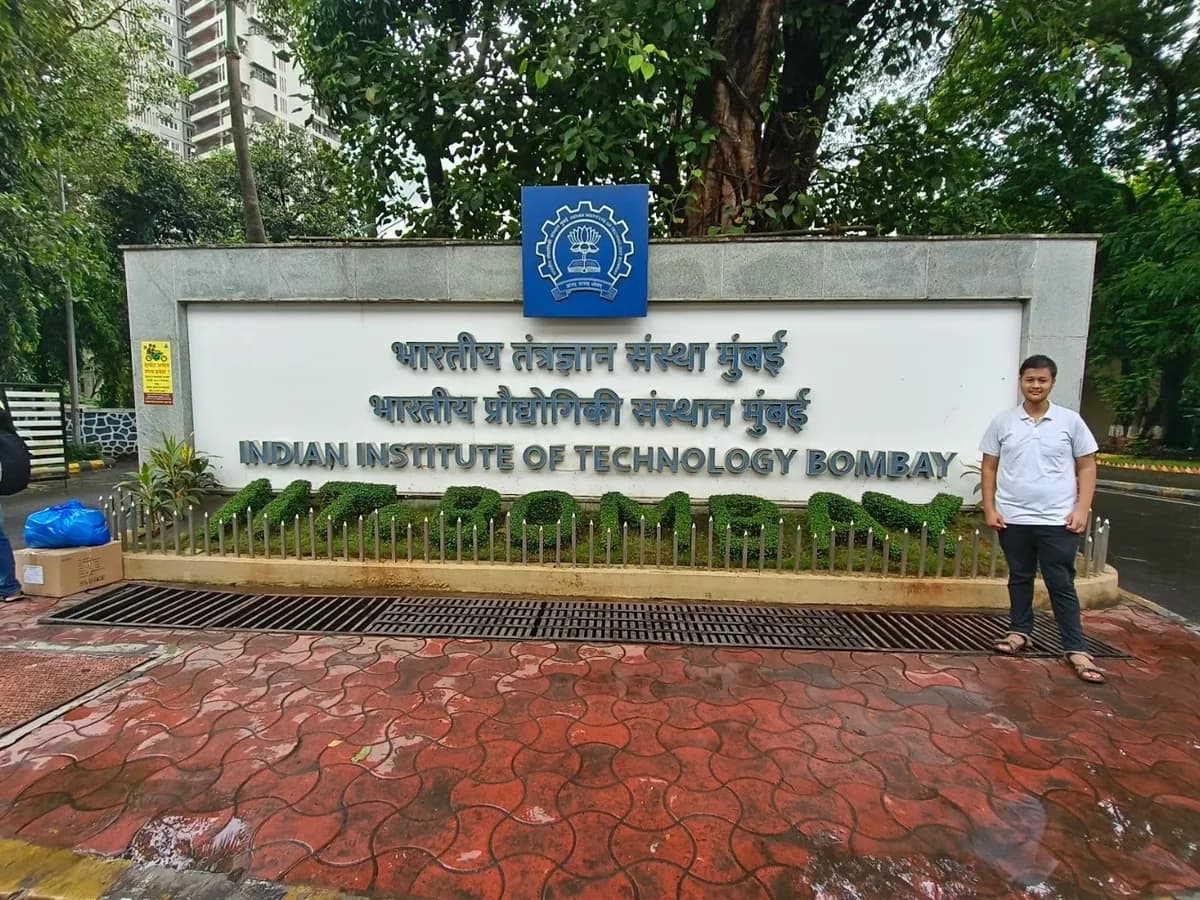

The Indian Institute of Technology Bombay (IIT Bombay or IITB) is a public research university and technical institute located in Mumbai, Maharashtra, India. Established in 1958, it is one of the 23 Indian Institutes of Technology, designated as an Institution of Eminence in 2018. IIT Bombay serves as a Centre of Excellence for India's training, research, and development in science, engineering, and technology. The institute comprises 17 academic departments, 35 additional academic centers, and three schools.
Total Fees
Contact for Fees
Total Courses
9
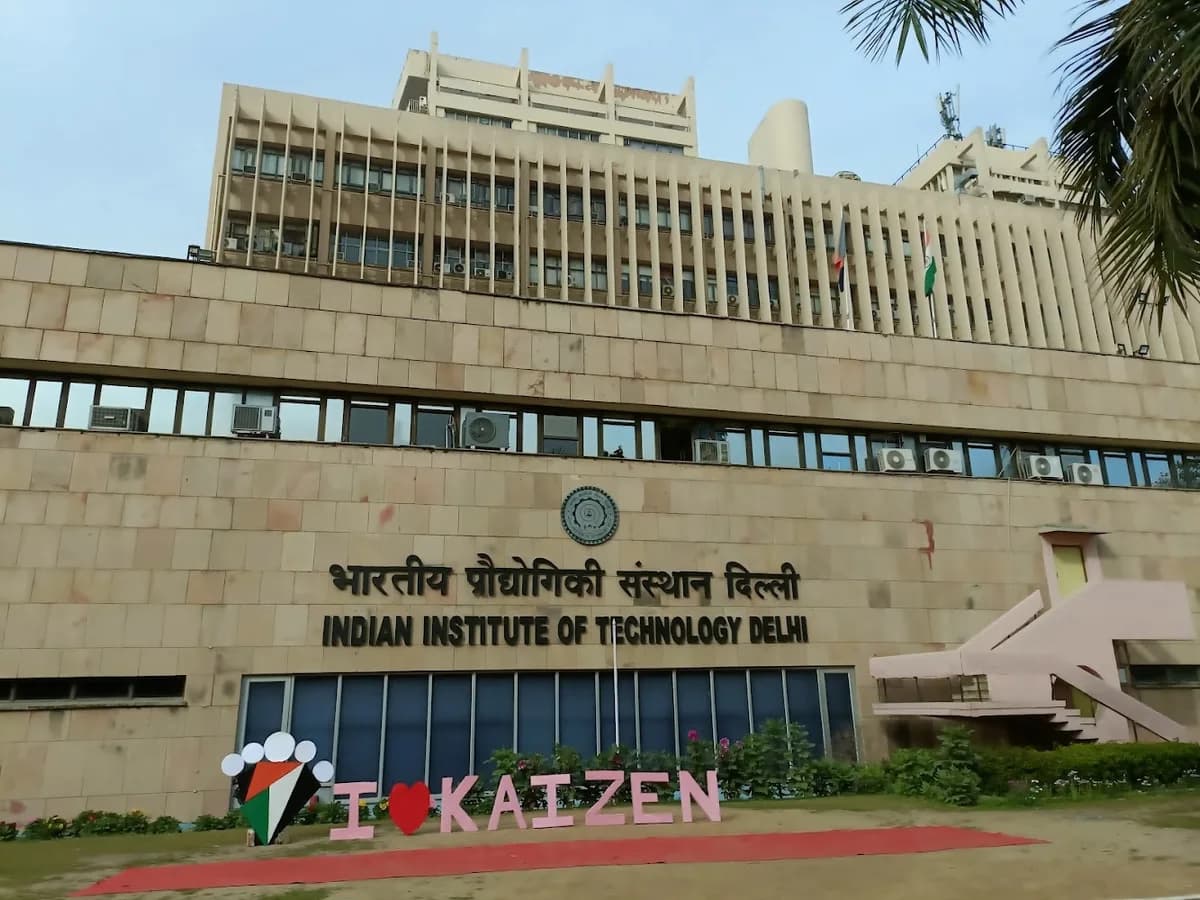
Indian Institute of Technology, Delhi, founded in 1961 in South, Delhi, is a premier academic institution dedicated to higher learning. Conforming to regulatory norms of All India Council for Technical Education (AICTE) through its affiliation with Delhi State University, the institution offers students an integrated foundation across engineering innovation, applied science, computational systems, and advanced technical research. The institution maintains robust academic resources including state-of-the-art computational centers, robotics and IoT laboratories, and core engineering workshops, fostering an active student life and practical competencies. Dedicated to holistic student empowerment, the institution prepares ethical and career-ready professionals who contribute meaningfully to societal and industrial growth.
Total Fees
Contact for Fees
Total Courses
10
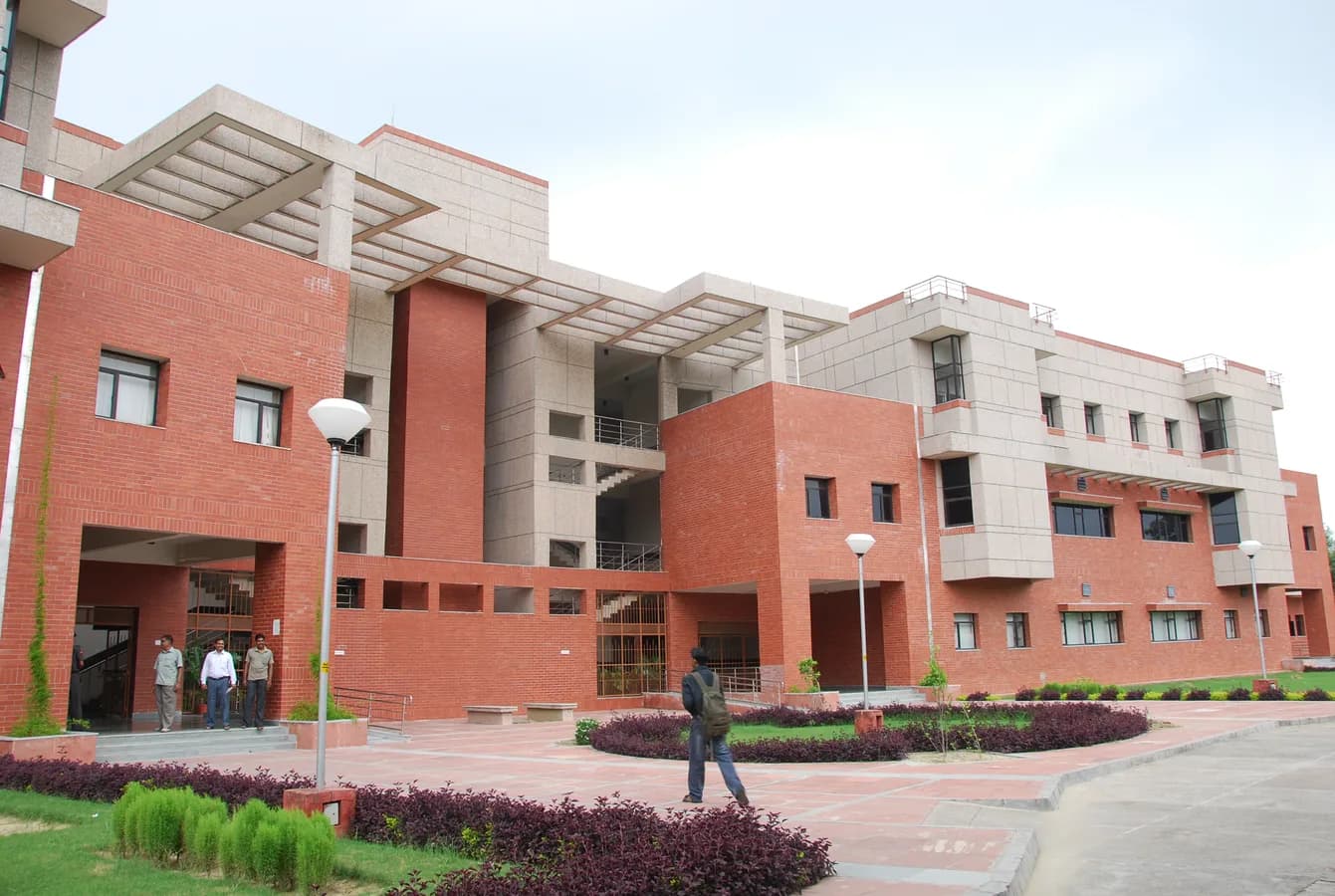

Indian Institute of Technology Kanpur (IITK) is one of the premier engineering institutions in India and was established in 1959 as one of the first IITs. It is recognized as an Institute of National Importance and is known for its excellence in engineering, science, management, and research. IIT Kanpur has consistently ranked among the top technical institutions in India and is known for its strong research culture, innovation, and global collaborations.
Total Fees
Contact for Fees
Total Courses
10


Indian Institute of Technology Kharagpur (IIT KGP), established in 1951, is the first IIT in India and one of the most prestigious engineering institutions globally. It offers undergraduate, postgraduate, and doctoral programs in engineering, sciences, management, law, and humanities. Known for its world-class faculty, research output, and innovation ecosystem, IIT Kharagpur consistently ranks among the top institutes in India.
Total Fees
Contact for Fees
Total Courses
9

Indian Institute of Technology, Madras is a renowned institution of higher learning in Chennai, Tamil Nadu. Equipped with modern research infrastructure, accredited academic schools, and extensive placement partnerships, it prepares students for impactful leadership across global industries.
Total Fees
Contact for Fees
Total Courses
7
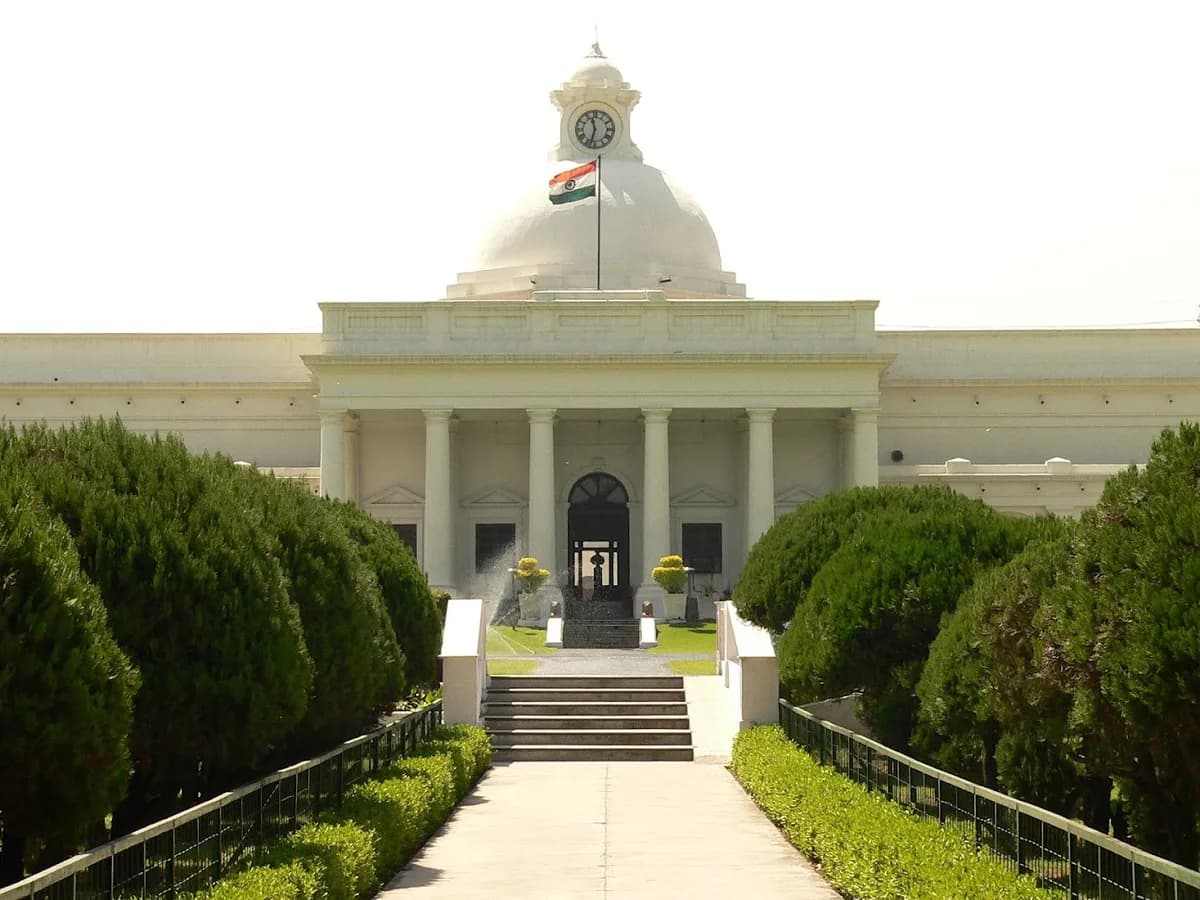

With an educational trajectory spanning 179 years since its inception in 1847, Indian Institute of Technology, Roorkee serves as a prominent seat of learning in Haridwar, Uttarakhand. Conforming to regulatory norms of All India Council for Technical Education (AICTE) through its affiliation with Uttarakhand State University, the institution offers students an integrated foundation across engineering innovation, applied science, computational systems, and advanced technical research. The institution maintains robust academic resources including state-of-the-art computational centers, robotics and IoT laboratories, and core engineering workshops, fostering an active student life and practical competencies. Graduates of Indian Institute of Technology, Roorkee emerge as competent, socially conscious professionals poised to assume impactful roles in diverse professional domains.
Total Fees
Contact for Fees
Total Courses
7
Get More Info About Mastering IIT JAM Mathematics
Recommended Articles

INI CET November 2026: Your Definitive Guide to PG Medical Admissions
Aspiring for postgraduate medical specialisation? Our comprehensive guide decodes INI CET November 2026, covering eligibility, exam pattern, key dates, and preparation strategies for MD, MS, MDS, DM, and MCh admissions.

MHT CET Marks vs Percentile vs Rank: Your Definitive Guide to Maharashtra Engineering Admissions
Demystify MHT CET scores with our comprehensive guide on marks, percentile, and rank. Understand how your performance translates into college admissions and strategize effectively for top engineering colleges in Maharashtra.

Mastering JEE Main: Strategic Insights from the 2019 April 12 Shift 1 Paper
Unlock your potential for JEE Main success by analyzing past papers. This guide delves into the 2019 April 12 Shift 1 paper, offering strategic insights and a robust preparation blueprint to help you excel.