

AI & Engineers: Job Threat or Career Evolution?
Admission & Info Tools
Need Expert Assistance?
Our counselors can help you with fee structures, eligibility guidelines, and upcoming admission cutoffs instantly.
Direct Application Tools
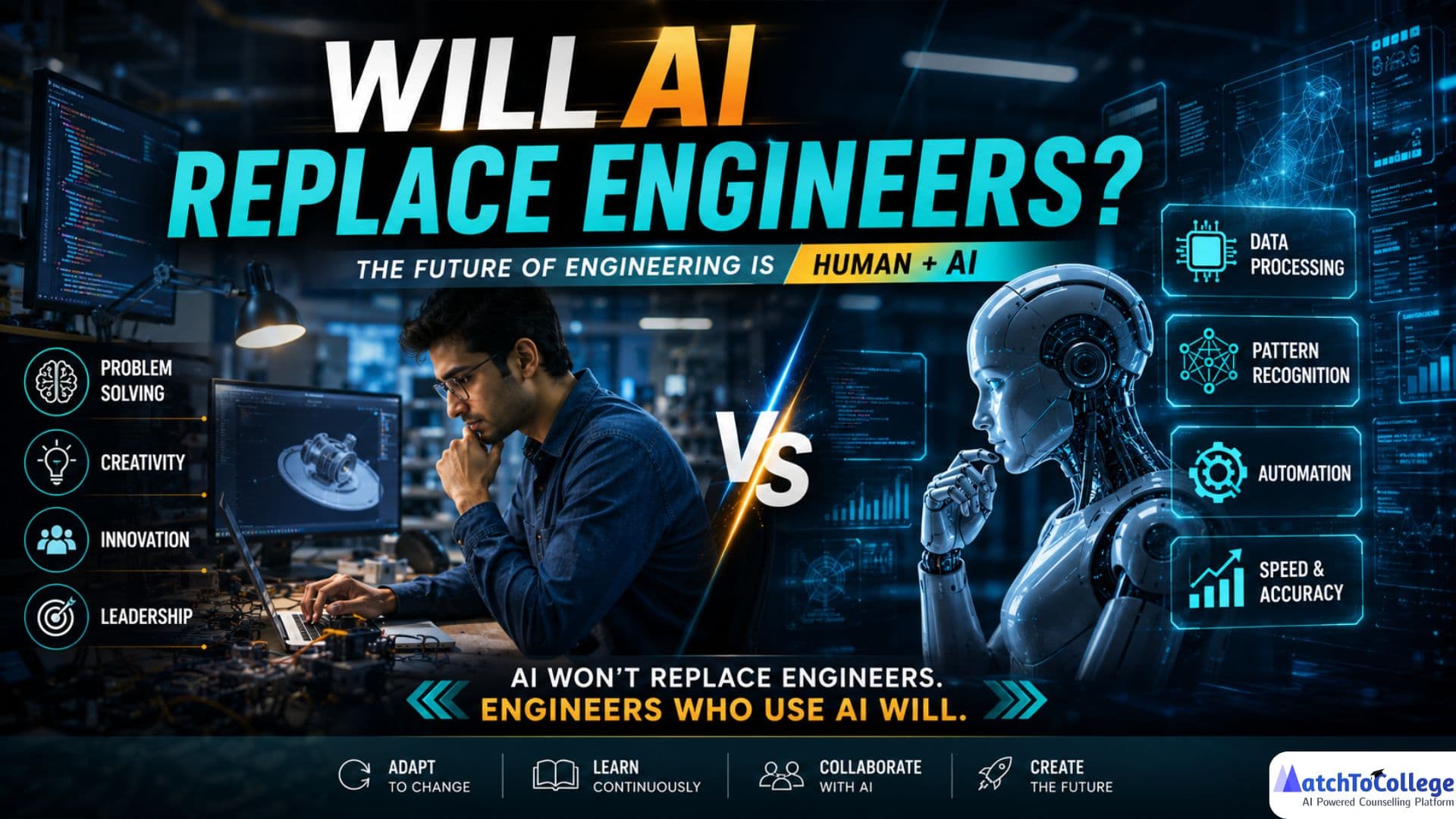
Human vs AI in engineering's future
Share this Article
Artificial Intelligence (AI) is transforming engineering faster than ever before. From automated design software to predictive maintenance and intelligent manufacturing, AI is becoming a powerful engineering tool. This has raised an important question among students and professionals:
Will AI replace engineers?
The short answer is No. AI is more likely to transform engineering jobs than eliminate them. Engineers who learn to work with AI will be in greater demand than those who ignore it.
AI's Impact on Engineering
| What AI Can Do | What Engineers Still Do |
| Automate repetitive tasks | Solve complex real-world problems |
| Analyze large datasets | Make strategic and ethical decisions |
| Generate design suggestions | Validate, optimize, and innovate designs |
| Predict failures through analytics | Apply engineering judgment and creativity |
| Improve productivity | Lead projects and collaborate with teams |
How Engineering Is Changing
- AI automates routine and repetitive engineering tasks.
- Engineers can focus more on innovation and critical decision-making.
- Design, testing, and analysis become faster with AI-powered tools.
- Human expertise remains essential for complex projects and real-world implementation.
Engineering Skills That Will Stay in Demand
| Technical Skills | Human Skills |
| AI & Machine Learning Basics | Critical Thinking |
| Data Analysis | Creativity |
| Programming & Automation | Communication |
| CAD & Simulation Tools | Leadership |
| Cloud Computing & IoT | Problem-Solving |
Engineering Fields with Strong Future Demand
| Engineering Field | Why It Has Strong Scope |
| Computer Science & AI | AI development, software engineering, intelligent systems |
| Mechanical Engineering | Robotics, smart manufacturing, automation |
| Civil Engineering | Smart cities, digital construction, infrastructure planning |
| Electrical & Electronics Engineering | EVs, renewable energy, semiconductor technologies |
| Robotics Engineering | AI-enabled automation and industrial robotics |
| Cyber Security Engineering | Protecting AI systems and digital infrastructure |
| Cloud & DevOps Engineering | AI applications require scalable cloud infrastructure |
How Engineers Can Stay Future-Ready
- Learn AI fundamentals and automation tools.
- Develop programming and data analysis skills.
- Build expertise in emerging technologies like IoT, Robotics, and Cloud Computing.
- Strengthen creativity, leadership, and problem-solving abilities.
- Continuously upskill through certifications and practical projects.
AI: Replacement vs Collaboration
| AI Replaces | Engineers Add Value |
| Repetitive calculations | Innovation and creativity |
| Routine documentation | Strategic planning |
| Basic design optimization | Complex engineering decisions |
| Manual data processing | Human judgment and ethics |
Key Insight
The future belongs to AI-enabled engineers, not engineers who avoid AI. Organizations increasingly seek professionals who can combine engineering expertise with AI, automation, and data-driven decision-making.
AI is not replacing engineering—it is redefining it. Engineers will continue to play a vital role by combining technical knowledge with creativity, critical thinking, and innovation. Those who embrace AI as a tool rather than viewing it as a threat will have the strongest career prospects.
Platforms like MatchToCollege help students choose future-ready engineering programs, understand emerging industry trends, and build the skills needed to succeed in an AI-driven world.
Related Topics
Get More Info About AI & Engineers
Recommended Articles
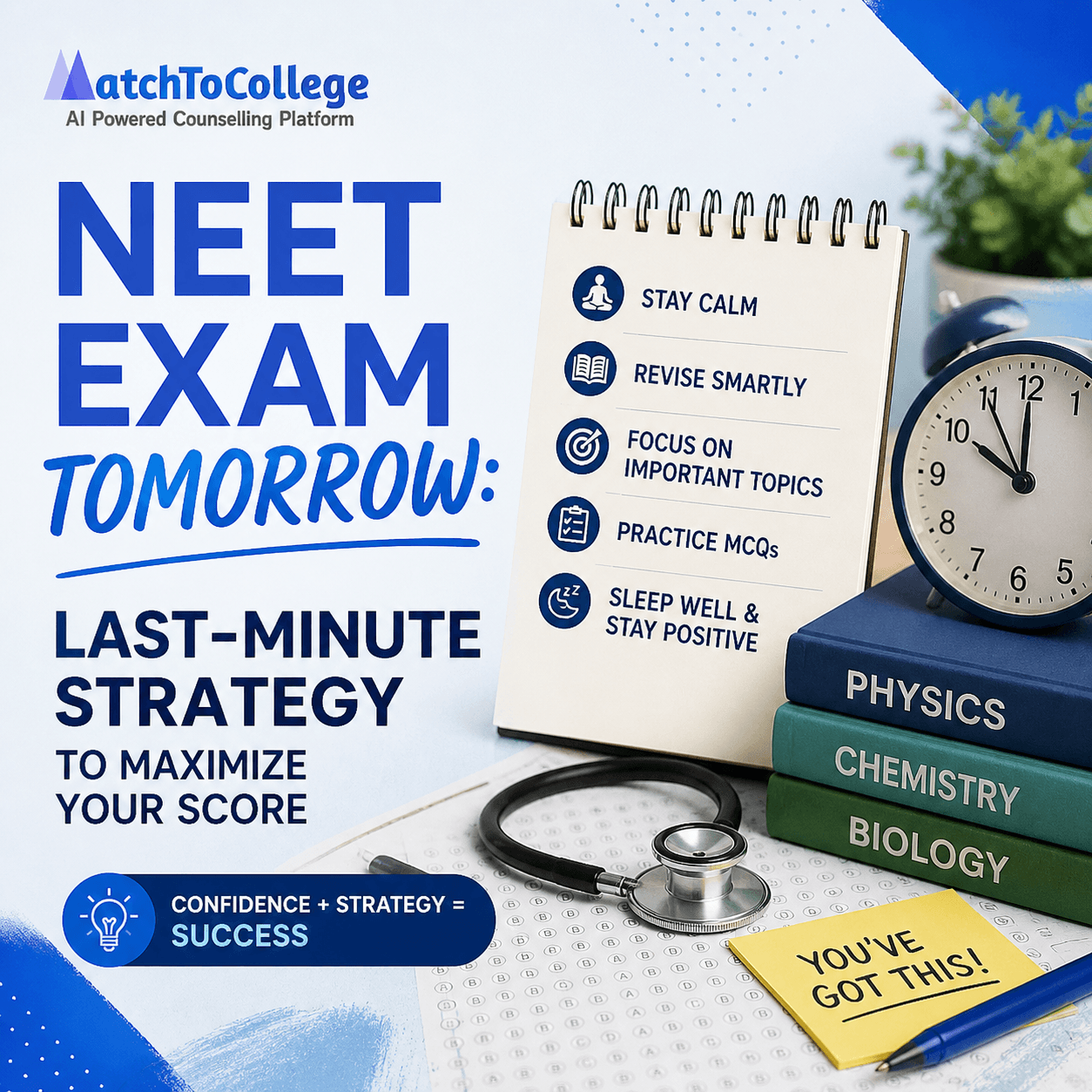
NEET Exam Tomorrow: Last-Minute Strategy to Maximize Your Score
NEET is tomorrow—here’s your complete last-day strategy covering revision, exam hall tips, and mistakes to avoid for maximum accuracy and performance.
GATE Previous Year Question Papers with Official Answer Keys (2007–2026) – Download PDF by Branch
Download official GATE previous year question papers with answer keys PDF from 2007 to 2026. Access branch-wise question papers for Computer Science (CS), Data Science (DA), Mechanical (ME), Electronics (EC), Electrical (EE), and Civil (CE) by IIT Madras.
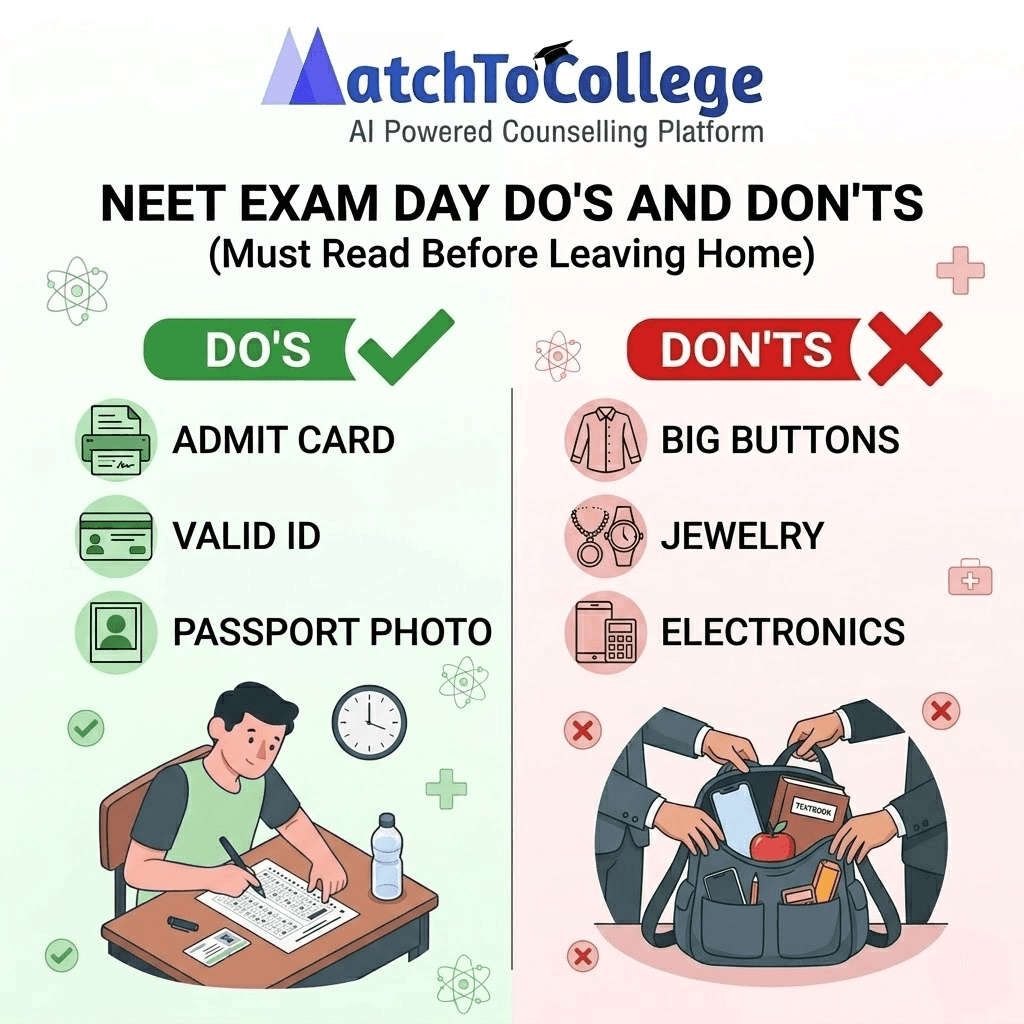
NEET Exam Day Do’s and Don’ts (Must Read Before Leaving Home)
Students appearing for the National Eligibility cum Entrance Test (NEET) must follow strict exam day guidelines set by the National Testing Agency. From required documents and dress code to prohibited items, this guide covers the most important NEET exam day do’s and don’ts to help candidates avoid last-minute problems at the exam center.